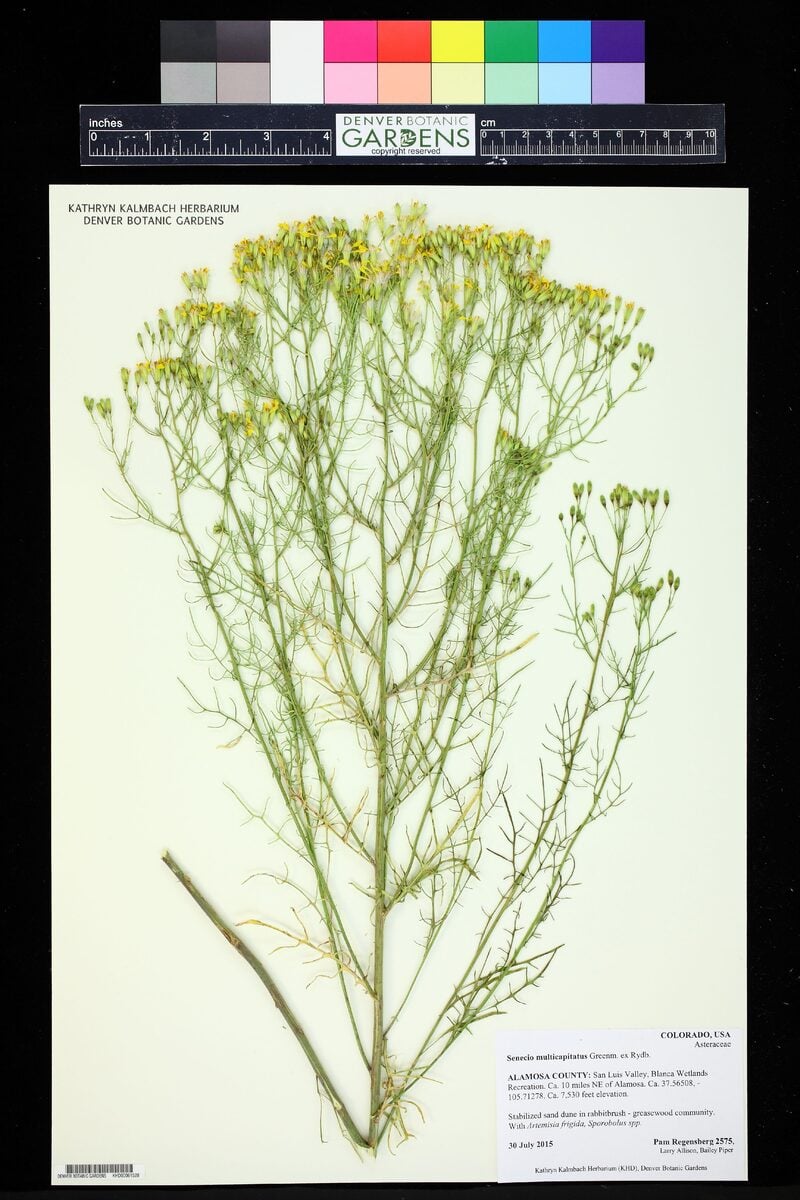
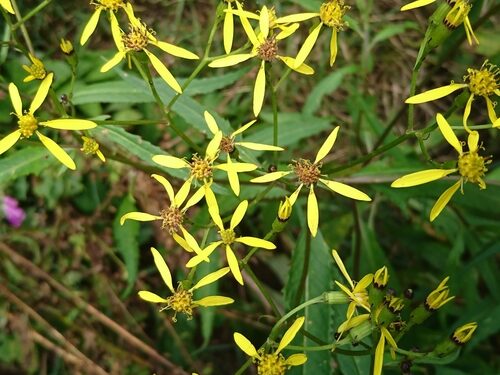
Erechtites hieraciifolius
(L.) Raf. ex DC.
Fireweed, American burnweed
iNaturalist· cc-by-nc
(c) vladimir_korotkov, some rights reserved (CC BY-NC)
iNaturalist· cc-by-nc
(c) rachell26, some rights reserved (CC BY-NC)
iNaturalist· cc-by
(c) Sandy Wolkenberg, some rights reserved (CC BY)
Description
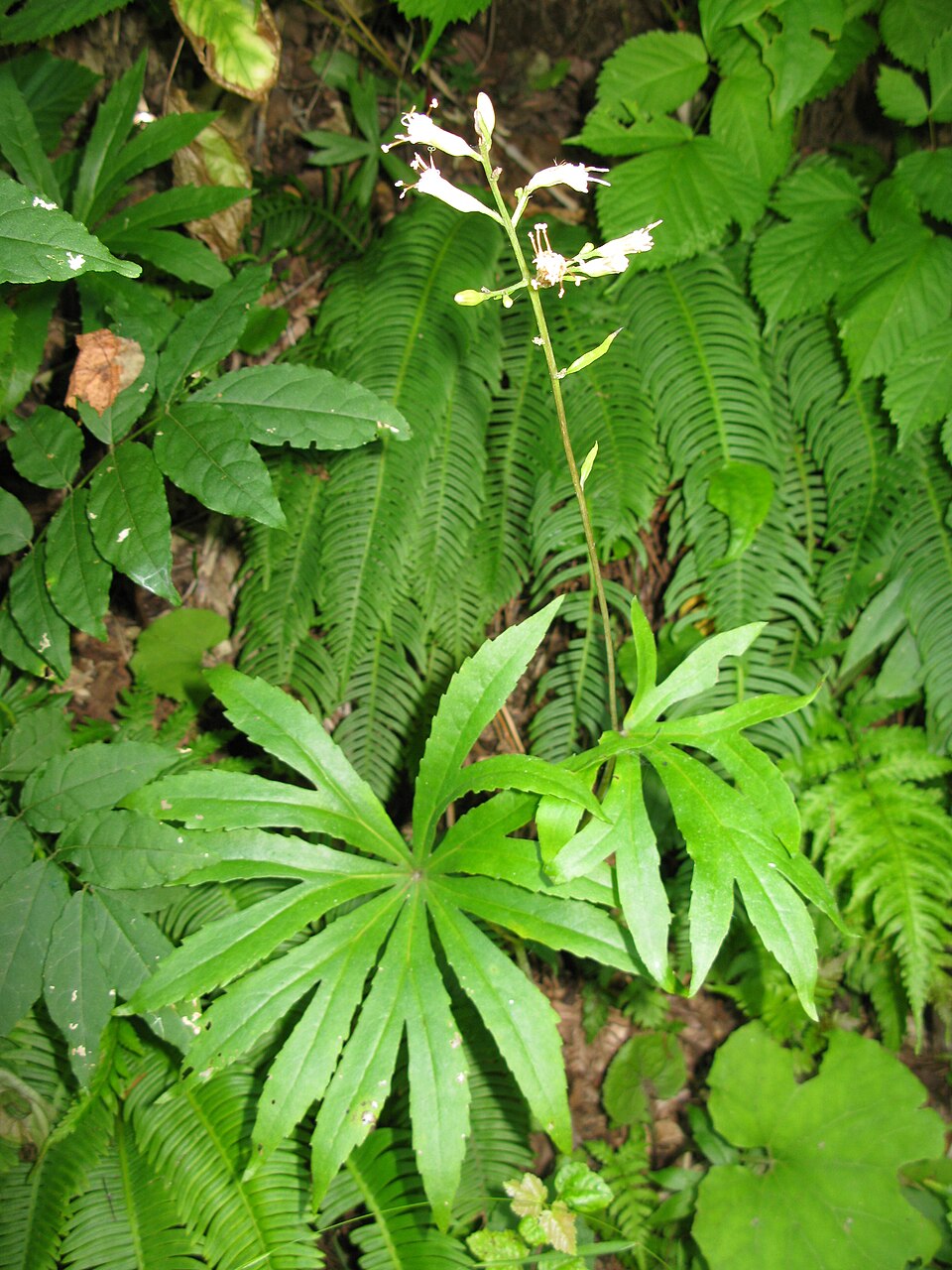
An annual herb. It grows 2 m high and spreads 2 m wide. The stem is thick and fleshy. It is slightly hairy. The leaves are alternate and narrowly sword shaped. They taper to the end. There are teeth around the edge. The flowers are white. Unopened flowers are yellow. They are in loose clusters at the top of the plant.
Edible Uses
Young leaves are cooked as a vegetable or eaten raw, and are sold in markets in Brunei. Young flower heads are eaten raw or steamed with rice.
Traditional Uses
The young leaves are cooked and eaten. It is also eaten raw. The young flower heads are eaten raw or steamed with rice.
This uses section is brief — help expand it
Distribution
A tropical plant. It will grow in most soils. It needs an open sunny position. It is resistant to frost and drought. In Java it grows up to 2,000 m above sea level. In southern China it grows between 1,000-1,400 m above sea level. In Srgentina it grows from sea level to 1,000 m above sea level. In Sichuan and Yunnan.
Where It Grows
Argentina, Asia, Australia, Bahamas, Bolivia, Brazil, Brunei, Canada, China, Cuba, Dominican Republic, Europe, Guiana, Guianas, Guyana, Haiti, Hawaii, India, Indonesia, Jamaica, Japan, Korea, Lesser Antilles, Malaysia, Mexico*, North America, Pacific, Paraguay, Philippines, Puerto Rico, SE Asia, South America*, Suriname, Taiwan, Thailand, Uruguay, USA, Venezuela, West Indies*,
Other Information
Young leaves edible as vegetable, sold in market in Brunei.
Notes
There are 6 Erechtites species.
Nutrition
| Part | Moisture | kJ | kcal | Protein | Vit A | Vit C | Iron | Zinc |
|---|---|---|---|---|---|---|---|---|
| Leaves | 89.7 | 125 | 30 | 2.2 | — | — | 1.3 | 68 |
Synonyms
Also Known As
Bolostrok, Caa peu guay, Capecoba, Capicoba, Ca-ramuru, Caricoba, Caruru, Doyan-doyan, Erechtites, Hagalpohansaw, Jambrong, Lechuga de cabro, Malayan groundsel, Phakkat-nokkut, Pilewort, Salimbego, Sintrong
References (17)
- Arora, R. K., 2014, Diversity in Underutilized Plant Species - An Asia-Pacific Perspective. Bioversity International. p 40
- Bodkin, F., 1991, Encyclopedia Botanica. Cornstalk publishing, p 387
- Burkill, I.H., 1966, A Dictionary of the Economic Products of the Malay Peninsula. Ministry of Agriculture and Cooperatives, Kuala Lumpur, Malaysia. Vol 1 (A-H) p 950
- Duke, J.A., 1992, Handbook of Edible Weeds. CRC Press. p 94
- Hoe, V. B. & Siong, K. H., 1999, The nutritional value of indigenous fruit and vegetables in Sarawak. Asia Pacific J. Clin. Nutr. 8(1):24-31
Show all 17 references Hide references
- Hwang, H., et al, 2013, A Study on the Flora of 15 Islands in the Western Sea of Jeollanamdo Province, Korea. Journal of Asia-Pacific Biodiversity Vol. 6, No. 2 281-310
- Hwang, HS, et al, 2014, Distribution characteristics of plant in the Ungseokbong Mountain, Gyeongsangnam-do, Korea. Journal of Asia-Pacific Biodiversity. 7(2014) e164-e178
- Kinupp, V. F., 2007, Plantas alimenticias nao-convencionais da regiao metropolitana de Porto Alegre, RS, Brazil p 66
- Lim, T. K., Edible Medicinal and Non-Medicinal Plants Volume 7 Flowers
- Malezas Comestibles del Cono Sur, INTA, 2009, Buernos Aires
- Martin, F.W. & Ruberte, R.M., 1979, Edible Leaves of the Tropics. Antillian College Press, Mayaguez, Puerto Rico. p 185
- Ochse, J.J. et al, 1931, Vegetables of the Dutch East Indies. Asher reprint. p 133
- Plants of Haiti Smithsonian Institute http://botany.si.edu
- Prodr. 6:294. 1838 "hieracifolia"
- Siemonsma, J. S. and Piluek, K. (Eds), 1994, Plant Resources of South-East Asia No. 8 Vegetables. Prosea Foundation, Bogor, Indonesia, p 174
- Terra, G.J.A., 1973, Tropical Vegetables. Communication 54e Royal Tropical Institute, Amsterdam, p 45
- Wiersema, J. H. & Leon, B., 2013, World Economic Plants. A Standard Reference CRC Press. 2nd Ed. p 277