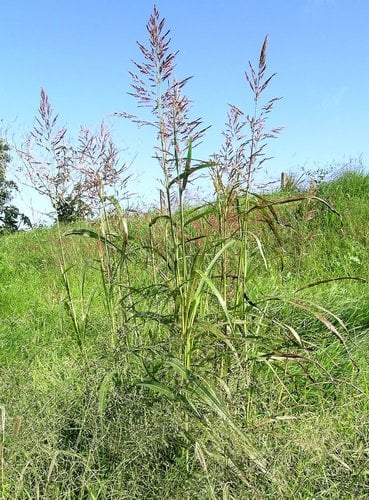
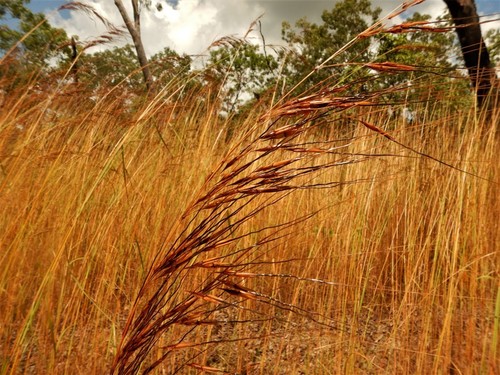
Eragrostis pilosa
(L.) Beauv.
Soft Lovegrass, Wild tef
iNaturalist· cc-by-nc
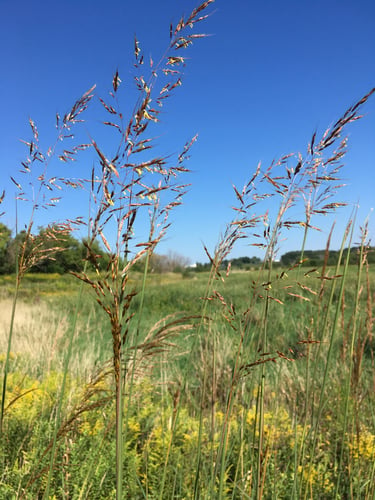
(c) François Rousseu, some rights reserved (CC BY-NC), uploaded by François Rousseu
iNaturalist· cc-by
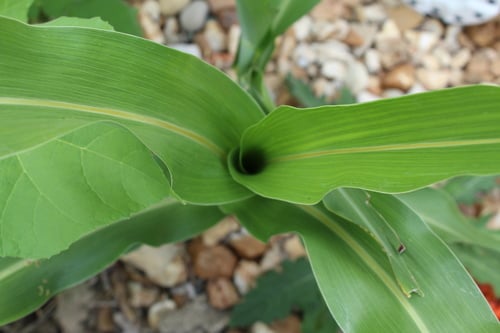
(c) Patrick Hacker, some rights reserved (CC BY)
iNaturalist· cc-by
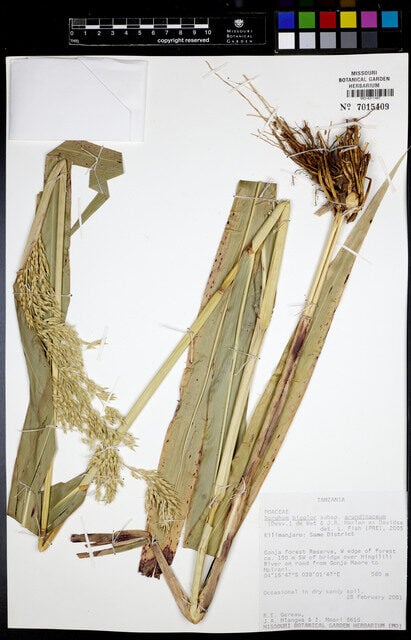
(c) Patrick Hacker, some rights reserved (CC BY)
Summary
Source: WikipediaEragrostis pilosa is a species of grass in the family Poaceae. It is native to Eurasia and Africa. It may or may not be native to North America. It is widely introduced, and it is a common weed in many areas. Common names include Indian lovegrass, Jersey love-grass, hairy love grass, small tufted lovegrass, and soft lovegrass.
Description
An annual grass. It can be erect or lie over. It grows 8-40 cm high. The leaf blades are short and narrow. They are 1-3 mm wide. The flowers are in a delicate panicle. They are open and 5-20 cm long.
Edible Uses
The seed is ground into flour and used as a cereal. It is generally regarded as a famine food, though it is used regularly in some areas. The seed is very small and fiddly to process.
Traditional Uses
It is used in kreb a grain mixture eaten in Chad.
This uses section is brief — help expand it
Medicinal Uses
The plant is said to be an effective remedy for contusions.
Distribution
A subtropical plant. It is widely distributed in the tropics. It grows well in damp places. It can grow on sandy soils. It can grow in hot arid places. It can be in poorly drained soils that are sandy or have clay. It grows from sea level to 2,300 m above sea level. It can tolerate shade. It can grow in arid places.
Where It Grows
Afghanistan, Africa, Albania, American Samoa, Angola, Armenia, Australia, Austria, Bahamas, Balkans, Barbados, Belarus, Benin, Bolivia, Botswana, Brazil, Britain, Bulgaria, Burkina Faso, Burundi, Cambodia, Caribbean, Caucasus, Central Africa, Central African Republic, CAR, Central America, Central Asia, Chad, Chile, China, Congo, Costa Rica, Côte d'Ivoire, Cuba, Czech Republic, Dominican Republic, East Africa, Ecuador, Egypt, Eswatini, Ethiopia, Europe, Fiji, France, French Guiana, Gabon, Gambia, Germany, Ghana, Greece, Guinea, Guinée, Guyana, Haiti, Hungary, India, Indochina, Indonesia, Iran, Iraq, Italy, Ivory Coast, Jamaica, Japan, Kazakhstan, Kenya, Korea, Laos, Lesotho, Lesser Antilles, Liberia, Malawi, Malaysia, Mali, Mauritania, Mediterranean, Mexico, Middle East, Moldova, Mozambique, Myanmar, Namibia, Netherlands Antilles, New Caledonia, Nicaragua, Niger, Nigeria, North Africa, North America, Pacific, Pakistan, Papua New Guinea, PNG, Paraguay, Peru, Portugal, Puerto Rico, Qatar, Romania, Rwanda, Sahel, Saudi Arabia, SE Asia, Senegal, Sierra Leone, Slovakia, Socotra, South Africa, Southern Africa, South America, South Sudan, Spain, Sri Lanka, St. Kitts and Nevis, Sudan, Swaziland, Switzerland, Syria, Taiwan, Tajikistan, Tanzania, Tasmania, Thailand, Tibet, Trinidad & Tobago, Turkey, Türkiye, Uganda, Ukraine, United Arab Emirates, UAE, Uruguay, USA, Venezuela, Vietnam, West Africa, West Indies, Yemen, Yugoslavia, Zambia, Zimbabwe,
Cultivation
Succeeds in any good loam or humus-rich soil in a sunny position. Prefers a light soil. A common weed of cultivated land. Plants are harvested (from the wild?) on a regular basis in E. Africa for their edible seed.
Propagation
Sow seed in early spring in a greenhouse, barely covering it. Germination typically occurs within 2 weeks. Once seedlings are large enough to handle, prick them out into individual pots and plant outside after the last expected frost. Seed can also be sown in situ in mid to late spring, though in a cool summer it may not ripen many seeds.
Other Uses
None known
Production
Seed can be collected from ant hills.
Other Information
It is a famine food.
Notes
There are about 300 Eragrostis species. It is 16.1% protein.
Synonyms
Also Known As
Am-hoy, Burwai, Chiriaka dana, Gadar punch, Galgala, Jukut tai hayam, Kadu sanna samai hullu, Kutaki, Kuthira val pul, Kwoinkwoin, Lanchuran, Myet-hmwa-gyi, Myet-wa-lon, Nikasanwak, Phularaw, Raguman, Sukei menuran
References (23)
- Abbiw, D.K., 1990, Useful Plants of Ghana. West African uses of wild and cultivated plants. Intermediate Technology Publications and the Royal Botanic Gardens, Kew. p 26
- Ambasta, S.P. (Ed.), 2000, The Useful Plants of India. CSIR India. p 198
- Asfaw, Z. and Tadesse, M., 2001, Prospects for Sustainable Use and Development of Wild Food Plants in Ethiopia. Economic Botany, Vol. 55, No. 1, pp. 47-62
- Burkill, H. M., 1985, The useful plants of west tropical Africa, Vol. 2. Kew.
- Burkill, I.H., 1966, A Dictionary of the Economic Products of the Malay Peninsula. Ministry of Agriculture and Cooperatives, Kuala Lumpur, Malaysia. Vol 1 (A-H) p 949
Show all 23 references Hide references
- Dalziel, J. M., 1937, The Useful plants of west tropical Africa. Crown Agents for the Colonies London.
- Ess. Agrostogr. 71, 162, 175. 1812
- Flora of Pakistan. www.eFloras.org
- Gallagher, D. E., 2010, Farming beyond the escarpment: Society, Environment, and Mobility in Precolonial Southeastern Burkina Faso. PhD University of Michigan.
- Grivetti, L. E., 1980, Agricultural development: present and potential role of edible wild plants. Part 2: Sub-Saharan Africa, Report to the Department of State Agency for International Development. p 41
- Jardin, C., 1970, List of Foods Used In Africa, FAO Nutrition Information Document Series No 2.p 3
- Kiple, K.F. & Ornelas, K.C., (eds), 2000, The Cambridge World History of Food. CUP p 116
- Kotschy, T. 1862, Reise von Chartum nach Kordafan, 1839, Petermann's geographische Mittheillungen Erganzungscheft. 7:3-17
- Lazarides, M. & Hince, B., 1993, Handbook of Economic Plants of Australia, CSIRO. p 92
- National Research Council, 1996, Lost crops of Africa. Volume 1 grains, p 258, 272
- Paczkowska, G. & Chapman, A.R., 2000, The Western Australian Flora. A Descriptive Catalogue. Western Australian Herbarium. p 105
- Peters, C. R., O'Brien, E. M., and Drummond, R.B., 1992, Edible Wild plants of Sub-saharan Africa. Kew. p 22
- Plants for a Future database, The Field, Penpol, Lostwithiel, Cornwall, PL22 0NG, UK. http://www.scs.leeds.ac.uk/pfaf/
- Plants of Haiti Smithsonian Institute http://botany.si.edu/antilles/West Indies
- Royal Botanic Gardens, Kew (1999). Survey of Economic Plants for Arid and Semi-Arid Lands (SEPASAL) database. Published on the Internet; http://www.rbgkew.org.uk/ceb/sepasal/internet [Accessed 3rd June 2011]
- Smith, A.C., 1979, Flora Vitiensis Nova, Lawaii, Kuai, Hawaii, Volume 1 p 301
- Swaziland's Flora Database http://www.sntc.org.sz/flora
- World Checklist of Useful Plant Species 2020. Royal Botanic Gardens, Kew