Cereus jamacaru
DC.
Honey cactus, Jamacaru
iNaturalist· cc-by-nc
(c) m_santos, some rights reserved (CC BY-NC)
iNaturalist· cc-by-nc
(c) Martin Lowry, some rights reserved (CC BY-NC), uploaded by Martin Lowry
iNaturalist· cc-by-nc
(c) KARTHIKEYAN R, some rights reserved (CC BY-NC), uploaded by KARTHIKEYAN R
Summary
Source: WikipediaCereus jamacaru, known as mandacaru or cardeiro, is a cactus native to central and eastern Brazil. and naturalized in South Africa. It often grows up to 5 m (16 ft) high.
Description
A columnar cactus. It grows 4-12 m tall. The trunk is short. The stems have 8 wings. There are spines in groups along these. The groups are 2-4 cm apart and there are 1-4 central spines and 7-12 spines around these. The flowers occur singly and open at night. The fruit are large and bright red. The pulp is white.
Edible Uses
Fruit - raw, cooked or preserved. A farinaceous, succulent pulp with a slightly sweet flavour. The fruit is about 12cm long and 7cm wide. Stems - cooked and used as a vegetable.
Traditional Uses
The fruit can be eaten raw. The stems can be used as a vegetable.
This uses section is brief — help expand it
Medicinal Uses
The juice is used for treating scurvy, lung and skin diseases. The juice is also applied topically to treat ulcers. The above reports do not specify if it is the juice from the fruit or from the stems. The plant is known to contain alkaloids.
Distribution
A tropical plant. It grows naturally in east and northeast Brazil. It grows in semi-arid regions and savannah. It is best in light, sandy well-drained soil. It needs an open sunny position. It is resistant to drought and frost. It can grow in arid places.
Where It Grows
Africa, Australia, Botswana, Brazil*, Canada, Colombia, Egypt, Eswatini, Mexico, North Africa, North America, Slovenia, South Africa, Southern Africa, South America, Swaziland, West Indies,
Cultivation
It is grown by cuttings. It can also be grown from seed. The seeds are separated from ripe fruit by washing. They need to be planted fresh. Seeds germinate in 40-60 days. It can be used as a hedge.
Propagation
Seed - best sown as soon as it is ripe. Sow the seed in a semi-shaded position, spreading the seed on the surface and watering it into the soil. Germination rates are usually low with the seed sprouting within 40 - 60 days. Cuttings.
Other Uses
The wood is regular-grained, very light and coarse-textured. It is very susceptible to wood eating organisms. It can only be used to make light boxes and models such as model aeroplanes, but was at one time used in the construction of traditional dwellings. The plant is a pioneer of open ground in its native area and could be a suitable, if slow-growing, pioneer for semi-arid areas generally. The plant has an upright and spiny habit and can be propagated easily by cuttings it makes a good living hedge for marking boundaries, excluding grazing animals and conserving the soil
Production
It grows quickly.
Other Information
The fruit are popular.
Nutrition
| Part | Moisture | kJ | kcal | Protein | Vit A | Vit C | Iron | Zinc |
|---|---|---|---|---|---|---|---|---|
| Fruit | — | 64 | 1.8 | — | — | — | — | — |
| Stems | — | — | — | — | — | — | — | — |
Synonyms
Also Known As
Cacto-cardero, Cardeiro, Cayuco, Cumbeba, Kaktus mandacaru, Mandacaru cereus, Swamp oak cactus
References (24)
- Bodkin, F., 1991, Encyclopedia Botanica. Cornstalk publishing, p 241
- Bussmann, R. W., (Ed.), 2020, Biodiverse food plants in the semiarid region of Brazil have unknown potential: A systematic review. Plos ONE 15(5): e0230936
- Cruz, M. P., et al, 2014, Local perceptions and consumption of native wild edible plants from seasonal dry forests in Brazil. Journal or Ethnobiology and Ethnomedicine 10:45
- de Lucena, et al, 2013, Use and knowledge of Cactaceae in Northeastern Brazil. Journal of Ethnobiology and Ethnomedicine 2013, 9:62
- Facciola, S., 1998, Cornucopia 2: a Source Book of Edible Plants. Kampong Publications, p 63
Show all 24 references Hide references
- Fouqué, A. 1972. Espèces fruitières d'Amérique tropicale. Institut français de recherches fruitierès outre-me
- Hunter, D., et al, 2019, The potential of neglected and underutilized species for improving diets and nutrition. Planta (2019) 250:709-729
- INFOODS:FAO/INFOODS Databases
- Leal, M. L. et al, 2018, Knowledge, use, and disuse of unconventional food plants. Journal of Ethnobiology and Ethnomedicine (2018) 14:6
- Lorenzi, H., Bacher, L., Lacerda, M. & Sartori, S., 2006, Brazilian Fruits & Cultivated Exotics. Sao Paulo, Instituto Plantarum de Estuados da Flora Ltda. p 102
- Lorenzi, H., 2009, Brazilian Trees. A Guide to the Identification and Cultivation of Brazilian Native Trees. Instituto Plantarum de Estuados da Flora Ltda. Vol. 3 p 66
- Lyle, S., 2006, Discovering fruit and nuts. Land Links. p 250
- Martin, F. W., et al, 1987, Perennial Edible Fruits of the Tropics. USDA Handbook 642 p 86
- Nascimento, V. T. D., et al, 2013, Knowledge and Use of Wild Food Plants in Areas of Dry Seasonal Forests in Brazil. Ecology of Food and Nutrition, 52:317–343
- Prodr. 3:467. 1828, nom. cons.
- Recher, P, 2001, Fruit Spirit Botanical Gardens Plant Index. www.nrg.com.au/~recher/ seedlist.html p 1
- Segura, S. et al, 2018, The edible fruit species in Mexico. Genet Resour Crop Evol (2018) 65:1767–1793
- Sukarya, D. G., (Ed.) 2013, 3,500 Plant Species of the Botanic Gardens of Indonesia. LIPI p 1007
- Swaziland's Flora Database http://www.sntc.org.sz/flora
- Roa, J. A. G. & Boada, D. S. G., 2018, Fundación para el Fortalecimiento de la Fruticultura y Plantas Alimenticias no Convencionales en Colombia.
- Royal Botanic Gardens, Kew (1999). Survey of Economic Plants for Arid and Semi-Arid Lands (SEPASAL) database. Published on the Internet; http://www.rbgkew.org.uk/ceb/sepasal/internet [Accessed 5th April 2011]
- Van Wick, B. & Van Wick, P., 2009, Filed Guide to Trees of Southern Africa, Struik Nature. p 36
- www.colecionandofrutas.org
- www.tradewindsfruit.com
More from Cactaceae
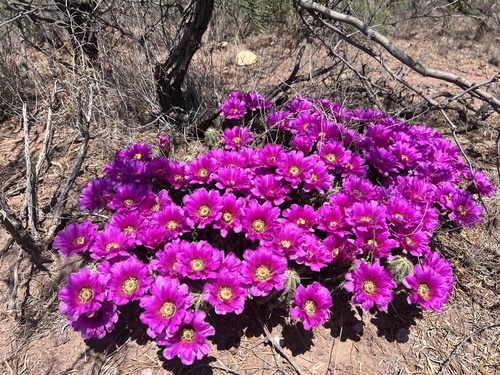
Echinocereus enneacanthus
Strawberry cactus
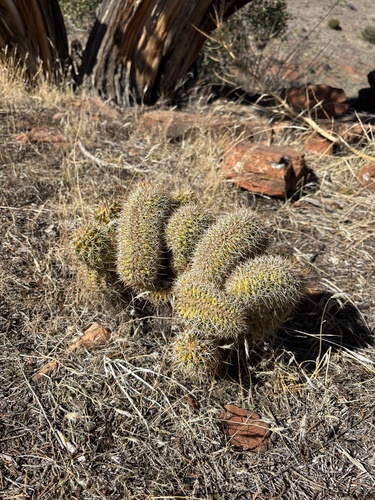
Echinocereus fasciculatus
Strawberry hedgehog
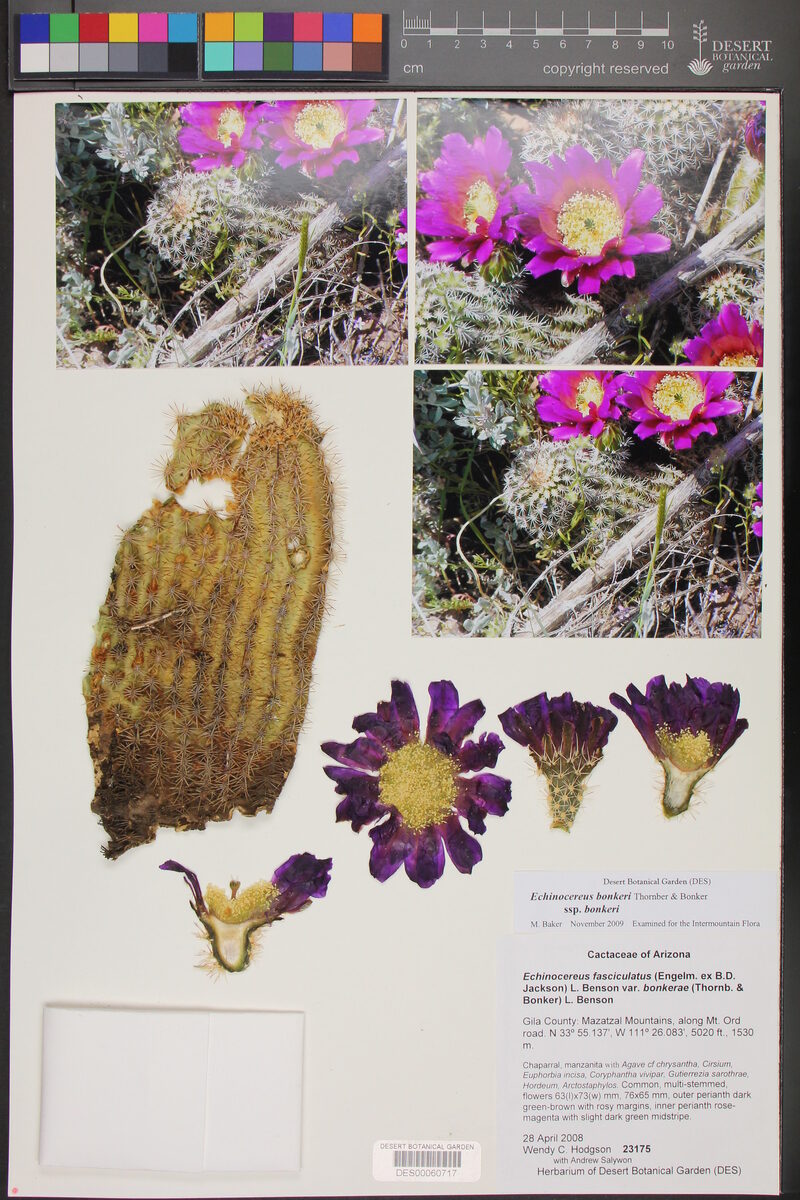
Echinocereus fasciculatus var. bonkerae
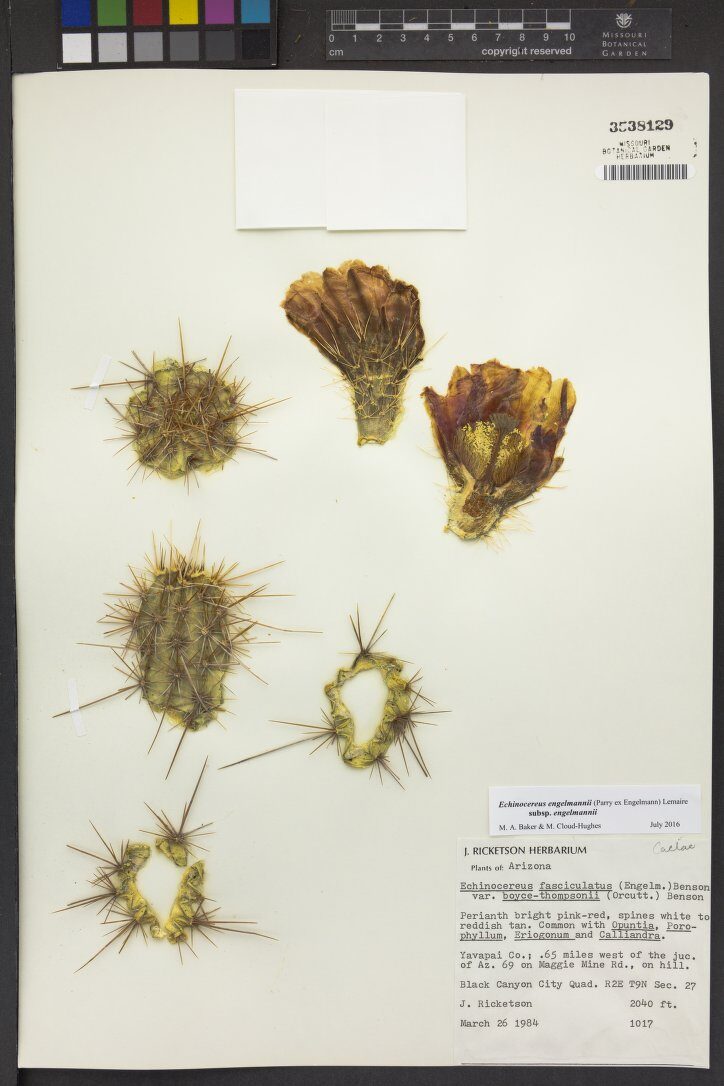
Echinocereus fasciculatus var. boyce-thompsonii
Echinocereus fendleri
Fendler's hedgehog cactus, Fendler needle-spine hedghog, Kuenzler's hedgehog, Kuenzler's cactus
Echinocereus ledingii
Leding's hedgehog cactus