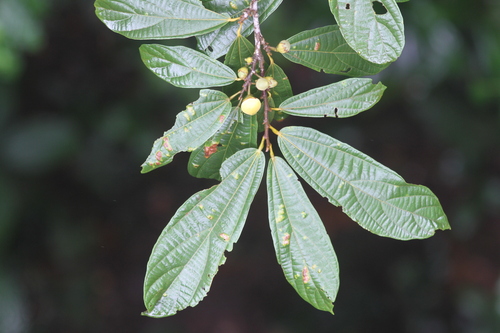
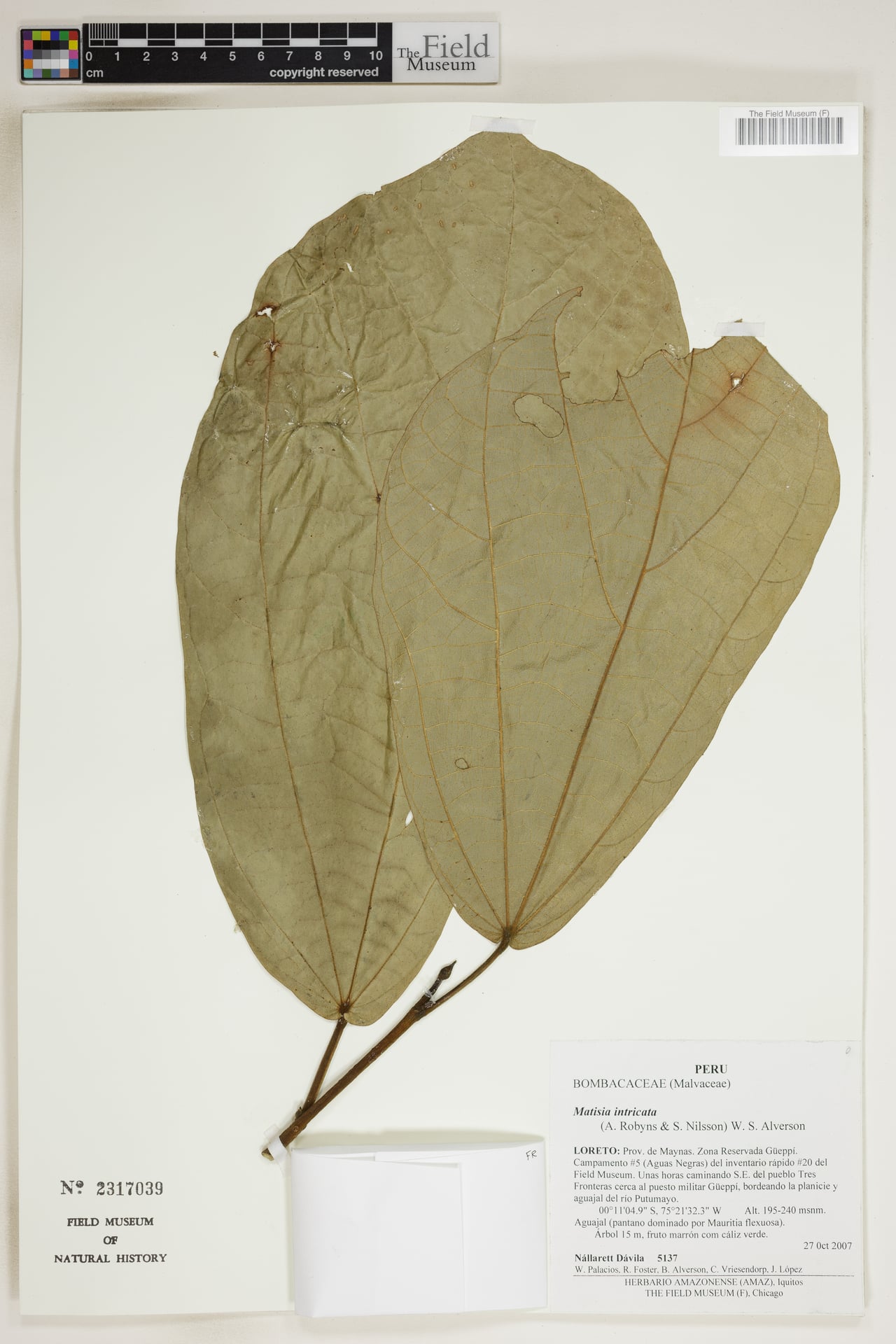
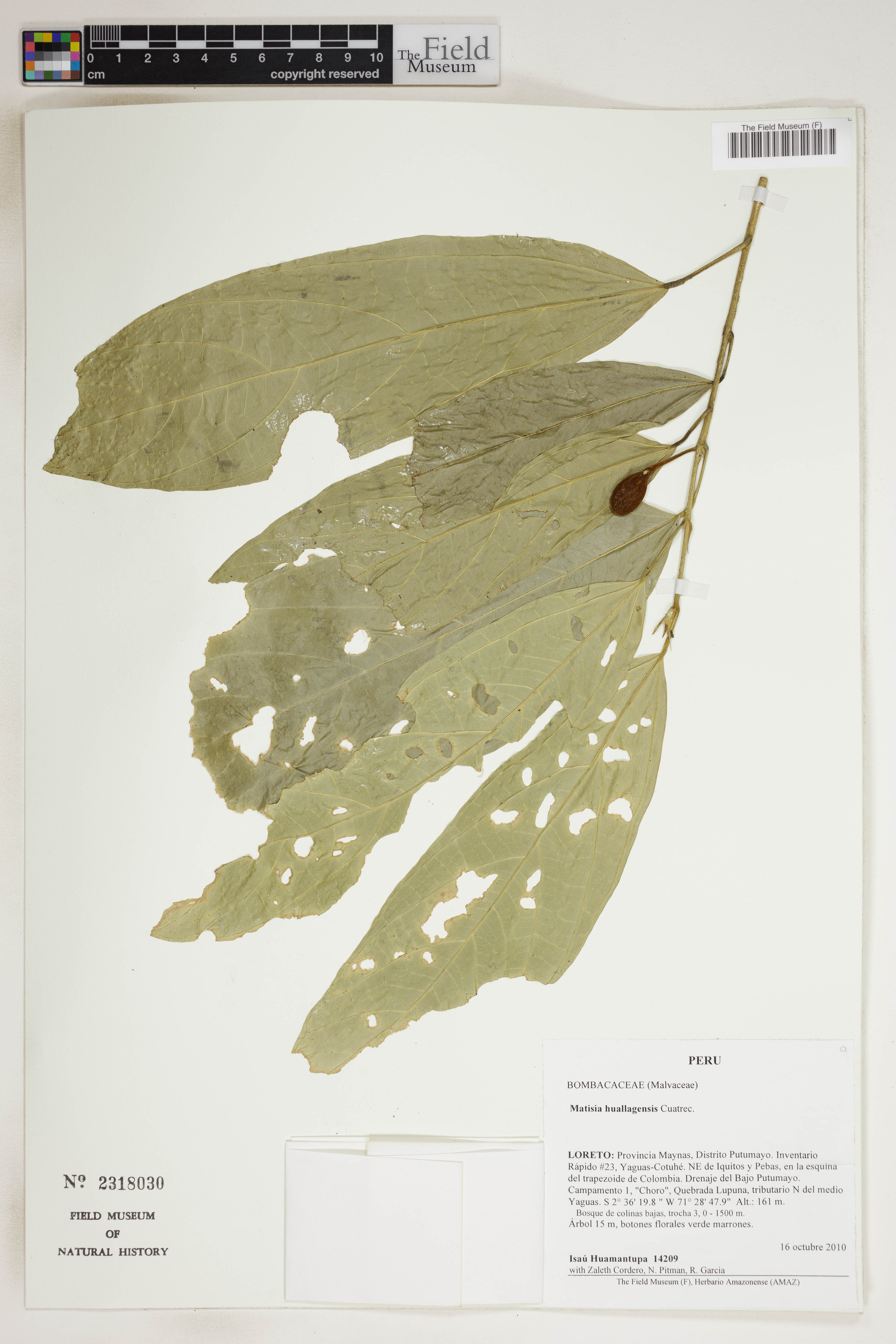
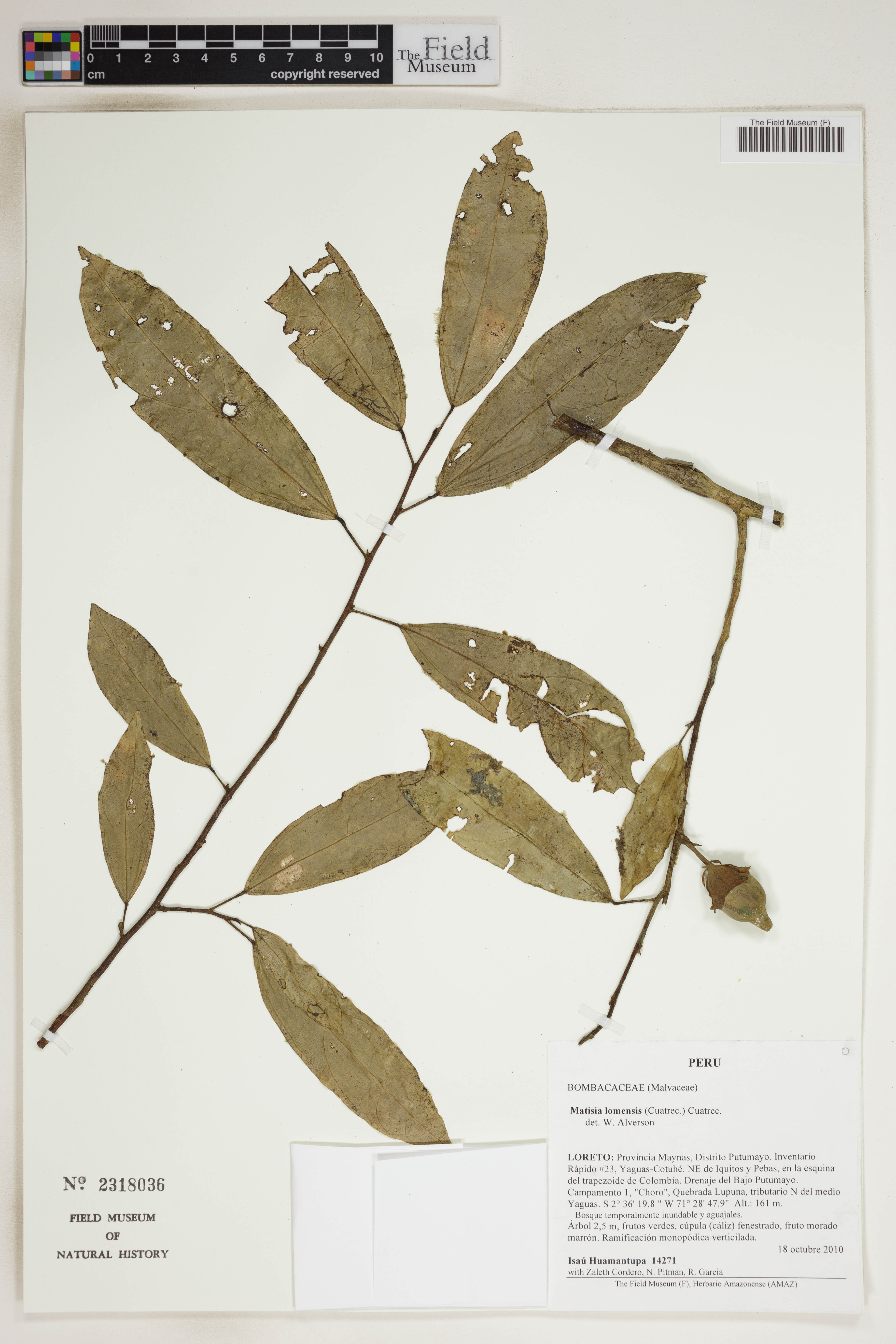
Quararibea cordata - (Bonpl.) Vischer
(Bonpl.) Vischer
South American Sapote, Chupa Chupa, Matisia
gbif· cc-by-nc
Wisconsin State Herbarium, Vascular Plants (WIS-)
gbif· cc-by-nc
Wisconsin State Herbarium, Vascular Plants (WIS-)
gbif· cc-by-nc
Wisconsin State Herbarium, Vascular Plants (WIS-)
Description
Quararibea cordata is a deciduous Tree growing to 20 m (65ft) by 16 m (52ft) at a fast rate. See above for USDA hardiness. It is hardy to UK zone 10 and is frost tender. The flowers are pollinated by Insects, humming birds. Suitable for: medium (loamy) and heavy (clay) soils and prefers well-drained soil. Suitable pH: mildly acid, neutral and basic (mildly alkaline) soils and can grow in saline soils. It cannot grow in the shade. It prefers moist soil.
Edible Uses
Drink. Fruit - raw. The fibrous yellow-orange pulp of the fruit is sweet and is eaten raw. The flavour is reminiscent of a very sweet pumpkin with overtones of mango and apricot. Opinions vary widely over the quality of this fruit, with some people describing it enthusiastically as like a blend of mangoes, peaches and strawberries, whilst others have found it to be bland. There are forms with very little fibre and these can be utilised for juice. The fruit is up to 10cm in diameter.
Distribution
S. America - Brazil, Bolivia, Peru, Ecuador, Colombia; C. America - Panama, Costa Rica.
Where It Grows
SOUTHERN AMERICA: Costa Rica, Panama, Brazil (west), Bolivia, Colombia, Ecuador, Peru
Cultivation
Likes to grow in hot, humid, lowland tropical to subtropical regions with lots of rainfall. Plants are very susceptible to frost injury. Prefers a fertile, moisture-retentive soil and a position in full sun. Young plants are fast-growing.
Propagation
Seed - best sown as soon as it is ripe in a partially shaded position in individual containers. A high germination rate can be expected, with the seed sprouting within 20 - 30 days. Stem cuttings.
Other Uses
Containers Houseplant Pioneer Wood. Sheltered seaside. Backyard tree. Public open space. Large conservatory. Agroforestry Uses: A fast-growing, natural pioneer species within its native range. With its edible fruit it could very well be useful in a mixed planting to restore native woodland or to establish a woodland garden. The large trees of this species are grown in association with avocados. This combination works well because both species have the same soil requirements, and zapote provides necessary shade for the avocados. Other Uses The wood is coarse-textured, irregular-grained, light in weight, with a low resistance to wood-eating organisms. It is easy to cut, but has poor mechanical properties. It is used as core material for doors and panelling, and to make light boxes.
Synonyms
Also Known As
Apasi, Chupa chupa, Chupa-chupa, Cordate matisia, Matisia, Patintoqui, Sapote Sapotillo, Saput, Zapote de monte