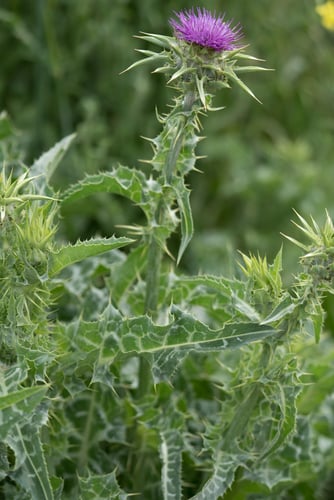
Carduus nutans subsp. macrocephalus
(Desf.) Nyman
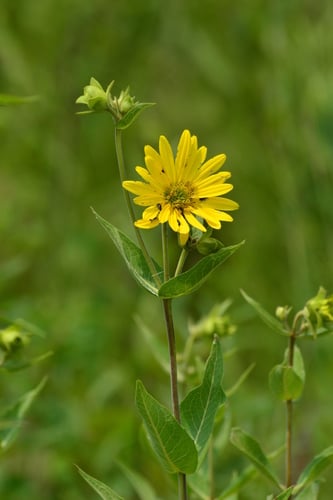
iNaturalist· cc-by-nc
(c) Veronika A. Johansson, some rights reserved (CC BY-NC), uploaded by Veronika A. Johansson
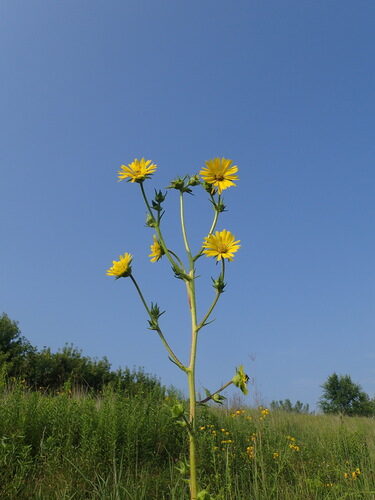
iNaturalist· cc-by-nc
(c) druzhinka, some rights reserved (CC BY-NC)
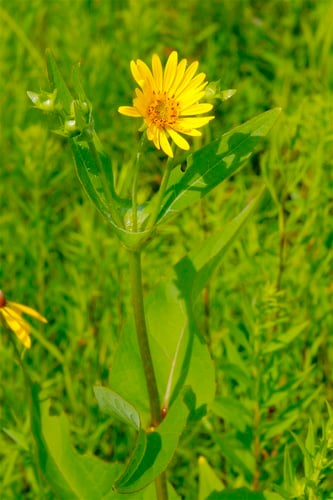
iNaturalist· cc-by-nc
(c) adrienne alms, some rights reserved (CC BY-NC), uploaded by adrienne alms
Summary
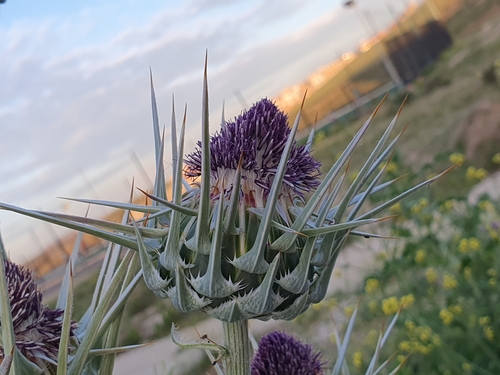
Source: WikipediaCarduus nutans is a biennial plant in the daisy and sunflower family Asteraceae with the common names musk thistle, nodding thistle, and nodding plumeless thistle. It is native to regions of Europe, Central Asia, and North Africa, where it is a scattered pasture plant. The musk thistle has been declared as invasive in North America, Australia, New Zealand, and South Africa.
Description
A thistle in the Asteraceae family found in Mediterranean climates. The leaf stalks are edible and commonly prepared.
This description is brief — help expand it
Edible Uses
The leaf stalks are boiled and dressed in olive oil and lemon, or stir fried and scrambled with eggs and cheese.
Traditional Uses
The leaf stalks are boiled and dressed in olive oil and lemon. They are also stir fried or scrambled with eggs and cheese.
This uses section is brief — help expand it
Medicinal Uses
Herbal decoctions have historically included Carduus nutans. Turkish folk medicine has used parts of the flowering branches to treat prostate disease. It has also been documented that it has been used for treatment of liver disease, malaria, constipation, and kidney stones.
Distribution
It is a Mediterranean climate plant.
Where It Grows
Europe, Italy, Mediterranean,
Synonyms
References (1)
- Biscotti, N. et al, 2018, The traditional food use of wild vegetables in Apulia (Italy) in the light of Italian ethnobotanical literature. Italian Botanist 5:1-24 (As Carduus nutans subsp. scabrisquamus)