Sinapis alba
L.
White mustard
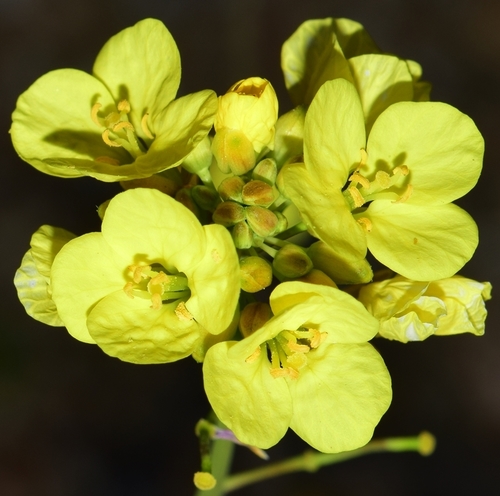
iNaturalist· cc-by-nc-nd
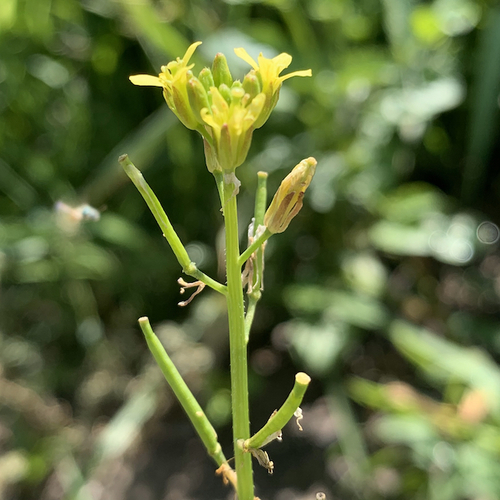
(c) Ava Babili, some rights reserved (CC BY-NC-ND)
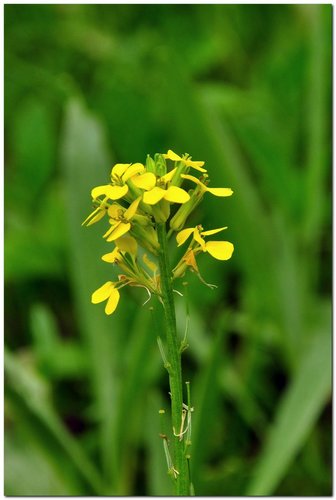
iNaturalist· cc-by-nc
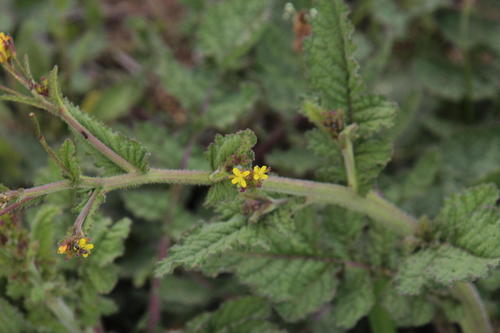
(c) Irene Zaina, some rights reserved (CC BY-NC)
iNaturalist· cc-by
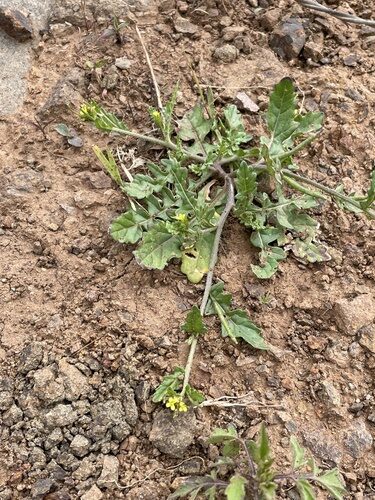
(c) Mehdi Chetibi, some rights reserved (CC BY)
Summary
Source: WikipediaWhite mustard is a fast-growing annual reaching 0.6m tall and 0.3m wide. Hardy to UK zone 6, it flowers June to August with seeds ripening July to September. The plant has both male and female organs, pollinated by bees, flies, and wind. It suits light sandy, medium loamy, and heavy clay well-drained soils across mildly acid to mildly alkaline pH, growing in semi-shade or full sun, and preferring moist soil.
Description
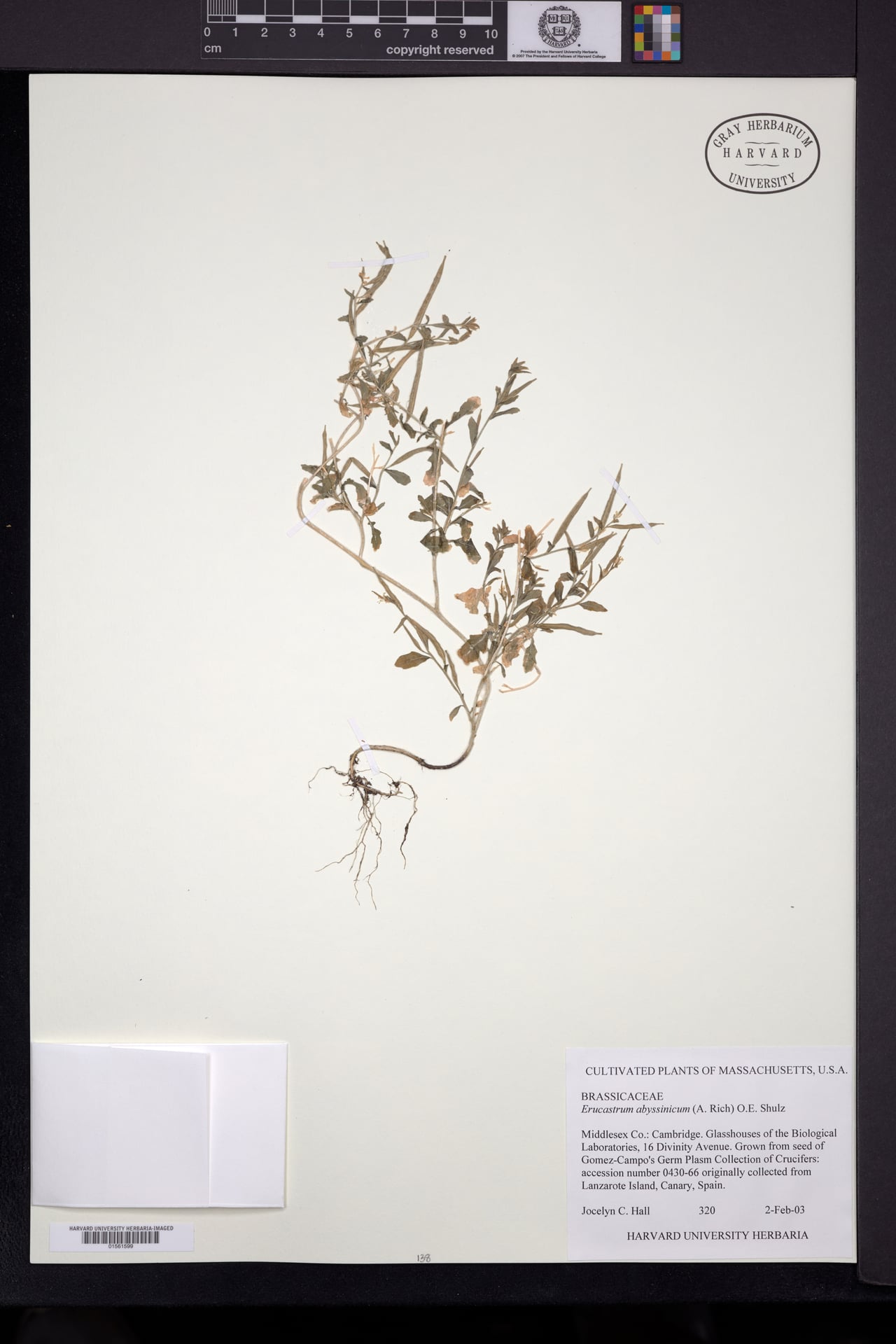
A cabbage family herb. It grows 50-80 cm high. It spreads 15 cm wide. It grows each year from seed. The stems are upright and branch towards the top. All the leaves have stalks. The leaves are oval and have lobes. They are bright green and sometimes have violet spots. There are up to 50 small yellow flowers in a group. The fruit are pods 2.5-5 cm long. The pods are hairy and have 1-4 seeds. They have beaks 1-3 cm long.
Edible Uses
Leaves can be eaten raw or cooked and have a hot, pungent flavour, particularly when raw. Young leaves work well as a flavouring in mixed salads, while older leaves are better used as a potherb. The seed can be sprouted and eaten raw in about 4 days — it has a hot flavour and is often used in salads. Ground seed is the 'white mustard' of commerce, milder than the black mustard from Brassica nigra. The pungency develops when cold water is added to the ground seed, as an enzyme (myrosin) acts on the glycoside sinigrin to produce a sulphur compound over 10–15 minutes. Using hot water or vinegar, or adding salt, inhibits this enzyme and produces a milder, more bitter mustard. Nutritional values per 100g of dry seed (500 calories): Protein 27.2g, Fat 35g, Carbohydrate 34g, Fibre 6g, Ash 4.5g; Calcium 500mg, Phosphorus 800mg, Iron 16mg, Sodium 5mg, Potassium 732mg; Vitamin A 400mg, Thiamine (B1) 0.5mg, Riboflavin (B2) 0.37mg, Niacin 8mg. (Figures are median values from a range given in the source.)
Traditional Uses
It provides edible oil. The seeds are used as a spice. They are used for white mustard. The dried ground seeds make hot English mustard eaten with roast beef. The sprouted seeds are used for mustard cress in salads. The young seedlings are used in salads and sandwiches. The leaves of mature plants can be used as a potherb. They are cooked with eggs.
Medicinal Uses
The seed is antibacterial, antifungal, appetizer, carminative, diaphoretic, digestive, diuretic, emetic, expectorant, rubefacient and stimulant. Its cathartic action is due to the hydrolytic liberation of hydrogen sulphide. In China it is used for coughs with profuse phlegm, tuberculosis and pleurisy. In Western practice the seed is seldom used internally; externally it is made into mustard plasters using the ground seed, poultices, or added to bathwater, and is used for respiratory infections, arthritic joints, chilblains and skin eruptions. At a ratio of 1:3, the seed inhibits fungal growth. Care should be taken as the seed contains substances that are extremely irritant to the skin and mucous membranes. The leaves are carminative.
Known Hazards
The seed contains substances that irritate the skin and mucous membranes. The plant is possibly poisonous once the seedpods have formed. Mustard allergy possibly especially in children and adolescents. Retention of seeds possibly in intestines if taken internally.
Distribution
It is a temperate plant. It does not produce seeds in the tropics. In Argentina it grows below 500 m above sea level. It suits hardiness zones 7-11. Tasmania Herbarium.
Where It Grows
Africa, Argentina, Asia, Australia, Balkans, Bangladesh, Belgium, Britain, Canada, Central Africa, Central Asia, China, Congo, Cuba, Cyprus, East Africa, Europe, Greece, Himalayas, India, Indochina, Ireland, Israel, Italy, Jordan, Lebanon, Laos, Libya, Macedonia, Malaysia, Mediterranean*, Middle East, Morocco, Mozambique, New Zealand, North Africa, North America, Northeastern India, Pakistan, Poland, Russia, Scandinavia, SE Asia, Serbia, Sicily, Slovenia, South Africa, Southern Africa, South America, Spain, Sri Lanka, Sweden, Syria, Tajikistan, Tasmania, Timor-Leste, Tunisia, Turkey, Türkiye, Turkmenistan, USA, Vietnam, West Indies,
Cultivation
Prefers a light well-drained soil. Succeeds on most soils when growing in a sunny position. For best production, it requires high nutrient soils with a high level of nitrogen, but it may be grown on a wide range of soils from light to heavy, growing best on relatively heavy sandy loamy soils. It is not suited to very wet soils. White mustard grows best where the annual precipitation varies from 35 to 179cm, annual temperature from 5.6 to 24.9°C and pH from 4.5 to 8.2. White mustard is a quick-growing long-day annual which prefers temperate climates with some humidity. It is sometimes cultivated, both in the garden and commercially, for its edible seed. The plant can withstand high temperatures, but very hot days during flowering and ripening may reduce seed setting and lower quality of seed. There are some named varieties. It is a very fast growing plant, but requires plenty of moisture for optimum growth. Seed yields are usually a bit less than 1 tonne per hectare, though experimental plantings have suggested that up to 8 tonnes per hectare is possible. White mustard is sometimes also grown as a seed sprout, usually with cress seeds (Lepidium sativum) to supply mustard and cress. This is a mixture of the two types of sprouted seeds, used when about 7 - 10 days old. The mustard seed should be sown three days before the cress seed. The plant is not very deep rooted, it self-sows freely when in a suitable site.
Propagation
Sow seed in situ from early spring to late summer — germination takes less than a week. Earlier sowings are intended for a seed crop, later sowings for edible leaves and green manure. For mustard and cress, soak seed for around 12 hours in warm water, then place in a humid spot. Traditionally this means sowing onto a thin layer of soil or moist blotting paper in a tray kept in a warm, dark place for a few days to encourage rapid, slightly etiolated growth, then moving to a lighter position for a couple more days to green up before eating. Mustard seed should be sown 3–4 days after cress so both are ready at the same time.
Other Uses
The seed contains up to 35% of a semi-drying oil used as a lubricant and for lighting. The plant can also be grown as a green manure crop — it is very fast growing and produces good bulk within a few weeks of sowing, though its shallow roots make it less effective during dry periods. It is also susceptible to cabbage family diseases such as club-root, so is best avoided where this is likely to be an issue.
Production
Leaves can be cut in about 6 days. The seeds contain about 35% oil.
Other Information
It is a commercially cultivated vegetable. It is cultivated for its seeds. These are an important condiment. More than 160,000 tons of seeds are sold each year. Leaves are sold in local markets.
Notes
There are 8 Sinapis species.
Nutrition
| Part | Moisture | kJ | kcal | Protein | Vit A | Vit C | Iron | Zinc |
|---|---|---|---|---|---|---|---|---|
| Seed | 6.9 | 1964 | 470 | 28.8 | 6 | 3 | 10 | 5.7 |
Synonyms
Also Known As
Bela gorčica, Beyaz hardal, Ela-aba, Gerdel, Hardal, Hot-cai trang, Kagudu, Khardal abiad, Lapsana, Lassani, Mazzareddu, Mostaza blanca, Sada sorisha shak, Venkaduku, Xerdel, Yaolaisa guphu
References (90)
- Al-Qura'n, S. A., 2010, Ethnobotanical and Ecological Studies of Wild Edible Plants in Jordan. Libyan Agriculture Research Center Journal International 1(4):231-243
- Ara, R. I. T., 2015, Leafy Vegetables in Bangladesh. Photon eBooks. p 162 (As Brassica alba)
- Arora, R. K., 2014, Diversity in Underutilized Plant Species - An Asia-Pacific Perspective. Bioversity International. p 109
- Bianchini, F., Corbetta, F., and Pistoia, M., 1975, Fruits of the Earth. Cassell. p 208
- Biscotti, N. & Pieroni, A., 2015, The hidden Mediterranean diet: wild vegetables traditionally gathered and consumed in the Gargano area, Apulia, SE Italy. Acta Societatis Botanicorum Poloniae 84 (3): 327-338
Show all 90 references Hide references
- Biscotti, N. et al, 2018, The traditional food use of wild vegetables in Apulia (Italy) in the light of Italian ethnobotanical literature. Italian Botanist 5:1-24
- Blamey, M and Grey-Wilson, C., 2005, Wild flowers of the Mediterranean. A & C Black London. p 68
- Bodkin, F., 1991, Encyclopedia Botanica. Cornstalk publishing, p 168 (As Brassica hirta)
- Bremness, L., 1994, Herbs. Collins Eyewitness Handbooks. Harper Collins. p 234 (As Brassica hirta)
- Brouk, B., 1975, Plants Consumed by Man. Academic Press, London. p 313 (As Brassica hirta)
- Brouk, B., 1975, Plants Consumed by Man. Academic Press, London. p 313 (As Brassica alba)
- Burkill, I.H., 1966, A Dictionary of the Economic Products of the Malay Peninsula. Ministry of Agriculture and Cooperatives, Kuala Lumpur, Malaysia. Vol 1 (A-H) p 363 (As Brassica alba)
- Cerne, M., 1992, Wild Plants from Slovenia used as Vegetables. Acta Horticulturae 318
- Ciftcioglu, C. G., 2015, Sustainable wild-collection of medicinal and edible plants in Lefke region of North Cyprus. Agroforest Syst. Springer
- Della, A., et(1982) p 244
- Dogan, Y., et al, 2004, The Use of Wild Edible Plants in Western and Central Anatolia (Turkey). Economic Botany 58(4) pp. 684-690
- Dogan, Y., 2012, Traditionally used wild edible greens in the Aegean Region of Turkey. Acta Societatis Botanicorum Poloniae 81(4): 329-342
- Ertug, F, Yenen Bitkiler. Resimli Türkiye Florası -I- Flora of Turkey - Ethnobotany supplement
- Esperanca, M. J., 1988. Surviving in the wild. A glance at the wild plants and their uses. Vol. 2. p 315
- Flora of China @ efloras.org Volume 8
- Flora of Pakistan. www.eFloras.org
- Geraci, A., et al, 2018, The wild taxa utilized as vegetables in Sicily (Italy): a traditional component of the Mediterranean diet. Journal of Ethnobiology and Ethnomedicine (2018) 14:14
- Gouldstone, S., 1983, Growing your own Food-bearing Plants in Australia. Macmillan p 192 (As Brassica alba)
- Hadfield, J., 2001, The A-Z of Vegetable Gardening in South Africa. Struik p 111
- Hadjichambis, A. C., et al, 2007, Wild and semi-domesticated food plant consumption in seven circum-Mediterranean areas. International Journal of Food Sciences and Nutrition. 2007, 1-32.
- Hammer, K. & Spahillari, M., 1999, Crops of European origin. in Report of a networking group on minor crops. IPGRI p 46
- Hedrick, U.P., 1919, (Ed.), Sturtevant's edible plants of the world. p 113 (As Brassica alba)
- Hemingway, J.S., 1979, Mustards, in Simmonds N.W.,(ed), Crop Plant Evolution. Longmans. London. p 56
- Hemphill, I, 2002, Spice Notes. Macmillan. p 249 (As Brassica alba)
- Herklots, G. A. C., 1972, Vegetables in South-East Asia. Allen & Unwin. p 127 (As Brassica alba)
- Heywood, V. H. & Zohary, D.,1995, A Catalogue of the Wild Relatives of Cultivated Plants Native to Europe. Flora Mediterranea 5 - 1995, p 391
- http://www.botanic-gardens-ljubljana.com/en/plants
- Hussey, B.M.J., Keighery, G.J., Cousens, R.D., Dodd, J., Lloyd, S.G., 1997, Western Weeds. A guide to the weeds of Western Australia. Plant Protection Society of Western Australia. p 120
- Hu, Shiu-ying, 2005, Food Plants of China. The Chinese University Press. p 407 (As Brassica hirta)
- Huxley, A. (Ed.), 1977, The Encyclopedia of the Plant Kingdom. Chartweil Books. p 150
- Irving, M., 2009, The Forager Handbook, A Guide to the Edible Plants of Britain. Ebury Press p 98
- Jardin, C., 1970, List of Foods Used In Africa, FAO Nutrition Information Document Series No 2.p 101
- Kaya, O. M., et al, 2020, An ethnobotanical research in Sanhurfa central district and attached Villages (Turkey). Indian Journal of Traditional Knowledge. Vol. 19(1) pp 7-23
- Kays, S. J., and Dias, J. C. S., 1995, Common Names of Commercially Cultivated Vegetables of the World in 15 languages. Economic Botany, Vol. 49, No. 2, pp. 115-152
- Kiple, K.F. & Ornelas, K.C., (eds), 2000, The Cambridge World History of Food. CUP p 433
- Kiple, K.F. & Ornelas, K.C., (eds), 2000, The Cambridge World History of Food. CUP p 1820 (As Brassica alba)
- Kybal, J., 1980, Herbs and Spices, A Hamlyn Colour Guide, Hamlyn Sydney p 184
- Lazarides, M. & Hince, B., 1993, Handbook of Economic Plants of Australia, CSIRO. p 220
- Lentini, F. and Venza, F., 2007, Wild food plants of popular use in Sicily. J Ethnobiol Ethnomedicine. 3: 15
- Licata, M., et al, 2016, A survey of wild plant species for food use in Sicily (Italy) – results of a 3-year study in four Regional Parks. Journal of Ethnobiology and Ethnomedicine 12:12
- Low, T., 1991, Wild Herbs of Australia and New Zealand. Angus & Robertson. p 52 (Drawing)
- Łukasz Łuczaj and Wojciech M Szymański, 2007, Wild vascular plants gathered for consumption in the Polish countryside: a review. J Ethnobiol Ethnomedicine. 3: 17
- Mabey, R., 1973, Food for Free. A Guide to the edible wild plants of Britain, Collins. p 77
- Mahklouf, M. H., 2019, Ethnobotanical Study of Edible Wild Plants in Libya. European Journal of Ecology. 5(2): 30-40
- Martin, F.W. & Ruberte, R.M., 1979, Edible Leaves of the Tropics. Antillian College Press, Mayaguez, Puerto Rico. p 188
- Martin, F.W. & Ruberte, R.M., 1979, Edible Leaves of the Tropics. Antillian College Press, Mayaguez, Puerto Rico. p 187 (As Brassica hirta)
- Medhi, P. & Borthakur, S. K., 2012, Phytoresources from North Cachur Hills of Assam -3: Edible plants sold at Hflong market. Indian Journal or Natural Products and Resources. 3(1) pp 84-109 (As Brassica alba)
- Miguel, E., et al, 1989, A checklist of the cultivated plants of Cuba. Kulturpflanze 37. 1989, 211-357
- Moerman, D. F., 2010, Native American Ethnobotany. Timber Press. p 532
- Mulherin, J., 1994, Spices and natural flavourings. Tiger Books, London. p 62 (As Brassica alba)
- Nassif, F., & Tanji, A., 2013, Gathered food plants in Morocco: The long forgotten species in Ethnobotanical Research. Life Science Leaflets 3:17-54
- Oran, S. A. S., 2015, Selected Wild Aromatic Plants in Jordan. International Journal of Medicinal Plants. Photon 108 (2015) 686-699
- Paczkowska, G. & Chapman, A.R., 2000, The Western Australian Flora. A Descriptive Catalogue. Western Australian Herbarium. p 188
- Pasta, S., et al, 2020, An Updated Checklist of the Sicilian Native Edible Plants: Preserving the Traditional Ecological Knowledge of Century-Old Agro-Pastoral Landscapes. Frontiers in Plant Science. Volume 11|Article 388
- Pham-Hoang Ho, 1999, An Illustrated Flora of Vietnam. Nha Xuat Ban Tre. p 606
- Plants for a Future database, The Field, Penpol, Lostwithiel, Cornwall, PL22 0NG, UK. http://www.scs.leeds.ac.uk/pfaf/
- Purseglove, J.W., 1968, Tropical Crops Dicotyledons, Longmans. p 91 (As Brassica alba)
- Rajapaksha, U., 1998, Traditional Food Plants in Sri Lanka. HARTI, Sri Lanka. p 127 (As Brassica alba)
- Sansanelli, S., et al, 2017, Ethnobotanical survey of wild food plants traditionally collected and consumed in the Middle Agri Valley (Basilicata region, southern Italy). Journal of Ethnobiology and Ethnomedicine (2017) 13:50
- Senkardes, I & Tuzlaci, E., 2016, Wild Edible Plants of Southern Part of Nevsehir inTurkey. Marmara Pharmaceutical Journal 20:34-43
- Small, E., 2009, Top 100 Food Plants. The world's most important culinary crops. NRC Research Press. p 362
- Solomon, C., 2001, Encyclopedia of Asian Food. New Holland. p 241 (As Brassica alba)
- Sp. pl. 2:668. 1753
- Terra, G.J.A., 1973, Tropical Vegetables. Communication 54e Royal Tropical Institute, Amsterdam, p 73
- Tasmanian Herbarium Vascular Plants list p 18
- Tukan, S. K., et al, 1998, The use of wild edible plants in the Jordanian diet. International Journal of Food Sciences and Nutrition. 49:225-235
- van Wyk, B., 2005, Food Plants of the World. An illustrated guide. Timber press. p 346
- Wild Edible Plants in Lebanon. Promoting dietary diversity in poor communities in Lebanon. http://www.wildedibleplants.org/
- Zhou Taiyan, Lu Lianli, Yang Guang, Ihsan A. Al-Shehbaz, BRASSICACEAE (CRUCIFERAE), Flora of China.re database, The Field, Penpol, Lostwithiel, Cornwall, PL22 0NG, UK. http://www.scs.leeds.ac.uk/pfaf/
- Purseglove, J.W., 1968, Tropical Crops Dicotyledons, Longmans. p 91 (As Brassica alba)
- Solomon, C., 2001, Encyclopedia of Asian Food. New Holland. p 241 (As Brassica alba)
- Sp. pl. 2:668. 1753
- Terra, G.J.A., 1973, Tropical Vegetables. Communication 54e Royal Tropical Institute, Amsterdam, p 73
- Tasmanian Herbarium Vascular Plants list p 18
- Tardio, J., et al, Ethnobotanical review of wild edible plants in Spain. Botanical J. Linnean Soc. 152 (2006), 27-71
- Tozer, F., 2007, The Uses of Wild Plants. Green Man Publishing. p 48
- Tyagi, R. K., et al, 2004, Conservation of Spices Germplasm in India. Indian J. Plant Genet. Resour. 17(3): 163-174 (As Synapis)
- van Wyk, B., 2005, Food Plants of the World. An illustrated guide. Timber press. p 346
- Wiersema, J. H. & Leon, B., 2013, World Economic Plants. A Standard Reference CRC Press. 2nd Ed. p 638
- Wild Edible Plants in Lebanon. Promoting dietary diversity in poor communities in Lebanon. http://www.wildedibleplants.org/
- World Checklist of Useful Plant Species 2020. Royal Botanic Gardens, Kew
- Yesil, Y., et al, 2019, Wild edible plants in Yeşilli (Mardin-Turkey), a multicultural area. Journal of Ethnobiology and Ethnomedicine (2019) 15:52
- Yesil, Y., et al, 2019, Traditional knowledge of wild edible plants in Hasankeyf (Batman Province, Turkey). Acta Societatis Botanicorum Poloniae. 88(3):3633
- Zeven, A. C. & de West, J. M. J., 1982, Dictionary of cultivated plants and their regions of diversity. Wageningen. p 108
- Zhou Taiyan, Lu Lianli, Yang Guang, Ihsan A. Al-Shehbaz, BRASSICACEAE (CRUCIFERAE), Flora of China.