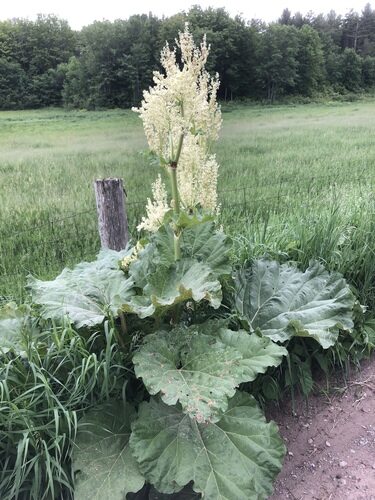
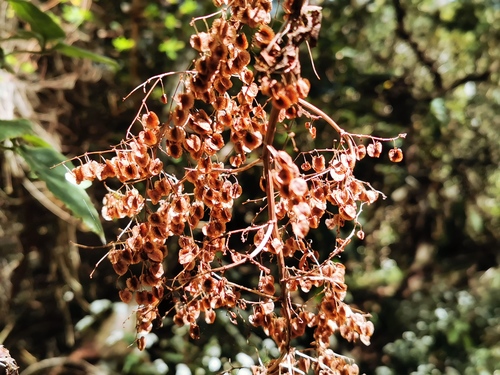
Emex australis
Steinh.
Spiny emex
iNaturalist· cc-by-nc
(c) Stacey Gerber, some rights reserved (CC BY-NC)
iNaturalist· cc-by-nc
(c) Stacey Gerber, some rights reserved (CC BY-NC)
iNaturalist· cc-by-nc
(c) Stacey Gerber, some rights reserved (CC BY-NC)
Summary
A low-growing annual herb reaching 0.1 m tall with a spread of 0.5 m. Flowers year-round with monoecious flowers. Tolerates light sandy, medium loamy, and heavy clay soils across mildly acidic to mildly alkaline pH ranges. Grows in semi-shade or full sun and prefers moist soil.
Description
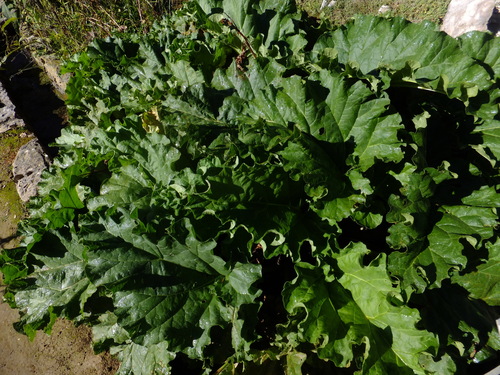
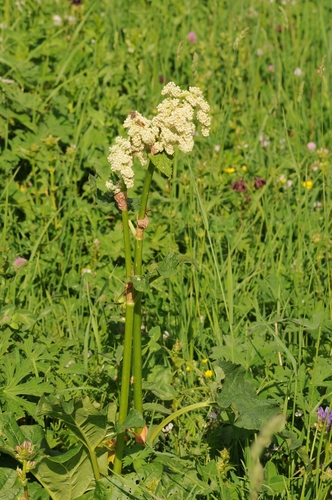
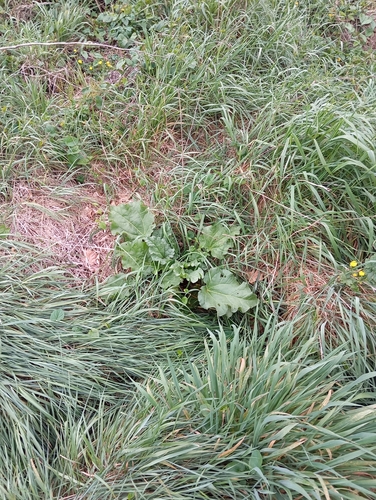
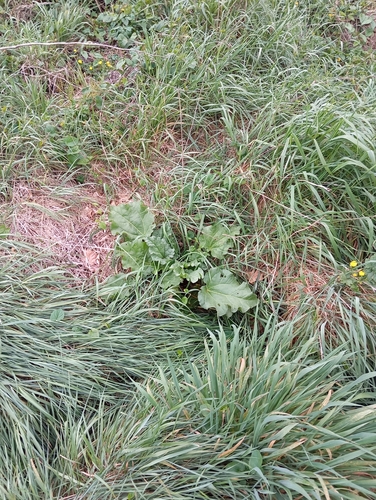
A small herb. It is like a dock but the stems trail along the ground. It is an annual plant. The leaves are 3-10 cm long on very long stalks. Male and female flowers are separate. The flowers are 2 mm long. The seed pods are large and spiny. The seed pods are about 1 cm long. They have 3 sharp spines.
Edible Uses
Young leaves are edible when cooked. The leaves contain oxalates and are laxative in large quantities.
Traditional Uses
The leaves and stems are steamed and eaten. They are used in stews.
This uses section is brief — help expand it
Medicinal Uses
When eaten in quantity, the leaves have a laxative effect on the body.
Distribution
It is a subtropical plant. It Africa it grows between 120-1,250 m above sea level. It grows in coastal and inland regions in Australia. It can grow in arid places.
Where It Grows
Africa, Australia, Botswana, East Africa, Eswatini, Hawaii, Kenya, Madagascar, Mozambique, Namibia, New Zealand, North America, Pacific, Pakistan, South Africa*, Southern Africa, St Helena, Swaziland, Tasmania, USA, Zimbabwe,
Cultivation
A serious weed of agriculture in many warmer areas of the world.
Propagation
Seed.
Other Uses
None known
Nutrition
| Part | Moisture | kJ | kcal | Protein | Vit A | Vit C | Iron | Zinc |
|---|---|---|---|---|---|---|---|---|
| Leaves | 89 | 151 | 36 | 5 | — | — | — | — |
Also Known As
Bullhead, Cape spinach, Cat's head, Double gee, Dubbeltjie, Duwweltjie, Goathead, Inkunzane, Prickly jack, Three cornered jack
References (19)
- Ann. Sci. Nat. Bot. ser. 2, 9:195, t. 7. 1838
- CABI digital library
- Curtis, W.M., 1993, The Student's Flora of Tasmania. Part 3 St David's Park Publishing, Tasmania, p 582
- Dashorst, G.R.M., and Jessop, J.P., 1998, Plants of the Adelaide Plains & Hills. Botanic Gardens of Adelaide and State Herbarium. p 52
- De Vynk, J. C., et al, 2016, Indigenous edible plant use by contemporary Khoe-San descendants of South Africa's Cape South Coast. South African Journal of Botany. 102 (2016) 60-69
Show all 19 references Hide references
- Flora of Pakistan. www.eFloras.org
- Fox, F. W. & Young, M. E. N., 1982, Food from the Veld. Delta Books. p 304
- Hussey, B.M.J., Keighery, G.J., Cousens, R.D., Dodd, J., Lloyd, S.G., 1997, Western Weeds. A guide to the weeds of Western Australia. Plant Protection Society of Western Australia. p 198
- Lazarides, M. & Hince, B., 1993, Handbook of Economic Plants of Australia, CSIRO. p 89
- Long, C., 2005, Swaziland's Flora - siSwati names and Uses http://www.sntc.org.sz/flora/
- Low, T., 1991, Wild Herbs of Australia and New Zealand. Angus & Robertson. p 43 (Drawing)
- Low, T., 1992, Bush Tucker. Australia’s Wild Food Harvest. Angus & Robertson. p 151
- Morley, B.D., & Toelken, H.R., (Eds), 1983, Flowering Plants in Australia. Rigby. p 85
- Plowes, N. J. & Taylor, F. W., 1997, The Processing of Indigenous Fruits and other Wildfoods of Southern Africa. in Smartt, L. & Haq. (Eds) Domestication, Production and Utilization of New Crops. ICUC p 190
- Royal Botanic Gardens, Kew (1999). Survey of Economic Plants for Arid and Semi-Arid Lands (SEPASAL) database. Published on the Internet; http://www.rbgkew.org.uk/ceb/sepasal/internet [Accessed 4th June 2011]
- Ruiters-Welcome, A. K., 2019, Food plants of southern Africa. Ph.D. thesis. Univ. of Johannesburg p 91
- Swaziland's Flora Database http://www.sntc.org.sz/flora
- Tasmanian Herbarium Vascular Plants list p 45
- Welcome, A. K. & Van Wyk, B.-E., 2019, An inventory and analysis of the food plants of southern Africa. South African Journal of Botany 122 (2019) 136–179