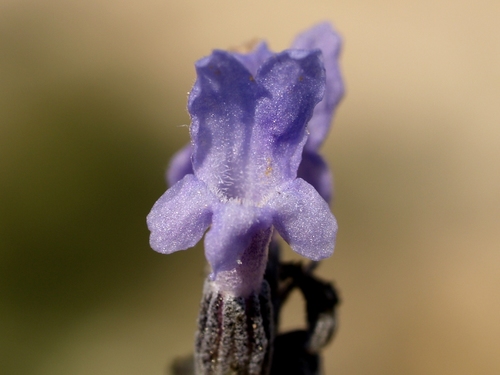
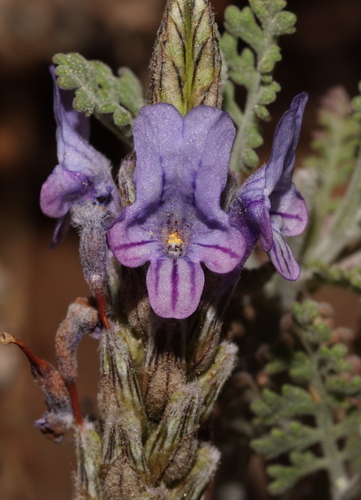
Elsholtzia ciliata
(Thunburg) Hylander
Crested Late-summer-mint, Vietnamese balm
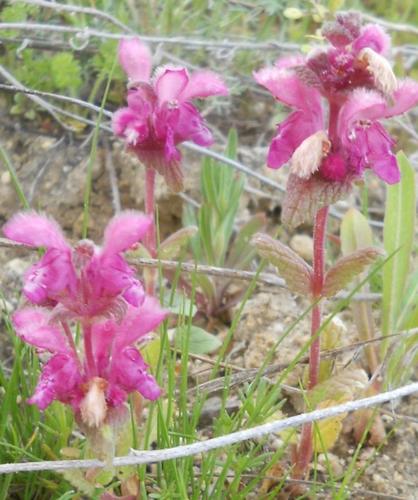
iNaturalist· cc-by-nc
(c) Dave Lage, some rights reserved (CC BY-NC), uploaded by Dave Lage
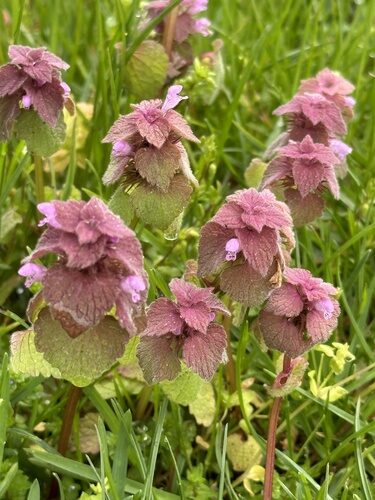
iNaturalist· cc-by-nc
(c) V.S. Volkotrub, some rights reserved (CC BY-NC), uploaded by V.S. Volkotrub
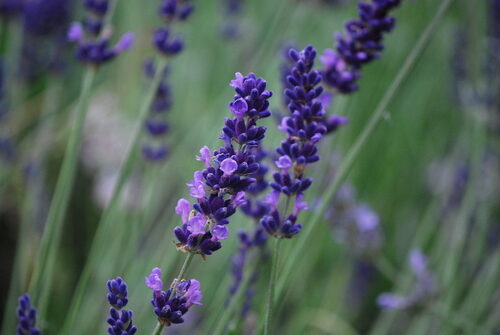
iNaturalist· cc-by-nc
(c) Donna Pomeroy, some rights reserved (CC BY-NC)
Summary
Source: WikipediaElsholtzia ciliata, commonly known as Vietnamese balm, comb mint, xiang ru (香薷) or kinh giới in Vietnamese, is a flowering plant in the family Lamiaceae native to Asia. In the US, it is commonly known as crested late summer mint. In US Vietnamese grocery stores, it is called kinh gioi, Vietnamese lemon balm, or Vietnamese lemon mint.
Description
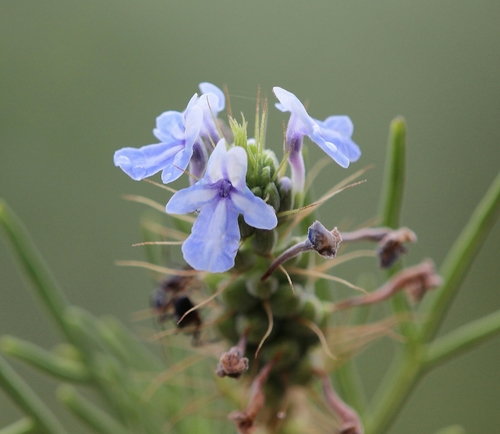
An erect herb. It grows to 60 cm high. The leaves have long stalks. The leaves are 2-8.5 cm long by 0.8-2.5 cm wide. They are oval to sword shaped. They have teeth along the edge. Underneath there are gland dots. The flowers are purple. They occur in flat spikes.
Edible Uses
Young leaves can be eaten raw or cooked — finely cut and added to salads or used as a potherb. They also serve as an aromatic condiment for vegetable dishes. The powdered seeds are used as a condiment for flavouring foodstuffs.
Traditional Uses
Powdered seeds are used to flavour foodstuffs. The young plants are eaten raw in salads. They are also finely cut and boiled as a potherb. It is used to flavour vegetable dishes. The leaves and young flowers are dried and used as flavouring.
Medicinal Uses
The plant contains an essential oil and has antibacterial, antipyretic, antiviral, astringent, carminative, diaphoretic, diuretic, and stomachic properties. It is said to relieve the effects of excess alcohol and is used to treat common colds, fevers, headaches, diarrhoea, oedema, and oliguria. The plant has a broad-spectrum antibacterial action. It is harvested when in flower and dried for later use.
Distribution
It is a cool temperate plant. In Nepal plants grow from 1500-3400 m altitude. In China it grows in waste areas and sunny terraces. It suits plant hardiness zone 5. In Yunnan.
Where It Grows
Afghanistan, Asia, Cambodia, China, Europe, Hawaii, Himalayas, India, Indochina, Japan, Korea, Laos, Malaysia, Mongolia, Nepal, North America, Pacific, Pakistan, Russia, SE Asia, Taiwan, Thailand, Tibet, USA, Vietnam,
Cultivation
Plants can be grown from seed.
Propagation
Seed should be sown directly in situ in late spring.
Other Uses
None known
Other Information
It is a cultivated plant.
Notes
There are about 40 Elsholtzia species. It is used in medicine.
Synonyms
Also Known As
Aromatic madder, Ban silam, Beng ji go, Bhotepaati, Bong ga da namg, Hsiang-ju, Kinh gioi ta, Naginata-koju, Rau kinh gioi, Vietnamese-perilla
References (19)
- Arora, R. K., 2014, Diversity in Underutilized Plant Species - An Asia-Pacific Perspective. Bioversity International. p 102 (As Elsholtzia cristata)
- Bot. Not. 1941:129. 1941
- Cheng, Z., et al, 2022, Ethnobotanical study on wild edible plants used by Dulong people in northwestern Yunnan, China. Journal of Ethnobiology and Ethnomedicine (2022) 18:3
- Facciola, S., 1998, Cornucopia 2: a Source Book of Edible Plants. Kampong Publications, p 126
- Flora of Pakistan. www.eFloras.org
Show all 19 references Hide references
- Hu, Shiu-ying, 2005, Food Plants of China. The Chinese University Press. p 645
- Lawton, B.P., 2002, Mints. A Family of Herbs and Ornamentals. Timber Press, Portland, Oregon. p 130
- Li, F., et al, 2015, Ethnobotanical study on wild plants used by Lhoba people in Milin County, Tibet. Journal of Ethnobiology and Ethnomedicine, 11:23
- Liu, Yi-tao, & Long, Chun-Lin, 2002, Studies on Edible Flowers Consumed by Ethnic Groups in Yunnan. Acta Botanica Yunnanica. 24(1):41-56
- Manandhar, N.P., 2002, Plants and People of Nepal. Timber Press. Portland, Oregon. p 217
- Plants for a Future database, The Field, Penpol, Lostwithiel, Cornwall, PL22 0NG, UK. http://www.scs.leeds.ac.uk/pfaf/
- Seidemann J., 2005, World Spice Plants. Economic Usage, Botany, Taxonomy. Springer. p 145
- Staples, G.W. and Herbst, D.R., 2005, A tropical Garden Flora. Bishop Museum Press, Honolulu, Hawaii. p 364
- Tanaka,
- Urgamal, M., Oyuntsetseg, B., Nyambayar, D. & Dulamsuren, Ch. 2014. Conspectus of the vascular plants of Mongolia. (Editors: Sanchir, Ch. & Jamsran, Ts.). Ulaanbaatar, Mongolia. “Admon“ Press. 334pp. (p. 79-90).
- Williams, D., 2017, Ainu Ethnobiology. Contributions in Ethnobiology. Society of Ethnobiology.
- Woodward, P., 2000, Asian Herbs and Vegetables. Hyland House. p 70
- World Checklist of Useful Plant Species 2020. Royal Botanic Gardens, Kew
- Zeven, A. C. & de West, J. M. J., 1982, Dictionary of cultivated plants and their regions of diversity. Wageningen. p 39 (As Elsholtzia cristata)