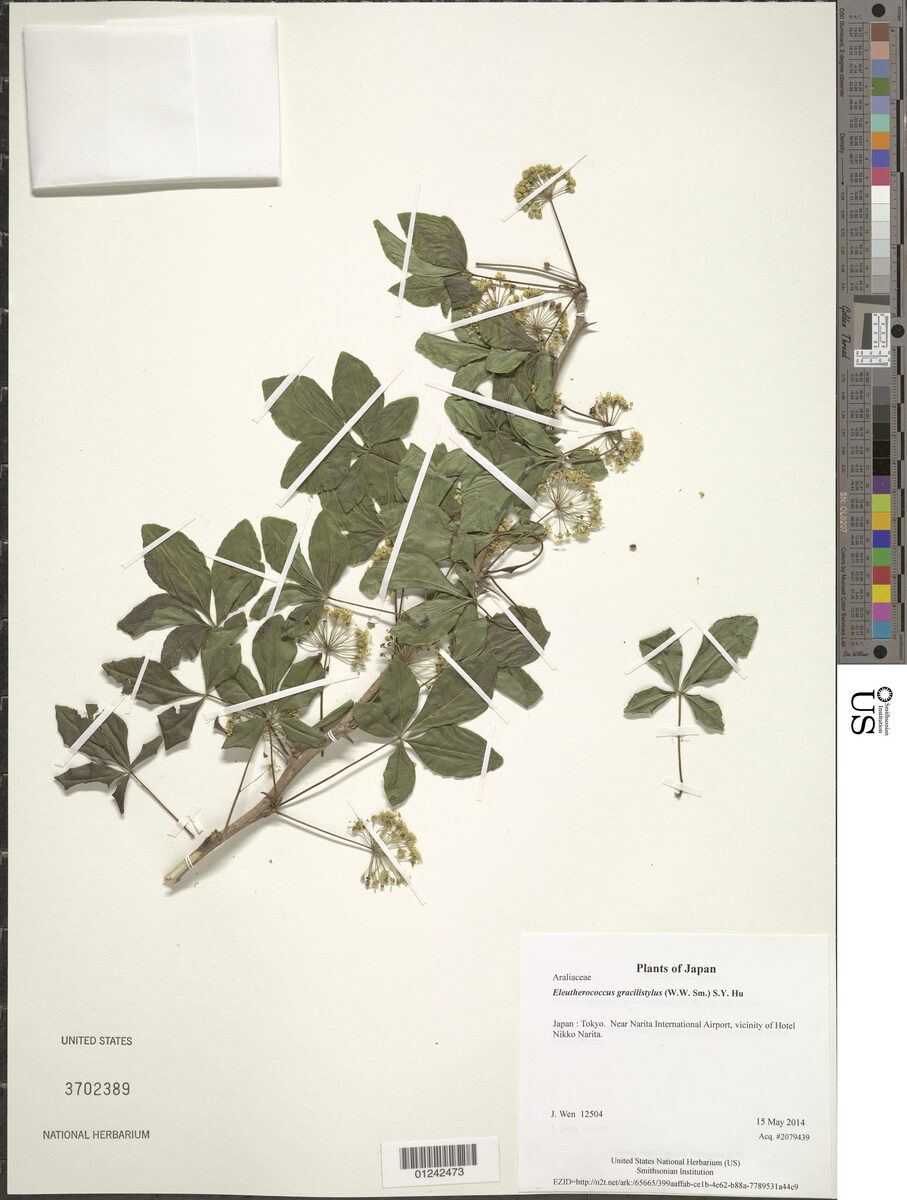
Eleutherococcus spinosus
(L. f.) S. Y. Hu
iNaturalist· cc-by-nc
(c) Keita Watanabe, some rights reserved (CC BY-NC), uploaded by Keita Watanabe
iNaturalist· cc-by
(c) WATANABE Hitoshi 渡辺仁, some rights reserved (CC BY)
iNaturalist· cc-by
(c) WATANABE Hitoshi 渡辺仁, some rights reserved (CC BY)
Summary
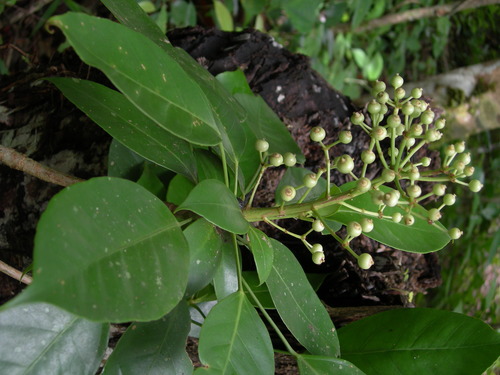
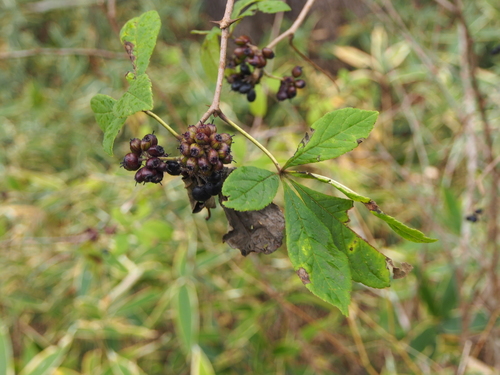
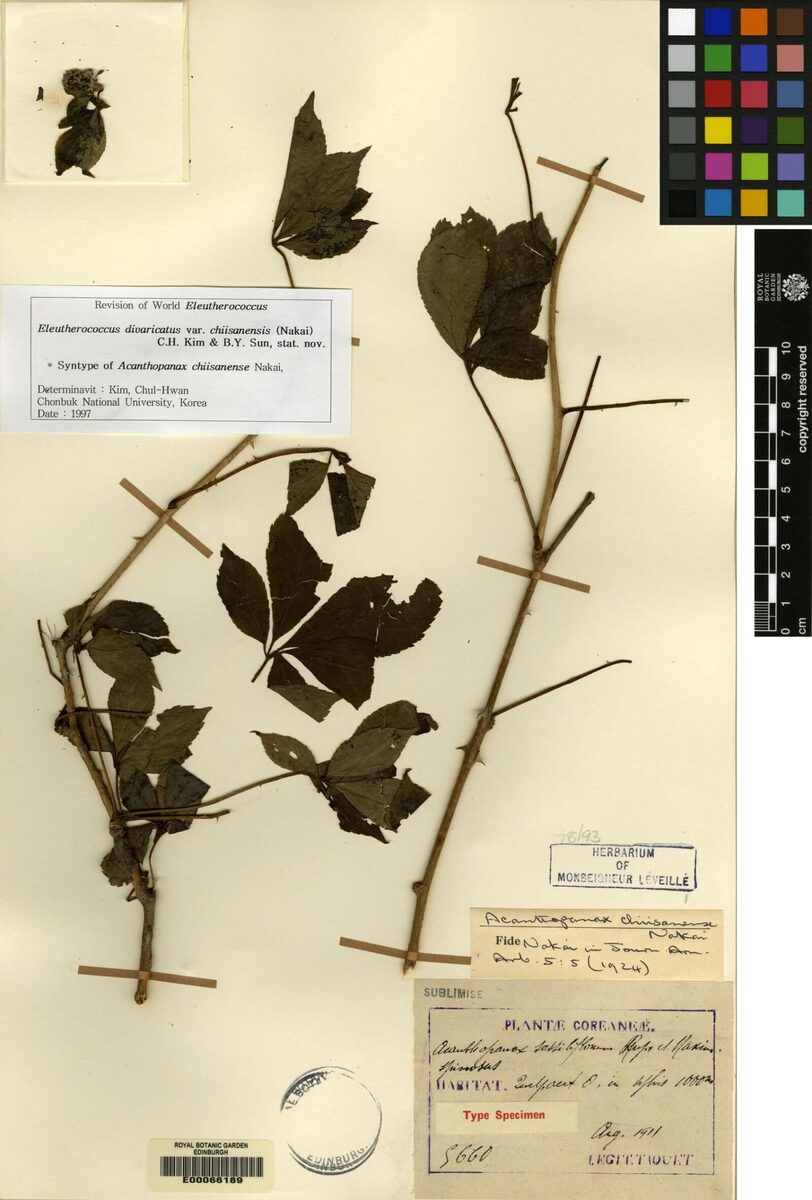
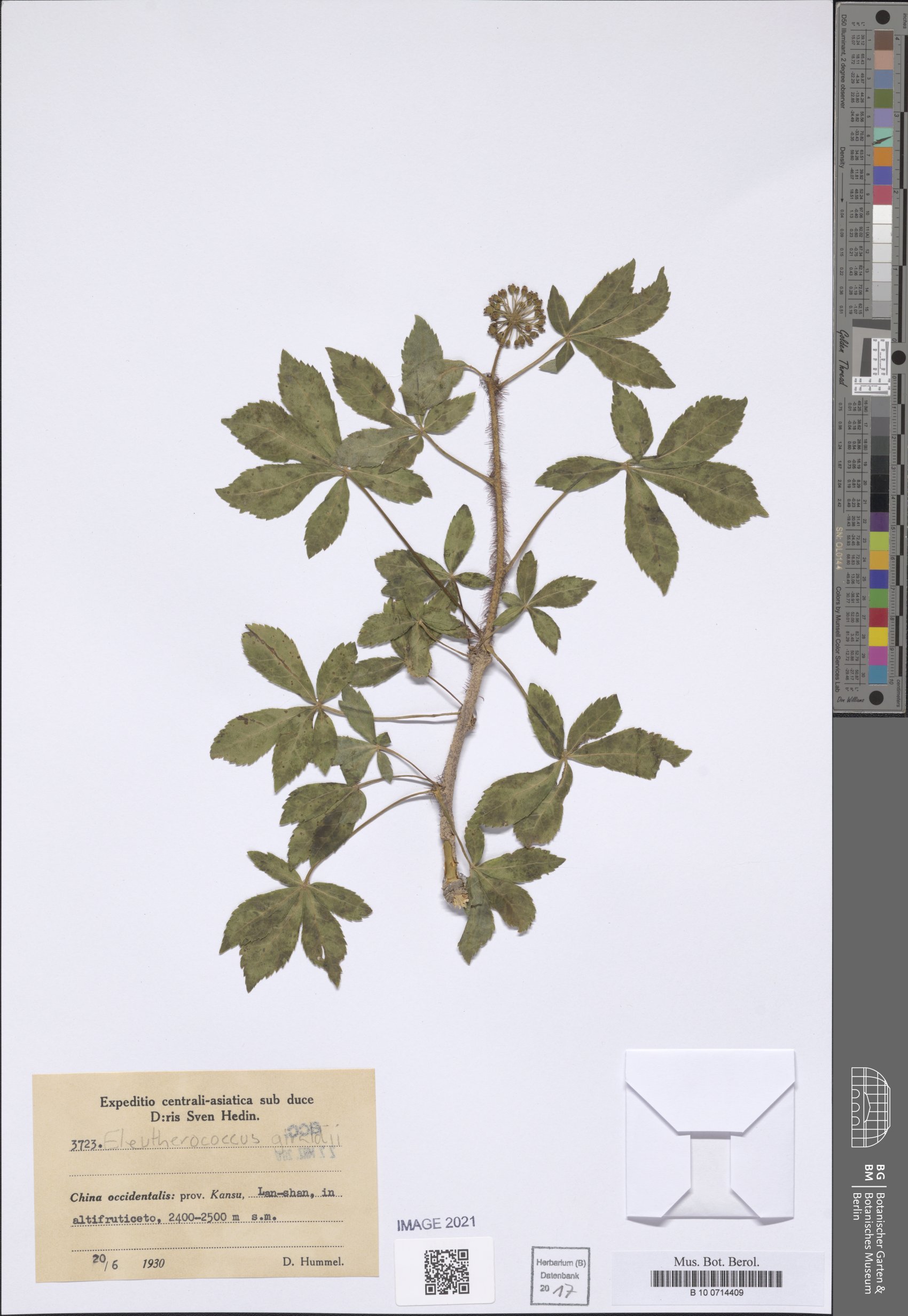
Source: WikipediaEleutherococcus spinosus is a species of flowering shrub in the ginseng family (Araliaceae). It native to Japan, where it is common species found on the island of Honshu south of Iwate Prefecture. Its natural habitat is in areas of forest edges. Eleutherococcus spinosus is a deciduous shrub with thorny branches. Its leaves are compound with five leaflets. These leaflets are thickened, 2–7 cm (0.79–2.76 in) long, and have an acute to obtuse apex. In May it produces white umbels of flowers, born on short spurs. Its fruits are black are ripen around July.
Description
A shrub. The leaves have leaflets along the stalk. There are 5-7 leaflets. They have short stalks and are broadly oval and wedge shaped.
This description is brief — help expand it
Edible Uses
Leaves and young budlings are edible when cooked. The dried leaves can be used as a tea substitute. Although there is no confirmed record of the seed being eaten, it is reported to contain 5.6–30.6% protein, 5.6–36.6% fat, and 2.1–3.5% ash.
Medicinal Uses
The root cortex is tonic and analgesic, used to treat general debility, rheumatic pains, and many other complaints. A wine made from the root is considered a general tonic for restoring vigour and sexual potency.
Distribution
It is a temperate plant.
Where It Grows
Asia, China, Japan,
Propagation
Seed is best sown as soon as it is ripe in autumn in a cold frame, though germination can be slow. Stored seed requires 6 months of warm stratification followed by 3 months of cold stratification, and may also be very slow to germinate. Prick seedlings out into individual pots when large enough to handle, then grow on in light shade in a cold frame or greenhouse for at least the first winter before planting out in late spring or early summer. Other options include half-ripe wood cuttings in July/August in a frame, ripe wood cuttings of the current season's growth at 15–30cm long in a cold frame, root cuttings in late winter, or division of suckers during the dormant season.
Other Uses
The plant can be used as a hedge.
Synonyms
References (4)
- Bircher, A. G. & Bircher, W. H., 2000, Encyclopedia of Fruit Trees and Edible Flowering Plants in Egypt and the Subtropics. AUC Press. p 5 (As Acanthopanax spinosus)
- J. Arnold Arbor. 61:110. 1980
- Plants for a Future database, The Field, Penpol, Lostwithiel, Cornwall, PL22 0NG, UK. http://www.scs.leeds.ac.uk/pfaf/
- Usher, G., 1974, A Dictionary of Plants Used by Man. Constable. p 15