Agave americana
L.
Agave, Century Plant
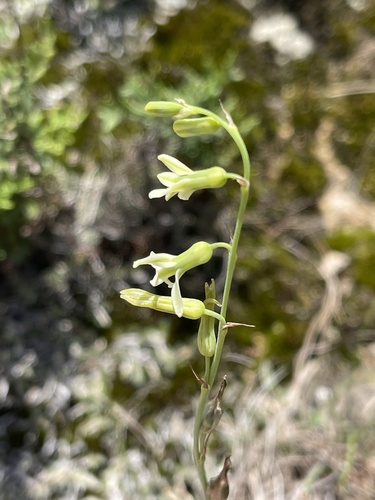
iNaturalist· cc-by-nc
(c) Pau Arranz Morell, some rights reserved (CC BY-NC), uploaded by Pau Arranz Morell
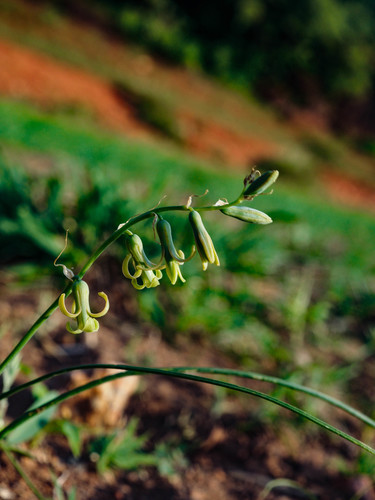
iNaturalist· cc-by-nc
(c) kyle_morales, some rights reserved (CC BY-NC)
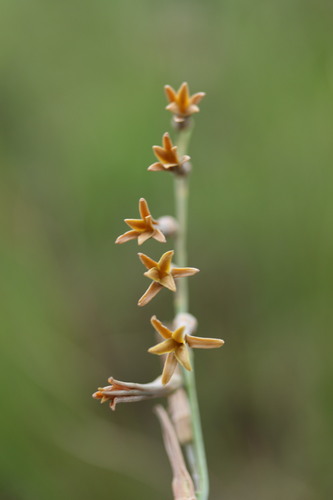
iNaturalist· cc-by-nc
(c) Flor, some rights reserved (CC BY-NC), uploaded by Flor
Summary
Source: WikipediaAgave americana, commonly known as the century plant, maguey, or American aloe, is a flowering plant species belonging to the family Asparagaceae. It is native to Mexico and the United States, specifically Texas. This plant is widely cultivated worldwide for its ornamental value and has become naturalized in various regions, including Southern California, the West Indies, South America, the Mediterranean Basin, Africa, the Canary Islands, India, China, Thailand, New Zealand and Australia. Despite being called "American aloe" in common parlance, Agave americana is not closely related to Aloe species.
Description
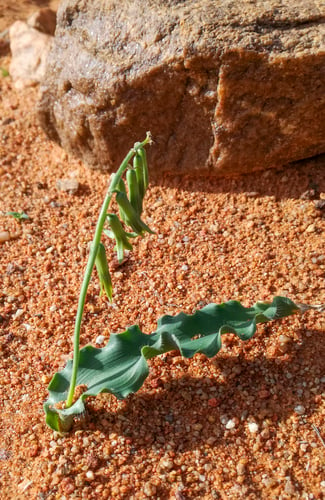
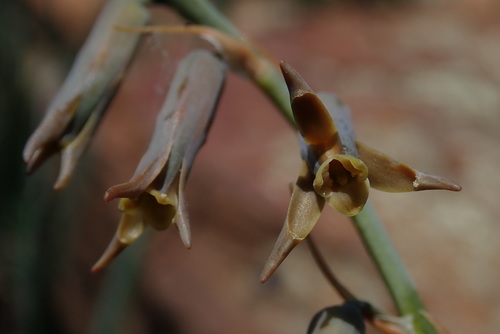
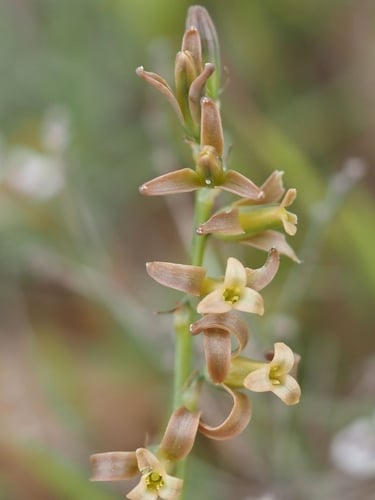
A perennial plant up to 7.5 m tall and 2.5 m wide. It does not have a trunk and has suckers. The plants have a very sharp and tough spine at the tip of each leaf. The leaves are grey-green and occur in rings at the base. There are spines on the edges of the leaves. There are 5-8 mm long and 2-6 cm apart. The leaves are word shaped and 1-2 m long. The flowers are tubular and yellow-green. These occur on stems 6 m high.
Edible Uses
The heart of the plant is very rich in saccharine matter and can be eaten when baked — sweet and nutritious, though rather fibrous, and sits partly below ground. Seeds can be ground into flour and used as a thickener in soups or combined with cereal flours for bread. The flower stalk can be roasted and used like asparagus. Sap from cut flowering stems is used as a syrup or fermented into pulque or mescal; it can also be tapped by boring a hole into the middle of the plant at the base of the flowering stem.
Traditional Uses
The heart of the plant can be eaten after baking. It is sweet but fibrous. The tender shoots are eaten raw. The seed is ground into flour and used to thicken soups. The flower stalk can be roasted and used like asparagus. They are also used to make wine. Sap from the cut flowering stems can be used as a syrup. This is called 'pulque' in Mexico. The flowers are cooked as a vegetable and also pickled.
Medicinal Uses
The sap has long been used in Central America as a binding agent for powders applied as poultices on wounds, and can be taken internally for diarrhoea, dysentery, indigestion, flatulence, constipation, and jaundice. It is antiseptic, diaphoretic, diuretic, and laxative, and has disinfectant properties that can check the growth of putrefactive bacteria in the stomach and intestines. An infusion of the chopped leaf is purgative, and the juice of the leaves is applied externally to bruises. Water in which agave fibre has been soaked for a day can be used as a scalp disinfectant and tonic in cases of falling hair. Steroid drug precursors are obtained from the leaves. A gum from the root and leaf is used in the treatment of toothache. The root is diaphoretic and diuretic and is used in the treatment of syphilis. All parts of the plant can be harvested as needed and dried for later use; dried leaves and roots store well.
Known Hazards
Contact with the fresh sap can cause dermatitis in sensitive people. The plants have a very sharp and tough spine at the tip of each leaf. They need to be carefully sited in the garden.
Distribution
It is a tropical plant. Plants are naturalised in the Mediterranean and it grows wild in Mexico. It requires a very well drained soil and a sunny position. Plants are frost tender. They need a temperature above 5°C. They suit warmer climates. In Sikkim it grows between 400-1,200 m above sea level. In Brisbane Botanical Gardens.
Where It Grows
Africa, Antigua and Barbuda, Argentina, Asia, Australia, Botswana, Britain, Central America, China, East Africa, Ecuador, Eswatini, Europe, Fiji, France, Germany, Greece, Haiti, Hawaii, India, Indonesia, Italy, Kiribati, Korea, Lesotho, Mediterranean, Mexico*, Myanmar, Nauru, Nepal, North America, Pacific, Pakistan, Philippines, Portugal, SE Asia, Sicily, Sikkim, Slovenia, Southern Africa, South America, St Helena, Swaziland, Tasmania, Turkey, Türkiye, USA, Venezuela, West Indies, Zimbabwe,
Cultivation
Requires a very well-drained soil and a sunny position. The agave is not very hardy in Britain tolerating temperatures down to about -3°c if conditions are not wet. It succeeds outdoors on the south coast of England from Torbay westwards. Plants survived lower temperatures during the very cold winters from 1985/1987 and were unharmed at Glendurgan gardens in West Cornwall. A monocarpic species, the plant lives for a number of years without flowering but dies once it does flower. However, it normally produces plenty of suckers during its life and these continue growing, taking about 10 - 15 years in a warm climate, considerably longer in colder ones, before flowering. This plant is widely used by the native people in its wild habitat, it has a wide range of uses. In a warm climate suckers take 10 - 15 years to come into flower. Members of this genus are rarely if ever troubled by browsing deer. The main harvest of the agave hearts (piñas) occurs after about 7 to 10 years, typically in late winter to early spring (January to April), depending on the climate and growing conditions. Agave usually flowers once it reaches maturity, which can be after 7 to 10 years, and the flowering period generally occurs in late spring to summer.
Propagation
Sow seed on the surface in a light position in April in a warm greenhouse; germination typically occurs within 1–3 months at 20°C. Prick out seedlings into individual pots of well-drained soil once large enough to handle and grow on in a sunny greenhouse position until at least 20cm tall. Plant out in late spring or early summer after the last expected frosts, and provide some protection from cold for at least the first few winters. Offsets can be potted up whenever available and kept in a warm greenhouse until well established.
Other Uses
Agave can be used for erosion control and as a drought-resistant crop in agroforestry systems, and is often planted as a hedge or boundary plant due to its size and spines. The plant contains saponins; an extract of the leaves or roots is used as a soap — chop the leaves or roots into small pieces and simmer in water to extract the saponins, taking care not to over-boil or the saponins will begin to break down. The plant has reported insecticidal properties, though no further details are available. A strong fibre obtained from the leaves is used for making rope and coarse fabrics, and paper can also be made from the leaves. The thorns on the leaves are used as pins and needles. Dried flowering stems are used as a waterproof thatch and as a razor strop. The plants are used in land-reclamation schemes in arid areas.
Production
The flower lives for a number of years without flowering but dies once it does flower. It normally dies after 20 to 30 years. Suckers however continue to grow. Suckers flower after 15 years in warm climates. The young flower is removed creating a trough like depression in which sap collects. It is drained out daily over several weeks. The yield can be 3-5 litres per day and a total of 800 litres of sap.
Other Information
It is sold in local markets.
Notes
There are about 250 Agave species. The Agavaceae are mostly in the tropics and subtropics. They are usually in dry rocky regions. The sap contains 12-15% sugar.
Synonyms
Also Known As
Agave amerika, Aguamiel, American Aloe, Ameriška agava, Desi kwar gandal, Ghyapat, Hattibar, Jangli kwar, gandal, Kalabandha, Kamal gand, Kanwar phara, Kattale, Ketaki, Ketuke, Keuro, Kittanara, Kyora, Laphra, Long she lan, Maguey, Maguey verde, Malina, Mishki, Moraba, Nanat-gyi, Retuke, Spiked Aloe, Zabbara, Zamara, Zargira
References (53)
- Ambasta S.P. (Ed.), 2000, The Useful Plants of India. CSIR India. p 19
- Andersohn, G., 1983, Cacti and Succulents. EP Publishing. p 73
- Anderson, M., 2002, The World Encyclopedia of Cacti and Succulents. Hermes House, New York. p 124
- Astrada, E., et al, 2007, Ethnobotany in the Cumbres de Monterrey National Park, Nuevo Leon, Mexico. Journal of Ethnobiology and Ethnomedicine 3:8
- Bhatia, H., et al, 2018, Traditionally used wild edible plants of district Udhampur, J&K, India. Journal of Ethnobiology and Ethnomedicine (2018) 14:73
Show all 53 references Hide references
- Bircher, A. G. & Bircher, W. H., 2000, Encyclopedia of Fruit Trees and Edible Flowering Plants in Egypt and the Subtropics. AUC Press. p 12 and p 13 (As Agave complicata) (Also as Agave melliflua)
- Blamey, M and Grey-Wilson, C., 2005, Wild flowers of the Mediterranean. A & C Black London. p 488
- Bodkin, F., 1991, Encyclopedia Botanica. Cornstalk publishing, p 57
- Bhogaonkar, P. Y. & Devarkar, V. D., 2018. Inventory for ethnovegetable knowledge of the tribals of Satpura hill area-Melghat, Dist. Amravati (India), Plantae Scientia, 2018; Vol. 01 Issue 01: 01-08
- Borrell, O.W., 1989, An Annotated Checklist of the Flora of Kairiru Island, New Guinea. Marcellin College, Victoria Australia. p 13
- Bremness, L., 1994, Herbs. Collins Eyewitness Handbooks. Harper Collins. p 139
- Brickell, C. (Ed.), 1999, The Royal Horticultural Society A-Z Encyclopedia of Garden Plants. Convent Garden Books. p 88
- Brown, D., 2002, The Royal Horticultural Society encyclopedia of Herbs and their uses. DK Books. p 105
- Cundall, P., (ed.), 2004, Gardening Australia: flora: the gardener's bible. ABC Books. p 112
- Datar, M. N. & Upadhye, A. S., 2015, Forest foods of Northern Western Ghats: Mode of Consumption, Nutrition, and Availability. Asian Agri-History Vol. 19, No. 4, 2015 (293–316)
- Delgado-Lemus, A., et al, 2014, Vulnerability and risk management of Agave species in the Tehuacan Valley, Mexico. Journal of Ethnobiology and Ethnomedicine 10:53
- Esperanca, M. J., 1988. Surviving in the wild. A glance at the wild plants and their uses. Vol. 1. p 42
- Facciola, S., 1998, Cornucopia 2: a Source Book of Edible Plants. Kampong Publications. p 2
- Geraci, A., et al, 2018, The wild taxa utilized as vegetables in Sicily (Italy): a traditional component of the Mediterranean diet. Journal of Ethnobiology and Ethnomedicine (2018) 14:14
- Harter, J.(Ed.), 1988, Plants. 2400 copyright free illustrations. Dover p 7.1, 7.6, 7.7
- Hedrick, U.P., 1919, (Ed.), Sturtevant's edible plants of the world. p 28
- Heywood, V.H., Brummitt, R.K., Culham, A., and Seberg, O. 2007, Flowering Plant Families of the World. Royal Botanical Gardens, Kew. p 339
- Hussey, B.M.J., Keighery, G.J., Cousens, R.D., Dodd, J., Lloyd, S.G., 1997, Western Weeds. A guide to the weeds of Western Australia. Plant Protection Society of Western Australia. p 14
- Jadhav, R., et al, 2015, Forest Foods of Northern Western Ghats: Mode of Consumption, Nutrition and Availability. Asian Agri-History Vol. 19, No. 4: 293-317
- Joyce, D., 1998, The Garden Plant Selector. Ryland, Peters and Small. p 201
- Khyade, M. S., et al, 2009, Wild Edible Plants Used By the Tribes of Akole Tahasil of Ahmednagar District (Ms), India. Ethnobotanical Leaflets 13: 1328-36, 2009
- Kiple, K.F. & Ornelas, K.C., (eds), 2000, The Cambridge World History of Food. CUP p 1890
- Kumar, R. & Saikia, P., 2020, Wild edible plants of Jharkhand and their utilitarian perspectives. Indian Journal of Traditional Knowledge Vol 19 (2), April 2020, pp 237-250
- Lazarides, M. & Hince, B., 1993, Handbook of Economic Plants of Australia, CSIRO. p 10
- Llamas, K.A., 2003, Tropical Flowering Plants. Timber Press. p 43
- Lord, E.E., & Willis, J.H., 1999, Shrubs and Trees for Australian gardens. Lothian. p 203
- Majeed, M., et al, 2021, Gathered Wild Food Plants among Diverse Religious Groups in Jhelum District, Punjab, Pakistan. Foods 2021, 10, 594.
- Marinelli, J. (Ed), 2004, Plant. DK. p 330
- Paczkowska, G. & Chapman, A.R., 2000, The Western Australian Flora. A Descriptive Catalogue. Western Australian Herbarium. p 29
- Piedra-Malagón, E. M. et al, 2022, Edible native plants of the Gulf of Mexico Province. Biodiversity Data Journal 10: e80565 p 12
- Plants for a Future database, The Field, Penpol, Lostwithiel, Cornwall, PL22 0NG, UK. http://www.scs.leeds.ac.uk/pfaf/
- Prashanth Kumar, G.M. and Shiddamallayya, N., 2015, Ethnobotanical Study of Less Known Wild Edible Plants of Hakki Pikki Tribes of Angadihalli, Hassan District, Karnataka. Journal or Medicinal Plants Studies 3(5):80-85
- Ruiters-Welcome, A. K., 2019, Food plants of southern Africa. Ph.D. thesis. Univ. of Johannesburg p 7
- Quintana, C. M., 2010, Wild Plants in the Dry Valleys Around Quito Ecuador. An Illustrated Guide. Publicationes del Harbario, QCA p 61
- Small, E., 2009, Top 100 Food Plants. National Research Council of Canada. p 526
- Smith, A.C., 1979, Flora Vitiensis Nova, Lawaii, Kuai, Hawaii, Volume 1 p 154
- Sp. pl. 1:323. 1753
- Staples, G.W. and Herbst, D.R., 2005, A tropical Garden Flora. Bishop Museum Press, Honolulu, Hawaii. p 580
- Sukarya, D. G., (Ed.) 2013, 3,500 Plant Species of the Botanic Gardens of Indonesia. LIPI p 996
- Swaziland's Flora Database http://www.sntc.org.sz/flora
- Torre, de la L., et al, 2008, Enciclopedia de las Plantas Útiles del Ecuador. Herbario QCA. Pontificia Universidad Católica del Ecuador. p 149
- Van den Eynden, V., et al, 2003, Wild Foods from South Ecuador. Economic Botany 57(4): 576-603
- Van den Eynden, V., 2003, Use and Management of edible non-crop plants in southern Ecuador. Ph. D. thesis. Faculty of Agricultural and Applied Biological Sciences, Gent, Belgium
- Vermeulen, N, 1998, The Complete Encyclopedia of Herbs. Rebo Publishers. p 28
- WAT
- Welcome, A. K. & Van Wyk, B.-E., 2019, An inventory and analysis of the food plants of southern Africa. South African Journal of Botany 122 (2019) 136–179
- Wiersema, J. H. & Leon, B., 2013, World Economic Plants. A Standard Reference CRC Press. 2nd Ed. p 24
- World Checklist of Useful Plant Species 2020. Royal Botanic Gardens, Kew