Elateriospermum tapos
Blume
Perah tree, Tapos
iNaturalist· cc-by-nc-nd
(c) loupok, some rights reserved (CC BY-NC-ND)
iNaturalist· cc-by-nc
(c) Peri Lee Pipkin, some rights reserved (CC BY-NC)
Description
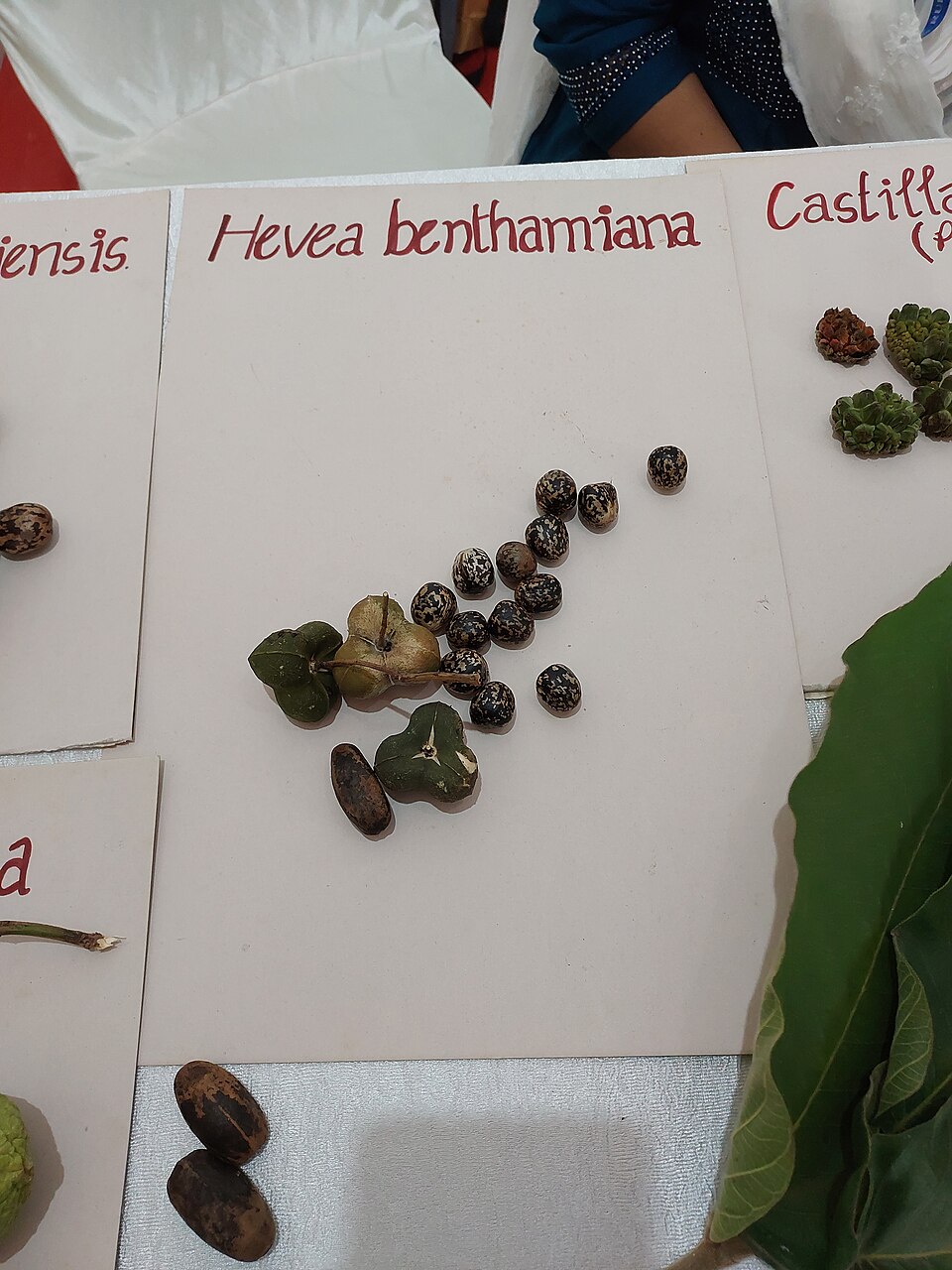
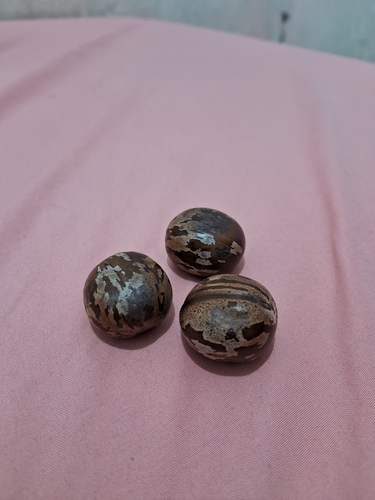
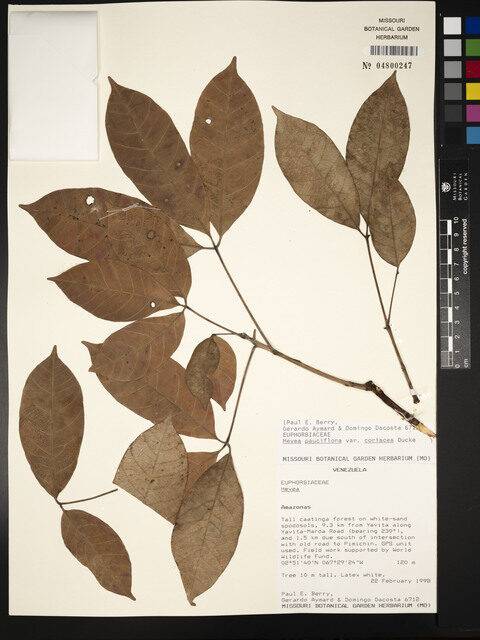
A straight tree. It grows up to 27 m tall. It has medium brown flaky bark. The trunk is 35 cm. across. The leaves are oblong and 15 cm long by 5 cm wide. It has a narrow tip. Young leaves are red. The flowers are at the ends of branches. They are 17 cm long. Male flowers are 2 mm across and female flowers are 5 mm across. They are cream and have a strong smell. The fruit are oblong and 5-6.3 cm long. The fruit grow in clusters of three. The fruit are green becoming dull brown. Older fruit compared to rubber fruit. The ripe fruit are edible. The seeds are 5 cm long.
Edible Uses
The ripe fruit are eaten fresh. The seeds are roasted, shelled, and eaten; they are also sometimes pickled or fermented. Seeds are never consumed raw.
Traditional Uses
The seeds are eaten after the fruit has been roasted and shelled. They are sometimes pickled. Seeds are also fermented and eaten. The seeds are never eaten raw probably due to hydrocyanic acid (HCN). CAUTION: They can cause dizziness if eaten in large amounts.
Medicinal Uses
Traditional uses are documented but specific medicinal purposes are not detailed in the data.
Known Hazards
Raw seeds contain hydrocyanic acid (HCN) and should not be eaten raw. Eating large amounts of the cooked seeds can cause dizziness.
Distribution
A tropical plant. It suits the hot humid tropical lowlands. It grows from sea level to 600 m altitude.
Where It Grows
Asia, Brunei, Indochina, Indonesia, Malaysia, Pacific, Philippines, SE Asia, Thailand,
Cultivation
Plants are grown by seed. The seed are 5 cm long.
Other Uses
The oil is pale yellow and nearly odourless. It can be used as a lamp oil, but is seldom pressed from the seed. The seeds make nice toys for children, they are used as toy beetles or threaded together in a game called 'conquerors'. A bluish-white latex obtained from the plant is used to polish blowpipes to a glossy dark sheen The sapwood is white, the heartwood with beautiful dark brown flames. It is hard and durable. The wood is usually considered to be excellent, but is unsuitable for construction because, although the sapwood is durable, the heartwood rots easily or is attacked by termites unless treated with preservatives. It is mainly used for making small items, like the handles of rubber tapping knives, because it takes a nice polish. The wood is often used as a fuel.
Notes
Wood used to make posts and build houses.
Nutrition
| Part | Moisture | kJ | kcal | Protein | Vit A | Vit C | Iron | Zinc |
|---|---|---|---|---|---|---|---|---|
| Fruit | 36.7 | 379 | 92.4 | 13.6 | — | — | 22 | 29 |
Synonyms
Also Known As
Buah perah, Dungku, Gua pra, Kedui, Kelampai, Perah kokong, Perah, Piah, Ple prah, Pra, Tapos, Tapuih
References (21)
- Burkill, I.H., 1966, A Dictionary of the Economic Products of the Malay Peninsula. Ministry of Agriculture and Cooperatives, Kuala Lumpur, Malaysia. Vol 1 (A-H) p 919
- Chai, P. P. K. (Ed), et al, 2000, A checklist of Flora, Fauna, Food and Medicinal Plants. Lanjak Entimau Wildlife Sanctuary, Sarawak. Forestry Malaysia & ITTO. p 159
- Coronel, R.E., 1982, Fruit Collections in the Philippines. IBPGR Newsletter p 9
- Jacquat, C., 1990, Plants from the Markets of Thailand. D.K. Book House p 75
- Macmillan, H.F. (Revised Barlow, H.S., et al) 1991, Tropical Planting and Gardening. Sixth edition. Malayan Nature Society. Kuala Lumpur. p 299
Show all 21 references Hide references
- Martin, F. W., et al, 1987, Perennial Edible Fruits of the Tropics. USDA Handbook 642 p 27
- Menninger, E.A., 1977, Edible Nuts of the World. Horticultural Books. Florida p 51
- Milow, P., et al, 2013, Malaysian species of plants with edible fruits or seeds and their evaluation. International Journal of Fruit Science. 14:1, 1-27
- Ochse, J.J. et al, 1931, Vegetables of the Dutch East Indies. Asher reprint. p 270
- Ong, H., et al, 2012, Traditional knowledge and usage of edible plants among the Semai community of Kampung Batu 16, Tapah, Perak, Malaysia. Scientific Research and Essays Vol. 7(4), pp. 441-445, 30 January, 2012
- Pawera, L., et al, 2020, Wild Food Plants and Trends in Their Use: From Knowledge and Perceptions to Drivers of Change in West Sumatra, Indonesia, Foods. 2020, 9, 1240
- Saw, L.G., LaFrankie, J. V. Kochummen, K. M., Yap S. K., 1991, Fruit Trees in a Malaysian Rain Forest. Economic Botany, Vol. 45, No. 1, pp. 120-136
- Septiani, Y. & Sidabutar, H., (Eds.) 2015, Biodiversity Survey. In the Sub Watershed Embaloh, Betung Kerihun National Park. ITTO p 82
- Siong, K. H., 2003, Indigenous Fruits of Sarawak. ITTO & Sarawak Forest Department. p 63
- Sosef, M. S. M., Hong, L. T., & Prawirohatmodjo, S., (Eds.), 1998, Timber tree: Lesser-known timbers. Plant Resources of South-East Asia, 5(3), p 210
- Sukarya, D. G., (Ed.) 2013, 3,500 Plant Species of the Botanic Gardens of Indonesia. LIPI p 258
- Wickens, G.E., 1995, Edible Nuts. FAO Non-wood forest products. FAO, Rome. p 122
- World Checklist of Useful Plant Species 2020. Royal Botanic Gardens, Kew
- www.nationalherbarium.nl/thaueuph/ Flora of Thailand.
- www.frim.gov.my
- Zawiah, N. & Othaman, H., 2012, 99 Spesies Buah di FRIM. Institut Penyelidikan Perhutanan Malaysia. p 114