Macaranga capensis
(Baill.) Sim
River macaragna, Swamp poplar
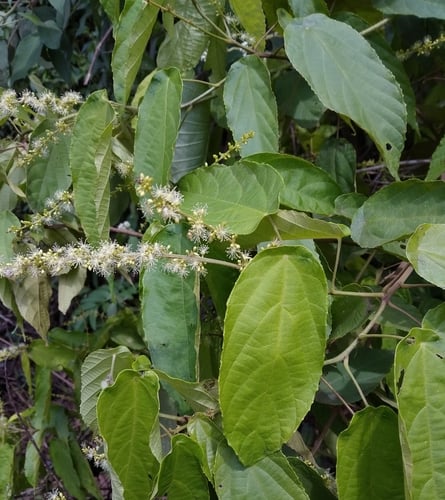
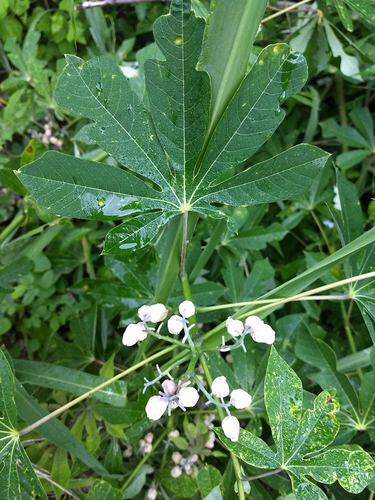
iNaturalist· cc-by-nc
(c) Ricky Taylor, some rights reserved (CC BY-NC), uploaded by Ricky Taylor
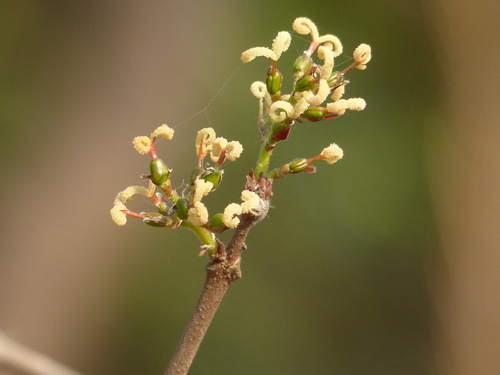
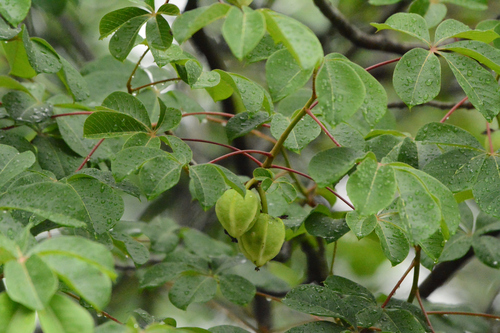
iNaturalist· cc-by-nc
(c) Craig Peter, some rights reserved (CC BY-NC), uploaded by Craig Peter
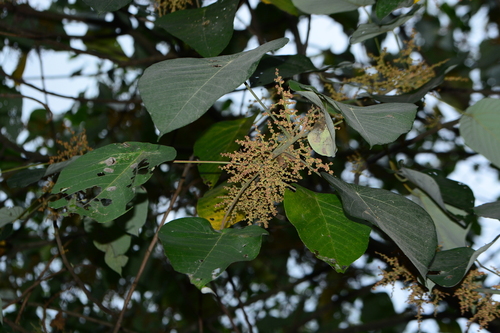
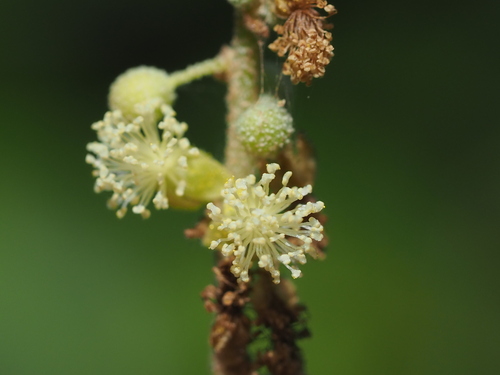
iNaturalist· cc-by-nc
(c) Craig Peter, some rights reserved (CC BY-NC), uploaded by Craig Peter
Summary
Source: WikipediaMacaranga capensis is a species of flowering plant in the spurge family, Euphorbiaceae. It is a tree native to sub-Saharan Africa, ranging through eastern and southern Africa from southern Ethiopia to the Eastern Cape Province of South Africa, with an outlier population in Gabon in west-central Africa. Macaranga capensis is a medium to large deciduous tree, typically 4.5 to 18 metres (15 to 59 ft) tall and occasionally up to 25 metres (82 ft). It has a rounded spreading crown. It typically has a straight bole, and the trunk and branches are armed with short spines. The leaves are large, shiny, and dark green, ovate to triangular-ovate, 100–150 mm (3.9–5.9 in) long by 80–120 mm (3.1–4.7 in) wide, with a short drip-tip at the apex. Flowers grow in clusters of small creamy white or yellow blooms. It generally grows in evergreen forests and along stream banks. The tree is harvested from the wild for timber and for local medicinal uses. It is planted as a shade or garden tree.
Description
A tree. It grows 30 m tall. The trunk does not have branches for up to 12 m. The trunk is 60-100 cm across.
This description is brief — help expand it
Edible Uses
The leaves are eaten.
Medicinal Uses
Also considered a medicine.
Distribution
It is a tropical plant.
Where It Grows
Africa, Burundi, East Africa, Ethiopia, Mozambique, South Africa, Southern Africa, Sudan, Zimbabwe,
Cultivation
A dioecious species, both male and female forms need to be grown if fruit and seed are required.
Other Uses
The wood is used for timber, knife sheaths, xylophones and water pots. The wood is used for fuel.
Notes
It is also considered a medicine.
References (2)
- PROTA4U
- World Checklist of Useful Plant Species 2020. Royal Botanic Gardens, Kew