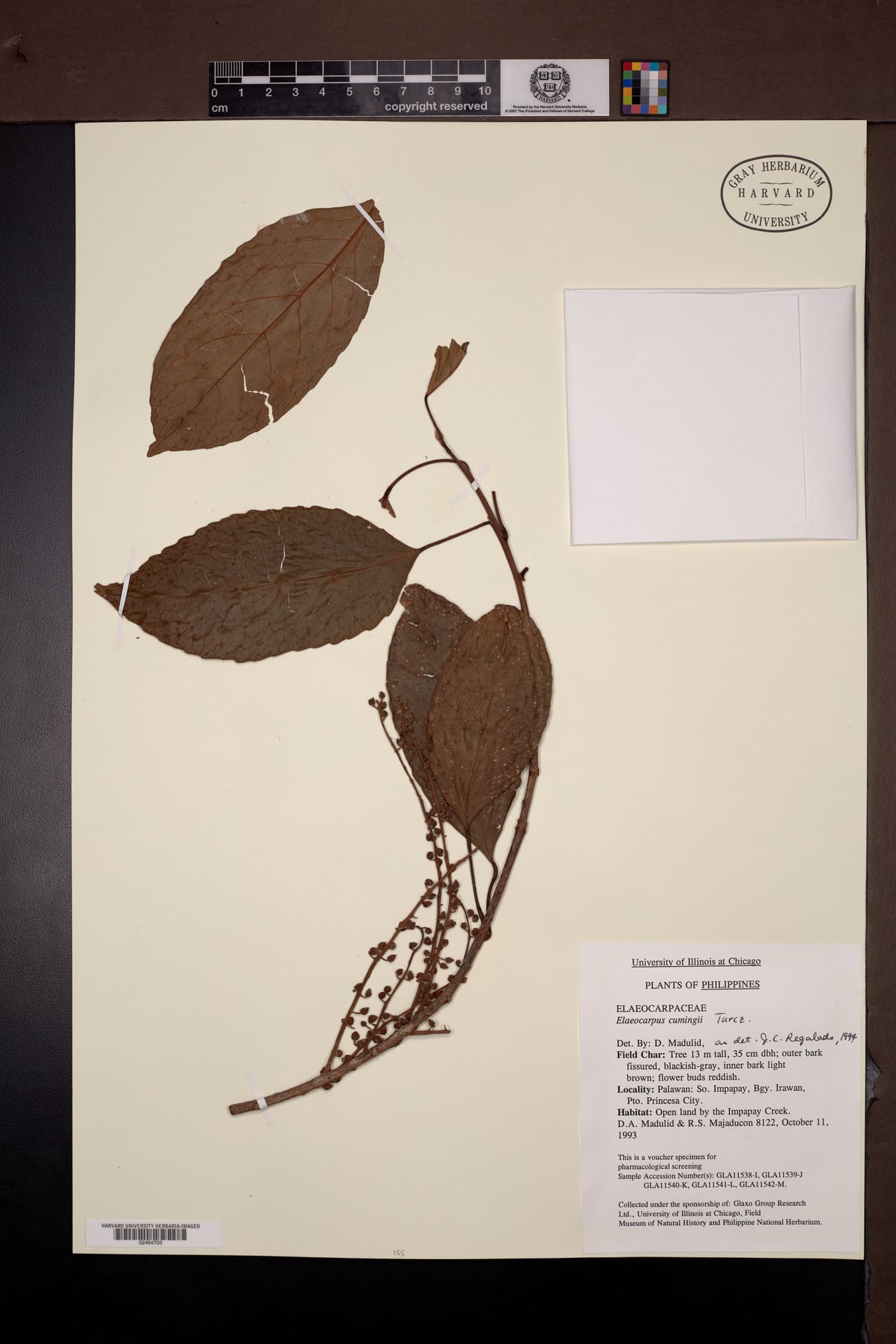
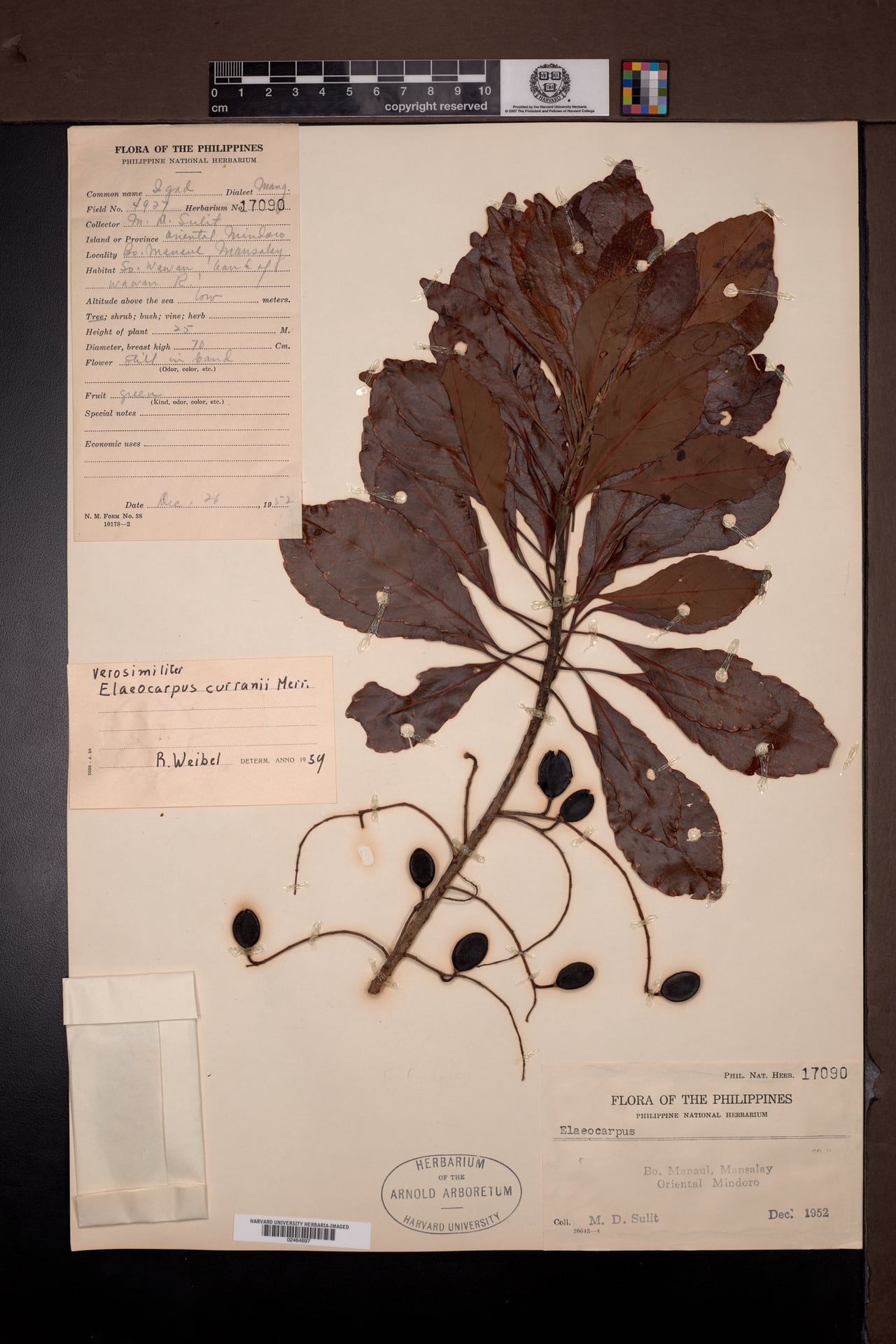
Elaeocarpus polydactylus Schltr. gp 4
Schltr.
gbif· cc0
President and Fellows of Harvard College
gbif· cc0
President and Fellows of Harvard College
gbif· cc0
President and Fellows of Harvard College
Description
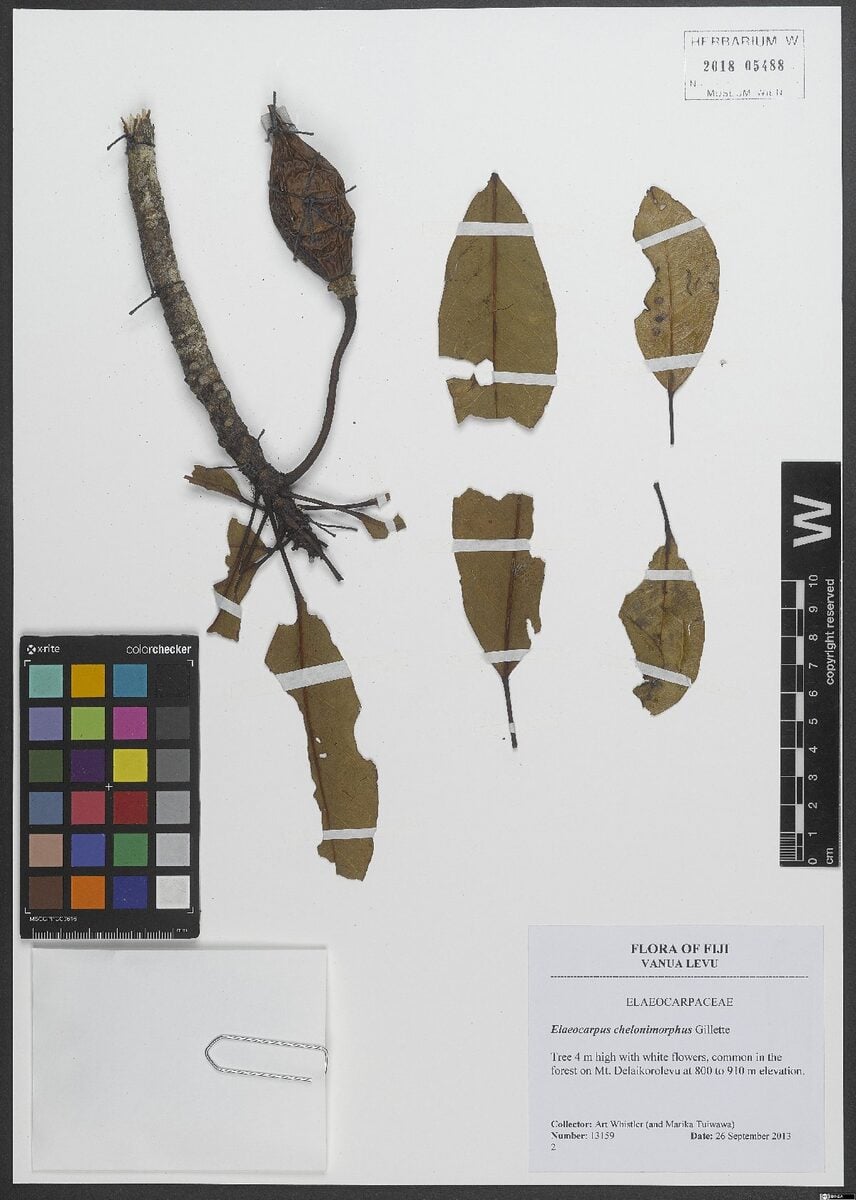
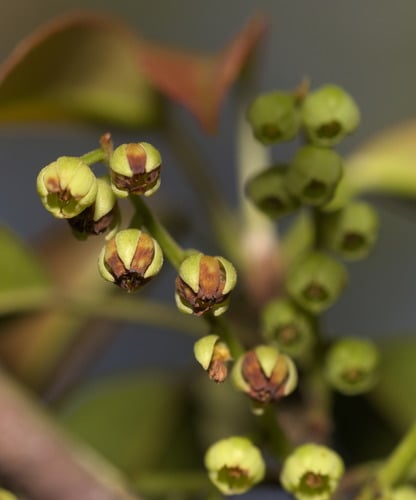
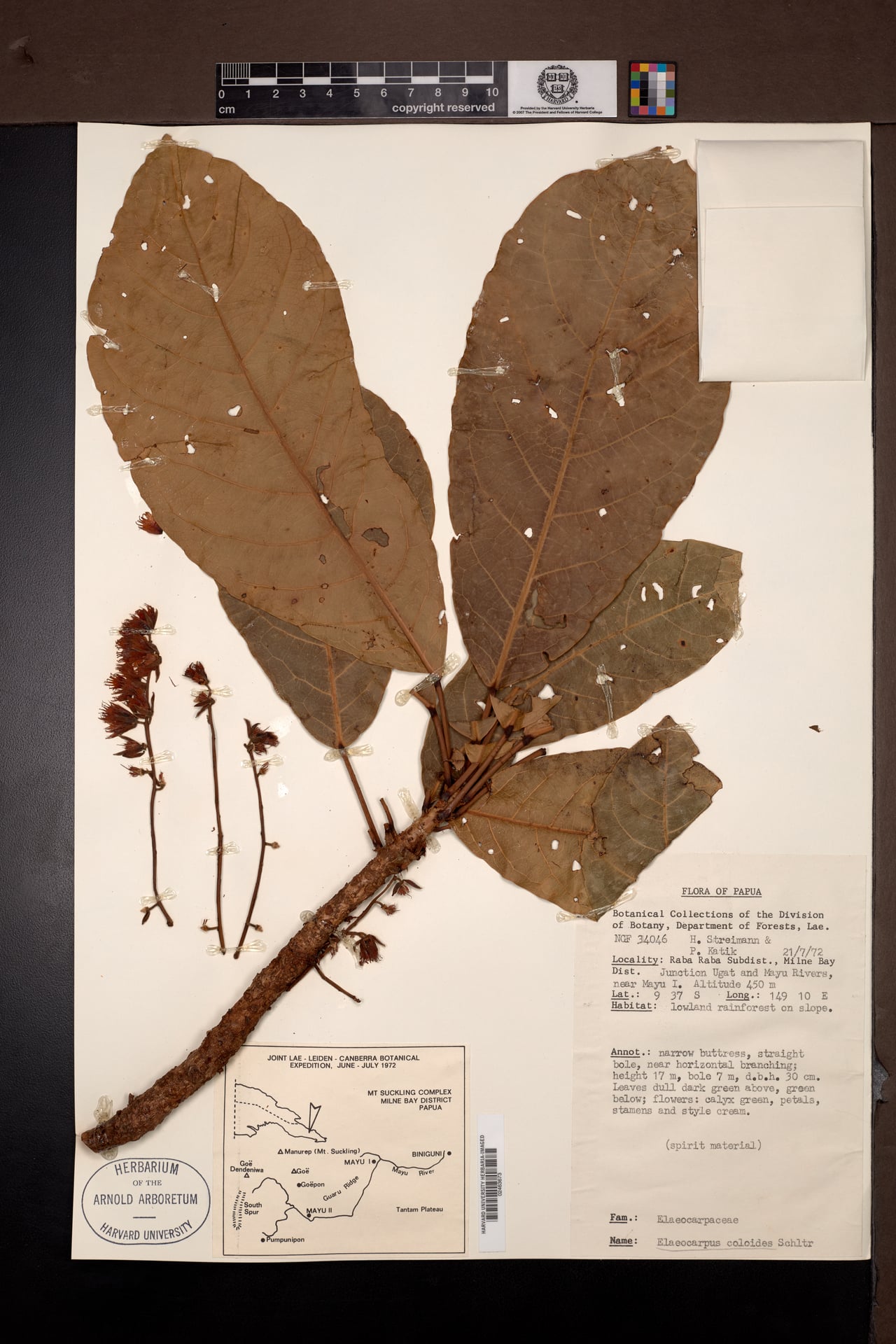
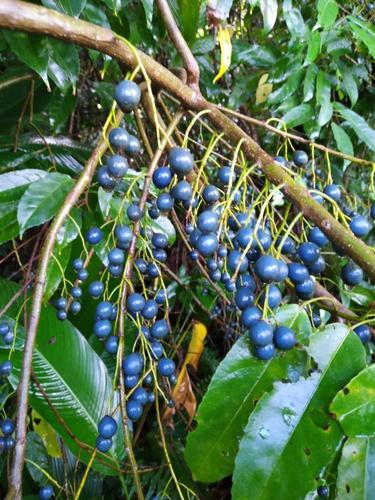
A tree or shrub up to 13 m tall. The leaves are 3-6 cm wide and 6-11 cm long and leathery. Flowers are few and are 5-11 cm long. Fruit are 1.5 cm x 1 cm. They are green when unripe and blue when ripe.
Edible Uses
The kernels inside the seeds are eaten and represent an occasionally consumed wild edible nut in some areas of Papua New Guinea.
Traditional Uses
The kernels inside the seeds are eaten.
This uses section is brief — help expand it
Distribution
A tropical plant. It grows in regrowth forest at 1850-2550 m above sea level. It mainly occurs in the Western and Eastern Highlands Provinces of Papua New Guinea.
Where It Grows
Pacific, Papua New Guinea, PNG,
Cultivation
Trees grow wild from seed.
Other Information
An occasionally eaten wild edible nut in some areas of Papua New Guinea.
Notes
There are about 360 Elaeocarpus species mostly in the tropics.
References (5)
- Bourke, M., 1995, Edible Indigenous Nuts in Papua New Guinea. In South Pacific Indigenous Nuts. ACIAR Proceedings No 69, Canberra. p 46
- Coode, M.J.E., in Henty, E.E., (Ed.), 1981, Handbooks of the Flora of Papua New Guinea, Melbourne University Press, p 97
- French, B.R., 1986, Food Plants of Papua New Guinea, A Compendium. Asia Pacific Science Foundation p 175
- Walter, A. & Sam C., 2002, Fruits of Oceania. ACIAR Monograph No. 85. Canberra. p 279
- World Checklist of Useful Plant Species 2020. Royal Botanic Gardens, Kew