Elaeocarpus serratus
L.
Ceylon-olive
iNaturalist· cc0
no rights reserved, uploaded by 葉子
iNaturalist· cc0
no rights reserved, uploaded by 葉子
iNaturalist· cc0
no rights reserved, uploaded by 葉子
Summary
Source: WikipediaElaeocarpus serratus, the Ceylon olive, is a tropical flowering plant in the family Elaeocarpaceae. It is a medium to large tree, with white flowers. It has a disjunctive distribution, with the species occurring in Sri Lanka and southern India, and in Assam, Bangladesh and other parts in the north of the Indian subcontinent. The fruit is commonly eaten, and people also use the plant for ornamental, religious and folk-medicinal purposes. There are historical records of traditional-medicine use of the plant. Paradoxurus jerdoni (Brown palm civet) consumes parts of the tree.
Description
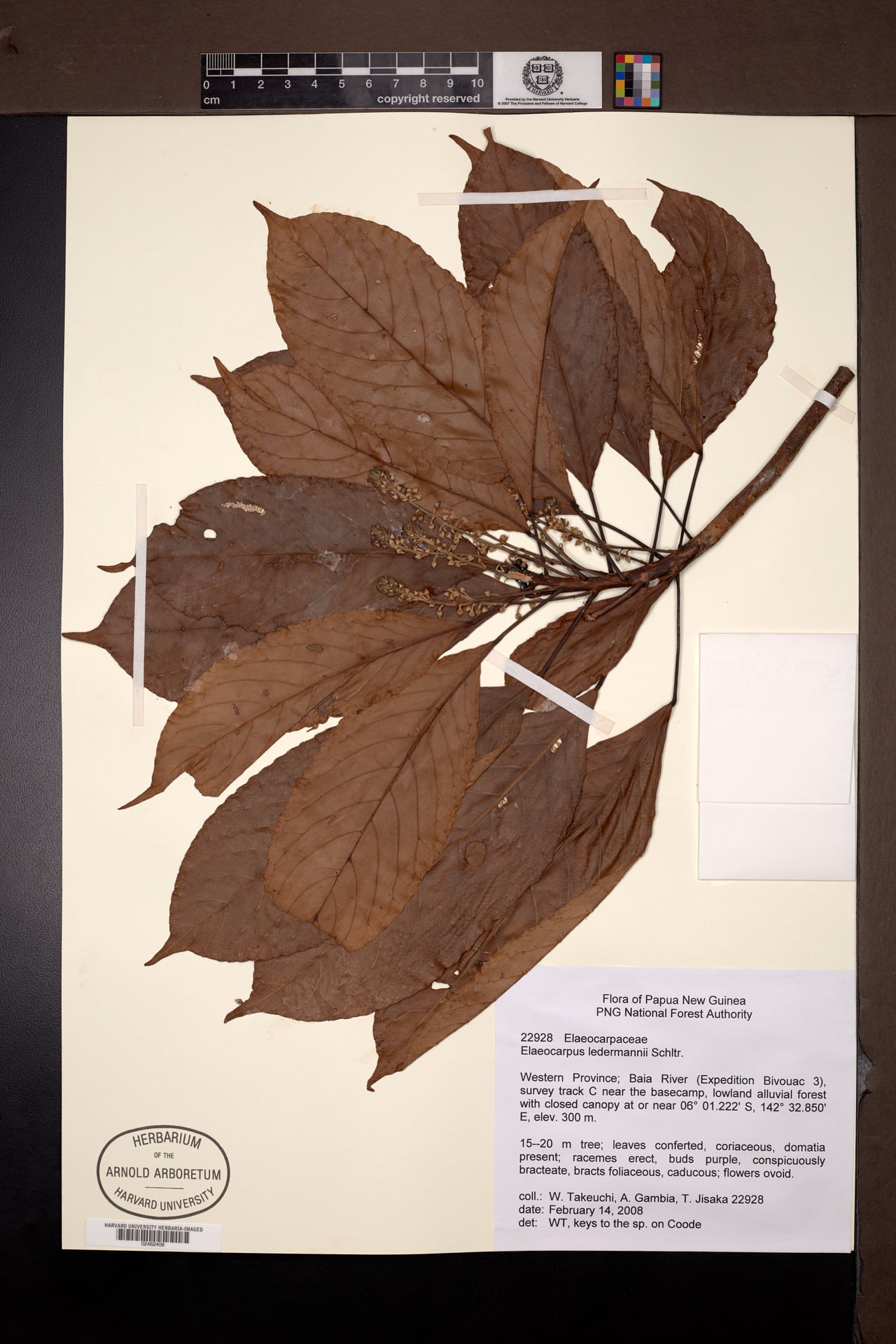
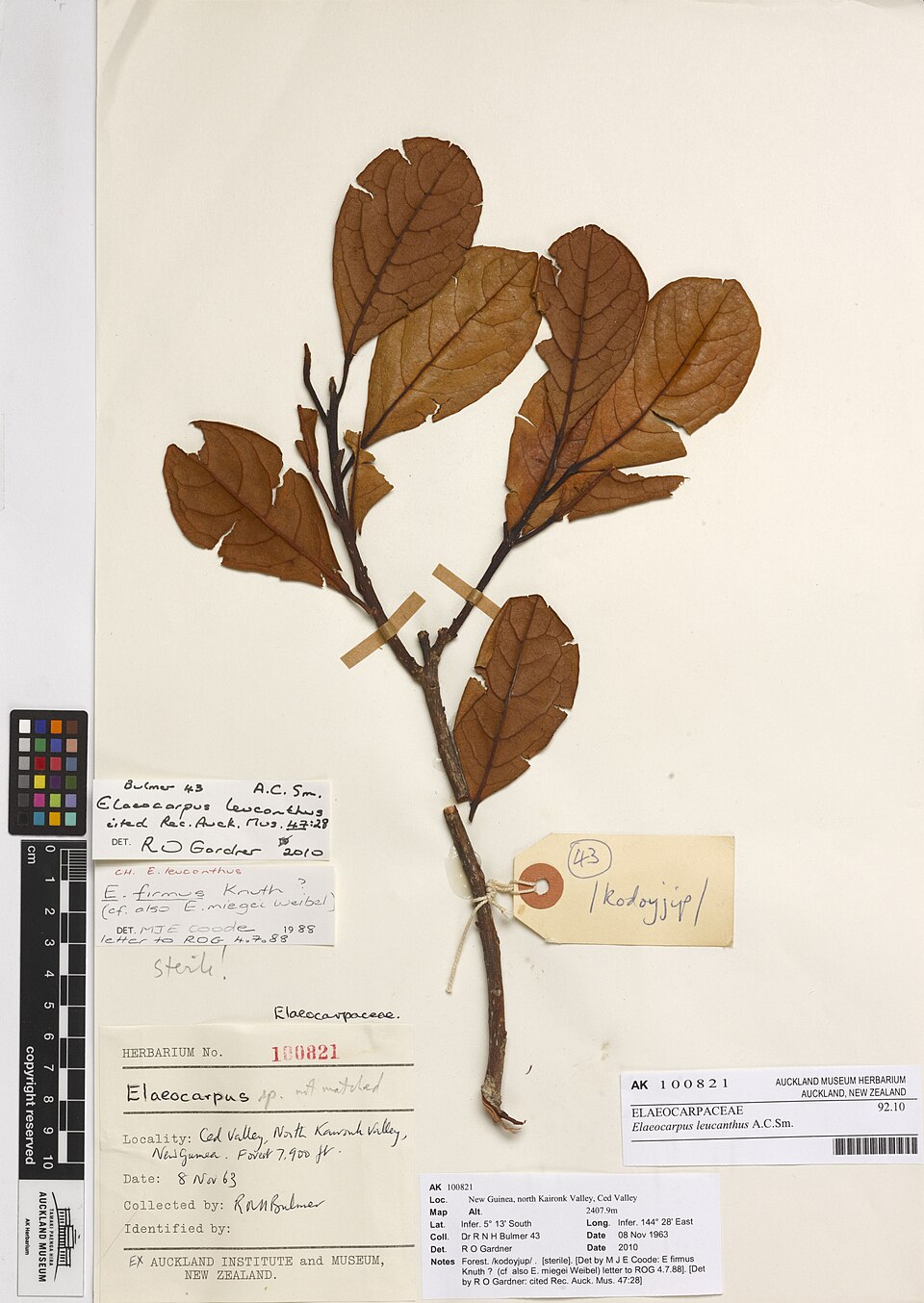
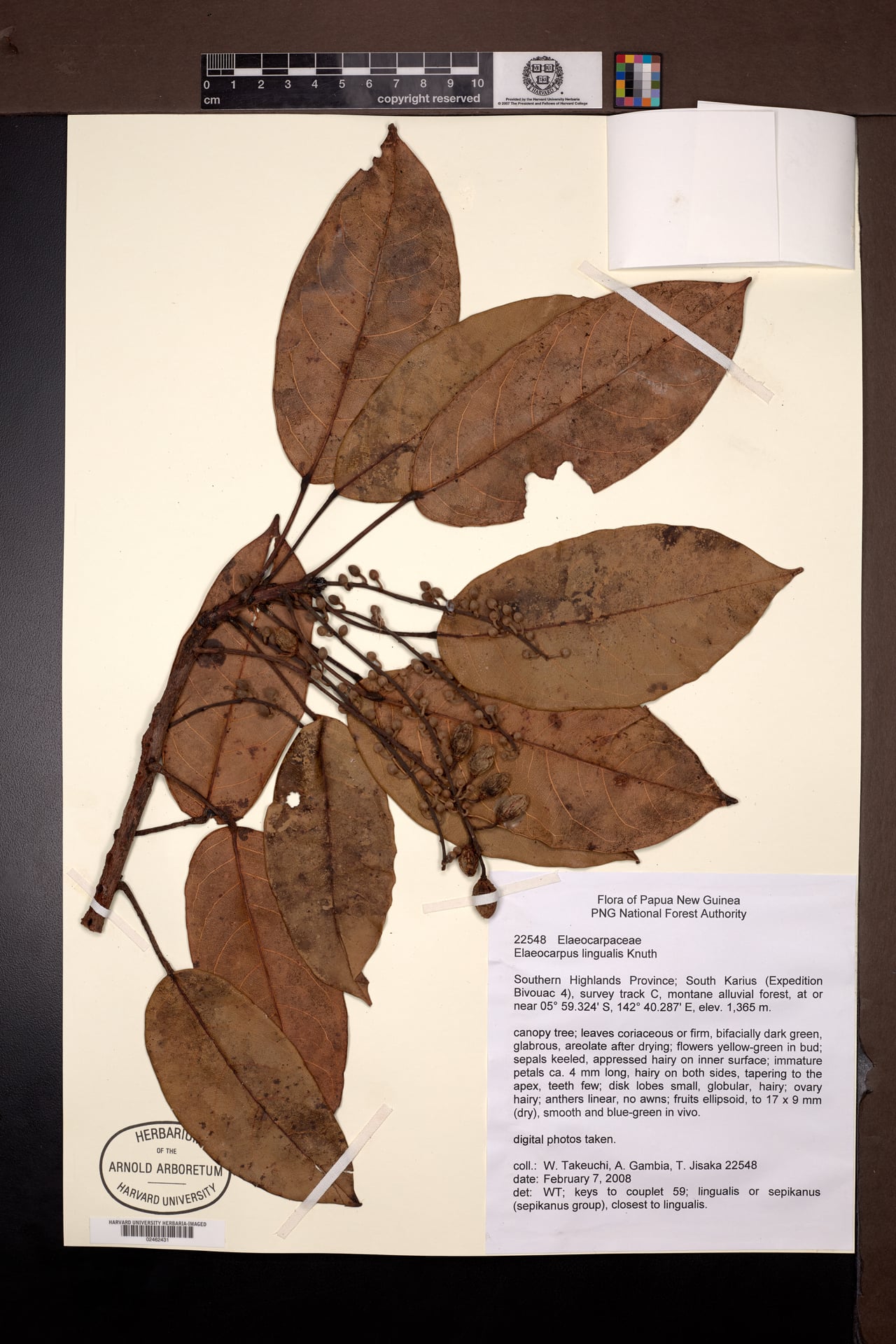
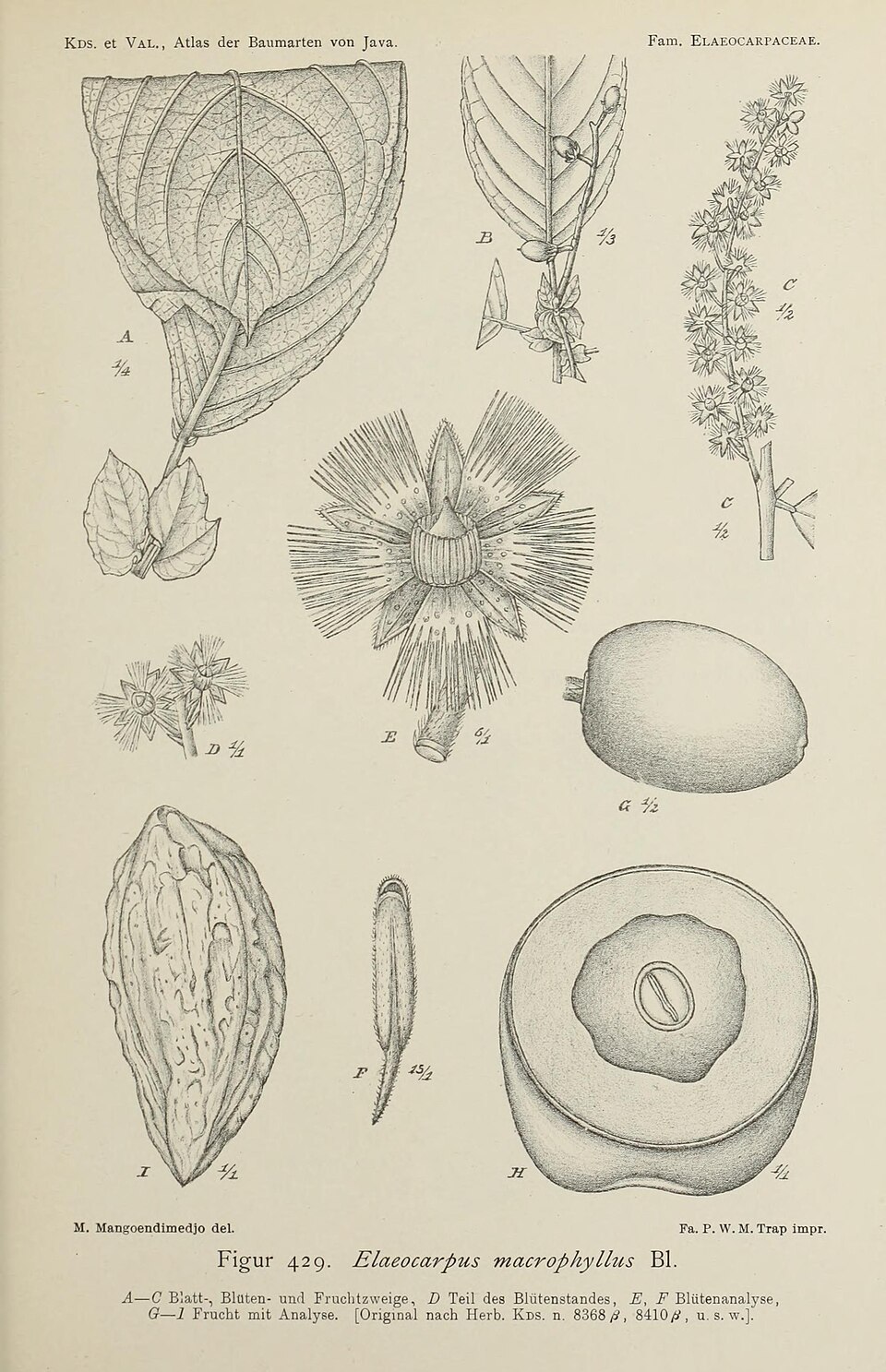
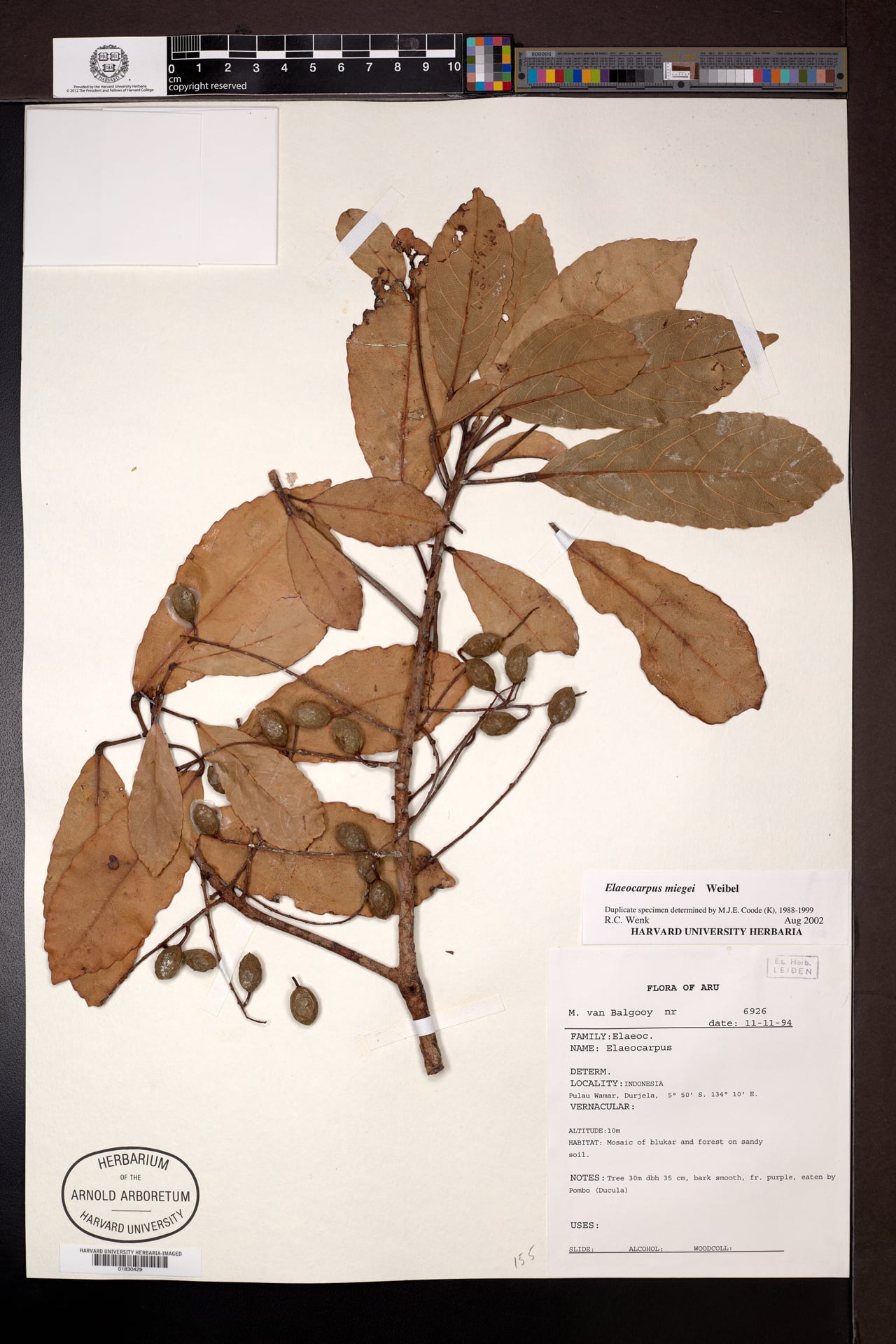
A tree. It grows 20 m tall. It has a rounded compact crown. The trunk is light yellowish white. The leaves are small and oval and taper towards the base. They have shallow teeth along the edge. The leaves turn rich orange red as they age. The flowers are white. The fruit are like olives but dull greenish-yellow. They are 4 cm long. The seeds are large and knobbly. There are 3-4 seeds in each fruit. The fruit pulp is acidic.
Edible Uses
Fruit - raw or cooked. Fleshy and pleasantly subacid. They can be used in curries and also pickled like olives. The ovoid fruit is about 3cm long.
Traditional Uses
The fruit are eaten either pickled or in curries. They can be eaten raw. They are also used in drinks.
This uses section is brief — help expand it
Medicinal Uses
The taxa is used as an ornamental plant and its fruit are eaten. The fruit of the taxa is well known in Sri Lanka. Use of the plant is recorded historically in India, the fruit was believed to ward off evil spirits and omens. In recent folk medicine, various parts of the plant have been used to treat a large variety of ailments. People living in Mai Municipality, Ilam District, far-eastern Nepal, use the plant as part of folk medicine and in religion. Juice from the bark is drunk in treatment for jaundice, while a paste from the seed is eaten in belief of a treatment for pneumonia and ulcer. The Karbi people of Karbi Anglong District, Assam, harvest both ripe and unripe fruit from August to October, the ripe fruit is made into a pickle, the taste of the fruit is sour. The fruits are high in starch and sugar and have low amounts of protein and iron. It may help treat diarrhoea due to its constipating effect.
Distribution
A tropical plant. It is native from India to Malaysia. It grows in the wet lowlands. It grows up to 800 m above sea level in Sri Lanka. It grows in evergreen and semi-evergreen forests up to 1,600 m above sea level in Indonesia.
Where It Grows
Africa, Asia, Australia, Bangladesh, China, Ghana, India, Indonesia, Malaysia, Myanmar, Northeastern India, SE Asia, Sri Lanka*, West Africa,
Cultivation
Plants are grown from seed. It can also be grown from cuttings.
Propagation
The seed of most species in this genus is covered by a hard, woody shell and can be very slow and erratic to germinate, sometimes taking 2 years or more. Filing down the shell, or cracking it (being very careful not to damage the seed) in order to allow the ingress of moisture can help to greatly speed up germination. Sow the seed in containers in light shade. When the seedlings are large enough to handle, prick them out into individual pots and grow them on until large enough to plant out, Cuttings of almost ripe shoots, in a sandy soil in a frame. The leaves should be left on the stem.. Many species strike readily from cuttings.
Other Uses
The seeds contain a fixed oil. No further information is given. The greyish-white wood is light in weight and of little value. We have no more information on the specific properties of the wood of this species, however the following is a general description of the wood from this genus:- The heartwood is light-yellowish white to pink-brown, it is not distinctly demarcated from the sapwood. The texture is moderately fine and even, with straight to shallowly interlocked grain. The wood is soft to moderately hard; light in weight to moderately heavy; weak; not very durable. It seasons fairly slowly with slight end and surface checking; shrinkage is fairly low. It is easy to resaw and cross-cut; planing is easy and leaves a moderately smooth finish; nailing properties are good. A general purpose wood, it is suitable for purposes such as general planking, shuttering, boxes, crates, wooden pallets, match splints, veneer and plywood.
Production
It grows moderately slowly.
Other Information
It is a cultivated food plant.
Notes
There are about 360 Elaeocarpus species mostly in the tropics.
Nutrition
| Part | Moisture | kJ | kcal | Protein | Vit A | Vit C | Iron | Zinc |
|---|---|---|---|---|---|---|---|---|
| Fruit | 80.2 | 173 | 72 | 1.2 | — | 20 | — | — |
Synonyms
Also Known As
Avil, Bengal olive, Bhadraksham, Jalpai, Jolopari, Kara, Karakka, Karamava, Nallakara, Perinkara, Ulangkarei, Uttraccham, Vailyakara, Veralikkai, Veralu, Welaru
References (25)
- Abbiw, D.K., 1990, Useful Plants of Ghana. West African uses of wild and cultivated plants. Intermediate Technology Publications and the Royal Botanic Gardens, Kew. p 46
- Ambasta, S.P. (Ed.), 2000, The Useful Plants of India. CSIR India. p 192
- Ashton, M. S., et al 1997, A Field Guide to the Common Trees and Shrubs of Sri Lanka. WHT Publications Ltd. p 185
- Bandyopadhyay, S. et al, 2009, Wild edible plants of Koch Bihar district, West Bengal. Natural Products Radiance 8(1) 64-72
- Barwick, M., 2004, Tropical and Subtropical Trees. A Worldwide Encyclopedic Guide. Thames and Hudson p 162
Show all 25 references Hide references
- Binu, S., 2010, Wild edible plants by the tribals in Pathanamthitta district, Kerala. Indian Journal of Traditional Knowledge. 9(2): 309-312
- Chandrashekara, U. M., 2009, Tree species yielding edible fruit in the coffee-based homegardens of Kerala, India: their diversity, uses and management. Food Sec. 1:361-370
- Dobriyal, M. J. R. & Dobriyal, R., 2014, Non Wood Forest Produce an Option for Ethnic Food and Nutritional Security in India. Int. J. of Usuf. Mngt. 15(1):17-37
- Facciola, S., 1998, Cornucopia 2: a Source Book of Edible Plants. Kampong Publications, p 94
- Heywood, V.H., Brummitt, R.K., Culham, A., and Seberg, O. 2007, Flowering Plant Families of the World. Royal Botanical Gardens, Kew. p 137
- Hu, Shiu-ying, 2005, Food Plants of China. The Chinese University Press. p 536
- Macmillan, H.F. (Revised Barlow, H.S., et al) 1991, Tropical Planting and Gardening. Sixth edition. Malayan Nature Society. Kuala Lumpur. p 299
- Peduruhewa, P. S., et al, 2021, Potential of Underutilized Wild Edible Plants as the Food for the Future – A Review. Journal of Food Security, Vol. 9, No. 4, 136-147
- Rajapaksha, U., 1998, Traditional Food Plants in Sri Lanka. HARTI, Sri Lanka. p 203
- Rashid, H. E., 1977, Geography of Bangladesh. Westview. p 346
- Ramachandran, V.S., 1987, Further Notes on the Ethnobotany of Cannanore District, Kerala. J. Econ. Tax. Bot. Vol. 11 No. 1 pp 47-
- Recher, P, 2001, Fruit Spirit Botanical Gardens Plant Index. www.nrg.com.au/~recher/ seedlist.html p 2
- Singh, V. B., et al, (Ed.) Horticulture for Sustainable Income and Environmental Protection. Vol. 1 p 216 (As Elaeocarpus ganitrus)
- Sp. pl. 1:515. 1753
- Sukarya, D. G., (Ed.) 2013, 3,500 Plant Species of the Botanic Gardens of Indonesia. LIPI p 257
- Tanaka,
- USDA, ARS, National Genetic Resources Program. Germplasm Resources Information Network - (GRIN). [Online Database] National Germplasm Resources Laboratory, Beltsville, Maryland. Available: www.ars-grin.gov/cgi-bin/npgs/html/econ.pl (10 April 2000)
- Wiersema, J. H. & Leon, B., 2013, World Economic Plants. A Standard Reference CRC Press. 2nd Ed. p 267
- World Checklist of Useful Plant Species 2020. Royal Botanic Gardens, Kew
- Yesodharan, K. & Sujana, K. A., 2007, Wild edible plants traditionally used by the tribes in the Parambokulam Wildlife Sanctuary, Kerala, India. Natural Product Radiance 6(1) pp 74-80