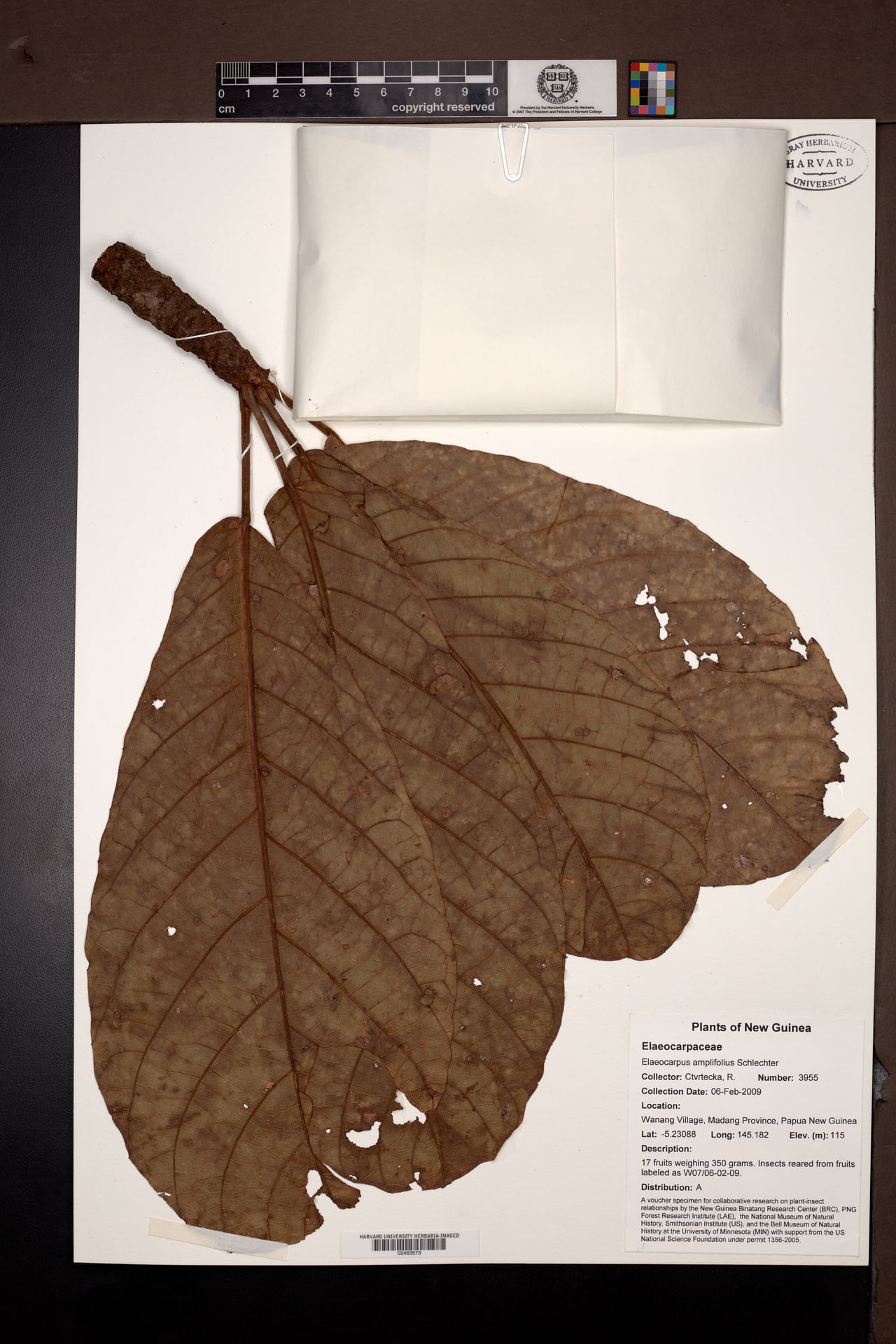
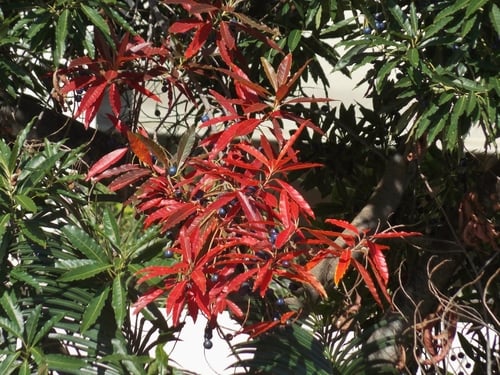
Elaeocarpus grandiflorus
J. E. Smith
Lily of Valley tree
iNaturalist· cc-by-nc-sa
(c) 106611639464075912591, some rights reserved (CC BY-NC-SA), uploaded by 106611639464075912591
iNaturalist· cc-by-nc
(c) Mayuresh Kulkarni, some rights reserved (CC BY-NC), uploaded by Mayuresh Kulkarni
iNaturalist· cc-by-nc-nd
(c) Chief RedEarth, some rights reserved (CC BY-NC-ND), uploaded by Chief RedEarth
Description
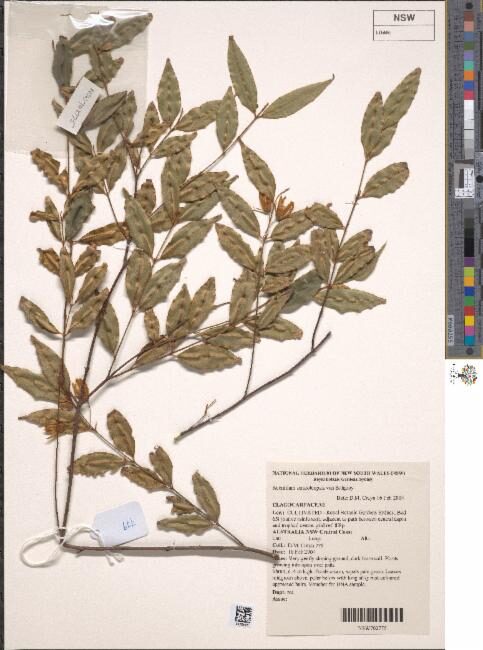
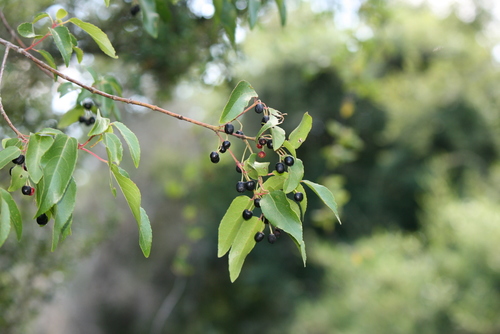
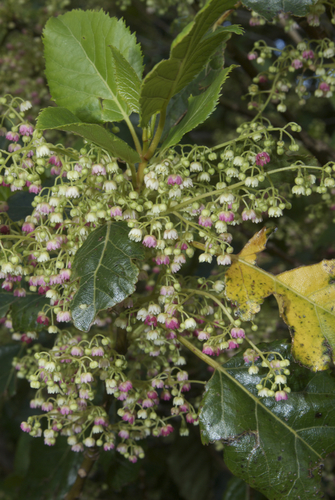
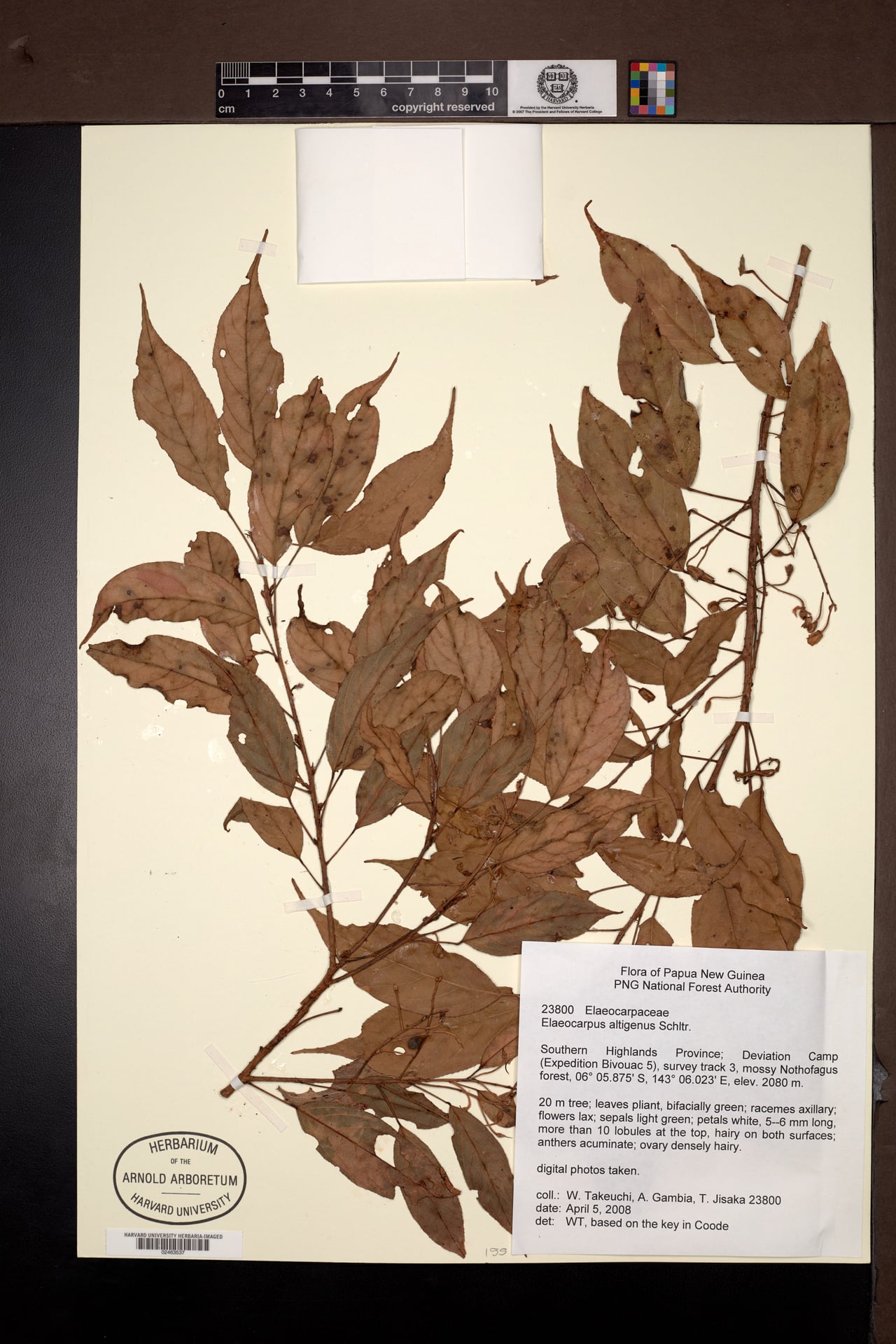
An evergreen tree. It grows 12-17 m high and the trunk is 35-45 cm across. The leaves are oval and 10-13 cm long by 2-3 cm wide. The flowers are 2.5 cm long. The petals are jagged and cream coloured. The sepals are bright red. The fruit is oval. They are yellowish-green.
Edible Uses
The fruit is eaten fresh.
Traditional Uses
The fruit is eaten.
This uses section is brief — help expand it
Medicinal Uses
The crushed bark is used for poulticing persistent ulcers.The bark is an ingredient of a traditional drug for women's diseases. A decoction of the leaves is drunk as a general tonic and is used in the treatment of bilious afflictions. The leaves are an ingredient of a traditional drug against syphilis. The seeds are a common ingredient in many traditional 'jamus'. They are credited with mild diuretic properties and as such are included in prescriptions to relieve bladder stones and painful urination in general.
Known Hazards
The plant is damaged by frost or drought and requires careful site selection.
Distribution
A tropical plant. It grows along river banks below 600 m altitude. It grows in evergreen lowland forest. It is best in moist soils near streams. It needs a protected, sunny position. It is damaged by frost or drought.
Where It Grows
Asia, Australia, India, Indochina, Indonesia, Laos, Malaysia, Myanmar, Pacific, Philippines, SE Asia, Singapore, Thailand*, Vietnam,
Cultivation
Plants can be grown from seeds or cuttings.
Propagation
The seed of most species in this genus is covered by a hard, woody shell and can be very slow and erratic to germinate, sometimes taking 2 years or more. Filing down the shell, or cracking it (being very careful not to damage the seed) in order to allow the ingress of moisture can help to greatly speed up germination. Sow the seed in containers in light shade. When the seedlings are large enough to handle, prick them out into individual pots and grow them on until large enough to plant out, Cuttings of almost ripe shoots, in a sandy soil in a frame. The leaves should be left on the stem.. Many species strike readily from cuttings.
Notes
There are about 360 Elaeocarpus species mostly in the tropics.
Synonyms
Also Known As
Com bong-lon, Com hoa long, Pohon genitri anyang-anyang, Ye-saga
References (7)
- Bodkin, F., 1991, Encyclopedia Botanica. Cornstalk publishing, p 377
- Coronel, R.E., 1982, Fruit Collections in the Philippines. IBPGR Newsletter p 9
- Forest Inventory and Planning Institute, 1996, Vietnam Forest Trees. Agriculture Publishing House p 164
- Morley, B. & Everard, B., 1970, Wild Flowers of the World. Ebury press. Plate 116
- Pham-Hoang Ho, 1999, An Illustrated Flora of Vietnam. Nha Xuat Ban Tre. p 468
Show all 7 references Hide references
- A. Rees, Cycl. 12: Elaeocarpus no. 5. 1809
- Sukarya, D. G., (Ed.) 2013, 3,500 Plant Species of the Botanic Gardens of Indonesia. LIPI p 257