Elaeocarpus foveolatus
F. Muell.
Northern Qandong, White Quandong
iNaturalist· cc-by
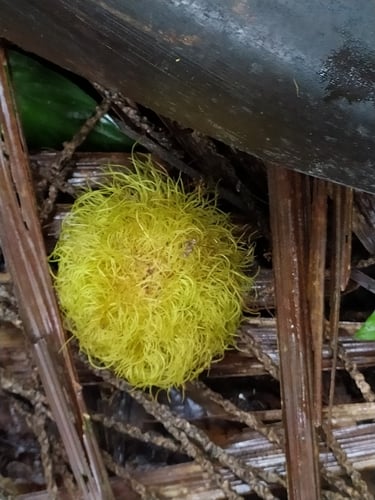
(c) Wairambar Rainforest, some rights reserved (CC BY), uploaded by Wairambar Rainforest
iNaturalist· cc-by-nc
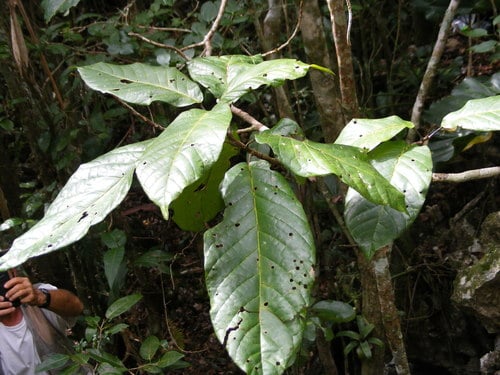
(c) Graham Bell, some rights reserved (CC BY-NC)
Summary
Source: WikipediaElaeocarpus foveolatus, commonly known as white quandong or northern quandong, is a species of flowering plant in the family Elaeocarpaceae and is endemic to Queensland. It is a medium-sized tree, sometimes with buttress roots at the base of the trunk, variably-shaped leaves with serrated edges, flowers with five petals often with a few short lobes or teeth on the tip, and elliptic to oval fruit.
Description
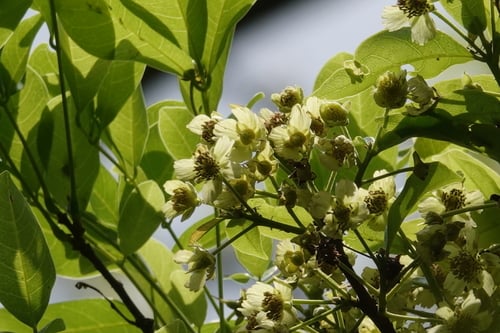
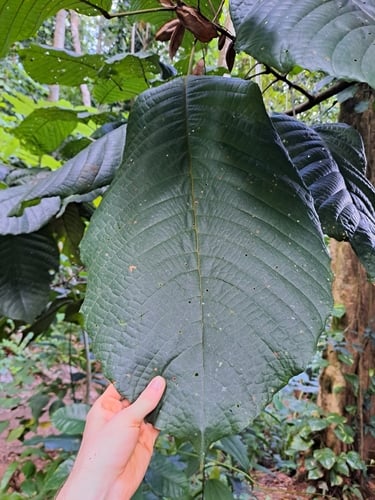
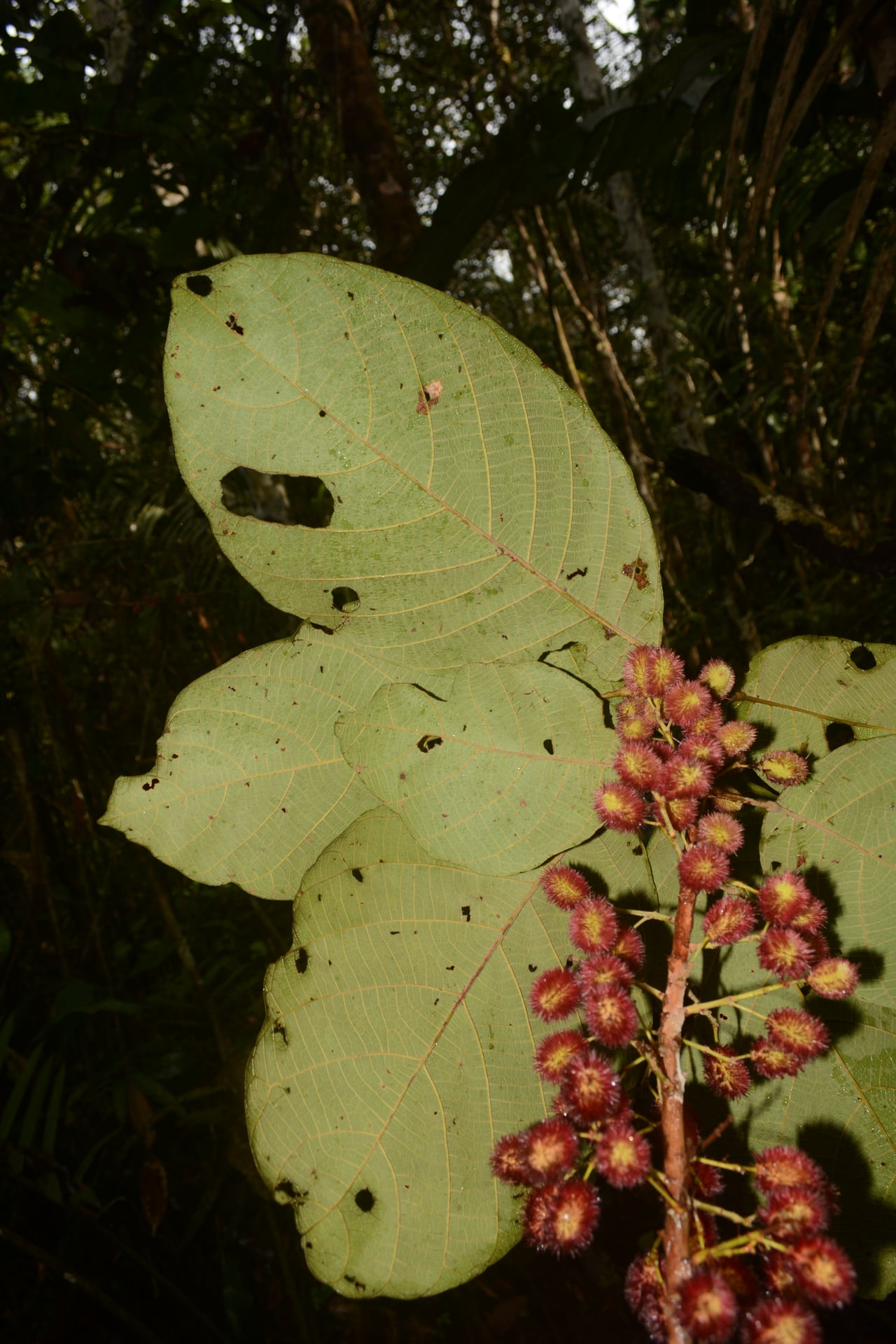
A medium sized tree. It grows up to 15- 25 m tall and spreads 5-12 m wide. The bark is dark brown. The young shoots have silky hairs. The leaves are simple and sword shaped. They are 3-14 cm long and 1-4.5 cm wide. They are hairy underneath. The leaves have teeth along the edge. The flower group are 3-5 cm long and in the axils of the upper leaves. The flowers are 1.2 cm across. They are white and cup-shaped. The fruit is 16 mm long by 1.3 mm wide. They occur singly or in bunches in the axils of leaves. The green flesh is sticky. There is one seed inside. This is 14 mm long by 10 mm wide. The flesh of the fruit is edible.
Edible Uses
The green flesh of the fruit is edible and can be eaten fresh.
Distribution
A tropical plant. It is native to NE Australia. It suits tropical and subtropical climates. It grows naturally in rainforest in Queensland in Australia. It grows between sea level and 1200 m altitude. It needs well drained soils.
Where It Grows
Australia*,
Cultivation
Plants can be grown from seed. Seed do not grow easily. Cracking the seed coat or fermenting the seeds helps.
Propagation
The seed of most species in this genus is covered by a hard, woody shell and can be very slow and erratic to germinate, sometimes taking 2 years or more. Filing down the shell, or cracking it (being very careful not to damage the seed) in order to allow the ingress of moisture can help to greatly speed up germination. Sow the seed in containers in light shade. When the seedlings are large enough to handle, prick them out into individual pots and grow them on until large enough to plant out, Cuttings of almost ripe shoots, in a sandy soil in a frame. The leaves should be left on the stem.. Many species strike readily from cuttings.
Other Uses
The pale coloured wood is light in weight. We have no more information on the specific properties of the wood of this species, however the following is a general description of the wood from this genus:- The heartwood is light-yellowish white to pink-brown, it is not distinctly demarcated from the sapwood. The texture is moderately fine and even, with straight to shallowly interlocked grain. The wood is soft to moderately hard; light in weight to moderately heavy; weak; not very durable. It seasons fairly slowly with slight end and surface checking; shrinkage is fairly low. It is easy to resaw and cross-cut; planing is easy and leaves a moderately smooth finish; nailing properties are good. A general purpose wood, it is suitable for purposes such as general planking, shuttering, boxes, crates, wooden pallets, match splints, veneer and plywood.
Notes
There are about 360 Elaeocarpus species mostly in the tropics.
References (8)
- Barwick, M., 2004, Tropical and Subtropical Trees. A Worldwide Encyclopedic Guide. Thames and Hudson p 162
- Cooper W & Cooper W T, 1994, Fruits of the Rain Forest. RD Press p 106
- Cooper, W. and Cooper, W., 2004, Fruits of the Australian Tropical Rainforest. Nokomis Editions, Victoria, Australia. p 160
- Elliot, W.R., & Jones, D.L., 1984, Encyclopedia of Australian Plants suitable for cultivation. Vol 3. Lothian. p 386
- Jackes, B.R., 2001, Plants of the Tropics. Rainforest to Heath. An Identification Guide. James Cook University. p 51
Show all 8 references Hide references
- Jones D, L, 1986, Ornamental Rainforest Plants in Australia, Reed Books, p 142
- Nicholson, N & H., 1996, Australian Rainforest Plants 2, Terania Rainforest Publishing. NSW. p 26
- Townsend, K., 1994, Across the Top. Gardening with Australian Plants in the tropics. Society for Growing Australian Plants, Townsville Branch Inc. p 175