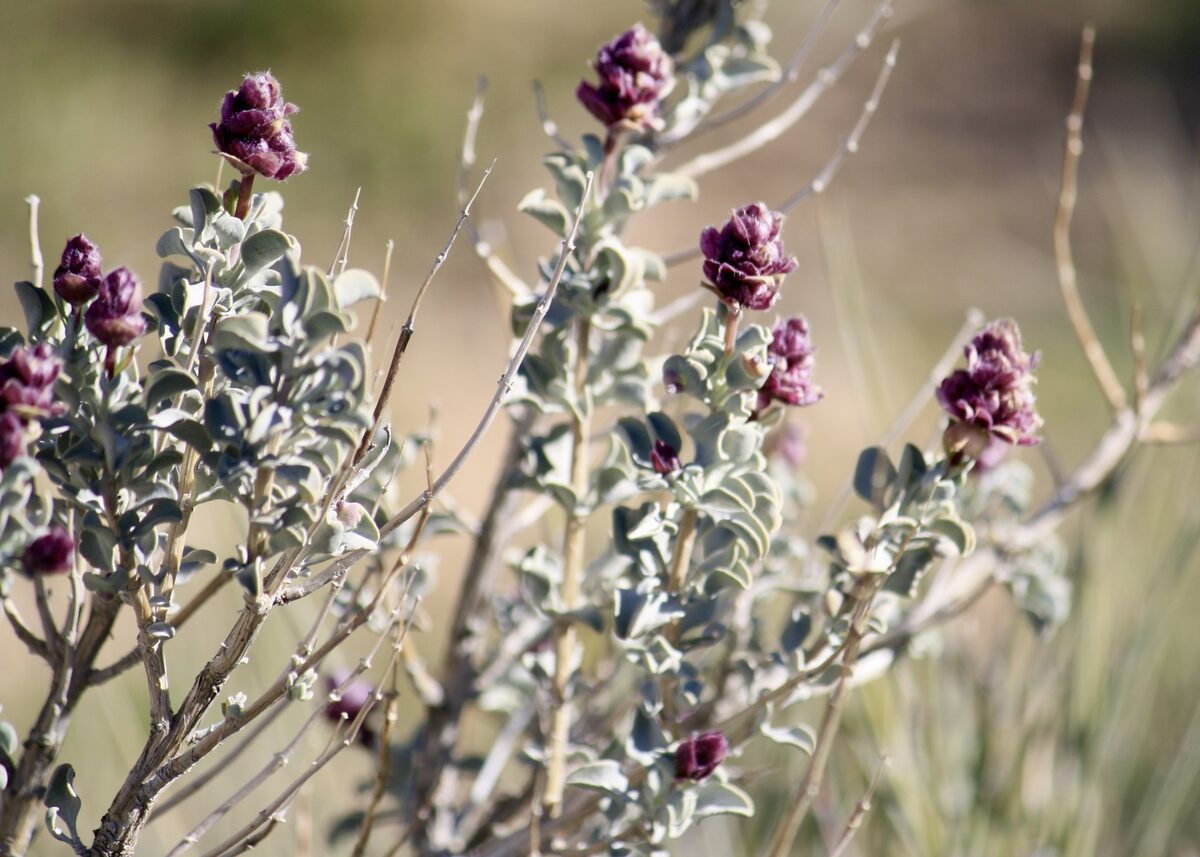
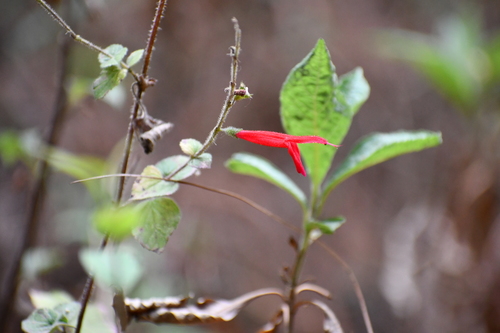
Agastache rugosa
(Fisch. & C. A. Mey.) Kuntze.
Korean mint, Wrinkled great hyssop
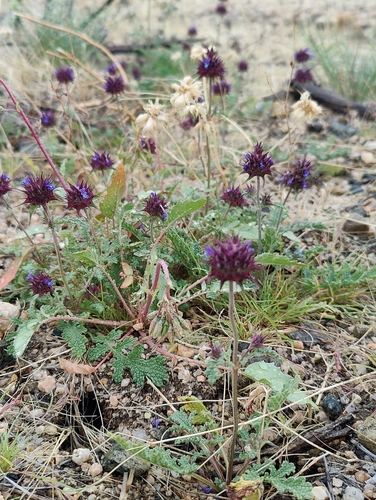
iNaturalist· cc-by-nc
(c) V.S. Volkotrub, some rights reserved (CC BY-NC), uploaded by V.S. Volkotrub
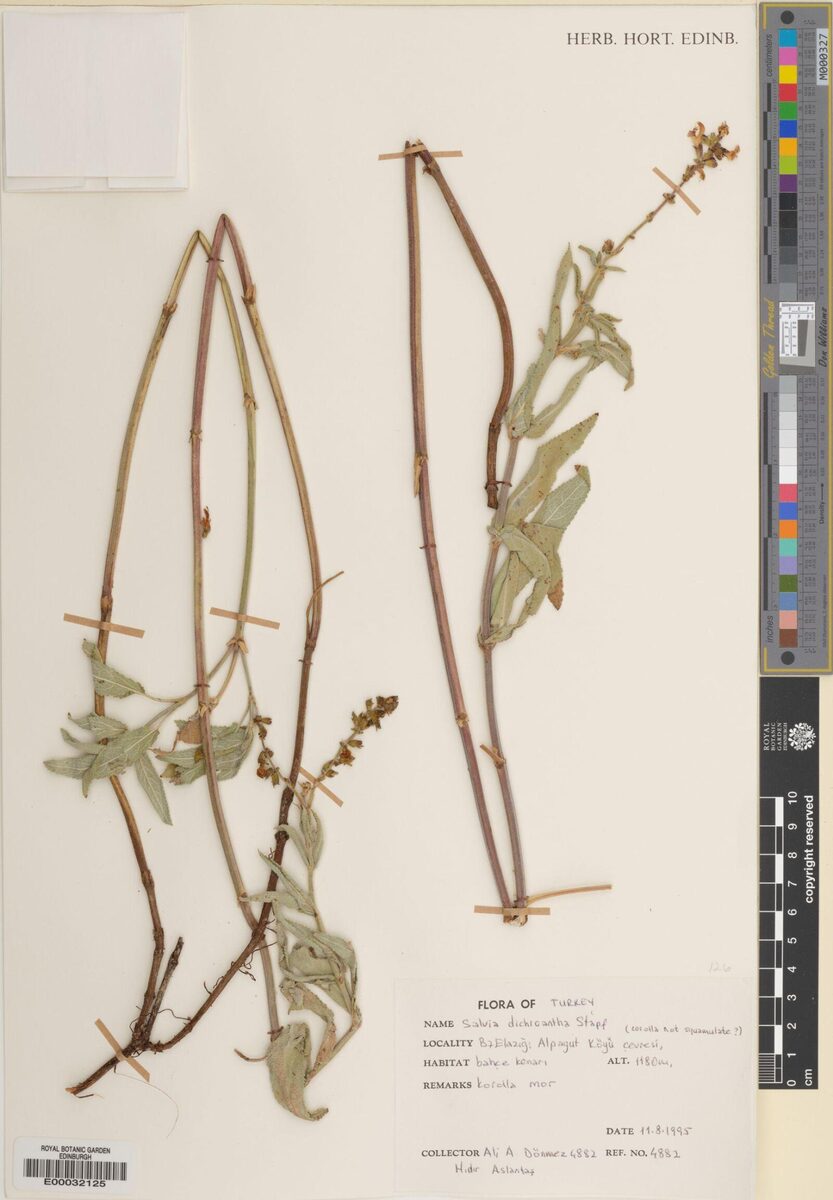
iNaturalist· cc-by
(c) Kim, Hyun-tae, some rights reserved (CC BY), uploaded by Kim, Hyun-tae
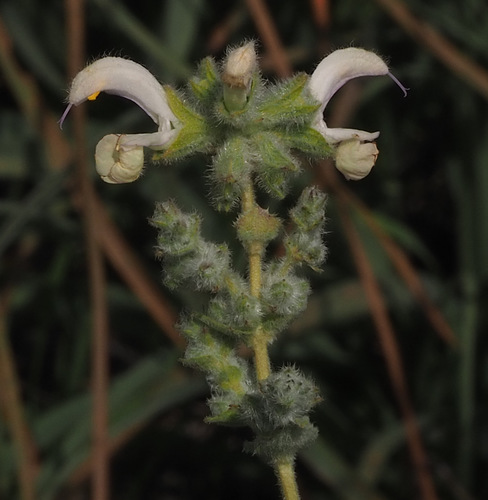
iNaturalist· cc-by
(c) David Sandler, some rights reserved (CC BY)
Summary
Source: WikipediaAgastache rugosa, also known as wrinkled giant hyssop, Korean mint, purple giant hyssop, Indian mint, Chinese patchouli, or Huoxiang (Chinese: 藿香; pinyin: huòxiāng), is an aromatic herb in the mint family, native to East Asia (China, Japan, Korea, Russian Primorye, Taiwan, India, and Vietnam).
Description
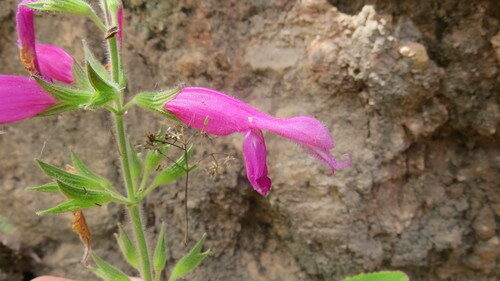
A perennial plant which grows to 1 m tall and spreads to 60 cm wide. The stems are erect. They are finely hairy. The leaves are gradually reduced upward. The leaf stalk is 1.5-3.5 cm long The leaf blade is heart shaped to oblong. It is 4.5-11 cm long by 3-6.5 cm wide. The spikes are compact. They are 2.5-12 cm long by 1.8-2.5 cm wide. The leaves near the flower are narrow. The flower is purple-red.
Edible Uses
Young leaves can be eaten raw or cooked. They have a strong anise-like fragrance and are best used as a flavouring or added in small quantities to salads — they can be somewhat coarse and overpowering when eaten in larger amounts. The leaves also make a pleasant-tasting tea substitute. The seed is possibly edible; it is certainly unlikely to be harmful, but it is very small and would be fiddly to use in any quantity.
Traditional Uses
The young leaves and flowers are eaten raw or cooked as a flavouring. They are used with meat. The leaves can be used for a herbal tea. The seeds are possibly edible.
Medicinal Uses
Korean mint is a key herb in Chinese herbalism and is considered one of the 50 fundamental herbs in that tradition. Regarded as a warming herb, it is prescribed where dampness in the digestive system leads to poor digestion and reduced vitality. The leaves and stems are antibacterial, antifungal, aromatic, carminative, diaphoretic, febrifuge, and stomachic. Taken internally, they help improve appetite, strengthen digestion, and relieve abdominal bloating, indigestion, nausea, vomiting, and morning sickness. The leaves are also used for chest congestion, diarrhoea, and headaches, and an infusion is used in the treatment of angina pains. The plant is used as a folk remedy for cancer, and extracts have shown anticancer activity in testing.
Distribution
It is a temperate to subtropical plant. It grows naturally in valleys all over Japan. It does best in sunny positions in well drained soil. It is frost hardy. It can tolerate temperatures down to -5°C or -10°C. It suits plant hardiness zones 7-11. In Melbourne Botanical garden. It grows in Sichuan.
Where It Grows
Asia, Australia, Austria, Britain, China, Germany, Indochina, Japan, Korea, Laos, Manchuria, North America, Russia, SE Asia, Siberia, Sweden, Taiwan, Tasmania, Tibet, USA, Vietnam,
Cultivation
Plants can be grown from seed. They should just be covered with soil and germinate in 1-3 months at 13°C. They should be grown in the nursery for the first year. Plants can also be grown by dividing clumps and can be grown from basal cuttings. These root in 3 weeks.
Propagation
Sow seed in spring in a greenhouse, barely covering it. Germination typically takes 1–3 months at 13°C. Prick seedlings into individual pots once large enough to handle and grow on under glass for the first year, then plant out in late spring or early summer. Division in spring is straightforward — large divisions can go straight into their permanent positions. For basal cuttings, harvest young shoots at around 10–15cm tall in spring, pot them in a lightly shaded greenhouse, and they should root within 3 weeks, ready to plant out in summer or the following spring.
Other Uses
Korean mint is attractive to wildlife, particularly bees, which are drawn to its flowers in large numbers. Its blooms are rich in nectar and pollen, attracting a range of pollinators including butterflies. The leaves provide some cover and habitat for small wildlife, though the plant is not a significant nesting site. Dense foliage can offer shelter and potential overwintering sites for beneficial invertebrates. The strongly aromatic, minty foliage may also help deter certain pest insects by confusing or repelling them.
Other Information
It is a cultivated food plant.
Notes
There are about 20-30 Agastache species. It is cultivated as a medicinal plant in China. It is used for an essential oil.
Synonyms
Also Known As
Chinese giant hyssop, Huo xiang
References (15)
- Altschul, S.V.R., 1973, Drugs and Foods from Little-known Plants. Notes in Harvard University Herbaria. Harvard Univ. Press. Massachusetts. no. 3711
- Bremness, L., 1994, Herbs. Collins Eyewitness Handbooks. Harper Collins. p 138
- Brown, D., 2002, The Royal Horticultural Society encyclopedia of Herbs and their uses. DK Books. p 105
- Cundall, P., (ed.), 2004, Gardening Australia: flora: the gardener's bible. ABC Books. p 111
- Facciola, S., 1998, Cornucopia 2: a Source Book of Edible Plants. Kampong Publications, p 125
Show all 15 references Hide references
- Haiyan, G., et al, 2016, Antimicrobial, antibiofilm and antitumor activities of essentaloil of Agastache rugosa from Xinjiang, China. Saudi Journal or Biological Sciences
- Hwang, H., et al, 2013, A Study on the Flora of 15 Islands in the Western Sea of Jeollanamdo Province, Korea. Journal of Asia-Pacific Biodiversity Vol. 6, No. 2 281-310
- Hwang, HS, et al, 2014, Distribution characteristics of plant in the Ungseokbong Mountain, Gyeongsangnam-do, Korea. Journal of Asia-Pacific Biodiversity. 7(2014) e164-e178
- Kew Plants of the World Online
- Lawton, B.P., 2002, Mints. A Family of Herbs and Ornamentals. Timber Press, Portland, Oregon. p 117
- Plants for a Future database, The Field, Penpol, Lostwithiel, Cornwall, PL22 0NG, UK. http://www.scs.leeds.ac.uk/pfaf/
- Revis. gen. pl. 2:511. 1891
- Seidemann J., 2005, World Spice Plants. Economic Usage, Botany, Taxonomy. Springer. p 12
- Vermeulen, N, 1998, The Complete Encyclopedia of Herbs. Rebo Publishers. p 28
- Wang, J. et al, 2013, A Study on the Utilization of Wild Plants for Food in Liangshan Yi Autonomous Prefecture. Plant Diversity and Resources. 35(4): 416-471