Salvia dorisiana
Standl.
Sage Fruity Pineapple
iNaturalist· cc-by-nc
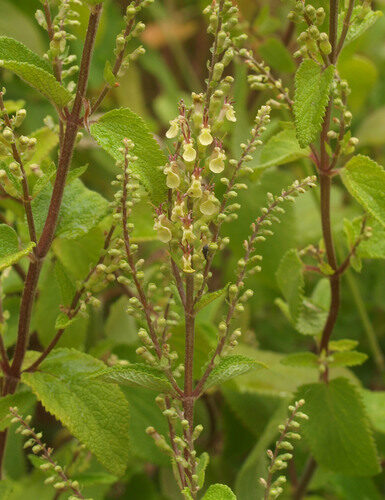
(c) Eric van den Berghe, some rights reserved (CC BY-NC), uploaded by Eric van den Berghe
wikimedia· cc-by
Scott Zona (via Wikimedia Commons)
Description
Salvia dorisiana is an evergreen Perennial growing to 1.3 m (4ft 3in) by 1.3 m (4ft 3in) at a fast rate. See above for USDA hardiness. It is hardy to UK zone 10. The flowers are pollinated by Hummingbirds. The plant is self-fertile. It is noted for attracting wildlife. Suitable for: light (sandy), medium (loamy) and heavy (clay) soils and prefers well-drained soil. Suitable pH: mildly acid, neutral and basic (mildly alkaline) soils. It can grow in semi-shade (light woodland) or no shade. It prefers moist soil.
Edible Uses
Tea. The leaves and flowers are intensely aromatic, with a fragrance of mixed fruits. They are likened to a sweeter version of Pineapple Sage (Salvia elegans) and used as flavourings in salads, fruits salads, iced teas, fruit punches and salad dressings. The large leaves make for an easy harvest for drying and storage. They are used to make flavourful tea. The dried leaves retain the fragrance and also make very lovely wreaths and potpourri.
Medicinal Uses
Skin. None Known
Distribution
Central America - Honduras.
Where It Grows
SOUTHERN AMERICA: Honduras,
Cultivation
Fruity sage succeeds in a range of soils but prefers to grow in moist, well-draining soil with rich, sandy loam. It will tolerate partial shade, but like most salvias, fruity sage prefers full sun. PH 6.1 (mildly acidic) to 7 (mildly alkaline). A plant of the tropics, where it is usually found at elevations between 1,000 - 2,500 metres. Plants do not grow well if the temperature falls below about 5°c for anything other than a short period, though they can withstand occasional short periods down to -2°c. The plant can be cut back to the ground in cold weather and usually resprouts from the base. It dislikes dry soils. Practically the whole plant is covered with hairs that release a delightful pineapple-grapefruit scent when stroked. Plants can be cut back quite severely to encourage new growth. Suitable as an Annual. Sage leaves can be harvested throughout the growing season, with the best flavor typically from spring to early summer, just before flowering. Sage usually flowers in late spring to early summer, generally between May and June (Northern Hemisphere), depending on the specific species and growing conditions. Sage is a moderately fast-growing herb, often reaching maturity in about 1 to 2 years under optimal conditions.
Propagation
Seed, Cuttings (easy).
Other Uses
Cosmetic Pot-pourri Agroforestry uses: Sage can be used as a companion plant to attract pollinators and beneficial insects. Its aromatic leaves may also deter some pests, making it useful in pest management strategies. An extract of the leaves is used as a skin conditioner ingredient in commercial cosmetic preparations. The dried leaves retain the fragrance and make lovely wreaths and potpourri. Scented. Ornamental. Deer Resistant. Attracts Wildlife, including Bees, Butterflies, and Hummingbirds. Flowers are Showy and Fragrant.
Synonyms
Also Known As
Peach sage, Fruit Sage, Fruity Sage, Fruit-Scented Sage, Fruit Scented Sage, Fruit cocktail sage, grapefruit sage