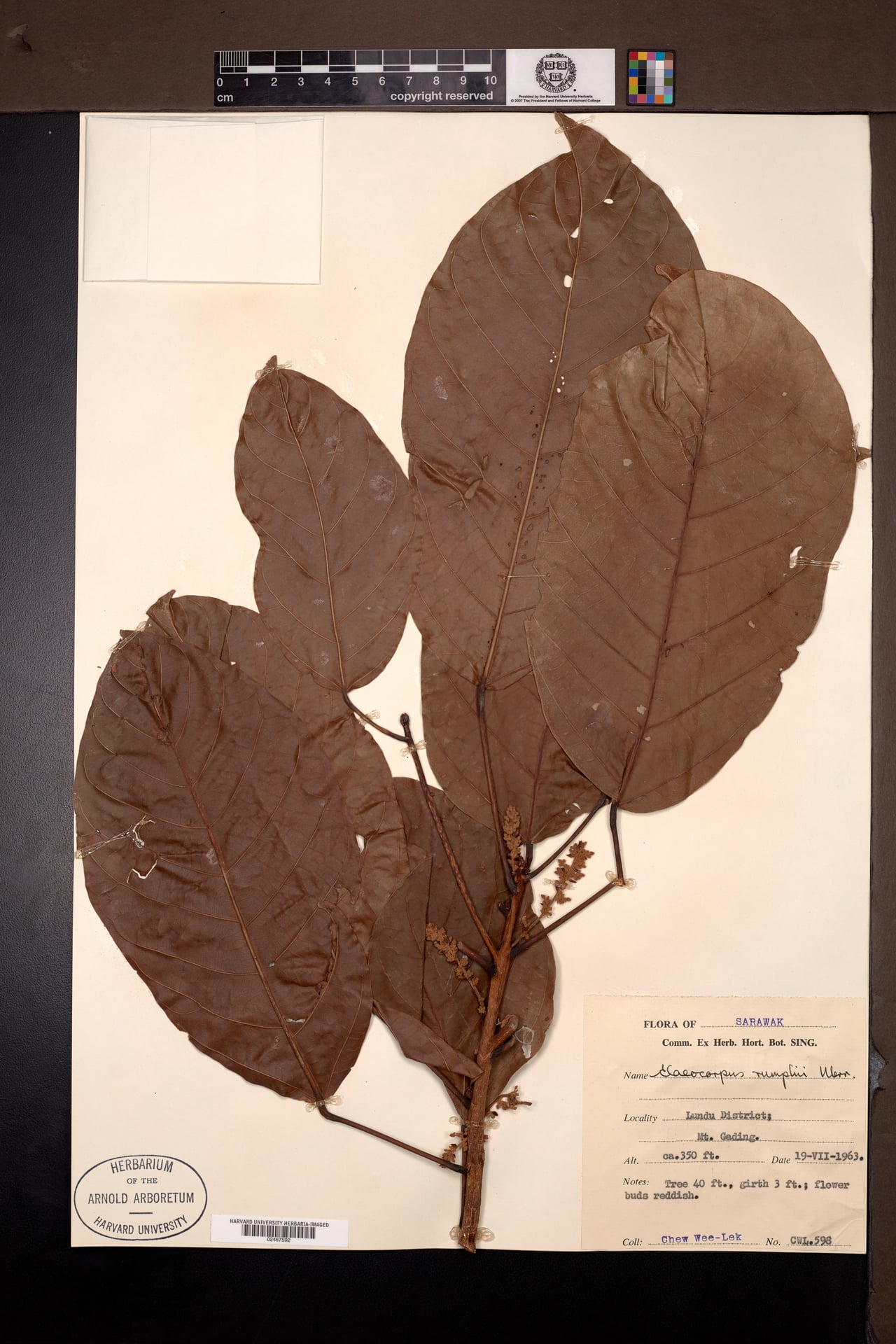
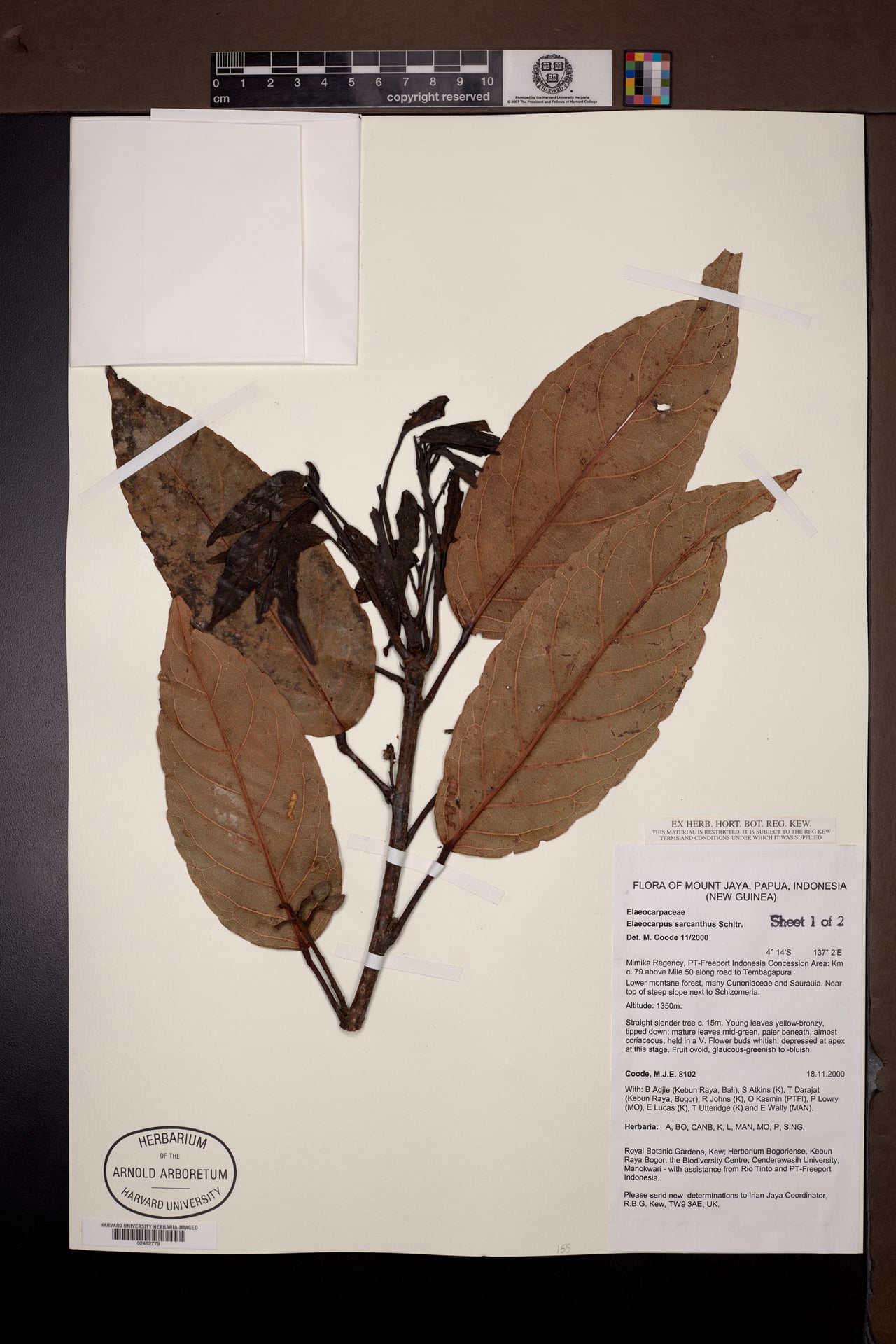
Elaeocarpus bancroftii
F. Muell & F.M.Bailey
Queensland almond, Karanda nut, Johnson River almond, Ebony Heart, Kuranda quandong, Grey nut
iNaturalist· cc-by-nc
(c) Graham Bell, some rights reserved (CC BY-NC), uploaded by Graham Bell
iNaturalist· cc-by-sa
(c) Steve Fitzgerald, some rights reserved (CC BY-SA)
iNaturalist· cc-by-sa
(c) Steve Fitzgerald, some rights reserved (CC BY-SA)
Summary
Source: WikipediaElaeocarpus bancroftii, commonly known as Kuranda quandong, Johnstone River almond, ebony heart, grey nut, or nut tree is a large rainforest tree in the family Elaeocarpaceae which is endemic to Queensland, Australia. It has coriaceous (thick but flexible) leaves, attractive white flowers and relatively large fruit containing an edible kernel.
Description
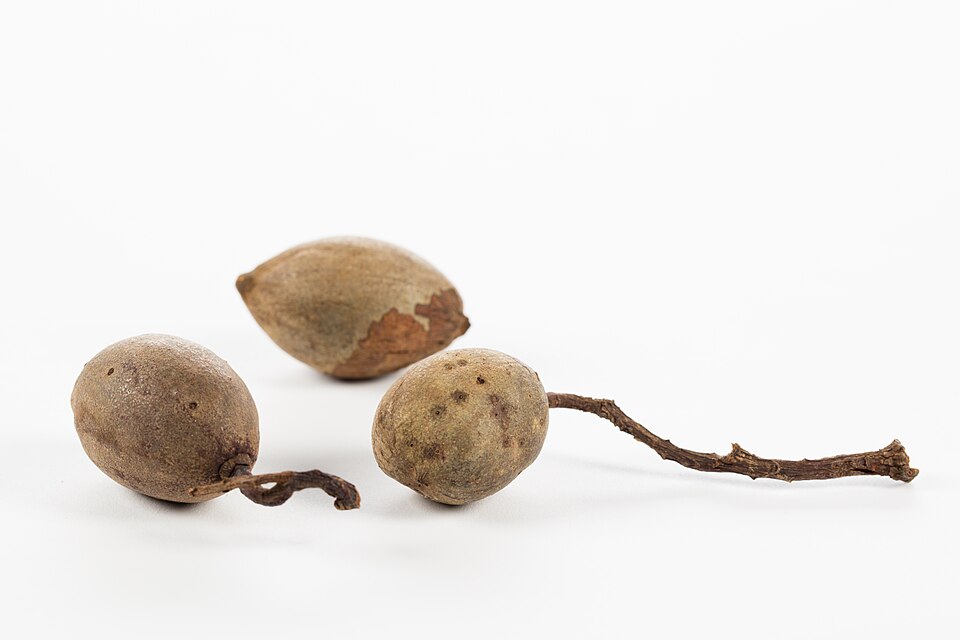
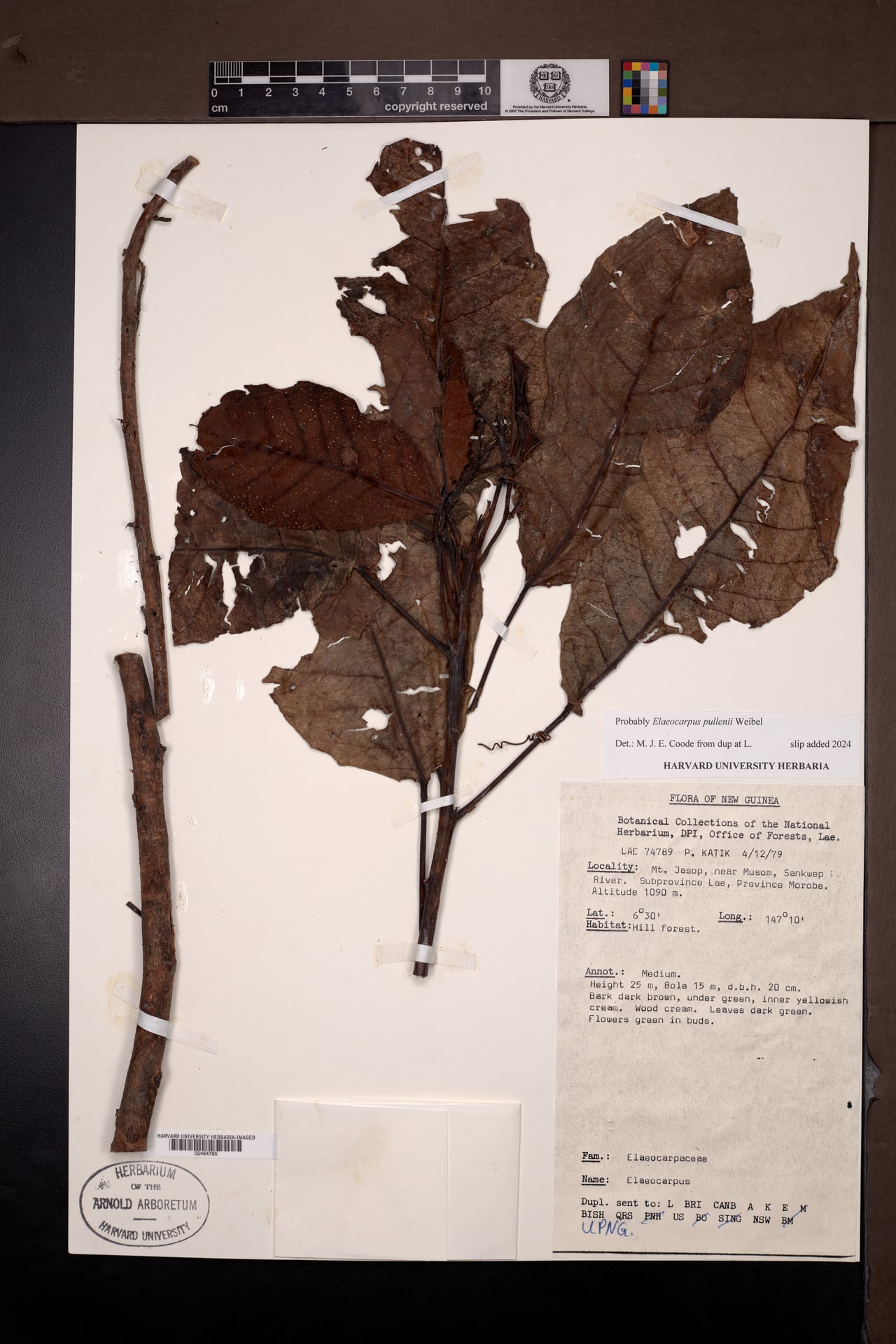
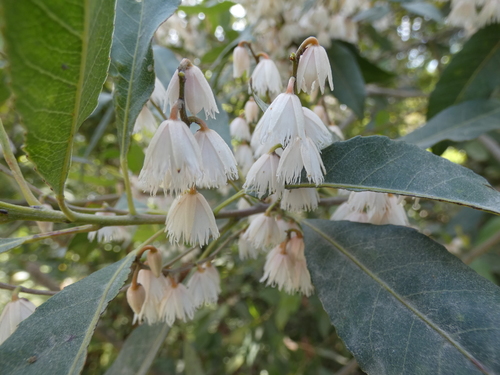
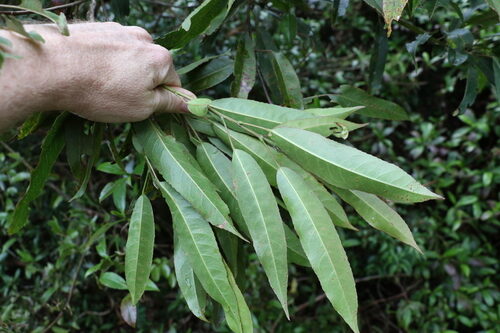
A medium sized to tall tree. It grows 15-30 m tall and spreads 8-15 m across. The bark is dark grey and scaly. Young shoots are covered with fine silky hairs. The leaves are oblong to sword shaped and 7-15 cm long by 2-6 cm wide. They are dark green and glossy on top and paler underneath. The edges of the leaf are entire. The flower racemes are 4-8 cm long with flowers 1.5 cm long. These flower arrangements grow in the leafless part of the stem. The flowers are white and bell shaped. The edges of the flower petals have lobes. The fruit is 2.5-3.5 cm across and rounded. They are greenish black. The kernel of the fruit is edible. The shell around the kernel is very hard.
Edible Uses
Indigenous Australians ate the seeds, although the very hard shell required them to use stones to crack them open. These special "nut stones", which had a groove or hollow in which the nut was placed, along with the accompanying "hammer stones", have been found throughout Queensland as forests were cleared during the expansion of European settlement. The 1889 book The Useful Native Plants of Australia records that "The cotyledons or 'kernels' have a good flavour, and are eaten by the settlers. Other species of Elaeocarpus have fruits which are more or less useful in this respect."
Traditional Uses
The kernel of the nut is eaten raw.
This uses section is brief — help expand it
Distribution
A tropical plant. It is native to NE Australia. It grows in tropical rainforests. It grows between sea level and 1100 m altitude. It requires well drained soil and plenty of moisture. It is sensitive to drought and frost. In Adelaide Botanical Gardens hot house.
Where It Grows
Australia*, Pacific, Papua New Guinea, PNG,
Cultivation
Plants are grown from seed. They can be grown from cuttings.
Propagation
The seed of most species in this genus is covered by a hard, woody shell and can be very slow and erratic to germinate, sometimes taking 2 years or more. Filing down the shell, or cracking it (being very careful not to damage the seed) in order to allow the ingress of moisture can help to greatly speed up germination. Sow the seed in containers in light shade. When the seedlings are large enough to handle, prick them out into individual pots and grow them on until large enough to plant out, Cuttings of almost ripe shoots, in a sandy soil in a frame. The leaves should be left on the stem.. Many species strike readily from cuttings.
Other Uses
The wood is light in weight, quite hard and durable. It is used for timber. We have no more information on the specific properties of the wood of this species, however the following is a general description of the wood from this genus:- The heartwood is light-yellowish white to pink-brown, it is not distinctly demarcated from the sapwood. The texture is moderately fine and even, with straight to shallowly interlocked grain. The wood is soft to moderately hard; light in weight to moderately heavy; weak; not very durable. It seasons fairly slowly with slight end and surface checking; shrinkage is fairly low. It is easy to resaw and cross-cut; planing is easy and leaves a moderately smooth finish; nailing properties are good. A general purpose wood, it is suitable for purposes such as general planking, shuttering, boxes, crates, wooden pallets, match splints, veneer and plywood.
Production
Seedlings grow quickly. In Australia flowering occurs from March to June and fruit are mature in July to October.
Other Information
The nut is enjoyed.
Notes
There are about 360 Elaeocarpus species mostly in the tropics.
Nutrition
| Part | Moisture | kJ | kcal | Protein | Vit A | Vit C | Iron | Zinc |
|---|---|---|---|---|---|---|---|---|
| Kernel | 37.6 | 1000 | 239 | 2.3 | — | — | — | — |
References (20)
- Bailey, F. M., 1913, Comprehensive Catalogue of Queensland Plants. Queensland Government. p 69
- Barwick, M., 2004, Tropical and Subtropical Trees. A Worldwide Encyclopedic Guide. Thames and Hudson p 161
- Bodkin, F., 1991, Encyclopedia Botanica. Cornstalk publishing, p 376
- Cherikoff V. & Isaacs, J., The Bush Food Handbook. How to gather, grow, process and cook Australian Wild Foods. Ti Tree Press, Australia p 199
- Cooper W & Cooper W T, 1994, Fruits of the Rain Forest. RD Press p 104
Show all 20 references Hide references
- Cooper, W. and Cooper, W., 2004, Fruits of the Australian Tropical Rainforest. Nokomis Editions, Victoria, Australia. p 159
- Cribb, A.B. & J.W., 1976, Wild Food in Australia, Fontana. p 85
- Doran, J.C., & Turnbull, J.W. (Eds), 1997, Australian Trees and Shrubs: species for land rehabilitation and farm plantings in the tropics. ACIAR Monograph No 24. p 353
- Elliot, W.R., & Jones, D.L., 1984, Encyclopedia of Australian Plants suitable for cultivation. Vol 3. Lothian. p 385
- Facciola, S., 1998, Cornucopia 2: a Source Book of Edible Plants. Kampong Publications, p 94
- Hiddins, L., 1999, Explore Wild Australia with the Bush Tucker Man. Penguin Books/ABC Books. p 146
- Hill, R. and Baird, A., 2003, Kuku-Yalanji Rainforest Aboriginal People and Carbohydrate Resource Management in the Wet Tropics of Queensland, Australia. Human Ecology, Vol. 31, No. 1. pp 27-52
- Jackes, B.R., 2001, Plants of the Tropics. Rainforest to Heath. An Identification Guide. James Cook University. p 51
- Jones D, L, 1986, Ornamental Rainforest Plants in Australia, Reed Books, p 141, 340
- Lazarides, M. & Hince, B., 1993, Handbook of Economic Plants of Australia, CSIRO. p 88
- Low, T., 1992, Bush Tucker. Australia’s Wild Food Harvest. Angus & Robertson. p 94
- Menninger, E.A., 1977, Edible Nuts of the World. Horticultural Books. Florida p 116
- Proc. Roy. Soc. Queensl. 2:142. 1885
- Townsend, K., 1994, Across the Top. Gardening with Australian Plants in the tropics. Society for Growing Australian Plants, Townsville Branch Inc. p 174
- Wickens, G.E., 1995, Edible Nuts. FAO Non-wood forest products. FAO, Rome. p 121