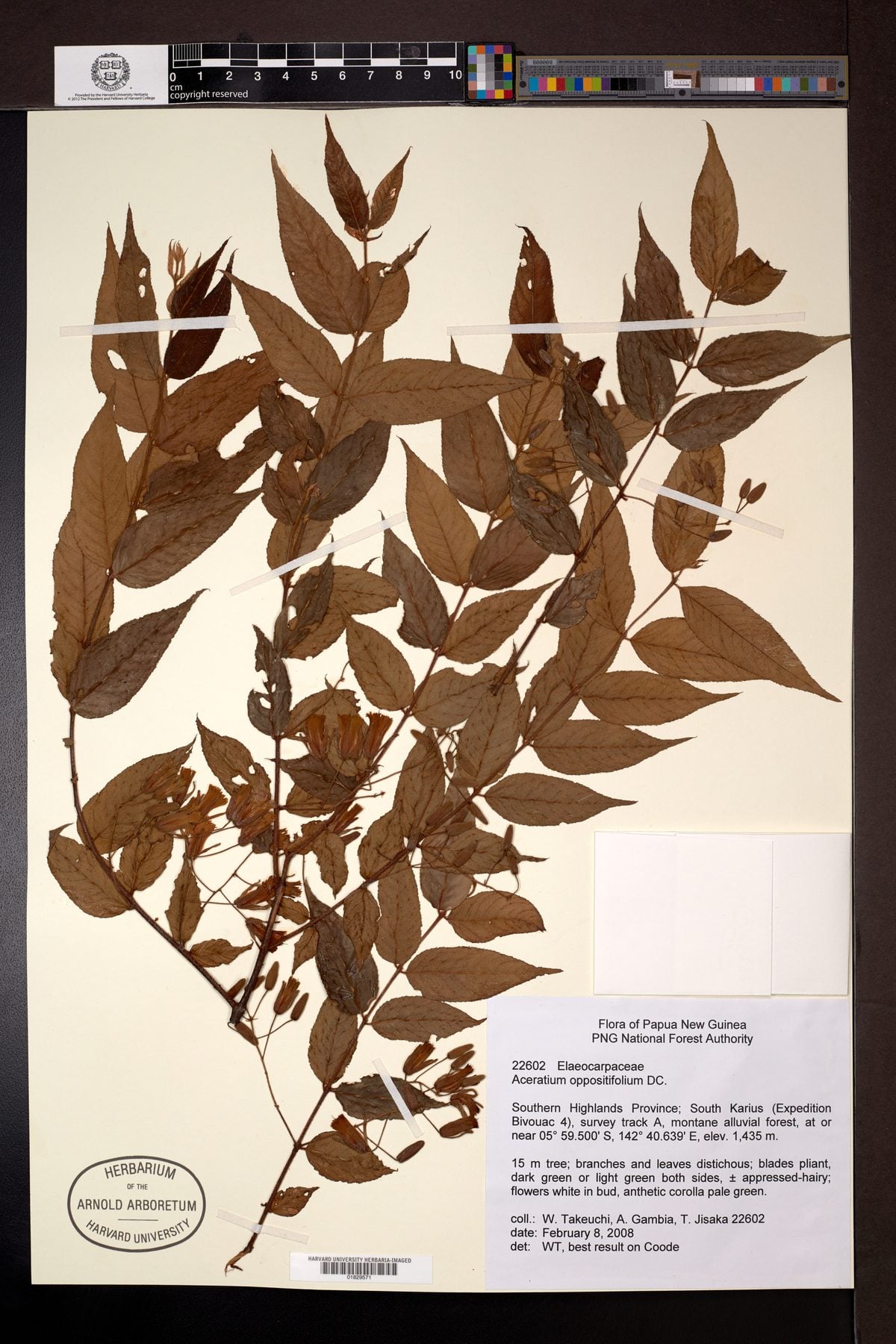
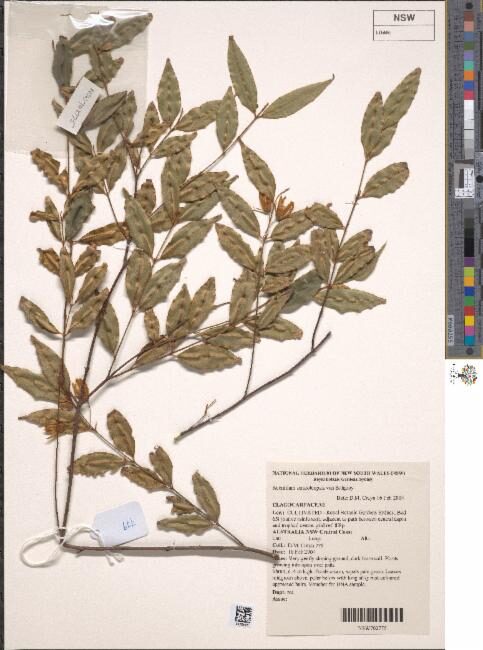
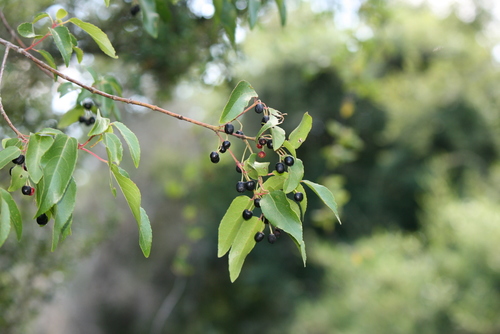
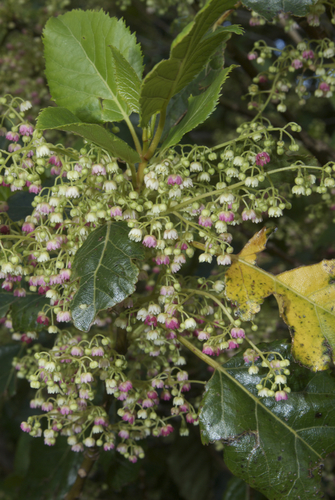
Sloanea laurifolia
(Willd.) Benth.
iNaturalist· cc-by-nc
(c) Jenny_Bee3, some rights reserved (CC BY-NC)
iNaturalist· cc-by-nc
(c) Jenny_Bee3, some rights reserved (CC BY-NC)
iNaturalist· cc-by-nc
(c) Jenny_Bee3, some rights reserved (CC BY-NC)
Description
A tree. It grows 18-45 m tall. The trunk has buttresses. The leaves are alternate or opposite They are 6-14 cm long by 3-5 cm wide. The fruit are green and 2-3 cm long by 1-2 cm wide. There is orange pulp around a single seed.
Edible Uses
Fruit. (As Sloanea venezuelana) The fresh fruit, when eaten, is believed to cause a 'loco' type of feeling. When ground and cooked it is prepared into a tortilla similar to that of arepa de maiz. The fruit comprises a single seed up to 17mm long surrounded by a thin layer of fleshy, orange-coloured pulp.
Traditional Uses
The fruit is often used cooked.
This uses section is brief — help expand it
Distribution
It is a tropical plant. In rainforest areas that are occasionally flooded the tree grows tall.
Where It Grows
Belize, Bolivia, Brazil, Central America, Colombia, Costa Rica, French Guiana, Honduras, South America,
Cultivation
The branches are very brittle.
Other Uses
The wood is very hard.
Synonyms
References (1)
- Plants of the World Online.