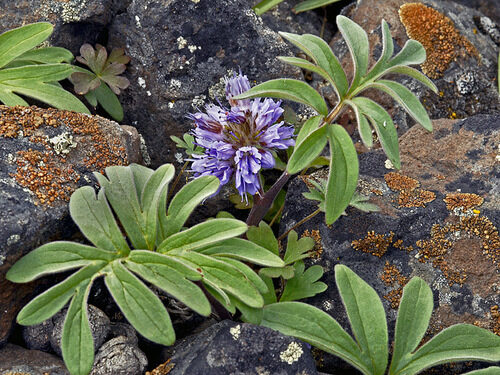
Ehretia laevis
Roxb.
Chamror
iNaturalist· cc-by
(c) Biodiversity Heritage Library, some rights reserved (CC BY)
iNaturalist· cc-by-nc
(c) Devendra Bhardwaj, some rights reserved (CC BY-NC)
iNaturalist· cc-by-nc
(c) SONU KUMAR, some rights reserved (CC BY-NC)
Description
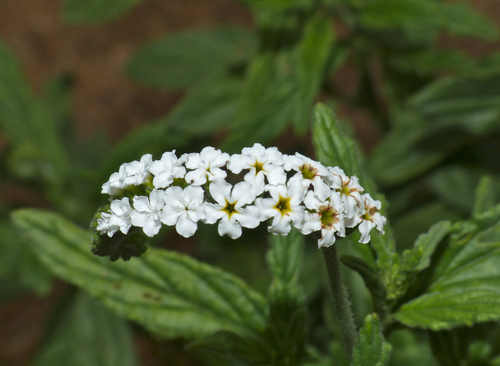
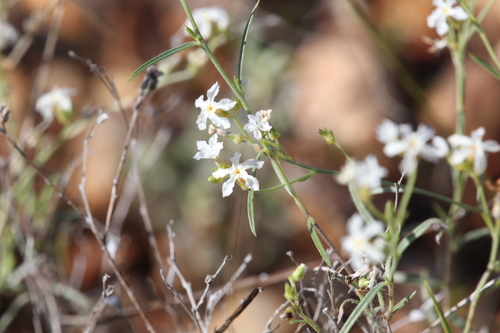
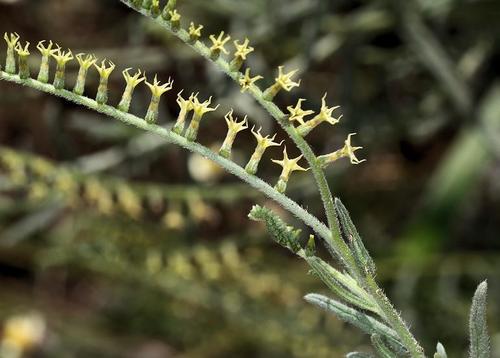
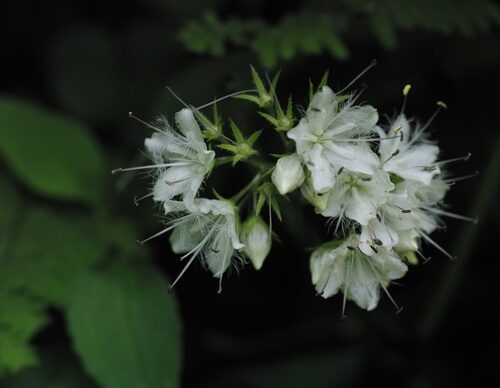
A bushy shrub or tree about 4- 10 m tall. It often has crooked stems and several stems. It is often gnarled and knobby. It loses its leaves during the year. The bark is yellow or grey but not rough. The leaves vary is shape. They are hairy when young and often broad. They become smooth and shiny. The tip is pointed. The flowers are small and white. They are 6 mm long. They are star shaped with 5 spreading petals and in loose clusters. They are in the axils of leaves and at the ends of twigs. The fruit are small bright orange berries. They turn black when ripe.
Edible Uses
The ripe fruit are eaten raw and young fruit are pickled. The leaves are used to make a tea-like drink. The inner bark is pounded and mixed with flour as a famine food. The seeds or nuts have been recorded as eaten. The bark is chewed and stains the teeth red.
Traditional Uses
The leaves can be used to give a tea like drink. The inner bark is pounded and eaten mixed with flour as a famine food. The bark is chewed and stains the teeth red. The nuts or seeds have been recorded as eaten. The ripe fruit are eaten raw. The young fruit are pickled.
Distribution
A tropical plant. It grows in the tropics. It grows along forest slopes, roadsides in China. In India is grows up to 800 m in the Himalayas.
Where It Grows
Asia, Australia, Bhutan, Cambodia, China, East Timor, Himalayas, India, Indochina, Iran, Japan, Kashmir, Laos, Middle East, Myanmar, Northeastern India, Pakistan, SE Asia, Timor-Leste, Vietnam,
Cultivation
Plants can be grown from seed or stem cuttings.
Production
In India fruit are produced March to May.
Notes
There are about 50 Ehretia species.
Synonyms
Also Known As
Adak, Addula, Bagari, Bhairo, Bhoiumbar, Chambal, Chamrod, Chamror, Chavandi, Chinor, Darar, Datrang, Datranga, Desi papdi, Geen, Guachipo, Gyaung-byu, Hanbuok-arong, Kadu-milaung, Kappura, Khoda, Koda, Mao e hou ke shu, Masania, Moksoam-kan, Mosonea, Paldatam, Pedda-pilmera, Pisini, Pisinika, Pogari, Pusi pan, Sakar, Tamboli, Tamoiya, Tawkunkauk, Taw-swen-kyauk
References (23)
- Ambasta, S.P. (Ed.), 2000, The Useful Plants of India. CSIR India. p 190
- Bahuguna, A. et al, 2010, Floristic Diversity and Indigenous uses of Forest Vegetation of Dabka Watershed in Indian Central Himalayas. Ethnobotanical Leaflets 14:491-510
- Bohra, N., et al, 2017, Ethnobotany of wild edible plants traditionally used by the local people in the Ramnagar regions from Nainital District, Uttarakhand, India. Biolife 5(1): 12-19
- Dey, A. & Mukhererjee, A., 2015, Living and Survival Amidst Hunger: Wild Edible Botanicals as a Prime Forest Productivity in the Rural Purulia District, West Bengal, India from Colonial to Present. Research Journal of Forestry 9(3): 71-86
- GAMMIE,
Show all 23 references Hide references
- GUPTA,
- Hedrick, U.P., 1919, (Ed.), Sturtevant's edible plants of the world. p 285
- Krishen P., 2006, Trees of Delhi, A Field Guide. DK Books. p 70
- Masoodi, H. U. R. & Sundriyal, R. C., 2020, Richness of non-timber forest products in Himalayan communities—diversity, distribution, use pattern and conservation status. Journal of Ethnobiology and Ethnomedicine 16:56
- Misra S. & Misra M., 2016, Ethnobotanical and Nutritional Evaluation of Some Edible Fruit Plants of Southern Odisha, India. International Journal of Advances in Agricultural Science and Technology, Vol.3 Issue.1, March- 2016, pg. 1-30
- Misra, S., 2020, Survey of edible plants for human consumption in south Odisha, India. Journal of Emerging Technologies and Innovative Research (JETIR) Vol. 7, Issue 12 p 278
- Phon, P., 2000, Plants used in Cambodia. © Pauline Dy Phon, Phnom Penh, Cambodia. p 268
- Pl. Corom. 1: 42. T. 56. 1795
- Plants for a Future database, The Field, Penpol, Lostwithiel, Cornwall, PL22 0NG, UK. http://www.scs.leeds.ac.uk/pfaf/ (As Ehretia ovalifolia)
- Rao, M. L. S., et al, 2014, Indigenous Plant Foods which are commonly consumed by the tribal communities in Dumbriguda Area of Visakhapatnam District, Andhra Pradesh, India. Biolife. Vol 2, Issue 3
- Reddy, K. N. et al, 2007, Traditional knowledge on wild food plants in Andhra Pradesh. Indian Journal of Traditional Knowledge. Vol. 6(1): 223-229
- Singh, H.B., Arora R.K.,1978, Wild edible Plants of India. Indian Council of Agricultural Research, New Delhi. p 56
- Swaminathan, M.S., and Kochnar, S.L., 2007, An Atlas of Major Flowering Trees in India. Macmillan. p 186
- Upreti, K., et al, 2010, Diversity and Distribution of Wild Edible Fruit Plants of Uttarakhand. Bioversity Potentials of the Himalaya. p 168
- Wild edible plants of Himachal Pradesh
- World Checklist of Useful Plant Species 2020. Royal Botanic Gardens, Kew (As Ehretia aspera)
- Yadav, D. K., 2011, Study on Biodiversity and Edible Bioresources of Betla National Park, Palamu, Jharkhand (India). The 2011 Las Vegas International Academic Conference.
- Zhu Ge-ling; Harald Riedl, Rudolf Kamelin, BORAGINACEAE, Flora of China