Phacelia tanacetifolia
Benth.
Tansy phacelia
iNaturalist· cc-by-nc-nd
(c) Laura O'Halloran, some rights reserved (CC BY-NC-ND)
iNaturalist· cc-by
(c) Alexis, some rights reserved (CC BY)
iNaturalist· cc-by-nc
(c) miriamzaramel, some rights reserved (CC BY-NC)
Summary
Source: WikipediaPhacelia tanacetifolia is a species of flowering plant in the family Hydrophyllaceae, known by the common names lacy phacelia, tansy-leaf phacelia, blue tansy, purple tansy or fiddleneck (UK).
Description
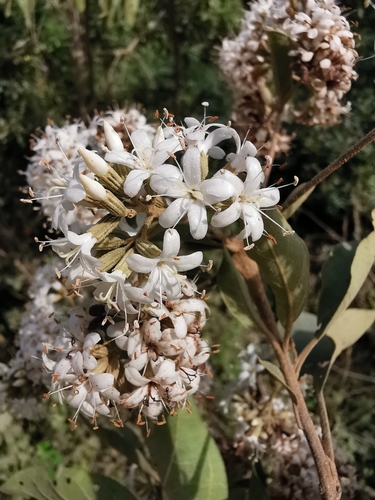
A herb or small shrub. It grows 1.3 m high. The flowers are lavender blue. It attracts beneficial insects and is a good honey producing crop.
This description is brief — help expand it
Edible Uses
None known
Traditional Uses
It is cultivated as a honey crop giving a mild aromatic honey.
This uses section is brief — help expand it
Medicinal Uses
None known
Distribution
It is a temperate plant.
Where It Grows
Australia, North America, Norway, Scandinavia, Russia, Tasmania, USA,
Cultivation
Succeeds in any moderately fertile well-drained soil in a sunny position. Prefers a moist soil. The flowers are a rich source of nectar and is occasionally grown commercially as a crop for bees.
Propagation
Sow seed in situ in late spring or late summer. The plant often self-sows.
Other Uses
Used as a green manure crop, though as of 1980 it had not been properly tested in Britain. It is not deeply rooted. The plant attracts wildlife and is suited to food forest systems.
Notes
Also put in the family Hydrophyllaceae.
Also Known As
Honningurt
References (4)
- Curtis, W.M., 1993, The Student's Flora of Tasmania. Part 3 St David's Park Publishing, Tasmania, p 486
- Facciola, S., 1998, Cornucopia 2: a Source Book of Edible Plants. Kampong Publications, p 122
- Girard, N. J., 2020, Sustainable Foraging of Wild Edible Plants in Norway. A Biocultural Approach. M. Sc. thesis Norwegian University. p 129
- J. Lindley, Edward's Bot. Reg. 20: t. 1696. 1834 (Trans. Linn. Soc. London 17:280; Trans. Hort. Soc. London 1:479. 1835)