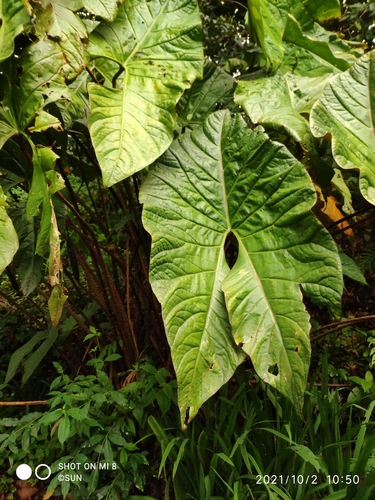
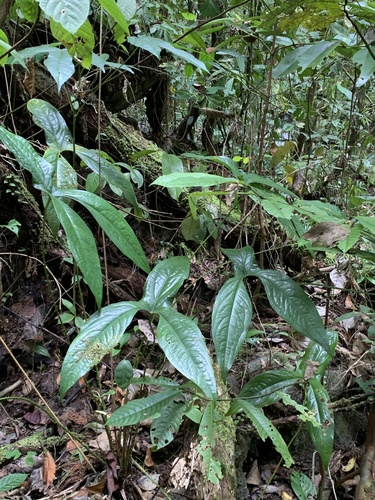
Dracontium asperum
K. Koch
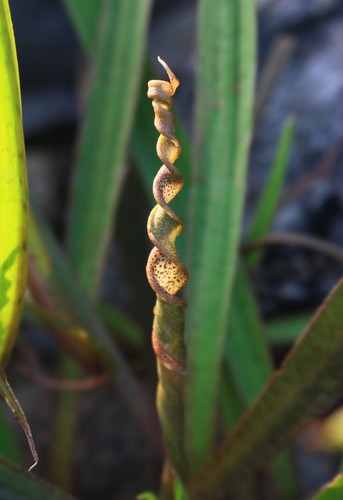
iNaturalist· cc-by-nc
(c) Kurt Miller, some rights reserved (CC BY-NC)
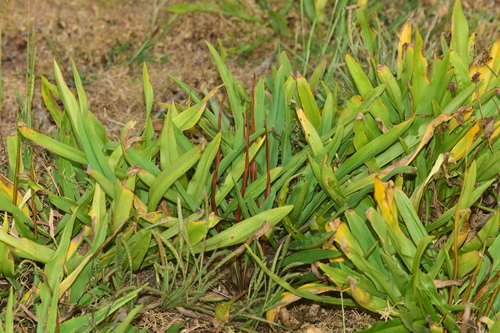
iNaturalist· cc-by-nc
(c) Kurt Miller, some rights reserved (CC BY-NC)
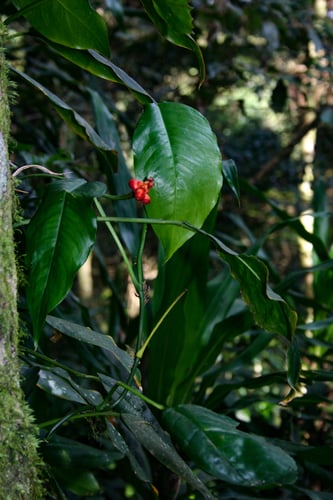
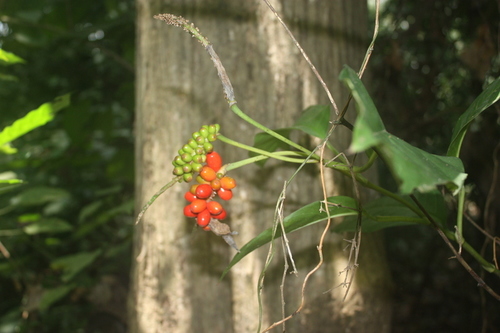
iNaturalist· cc-by-nc
(c) Kurt Miller, some rights reserved (CC BY-NC)
Description
A taro family herb. It grows 1.8 m tall. It forms a tuber 8 cm across. The leaf stalk is 3 m long. There is only one leaf with irregular lobes that vary is size and shape.
Edible Uses
The tubers are cooked and eaten.
Traditional Uses
The tubers are cooked and eaten. Caution: They probably contain oxalates.
This uses section is brief — help expand it
Known Hazards
The tubers probably contain oxalates.
Distribution
It is a tropical plant. It grows in wet lands.
Where It Grows
Asia, Brazil, Colombia, Guianas, Guyana, Peru, SE Asia, Singapore, South America, Suriname, Venezuela,
Notes
There are 23 Dracontium species. It is used in medicine.
Synonyms
Also Known As
Erva-jararaca, Taruma
References (5)
- Brown, D., 2000, Aroids. Plants of the Arum family. Timber Press. (Second edition) p 270
- Burkill, I.H., 1966, A Dictionary of the Economic Products of the Malay Peninsula. Ministry of Agriculture and Cooperatives, Kuala Lumpur, Malaysia. Vol 1 (A-H) p 873
- Kermath, B. M., et al, 2014, Food Plants in the Americas: A survey of the domesticated, cultivated and wild plants used for Human food in North, Central and South America and the Caribbean. On line draft. p 319
- USDA, ARS, National Genetic Resources Program. Germplasm Resources Information Network - (GRIN). [Online Database] National Germplasm Resources Laboratory, Beltsville, Maryland. Available: www.ars-grin.gov/cgi-bin/npgs/html/econ.pl (10 April 2000)
- Wochenschr. Gaurtnerei Pflanzenk. 2:259. 1859