Afzelia africana
Sm. ex Pers.
African mahogany, Lucky-bean tree
iNaturalist· cc-by-nc
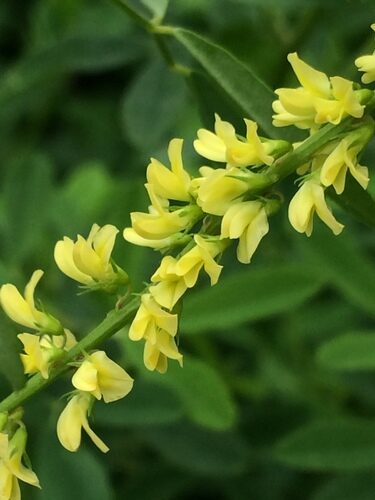
(c) ONG OeBenin, some rights reserved (CC BY-NC), uploaded by ONG OeBenin
iNaturalist· cc-by-nc
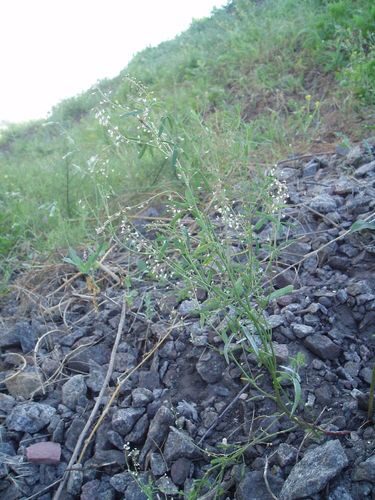
(c) AMADOU BAHLEMAN FARID, some rights reserved (CC BY-NC), uploaded by AMADOU BAHLEMAN FARID
iNaturalist· cc-by-nc
(c) ONG OeBenin, some rights reserved (CC BY-NC), uploaded by ONG OeBenin
Summary
Source: WikipediaAfzelia africana, the African mahogany, afzelia, lenke, lengue, apa, or doussi, is a Myrmecophyte tree species in the family Fabaceae.
Description
A large tree. It grows 6-30 m tall. Often is loses its leaves during part of the year. It has thick branches. It has short thick buttresses near the base. The bark is dark brown. Large pieces of bark flake off. The leaves are compound. The leaf stalks are 32 cm long. There are 2-5 pairs of leaflets. They are oval and 5-15 cm long. The tip is pointed. The flowers occur in heads about 10 cm long. Each flower is 1-2 cm long and has only one petal. The flower is green-white with pink lines. The fruit is a large woody straight pod. It can be 10-20 cm long and 5-8 cm wide. The seeds are black and 3 cm long. They are half covered with a soft bright orange aril. They lie in white pith.
Edible Uses
The fruit can be eaten raw — the fleshy pulp found inside the seedpod, surrounding the seeds, has a sweet flavour. Some caution is advised, as the seeds themselves are poisonous, though they have a sweet edible aril. The seeds are being investigated for use as seed flour and seed oil; they contain approximately 27% crude proteins, 33% crude carbohydrates, and 18% oil by dry weight. The pods are flattened, 12–17 × 5–8 × 3.5cm, glabrous, black, woody, and burst open at maturity to spread the seeds. Tender young leaves are occasionally cooked and eaten as a vegetable.
Traditional Uses
The aril of the seed is eaten. The seeds are used as a soup thickener. The seeds are also used as a spice. The young leaves and young fruit are eaten. The seeds are made into flour for biscuits.
Medicinal Uses
The plant is used in traditional medicine and is considered analgesic, antihaemorrhagic, aphrodisiac, emetic, emmenagogue, febrifuge, and laxative. It is used for general pain relief, digestive problems such as constipation and vomiting, and internal bleeding. A decoction of the stem bark treats malaria and rheumatism. An infusion of the bark is used against paralysis, and a decoction against constipation. The pulp is combined with Pericopsis and Tamarindus as a diuretic and febrifuge. A maceration is used as a remedy for leprosy. The bark ash, prepared with shea butter as a soap, treats lumbago; in a decoction or prepared with food, it treats back-ache. The roots are pulverised with millet-beer to treat hernias and, in a decoction with pimento, against gonorrhoea and stomach-ache. A leaf decoction combined with Syzygium guineensis leaves and Xylopia fruit is taken as a drink to treat oedema.
Known Hazards
The seeds are poisonous. The sawdust can be irritating, producing sneezing. The bark is used as a fish poison.
Distribution
It grows in the tropics. It grows in wooded grassland and better rainfall areas. It can grow in dry stony soils. It grows between 1,220-1,370 m above sea level. It can grow in arid places.
Where It Grows
Africa, Benin, Burkina Faso, Cameroon, Central Africa, Central African Republic, CAR, Congo, Côte d'Ivoire, East Africa, Ghana, Guinea, Guinée, Guinea-Bissau, Ivory Coast, Liberia, Niger, Nigeria, Sahel, Senegal, Sierra Leone, S Sudan, Sudan, Togo, Uganda, West Africa,
Cultivation
A plant of the lowland moist tropics where it can be found at elevations up to 900 metres. It grows best in areas where annual daytime temperatures are within the range 20 - 32°c, but can tolerate 10 - 40°c. It prefers a mean annual rainfall in the range 1,200 - 1,800mm, but tolerates 1,000 - 2,500mm. Requires a sunny position, though young plants can tolerate light shade. Found in the wild in well watered sites with a deep sandy soil, though it can adapt to lateritic soils. Grows best in a fertile soil. Prefers a pH in the range 5.5 - 6.5, tolerating 5 - 7. Plants can tolerate occasional inundation of the soil. The tree will resprout if cut back to the old wood. The tree is not tolerant of fires. The tree can resist fires. Although most species in the family Fabaceae have a symbiotic relationship with bacteria on their roots that can fix atmospheric nitrogen, there is a report that this species does not have this relationship.
Propagation
Seed. Scarification by removing part of the seedcoat reduced time to germination initiation to 8 days, with 100% germination achieved by day 14 at 25°C. Seeds did not germinate at 10°C; germination occurred by day 11 at 20°C and by day 7 at 30°C. The optimum germination temperature is 25°C, with maximum germination reached within two weeks at both 25°C and 30°C. Incubated seeds had less fungal presence. Seeds germinated even when the outer seedcoat was completely covered with fungi. Smaller seeds tend to germinate more rapidly, but seedlings from larger seeds have higher relative growth rates. Seeds vary in size.
Other Uses
The leaves are rich in nitrogen and are used to enrich the soil. Burnt pods are rich in potash and are used locally to manufacture soap. Dried seedpods are used as musical instruments. A dark yellow, highly aromatic resin exudes from injuries in the bark. The seeds contain 31% oil and have potential for industrial use. The heartwood is golden-brown to light red-brown, sometimes with darker veins, clearly demarcated from the 2–8cm wide band of yellow-white sapwood; texture is coarse, grain straight or interlocked. The white or yellow substance afzelin, present in the wood vessels, can stain textiles and materials that contact it when damp. Reports vary on weight — some describe the wood as light and soft, others as hard and heavy. It is durable to very durable, resistant to termites, dry wood borers, and fungi. It seasons slowly with slight risk of checking or distortion; once dried it is stable in service. The wood is hard to cut; stellite-tipped and tungsten carbide tools are recommended. Nailing and screwing are good but pre-boring is recommended; gluing is suitable for internal use; filling is recommended for a good finish. Considered a good substitute for mahogany (Swietenia spp.), though difficult to work, it is used for shipbuilding, construction, interior and exterior joinery, panelling, cabinetwork, cooperage, shingles, and more. The wood is also used as fuel and for making charcoal.
Production
The plant is slow growing.
Other Information
They are chewed especially by children.
Notes
There are 15 Afzelia species. They occur in the tropics. Also as Caesalpinaceae.
Synonyms
Also Known As
Akpalata, Aru, Becancha, Becancla, Bignani, Biique, Butaua, Butone, Congo, Gbeou, Gongo, Kankalga, Lencom-o, Lengue, Lenguei, Lengueje, Leonco, Lingue, Luengue, Meli, Oru, Papao, Pau-conta, Pega, Po-de-conta, Yiase
References (32)
- Abbiw, D.K., 1990, Useful Plants of Ghana. West African uses of wild and cultivated plants. Intermediate Technology Publications and the Royal Botanic Gardens, Kew. p 41
- Alyegba, S. S. et al, 2013, Ethnobotanical Survey of Edible Wild Plants in Tiv Communities of Benue State, Nigeria. Journal of Natural Sciences Research. Vol.3, No.7
- Belem, B., et al, 2007, Use of Non Wood Forest Products by local people bordering the “Parc National Kaboré Tambi”, Burkina Faso. The Journal of Transdisciplinary Environmental Studies vol. 6, no. 1 p 9
- Belem, M., et al, 2017, Strategy of Conservation and Protection of Wild Edible Plants Diversity in Burkina Faso. ANADOLU 27 (2) 2017, 82- 90
- Bircher, A. G. & Bircher, W. H., 2000, Encyclopedia of Fruit Trees and Edible Flowering Plants in Egypt and the Subtropics. AUC Press. p 12
Show all 32 references Hide references
- Bonou, A., et al, 2013, Valeur economique des Produits Forestiers Non Ligneux (PFNL) au Benin. Editions Universitaires Europeennes p 90
- Burkill, H. M., 1985, The useful plants of west tropical Africa, Vol. 3. Kew.
- Chapman, J. D. & Chapman, H. M., 2001, The Forest Flora of Taraba and Andamawa States, Nigeria. WWF & University of Canterbury. p 181
- Codjia, J. T. C., et al, 2003, Diversity and local valorisation of vegetal edible products in Benin. Cahiers Agricultures 12:1-12
- Dalziel, J. M., 1937, The Useful plants of west tropical Africa. Crown Agents for the Colonies London.
- Dansi, A., et al, 2008, Traditional leafy vegetables and their use in the Benin Republic. Genet Resour Crop Evol (2008) 55:1239–1256
- Dansi, A., et al, 2009, Traditional leafy vegetables in Benin: folk nomenclature, species under threat and domestication. Acta Bot. Gallica 156(2), 183-199
- FAO Corporate Document Repository. The Major Significance of 'Minor' Forest Products. Appendix 3
- Gallagher, D. E., 2010, Farming beyond the escarpment: Society, Environment, and Mobility in Precolonial Southeastern Burkina Faso. PhD University of Michigan.
- Goode, P., 1989, Edible Plants of Uganda. FAO p 41
- Grivetti, L. E., 1980, Agricultural development: present and potential role of edible wild plants. Part 2: Sub-Saharan Africa, Report to the Department of State Agency for International Development. p 43
- Grubben, G. J. H. and Denton, O. A. (eds), 2004, Plant Resources of Tropical Africa 2. Vegetables. PROTA, Wageningen, Netherlands. p 559
- Guinko, S. & Pasgo, L. J., Harvesting and marketing of edible products from local woody species in Zitenga, Burkina Faso. Unasylva - No. 168
- Hedrick, U.P., 1919, (Ed.), Sturtevant's edible plants of the world. p 28
- Jardin, C., 1970, List of Foods Used In Africa, FAO Nutrition Information Document Series No 2. p 51
- Katende, A.B., Birnie, A & Tengnas B., 1995, Useful Trees and Shrubs for Uganda. Identification, Propagation and Management for Agricultural and Pastoral Communities. Technical handbook No 10. Regional Soil Conservation Unit, Nairobi, Kenya. p 68
- Kristensen, M and Lykke, A. M., 2003, Informant-Based Valuation of Use and Conservation Preferences of Savanna Trees in Burkina Faso. Economic Botany, Vol 57, No. 2, pp. 203-271
- Martin, F.W. & Ruberte, R.M., 1979, Edible Leaves of the Tropics. Antillian College Press, Mayaguez, Puerto Rico. p 197
- Menninger, E.A., 1977, Edible Nuts of the World. Horticultural Books. Florida p 89
- Okigbo, B.N., Vegetables in Tropical Africa, in Opena, R.T. & Kyomo, M.L., 1990, Vegetable Research and development in SADCC countries. Asian Vegetable Research and development Centre. Taiwan. p 42
- Peters, C. R., O'Brien, E. M., and Drummond, R.B., 1992, Edible Wild plants of Sub-saharan Africa. Kew. p 120
- Royal Botanic Gardens, Kew (1999). Survey of Economic Plants for Arid and Semi-Arid Lands (SEPASAL) database. Published on the Internet; http://www.rbgkew.org.uk/ceb/sepasal/internet [Accessed 21st April 2011]
- Salvi, J. et al, 2016, A review: Underutilized wild edible plants as a potential source of alternative nutrition. International Journal of Botany Studies. Volume 1; Issue 4; May 2016; Page No. 32-36
- Syn. pl. 1:455. 1805
- Vivien, J. & Faure, J.J., 1985, Abres des forets dense d'Afrique Centrale. Agence de Cooperation Culturelle et Technique. Paris. p 66
- World Checklist of Useful Plant Species 2020. Royal Botanic Gardens, Kew
- www.worldagroforestrycentre.org/sea/products/afdbases/af