Diploglottis cunninghamii
(Hook.) Hook.f.
Native tamarind
iNaturalist· cc-by-nc
(c) simalaoer, some rights reserved (CC BY-NC)
iNaturalist· cc-by-nc
(c) simalaoer, some rights reserved (CC BY-NC)
iNaturalist· cc-by-nc
(c) simalaoer, some rights reserved (CC BY-NC)
Description
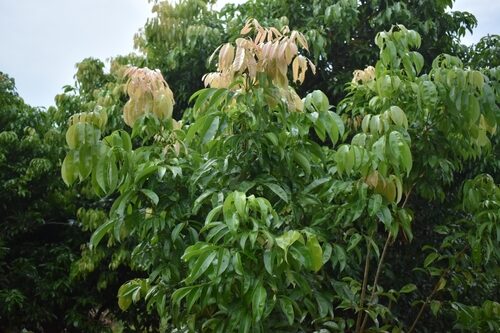
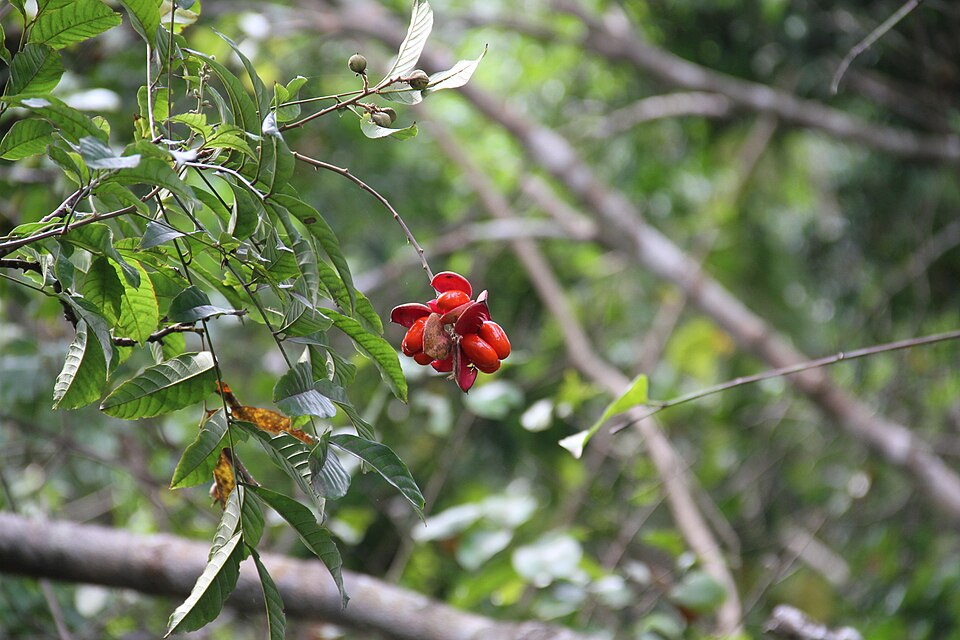
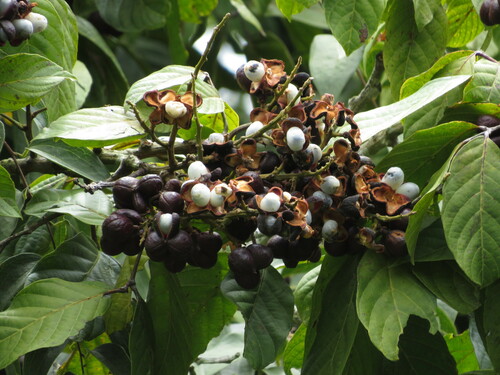
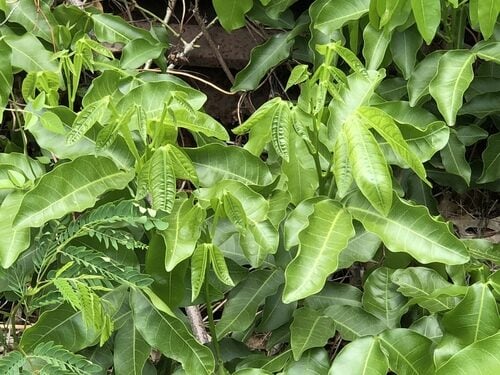
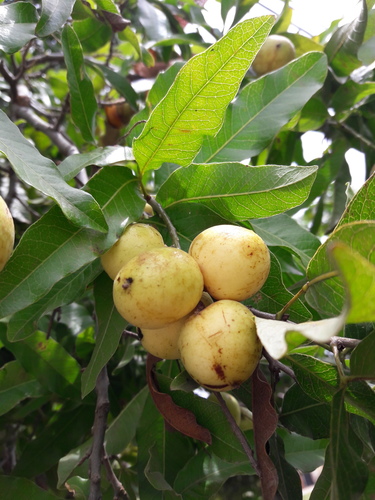
A large shrub or small tree. It can grow 8-20 m high. It spreads 2-6 m wide. The trunk is fluted at the base. The bark is grey. The young shoots are angular. They are covered with velvety brown hairs. Young leaves are broad and papery. The leaves are 30-80 cm long. The mature leaves are divided into leaflets along the stalk. There are 8-12 leaflets which are 10-30 cm long by 2-6 cm wide and oval or sword shaped. They have velvety hairs underneath. The flowers are in a large panicle at the ends of branches. The flowers are 0.4 cm across. They have 2-3 lobes. The flowers are yellow-brown. The fruit contain 3 large seeds. These are surrounded by a fleshy orange aril which is edible. The fruit are 1-2 cm wide.
Edible Uses
The orange arils have a refreshing acid flavour—they may be eaten in the raw state and they have been used to make jams, jellies, sauces, chutneys, and cordials. The timber can be used for indoor works.
Traditional Uses
The fruit are edible but sour. The jelly like aril is chewed or used for drinks or jam. They can be cooked with fish and chicken. They can be used for jams, chutneys, sauces and cocktails.
Distribution
It grows in the rainforest. It grows in warm temperate regions but can grow in the tropics. It needs well drained soil and light shade. It suits hardiness zones 8-11.
Where It Grows
Australia*,
Cultivation
Plants are grown from seed. Seed need to be sown fresh. Seeds germinate in 1-2 weeks.
Notes
There are 8 Diploglottis species.
Synonyms
References (28)
- Alice, L. & O'Quinn, T., Australian Bush Superfoods. Explore Australia p 166 (As Diploglottis australis)
- Bailey, F. M., 1913, Comprehensive Catalogue of Queensland Plants. Queensland Government.
- Bodkin, F., 1991, Encyclopedia Botanica. Cornstalk publishing, p 347
- Bodkin, F., 1991, Encyclopedia Botanica. Cornstalk publishing, p 347 (As Diploglottis australis)
- Cherikoff V. & Isaacs, J., The Bush Food Handbook. How to gather, grow, process and cook Australian Wild Foods. Ti Tree Press, Australia p 199 (As Diploglottis australis)
Show all 28 references Hide references
- Cherikoff V. & Isaacs, J., The Bush Food Handbook. How to gather, grow, process and cook Australian Wild Foods. Ti Tree Press, Australia p 147, 195
- Cribb, A.B. & J.W., 1976, Wild Food in Australia, Fontana. p 29 (As Diploglottis australis)
- Edible and Useful Native Plants (off internet)
- Elliot, W.R., & Jones, D.L., 1984, Encyclopedia of Australian Plants suitable for cultivation. Vol 3. Lothian. p 290 (Photo)
- Etherington, K., & Imwold, D., (Eds), 2001, Botanica's Trees & Shrubs. The illustrated A-Z of over 8500 trees and shrubs. Random House, Australia. p 265
- Facciola, S., 1998, Cornucopia 2: a Source Book of Edible Plants. Kampong Publications, p 224
- Haslam, S., 2004, Noosa's Native Plants. Noosa Integrated Catchment Assn. Inc. p 334
- Hibbert, M., 2002, The Aussie Plant Finder 2002, Florilegium. p 88 (As Diploglottis australis)
- Holliday, I., 1989, A Field Guide to Australian Trees. Hamlyn. p 120
- Jones D, L, 1986, Ornamental Rainforest Plants in Australia, Reed Books, p 124, 340
- Lazarides, M. & Hince, B., 1993, Handbook of Economic Plants of Australia, CSIRO. p 82
- Lord, E.E., & Willis, J.H., 1999, Shrubs and Trees for Australian gardens. Lothian. p 14
- Low, T., 1991, Wild Food Plants of Australia. Australian Nature FieldGuide, Angus & Robertson. p 87
- Lyle, S., 2006, Discovering fruit and nuts. Land Links. p 262 (As Diploglottis australis)
- Molyneux, B & Forrester, S., 1997, The Austraflora A-Z of Australian Plants. Reed. p 74
- Nicholson, N & H., 1996, Australian Rainforest Plants, Terania Rainforest Publishing. NSW. p 26 (As Diploglottis australis)
- Ratcliffe D & P., 1987, Australian Native Plants for Indoors. Little Hills press. p 83
- Recher, P, 2001, Fruit Spirit Botanical Gardens Plant Index. www.nrg.com.au/~recher/ seedlist.html p 2 (As Diploglottis australis)
- Robins, J., 1996, Wild Lime. Cooking from the Bush food garden. Allen & Unwin p 90
- Ryan, M. (Ed.), 2003, Wild Plants of Greater Brisbane. Queensland Museum. p 261 (As Diploglottis australis)
- Williams, J.B., Harden, G.J., and McDonald, W.J.F., 1984, Trees and shrubs in rainforests of New South Wales and Southern Queensland. Univ. of New England, Armidale. p 42 (As Diploglottis australis)
- Yallakool Reserve Plant List July 1, 2009 Off internet (As Diploglottis australis)
- Young, P.A.R., 1991, Rainforest Guide. Brisbane Forest Park. p 32