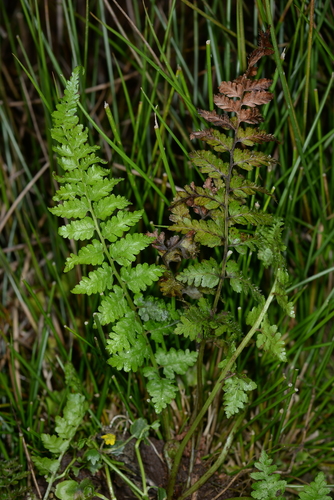
Diplazium proliferum
(Lam.) Kaulf.
Mother fern
iNaturalist· cc-by-nc
(c) Sandra Falanga, some rights reserved (CC BY-NC), uploaded by Sandra Falanga
gbif· cc-by-nc
SunGW
iNaturalist· cc-by-nc
(c) Sandra Falanga, some rights reserved (CC BY-NC), uploaded by Sandra Falanga
iNaturalist· cc-by-nc
(c) Isaac Aguilar, some rights reserved (CC BY-NC)
iNaturalist· cc-by-nc
(c) Isaac Aguilar, some rights reserved (CC BY-NC)
iNaturalist· cc-by-nc
(c) Isaac Aguilar, some rights reserved (CC BY-NC)
Description
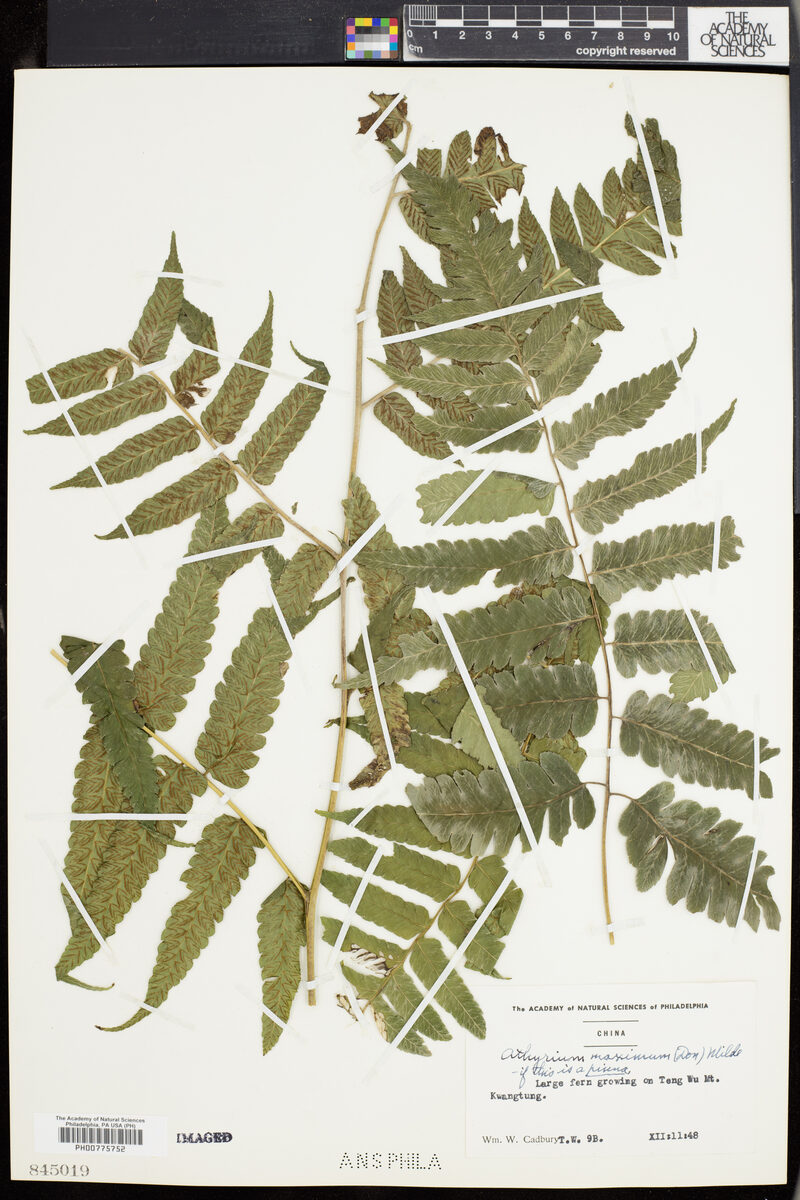
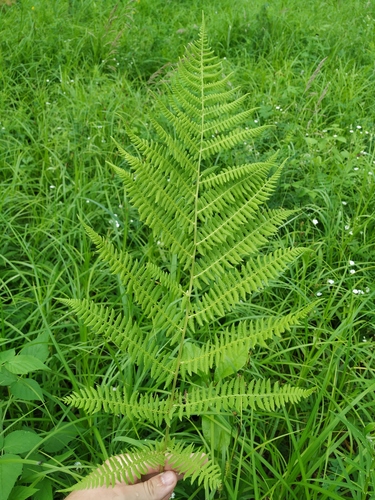
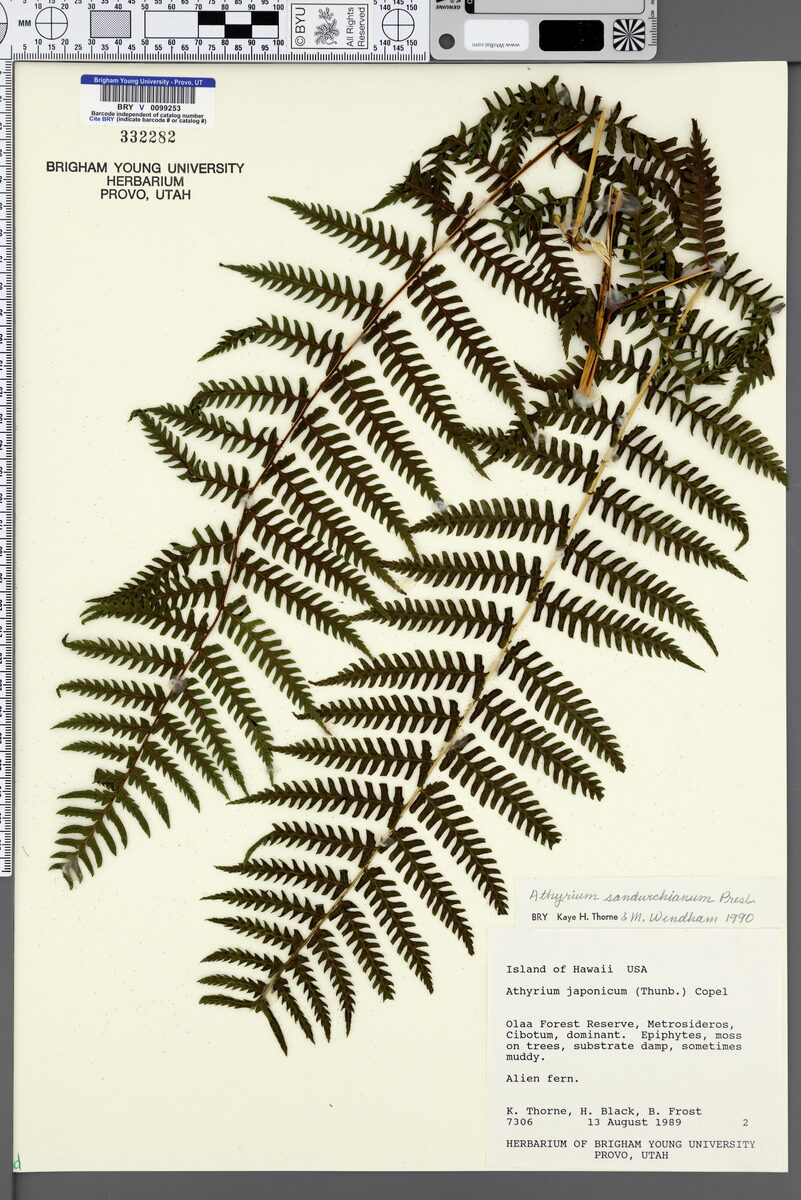
A moderate sized land fern with a scaly rhizome. It grows 1-2 m tall. The blade is up to 60 cm long. The leaflets are 2-3 cm wide and 15 cm long. The sori are long and attached along the veins. The leaves are large and crenate and placed alternatively along the stalk. The mature fronds often have small bulbils or plantlets growing in their leaf axils.
Edible Uses
Young fronds are cooked and eaten, often added to vegetable soup. The bulbils on the stems are eaten raw or cooked.
Traditional Uses
Young fronds are cooked and eaten. They are added to vegetable soup. The bulbils on the stems are eaten raw or cooked.
This uses section is brief — help expand it
Distribution
A tropical plant. It occurs from Polynesia to Australia and in Africa. It is usually found near streams. In Indonesia it grows from sea level to 1,200 m above sea level.
Where It Grows
Africa, American Samoa, Asia, Benin, Cameroon, Central Africa, Congo, Côte d'Ivoire, East Africa, Equatorial-Guinea, Fiji, Ghana, Guinea, Guinée, Indonesia, Ivory Coast, Liberia, Madagascar, Malaysia, Mauritius, Nigeria, Pacific, Samoa, Sao Tome and Principe, SE Asia, Sierra Leone, Solomon Islands, Togo, Tonga, West Africa,
Cultivation
Plantlets on the fronds take root and grow into new plants. Plants are also easily grown from spores. The bulbils can also be used to grow new plants.
Propagation
Spores - easy to reproduce. The bulbils produced on the fronds can be detached and placed in the soil for rooting, or they can be left on the plant to develop into plantlets which can be simply detached and planted.
Other Information
It is only a minor food plant.
Notes
There are about 300-600 Diplazium species. They have also been put in the families Aspleniaceae and Woodsiaceae.
Synonyms
Also Known As
Banihelu, Dada’ame, Jito, Lalabe, Lama, Lame, Natete, Nonogara, Pakis buahan, Paku buwa, Paku udang, Paku labuh, Rosi, Takuma
References (21)
- Burkill, H. M., 1985, The useful plants of west tropical Africa, Vol. 2. Kew.
- Burkill, I.H., 1966, A Dictionary of the Economic Products of the Malay Peninsula. Ministry of Agriculture and Cooperatives, Kuala Lumpur, Malaysia. Vol 1 (A-H) p 848
- Chapman, J. D. & Chapman, H. M., 2001, The Forest Flora of Taraba and Andamawa States, Nigeria. WWF & University of Canterbury. p 216
- Elliot, W.R., & Jones, D.L., 1984, Encyclopedia of Australian Plants suitable for cultivation. Vol 3. Lothian. p 288
- Etoh, T. & Sundaresan, 1985, Food Plants in Fiji and Their Utilization. Kagoshima Univ. Res. Center S. Pac, Occasional Papers, No. 5. p. 145-164. (As Athyrium accedens)
Show all 21 references Hide references
- Fl. Tristan d' Acunha 35. 1804
- Flora of Solomon Islands
- French, B.R., 2010, Food Plants of Solomon Islands. A Compendium. Food Plants International Inc. p 107
- Grubben, G. J. H. and Denton, O. A. (eds), 2004, Plant Resources of Tropical Africa 2. Vegetables. PROTA, Wageningen, Netherlands. p 288
- Henderson, C.P. and I.R.Hancock, 1988, A Guide to the Useful Plants of the Solomon Islands. Res. Dept. Min of Ag. & Lands. Honiara, Solomon Islands. p 87
- Heyne, K., 1927, p 100
- Jardin, C., 1970, List of Foods Used In Africa, FAO Nutrition Information Document Series No 2.p 112
- Maroyi, A., 2014, Not just minor wild edible forest products: consumption of pteridophytes in sub-Saharan Africa. Journal of Ethnobiology and Ethnomedicine. 10:78
- Ochse, J. J. et al, 1931, Vegetables of the Dutch East Indies. Asher reprint. p 602
- Parham, B. E. V., 1972, Plants of Samoa. New Zealand Department of Scientific and Industrial Research. Information Series. No. 85 p 56
- Sujarwo, W., et al, 2014, Ethnobotanical Study of Edible Ferns Used in Bali Indonesia. Asia Pacific Journal of Sustainable Agriculture Food and Energy. 2(2): 1-4. (As Diplazium repandum)
- Sukarya, D. G., (Ed.) 2013, 3,500 Plant Species of the Botanic Gardens of Indonesia. LIPI p 865
- USDA, ARS, National Genetic Resources Program. Germplasm Resources Information Network - (GRIN). [Online Database] National Germplasm Resources Laboratory, Beltsville, Maryland. Available: www.ars-grin.gov/cgi-bin/npgs/html/econ.pl (10 April 2000)
- Wiersema, J. H. & Leon, B., 2013, World Economic Plants. A Standard Reference CRC Press. 2nd Ed. p 250
- World Checklist of Useful Plant Species 2020. Royal Botanic Gardens, Kew
- Yuncker, T.G., 1959, Plants of Tonga, Bernice P. Bishop Museum, Hawaii, Bulletin 220. p 31