Diospyros batocana
Hiern.
Sand jackal tree, Sand jackal-berry
iNaturalist· cc-by
(c) Mathew Rees, some rights reserved (CC BY), uploaded by Mathew Rees
iNaturalist· cc-by
(c) Mathew Rees, some rights reserved (CC BY)
Description
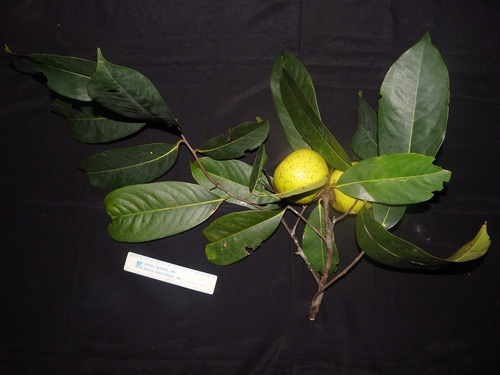
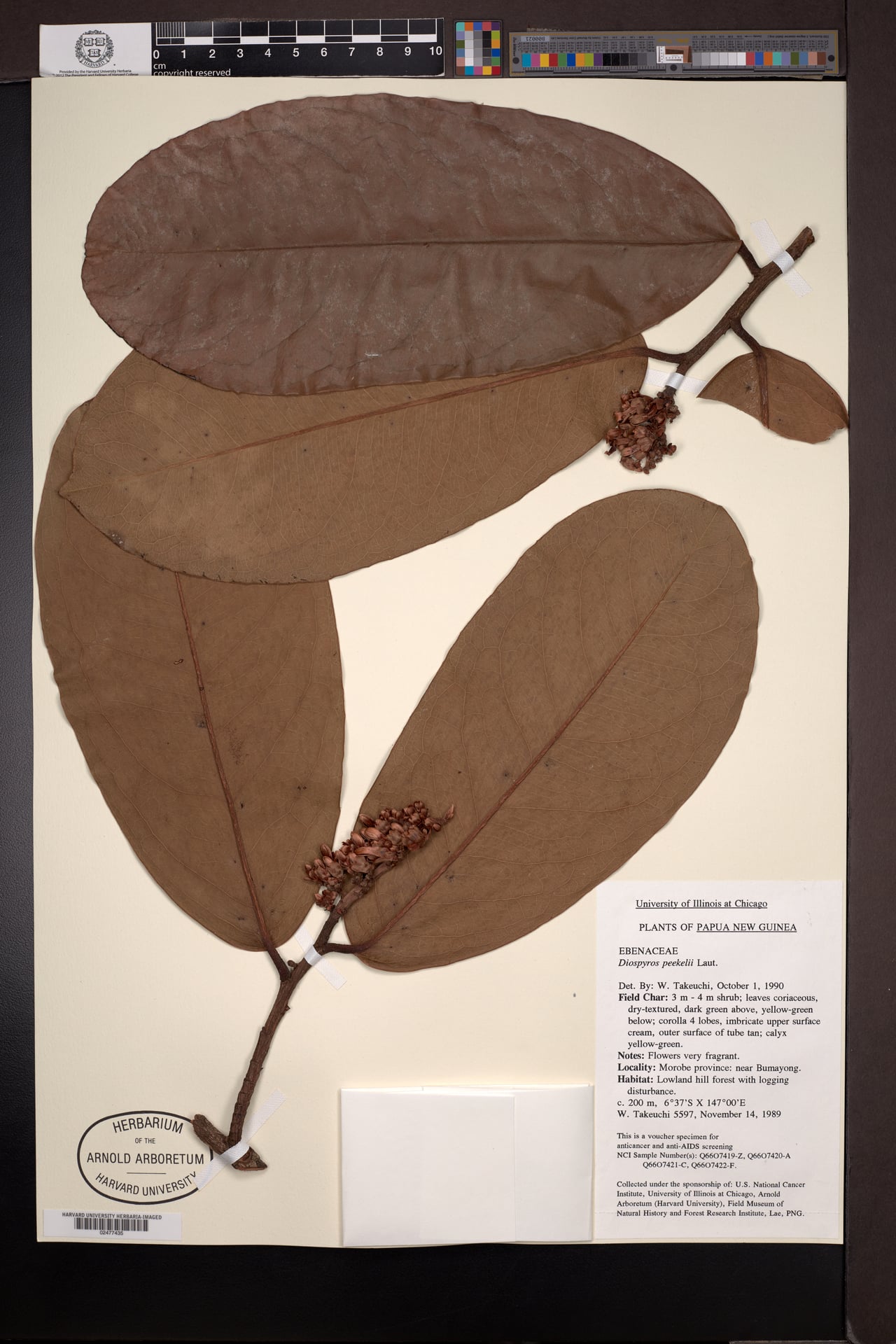
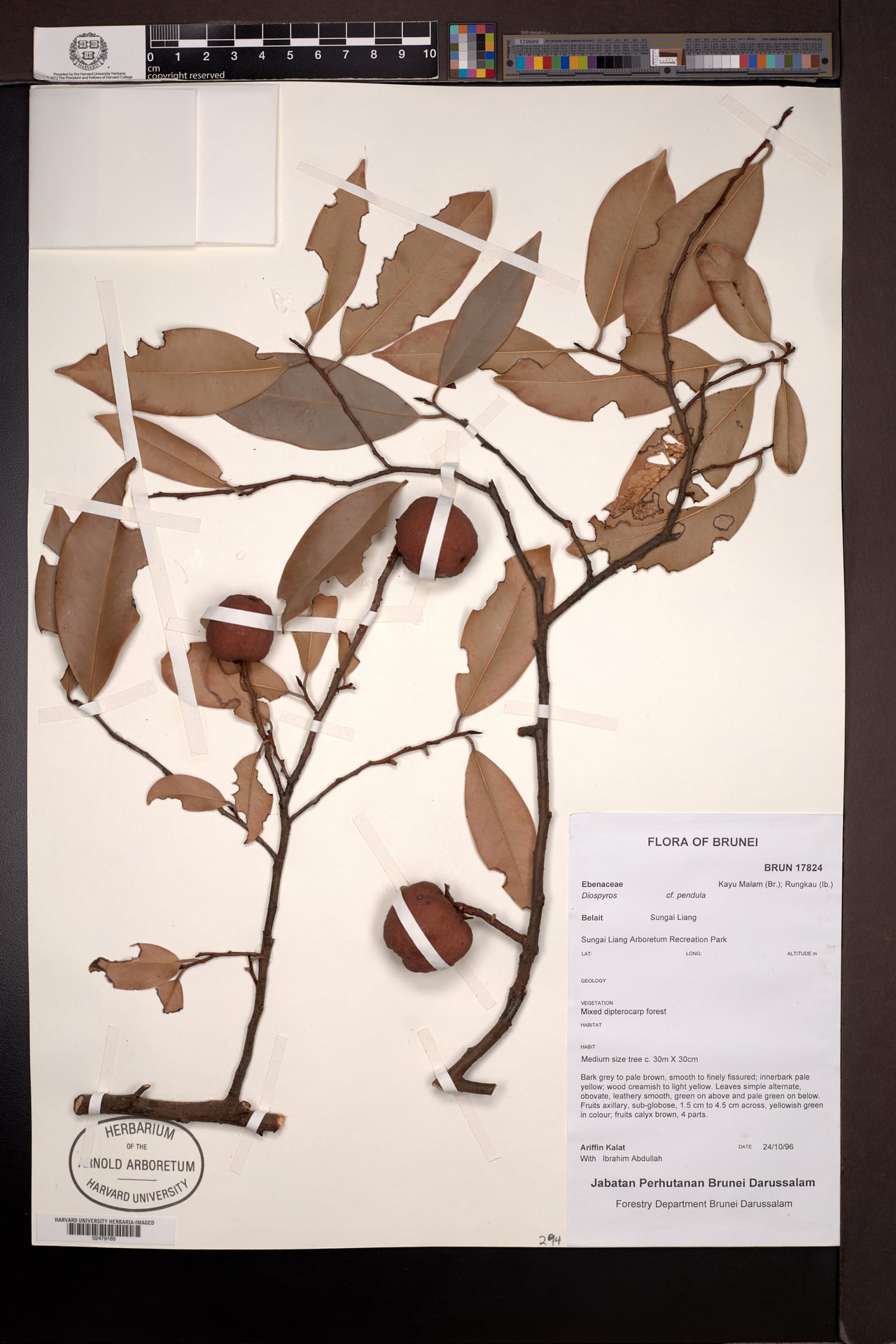
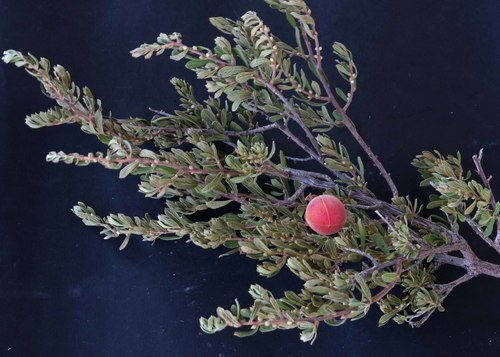
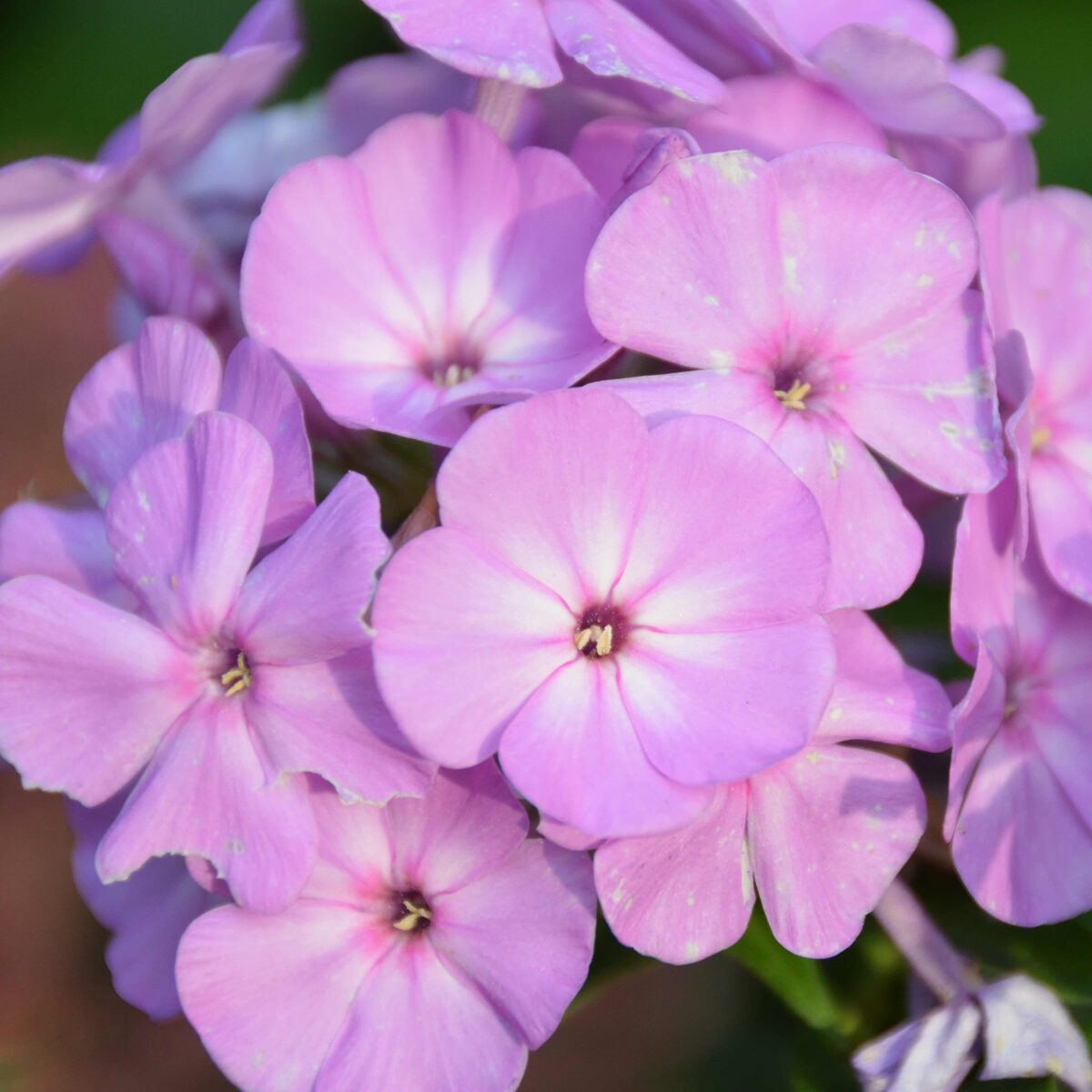
A small tree. It is often twisted and crooked. It grows to 7 m high. The bark is dark grey. It is rough and cracked. The leaves are oval. They are 5-10 cm long by 2.2-4.5 cm wide. They are leathery. The leaves are glossy dark green above and dull pale green underneath. The edges are rolled under. The leaf stalk is 3-8 cm long. The flowers are creamy white. There can be violet tinges. They are 1.5 cm long with a sweet scent. The flowers occur in clusters on old wood. The fruit are oval or round and fleshy. They are 4 cm across. They have short, soft, brown hairs when young. Fruit are orange when mature.
Edible Uses
Fruit - raw. The very acid pulp is said to be refreshing on a hot day. The orange-coloured, obovoid or oblate fruit is up to 4cm in diameter with chocolate-brown or rufous appressed hairs on the skin.
Traditional Uses
The fruit are eaten. They are eaten as a famine food by adults. They can be boiled. The leaves are poisonous but are laid over millet being fermented into beer to improve the flavour.
Known Hazards
The leaves are poisonous, though they are used to flavor millet during beer fermentation.
Distribution
A tropical plant. It grows at low altitude in hot woodland. It grows between 900-1,525 m above sea level. It grows on sands. It can grow in arid places.
Where It Grows
Africa, Angola, Botswana, Central Africa, Congo, East Africa, Namibia, South Africa, Southern Africa, Zambia, Zimbabwe,
Cultivation
Plants are grown from seeds.
Propagation
Seed - in general the seed of Diospyros species has a very short viability and so should be sown as soon as possible. The flesh should be removed since this contains germination inhibitors. Sow the seed in a shady position in a nursery seedbed. The sowing media for ebony uses soil and fine sand at the ratio 3:1. The seed is planted horizontally or vertically with the radicle end down, with a sowing depth of 1 - 1½ times the thickness of seed. Distance between the seeds is 3 - 5cm. Seeds are very sensitive to desiccation during germination and early growth, so must be regularly watered at this time. Normally the seed will germinate after one week. As a rule fresh seeds have a high percentage of fertility. The seedlings develop long taproots at an early stage, often before any appreciable elongation of the shoot takes place. The growth of the seedling is decidedly slow .
Other Information
The fruit are eaten especially by children.
Notes
There are about 485 species of Diospyros mostly in the tropics.
Nutrition
| Part | Moisture | kJ | kcal | Protein | Vit A | Vit C | Iron | Zinc |
|---|---|---|---|---|---|---|---|---|
| Fruit | 66 | 300 | 72 | 1.5 | — | — | — | — |
Synonyms
Also Known As
Batoka diospyros, Monjongolo, Muchenje, Mufumbo, Mukwi, Munjongolo, Muntufita
References (10)
- Baidu-Forson, J.J., Phiri, N., Ngu’ni, D., Mulele, S., Simainga, S., Situmo, J., Ndiyoi, M., Wahl, C., Gambone, F., Mulanda, A., Syatwinda, G. ,2014,. Assessment of agrobiodiversity resources in the Borotse flood plain, Zambia. CGIAR Research Program on Aquatic Agricultural Systems. Penang, Malaysia. Working Paper: AAS-2014-12.
- Fowler, D. G., 2007, Zambian Plants: Their Vernacular Names and Uses. Kew. p 23
- Fox, F. W. & Young, M. E. N., 1982, Food from the Veld. Delta Books. p 185
- Malaisse, F., 1997, Se nourrir en floret claire africaine. Approche ecologique et nutritionnelle. CTA., p 61
- Palgrave, K.C., 1996, Trees of Southern Africa. Struik Publishers. p 744
Show all 10 references Hide references
- Royal Botanic Gardens, Kew (1999). Survey of Economic Plants for Arid and Semi-Arid Lands (SEPASAL) database. Published on the Internet; http://www.rbgkew.org.uk/ceb/sepasal/internet [Accessed 16th April 2011]
- Ruiters-Welcome, A. K., 2019, Food plants of southern Africa. Ph.D. thesis. Univ. of Johannesburg p 52
- Tredgold, M.H., 1986, Food Plants of Zimbabwe. Mambo Press. p 98
- Welcome, A. K. & Van Wyk, B.-E., 2019, An inventory and analysis of the food plants of southern Africa. South African Journal of Botany 122 (2019) 136–179
- World Checklist of Useful Plant Species 2020. Royal Botanic Gardens, Kew