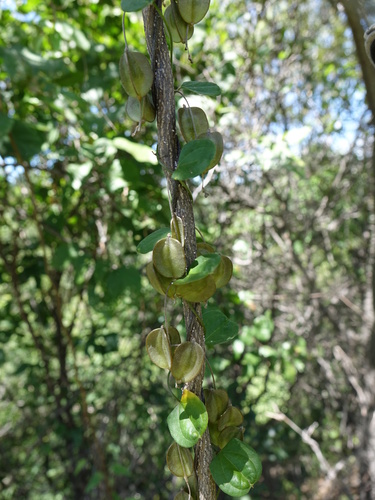
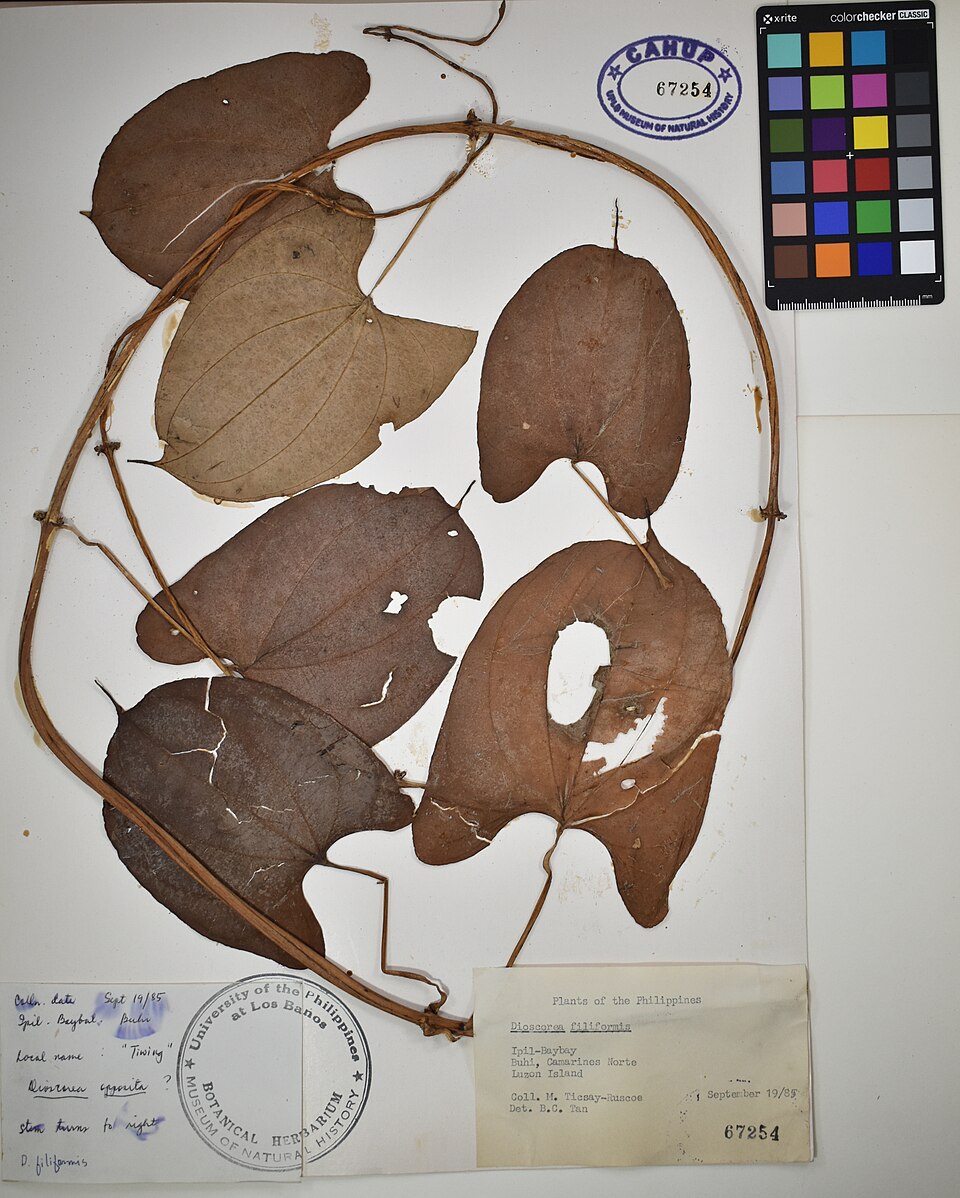
Dioscorea villosa
L.
Devil's bones, Rheumatism root, Colicroot
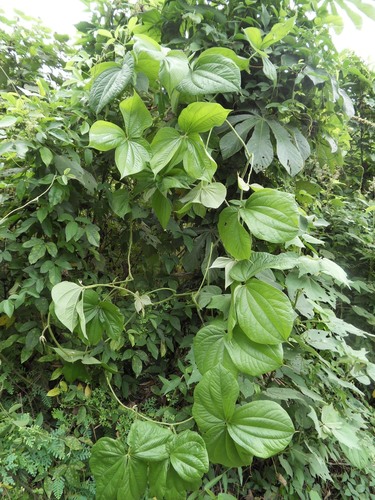
iNaturalist· cc-by-nc
(c) Mark Kluge, some rights reserved (CC BY-NC), uploaded by Mark Kluge
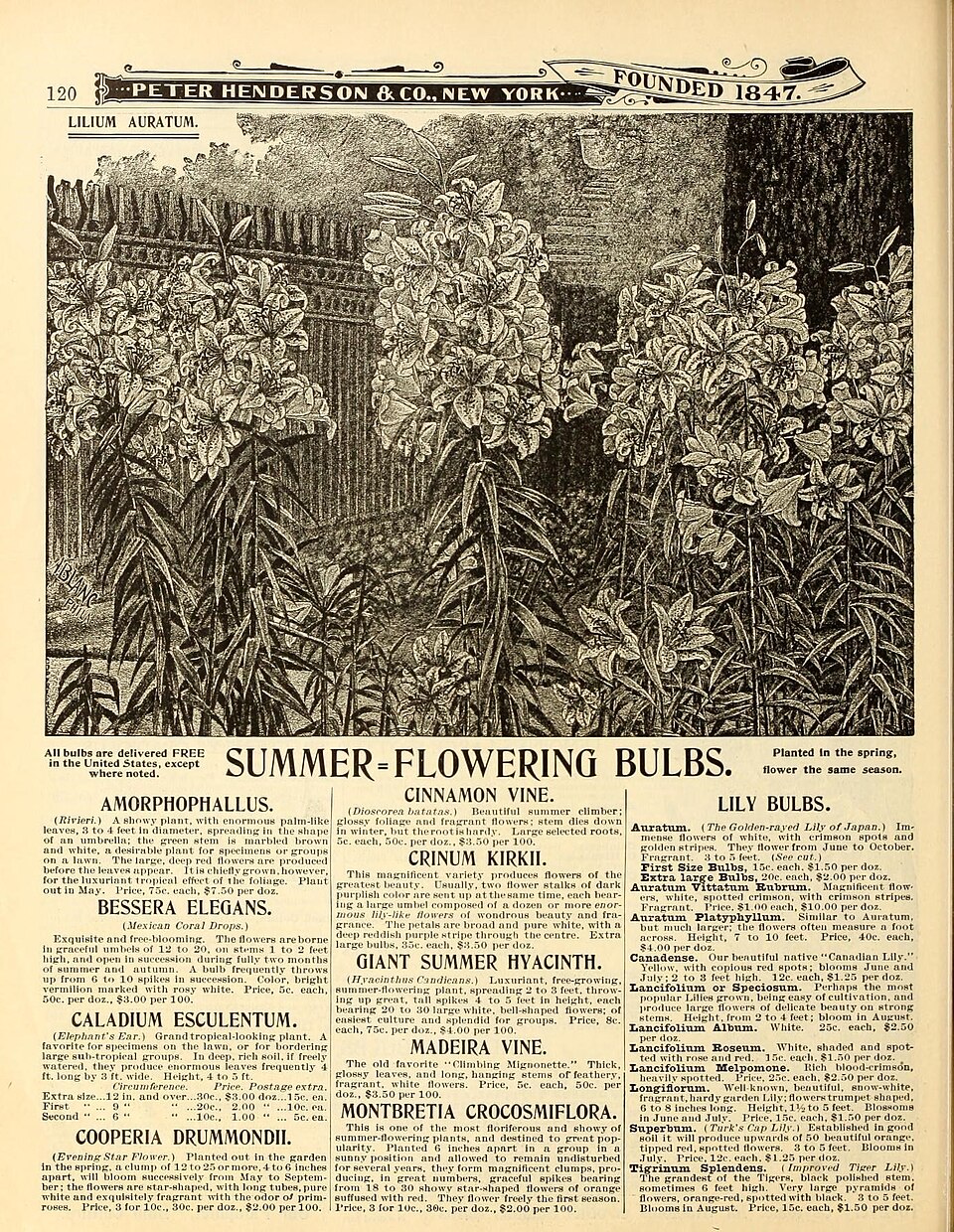
iNaturalist· cc-by-sa
(c) Douglas Goldman, some rights reserved (CC BY-SA), uploaded by Douglas Goldman
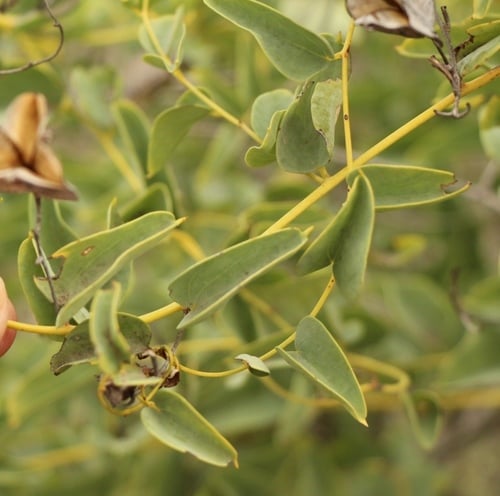
iNaturalist· cc-by-nc
(c) eplonka1, some rights reserved (CC BY-NC), uploaded by eplonka1
Summary
Source: WikipediaDioscorea villosa is a species of twining tuberous vine which is native to eastern North America. It is commonly known as wild yam, colic root, rheumatism root, devil's bones, and fourleaf yam. It is common and widespread in a range stretching from Texas and Florida north to Minnesota, Ontario and Massachusetts.
Description
A climbing yam plant. It can be 5 m tall. It keeps growing from year to year. It has slender rhizomes. They are twisted, long and woody. The leaves are simple. The stem has bulbils in the axils of leaves. The leaves are heart shaped and 5-10 cm long. The flowers are small and yellow-green. The are in drooping spikes in the axils of leaves. Male and female flowers are borne separately. The fruit is a capsule that in longer than wide. The seeds are winged at the base.
Edible Uses
The tubers are eaten cooked. Some caution should be exercised — see medicinal uses for relevant information.
Traditional Uses
The tubers are boiled then cut in pieces and washed in running water to remove the toxic element. The tubers are eaten whole or pounded into flour for bread.
Medicinal Uses
The roots contain diosgenin, as do the roots of many other members of this genus. Diosgenin is widely used in modern medicine to manufacture progesterone and other steroid drugs, employed as contraceptives and in treating disorders of the genital organs, as well as conditions such as asthma and arthritis. The roots are anti-inflammatory, antispasmodic, cholagogue, diaphoretic, and vasodilator, and act as a visceral relaxant. The plant is considered one of the best and fastest remedies for bilious colic, is particularly helpful for the nausea of pregnant women, and has been used to ease the pain of childbirth. It is also taken internally for arthritis, irritable bowel syndrome, gastritis, gall bladder complaints, and painful menstruation. The root is harvested in autumn and dried for later use, but should not be stored for longer than one year as it is likely to lose its medicinal virtues. When taken fresh, the root can cause vomiting and other side effects, so caution is advised. The root, harvested in September, is also used to prepare a homeopathic remedy primarily used in the treatment of infant colic.
Known Hazards
Edible species of Dioscorea have opposite leaves whilst poisonous species have alternate leaves. Use of the fresh plant can cause vomiting and other side effects. Known to cause headaches, menstrual irregularities & acne. May cause hair loss & oily skin. Avoid during pregnancy. Avoid in patients with cancers of the breast, ovaries, prostate & uterus.
Distribution
It is a temperate plant. It is best in rich, moist soils. It needs a protected sunny position. It is resistant to frost but damaged by drought. In Assam is grows up to 1,600 m above sea level.
Where It Grows
Asia, Australia, Bangladesh, Brazil, Canada, Europe, Himalayas, India, North America*, Northeastern India, Turkey, Türkiye, USA,
Cultivation
An easily grown plant, succeeding in a fertile well-drained soil in a sunny position or light shade. Prefers a rich light soil. Plants are hardy to at least -15°c. Plants produce tubercles (small tubers that are formed in the leaf axils of the stems), and can be propagated by this means. A climbing plant that supports itself by twining around the branches of other plants. This is a highly polymorphic species, some botanists dividing it up into several species. Dioecious. Male and female plants must be grown if seed is required.
Propagation
Sow seed in March to April in a sunny position in a warm greenhouse, barely covered. Germination takes 1–3 weeks at 20°C. Prick out seedlings once large enough to handle and grow on in the greenhouse for their first year, then plant out in late spring as new growth begins. Basal stem cuttings can be taken in summer. Divide in the dormant season only — never when in growth. The plant often produces several shoots; the top 5–10cm of root below each shoot can be potted up as a new plant, while the lower portion can possibly be eaten. Tubercles forming in the leaf axils are harvested in late summer to early autumn when approximately pea-sized and detaching freely. Pot up immediately into individual containers in a greenhouse or cold frame and plant out in early summer when actively growing.
Other Uses
None known.
Other Information
It is a cultivated food plant.
Notes
This yam is used for contraceptives. There are about 650 species of Dioscorea.
Synonyms
Also Known As
Gam hakai, Kadawa kand, Kadia kand, Kath alu, Kedvo kand, Magiya, Mano kand, Munia, Thaphu-nairo, Vaj kand, Wild yam
References (23)
- Ali, A. M. S., 2005, Homegardens in Smallholder Farming Systems: Examples from Bangladesh. Human Ecology, Vol. 33, No. 2 pp. 245-270 (Would need to check species!)
- BHARGAVA, (As Dioscorea quinata)
- Bodkin, F., 1991, Encyclopedia Botanica. Cornstalk publishing, p 345
- Bremness, L., 1994, Herbs. Collins Eyewitness Handbooks. Harper Collins. p 278
- Brown, D., 2002, The Royal Horticultural Society encyclopedia of Herbs and their uses. DK Books. p 194
Show all 23 references Hide references
- Dutta, B., 2015, Food and medicinal values of certain species of Dioscorea with special reference to Assam. Journal of Pharmacognosy and Phytochemistry. 3(4): 15-18 (Also as Dioscorea sativa)
- GAMMIE, (As Dioscorea sativa)
- Gangte, H. E., et al, 2013, Wild Edible Plants used by the Zou Tribe in Manipur, India. International Journal of Scientific and Research Publications, Volume 3, Issue 5 (As Dioscorea sativa)
- Gangwar, A. K. & Ramakrishnan, P. S., 1990, Ethnobotanical Notes on Some Tribes of Arunachal Pradesh, Northeastern India. Economic Botany, Vol. 44, No. 1 pp. 94-105 (As Dioscorea sativa)
- Guite, C., 2016, A study of wild edible plants associated with the Paite tribe of Manipur, India, International Journal of Current Research. Vol. 8, Issue, 11, pp. 40927-40932 (As Dioscorea sativa)
- Hedrick, U.P., 1919, (Ed.), Sturtevant's edible plants of the world. p 275 (As Dioscorea sativa)
- Jones, D.L. & Gray, B., 1977, Australian Climbing Plants. Reed. p 61 (As Dioscorea sativa)
- Kiple, K.F. & Ornelas, K.C., (eds), 2000, The Cambridge World History of Food. CUP p 1882
- Lim, T. K., 2015, Edible Medicinal and Non Medicinal Plants. Volume 9, Modified Stems, Roots, Bulbs. Springer p 37
- Medhi, P. and Borthakur, S. K., 2011, Genetic Resources of Root and Tuber Crops from North Cachar Hills of Assam. Journal of Root Crops, Vol. 37No.2 pp. 131-143
- Medhi, P., Sarma, A and Borthakur, S. K., 2014, Wild edible plants from the Dima Hasao district of Assam, India. Pleione 8(1): 133-148
- Patiri, B. & Borah, A., 2007, Wild Edible Plants of Assam. Geethaki Publishers. p 146 (As Dioscorea sativa)
- Plants for a Future database, The Field, Penpol, Lostwithiel, Cornwall, PL22 0NG, UK. http://www.scs.leeds.ac.uk/pfaf/
- Saikia, M., 2015, Wild edible vegetables consumed by Assamese people of Dhemaji District of Assam, NE India and their medicinal values. Archives of Applied Science Research, 2015, 7 (5):102-109 (As Dioscorea sativa L.)
- Singh, H.B., Arora R.K.,1978, Wild edible Plants of India. Indian Council of Agricultural Research, New Delhi. p 13 (As Dioscorea quinata)
- Sp. pl. 2:1033. 1753
- Sp. Pl. 1(2): 1033. 1753 (As Dioscorea sativa)
- Toupal, R. S. & Hollenback, K., 2009, An Ethnobotany of Indiana Dunes National Lakeshore: Plant Uses of the Ojibwa People. Bureau of Applied Research in Anthropology. University of Arizona