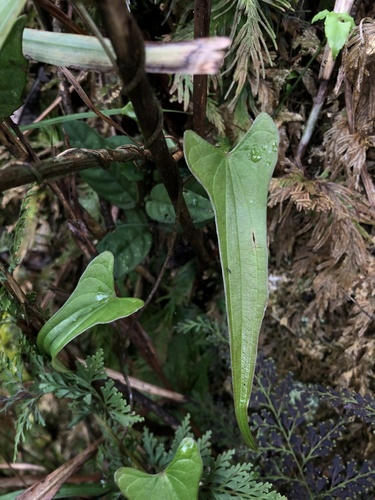
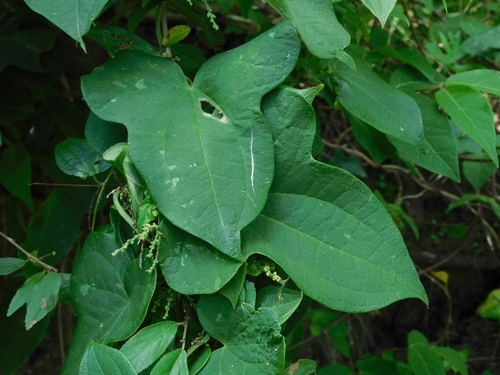
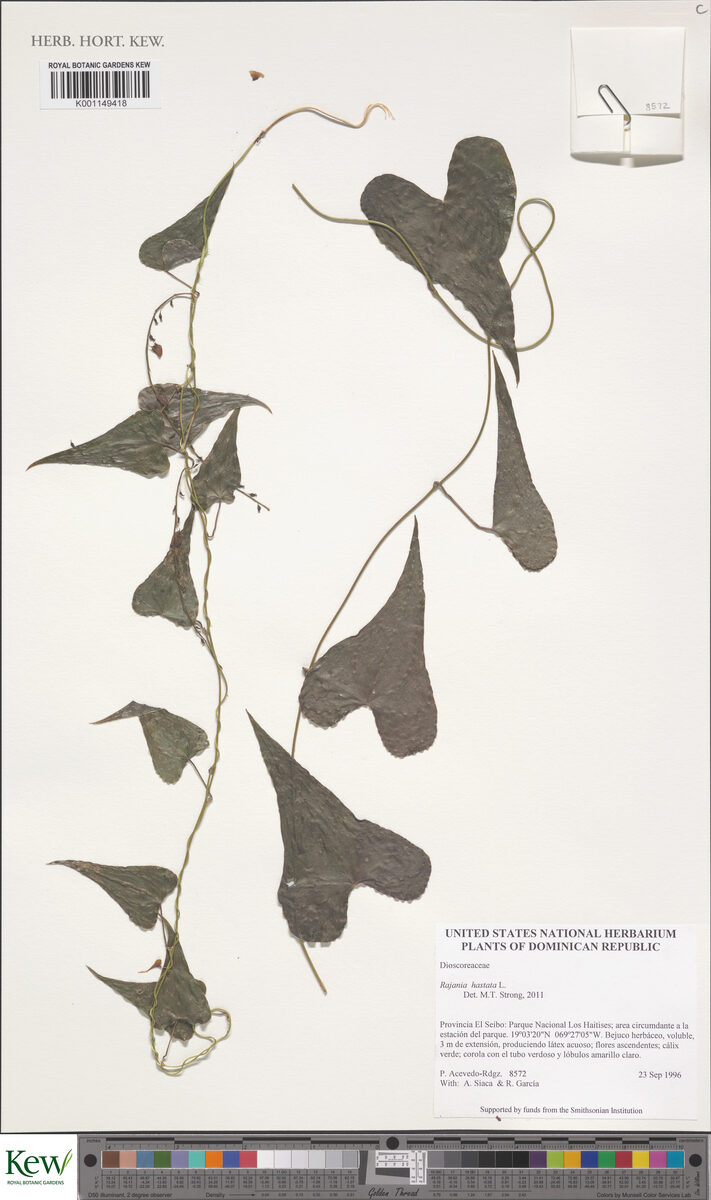
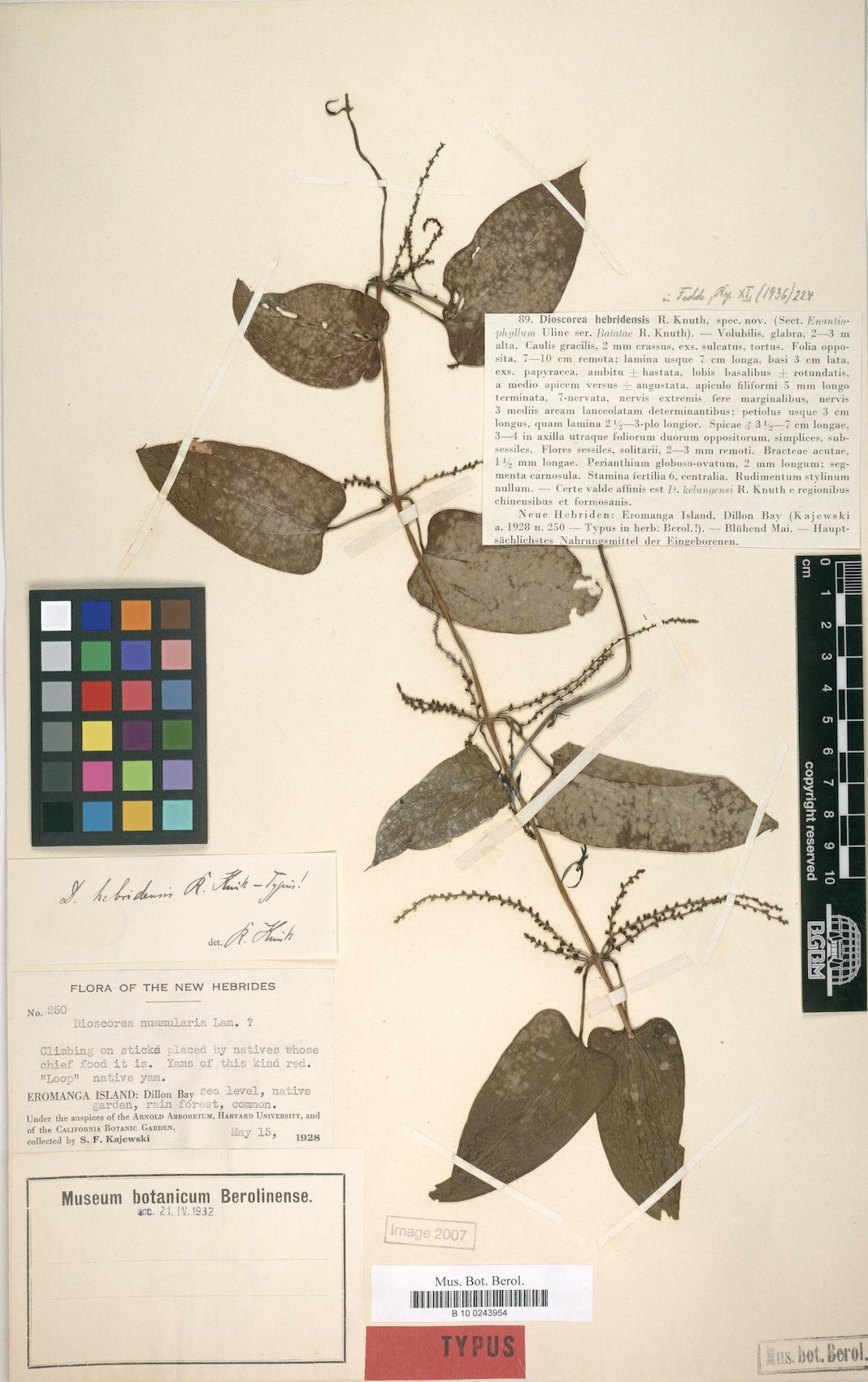
Dioscorea hastifolia
Nees
Spear-leaved dioscorea
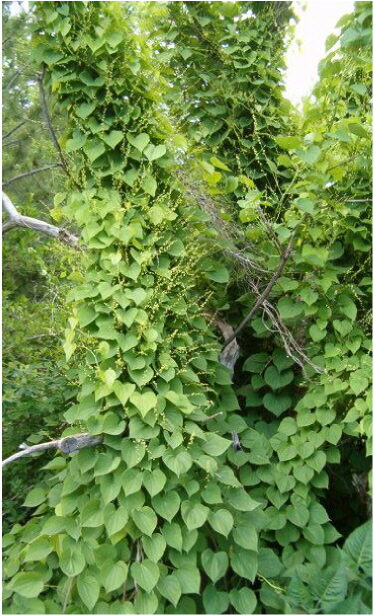
iNaturalist· cc-by-nc
(c) overlander (Gerald Krygsman), some rights reserved (CC BY-NC), uploaded by overlander (Gerald Krygsman)
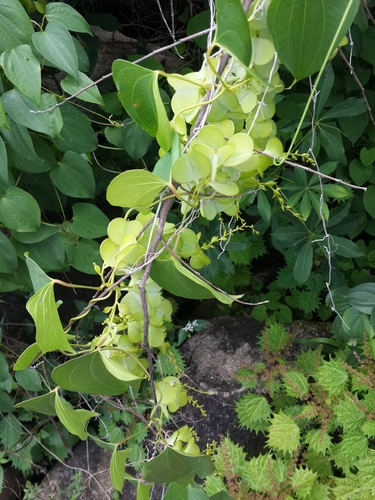
iNaturalist· cc-by-nc
(c) Jamie Lee, some rights reserved (CC BY-NC)
Summary
Source: WikipediaDioscorea hastifolia, the adjigo (ˈadʒɪɡəʊ) yam, also known as the warram, is a yam with long, white, edible tubers that is native to Southwest Australia. It is a climbing vine with hastate, spearheaded, leaves and bears green triangular fruit. The tubers are used by Aboriginal Australians as a source of carbohydrates, who managed the plant extensively in agriculture-like systems. After the yellow flowers have seeded the plant is dug up in winter and roasted.
Description
A scrambling or twining vine in the yam family with a tuberous root from which it regenerates after dying back seasonally. It can grow to 2 m high with variable leaves typically 2-3.5 cm long and 0.5-1.5 cm wide, bearing 3-5 prominent veins. Male and female flowers occur on separate plants, with females producing winged fruit about 2 cm long.
Edible Uses
The cylindrical yam tubers, 2-3 cm across, are eaten.
Where It Grows
Tubers, Root,
Cultivation
It is grown from shoots and the tips of the yam tubers. It can also be grown from seed.
Other Information
Dioscoreaceae
Notes
A yam. A scrambling or twining shrub. It has a slender vine and a tuberous root. Plants die back and re-grow from this tuberous root. The plant can grow to 2 m high. The leaves vary a lot in shape and size. They can be 8 cm long but are more often 2-3.5 cm long by 0.5-1.5 cm wide. The leaves have 3-5 prominent veins. Male and female flowers are on separate plants. The male flowers are in spikes 1-3 cm long. The female plants produce winged fruit. These are about 2 cm long. The yams are cylindrical and 2-3 cm across.
Also Known As
Native yam, Southern yam, Warrain, Warrine
References (17)
- Bindon, P., 1996, Useful Bush Plants. Western Australian Museum. p 101
- Bonney, N., 2012, Edible Wild Native Plants for Southern Australia. p 110
- Cherikoff V. & Isaacs, J., The Bush Food Handbook. How to gather, grow, process and cook Australian Wild Foods. Ti Tree Press, Australia p 199
- Daw, B., Walley, T. & Keighery, G., 2001, Bush Tucker. Plants of the South-West. Department of Conservation and Land Management. Western Australia. p 16
- Elliot, W.R., & Jones, D.L., 1984, Encyclopedia of Australian Plants suitable for cultivation. Vol 3. Lothian. p 282
Show all 17 references Hide references
- Hedrick, U.P., 1919, (Ed.), Sturtevant's edible plants of the world. p 274
- Jardin, C., 1970, List of Foods Used In Africa, FAO Nutrition Information Document Series No 2.p 14
- Jones, D.L. & Gray, B., 1977, Australian Climbing Plants. Reed. p 61
- Lim, T. K., 2015, Edible Medicinal and Non Medicinal Plants. Volume 9, Modified Stems, Roots, Bulbs. Springer p 35
- Low, T., 1992, Bush Tucker. Australia’s Wild Food Harvest. Angus & Robertson. p 106
- Morley, B.D., & Toelken, H.R., (Eds), 1983, Flowering Plants in Australia. Rigby. p 342
- Paczkowska, G. & Chapman, A.R., 2000, The Western Australian Flora. A Descriptive Catalogue. Western Australian Herbarium. p 60
- Pascoe, B., 2018, Dark Emu. Aboriginal Australia and the birth of Agriculture. Magabala books, p 17
- RIRDC, 2010, New Root Vegetables fo the Native Food Industry, Australian Government RIRDC Publication 9/161
- Smith, K., 1998, Growing Uncommon Fruits and Vegetables. New Holland. p 104
- Smith, K & I., 1999, Grow your own bushfoods. New Holland. Australia. p 80
- Uphof, 1968,