Aframomum angustifolium
(Sonn.) K. Schum
Madagascar cardamom, Wild cardamom
iNaturalist· cc-by-nc
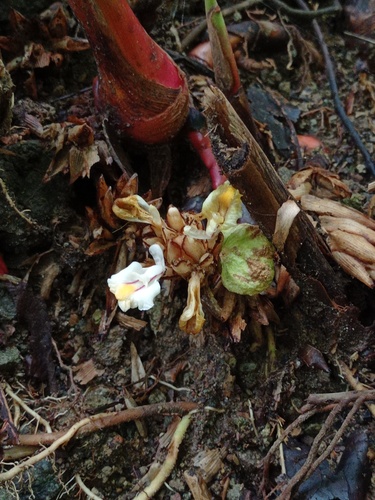
(c) Nicolas Küffer, some rights reserved (CC BY-NC), uploaded by Nicolas Küffer
iNaturalist· cc-by-nc
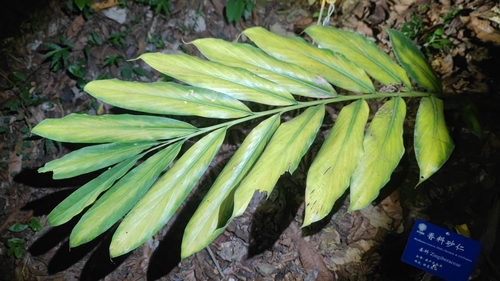
(c) ccaneydunod, some rights reserved (CC BY-NC), uploaded by ccaneydunod
iNaturalist· cc-by-nc
(c) nest5280, some rights reserved (CC BY-NC)
Summary
Source: WikipediaAframomum angustifolium, known as longoza (Malagasy pronunciation: [luŋguza], also "wild cardamom" in English) is a species in the ginger family Zingiberaceae that grows in tropical Africa and in Madagascar.
Description
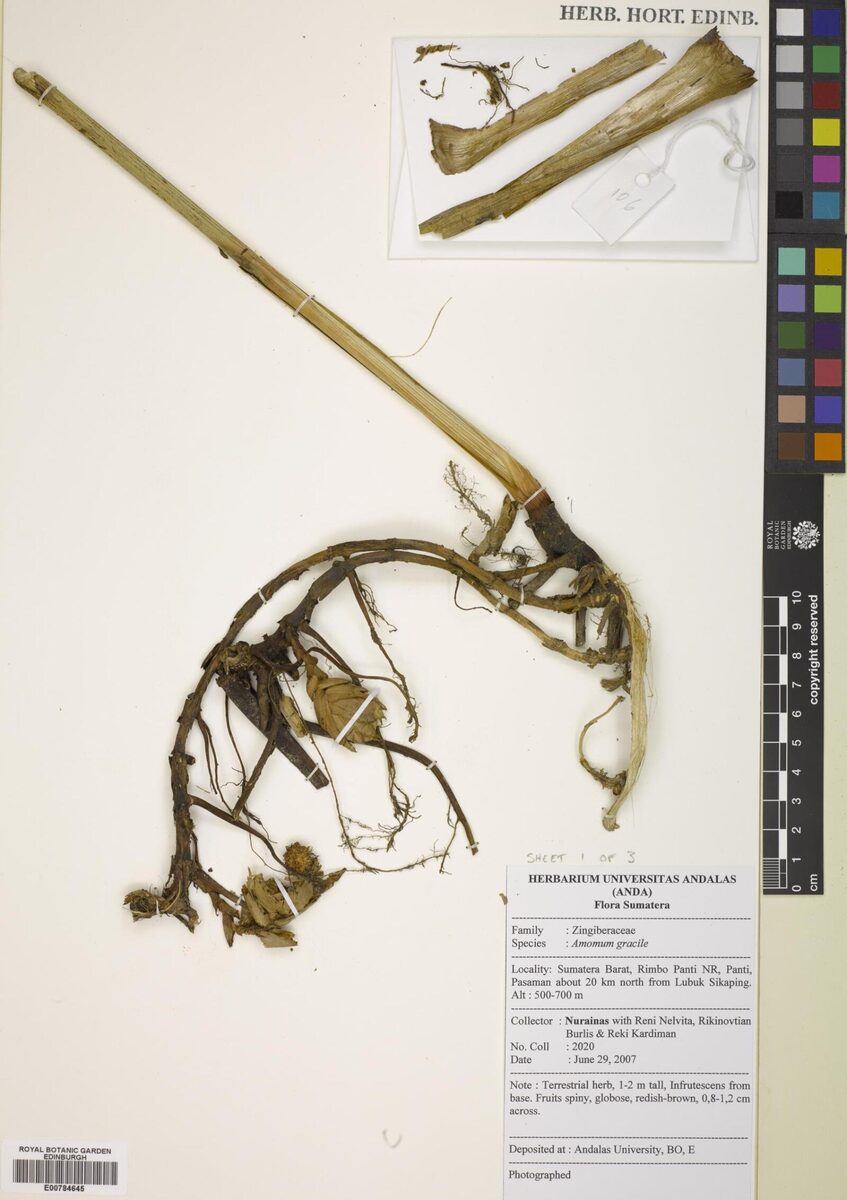
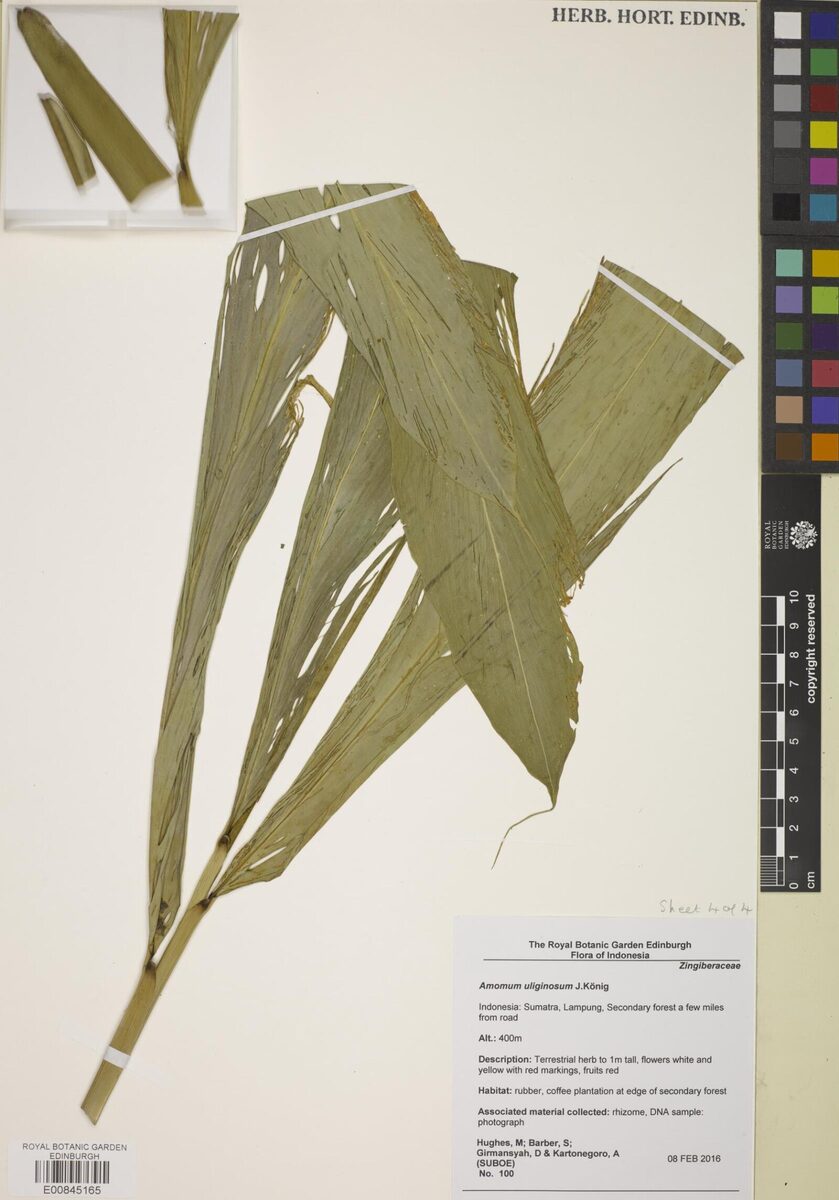
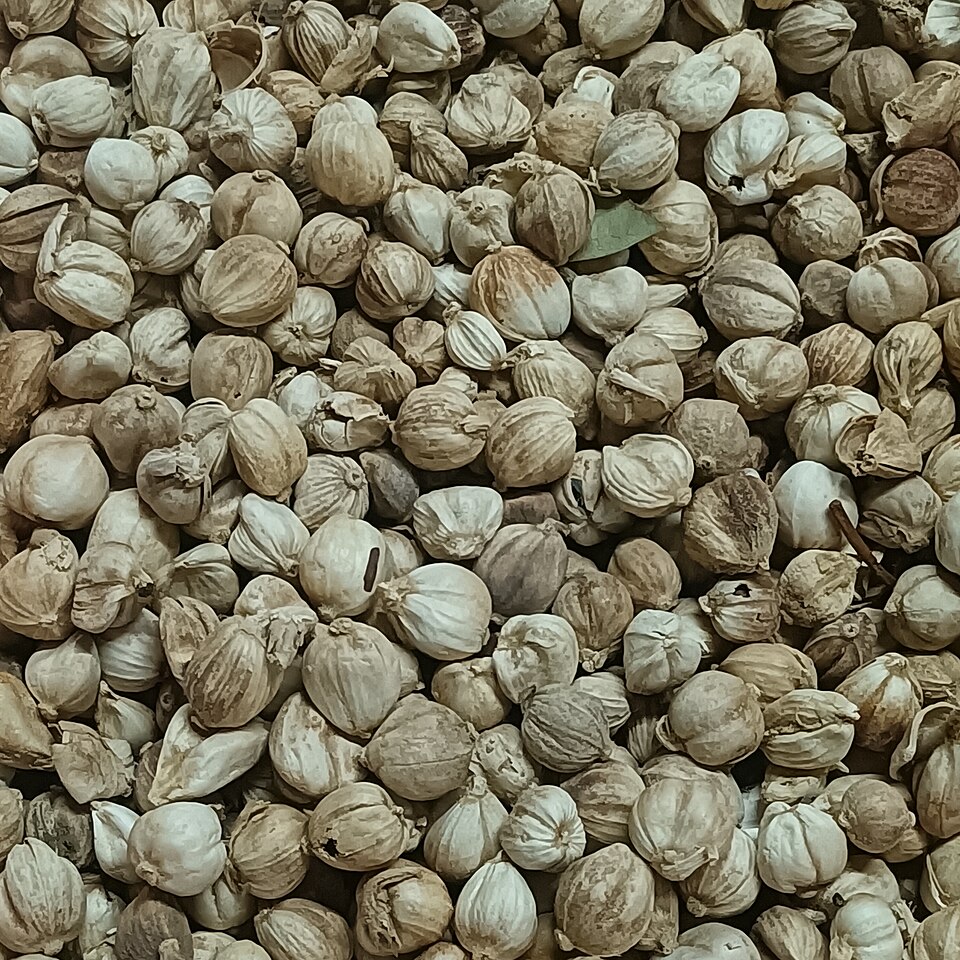
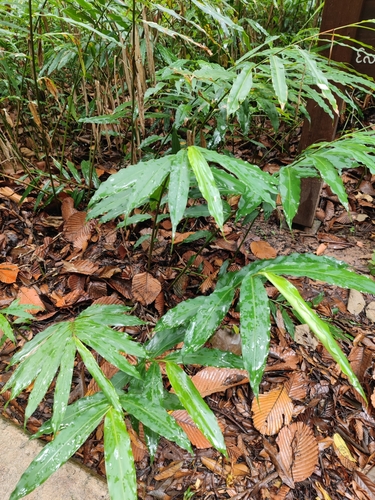
A ginger family plant. It is a herb that keeps growing from year to year. It has stems 2 m high. They are made up of the leaf bases. The rootstock is thick and creeping. It grows in dense stands. The leaves arise in two ranks from underground rhizomes or stems. The leaf blades are 40 cm long by 12 cm wide. The tip narrows to a point. The flower is like a canna but is at the base of the stem. The flower has a protruding lip that is orange tipped with scarlet. The fruit is a narrow egg shape and turns red when ripe. It can be 8 cm long and 3 cm wide. It has a pointed tip. The seeds are oval and 4-5 mm long by 2-3 mm wide. They are smooth.
Edible Uses
The plant's crushed seeds are used as a peppery spice. The leaves are also used as disposable receptacles for eating rice.
Traditional Uses
The ripe fruit are eaten raw. It is the sugary pulp that is eaten. The dried seeds are used like pepper for seasoning. They are used to flavour porridge and bread. They are also added to coffee.
Medicinal Uses
The crushed seeds are boiled with the roots of Piper capensis and drunk as an aphrodisiac.
Distribution
It is a tropical plant. It grows on the edge of the forest. It is often near the edges of swamps. In Tanzania it grows between 1,000-1,700 m above sea level and in areas with a rainfall between 900-2,200 mm. It does well in sandy clay loam soils.
Where It Grows
Africa, Angola, Asia, Australia, Benin, Burundi, Cameroon, Central Africa, Central African Republic, Congo R, Congo DR, Côte d'Ivoire, East Africa, Equatorial Guinea, Ethiopia, Gabon, Ghana, Guinea, Guinée, Ivory Coast, Kenya, Liberia, Madagascar, Malawi, Mauritius, Mozambique, Myanmar, Nigeria, Rwanda, Sao Tome and Principe, SE Asia, Seychelles, Sierra Leone, Southern Africa, Sudan, Tanzania, Togo, Uganda, West Africa, Zambia, Zimbabwe,
Cultivation
Plants can be grown from seed.
Other Uses
The stems are beaten and used as a rope. The dense stands formed by the plant are a favoured habitat for snakes, especially green mamba.
Other Information
The fruit are enjoyed by children. It is a cultivated food plant. It is sold in local markets.
Notes
There are about 50 Aframomum species.
Synonyms
Also Known As
Amatehe, Amatungulu, Amatunguru, Dark crimson cardamom, Gingenga da mata, Ginger lily, Gobeni, Great Cardamom, Ijooja, Itungulu, Kinsansi, Kongo amor, Lingoza, Lingozakelt, Linguwisha, Longouze, Longoza, Mansasa ma mfinda, Matongururu, Matungulu, Msamaka, Mtunguru, Mtuguu, Mtweve, Nthungula, Oceyo, Omushaasha, Oseyo, Samaka, Tchankoko, Tungulu, Tunguru
References (46)
- Agea, J. G., et al 2011, Wild and Semi-wild Food Plants of Bunyoro-Kitara Kingdom of Uganda: etc. Environmental Research Journal 5(2) 74-86
- Bircher, A. G. & Bircher, W. H., 2000, Encyclopedia of Fruit Trees and Edible Flowering Plants in Egypt and the Subtropics. AUC Press. p 11
- Chapman, J. D. & Chapman, H. M., 2001, The Forest Flora of Taraba and Andamawa States, Nigeria. WWF & University of Canterbury. p 213
- Goode, P., 1989, Edible Plants of Uganda. FAO p 54 (As Aframomum sanguineum)
- Brown, D., 2002, The Royal Horticultural Society encyclopedia of Herbs and their uses. DK Books. p 105
Show all 46 references Hide references
- Burkill, I.H., 1966, A Dictionary of the Economic Products of the Malay Peninsula. Ministry of Agriculture and Cooperatives, Kuala Lumpur, Malaysia. Vol 1 (A-H) p 928 (As Aframomum hanburyi)
- Burkill, H. M., 1985, The useful plants of west tropical Africa, Vol. 5. Kew.
- Dalziel, J. M., 1937, The Useful plants of west tropical Africa. Crown Agents for the Colonies London.
- e-monocot.org/taxon/urn:kew.org:wcs:taxon:218350
- Facciola, S., 1998, Cornucopia 2: a Source Book of Edible Plants. Kampong Publications, p 247
- Fowler, D. G., 2007, Zambian Plants: Their Vernacular Names and Uses. Kew. p 74
- Godfrey, J. et al, 2013, Harvesting, preparationand preservation of commonly consumed wild and semi-wild food plants in Bunyoro-Kitara Kingdom, Uganda. Int. J. Med. Arom. Plants. Vol.3 No.2 pp 262-282
- Goode, P., 1989, Edible Plants of Uganda. FAO p 27 (As Aframomum sanguineum)
- Grivetti, L. E., 1980, Agricultural development: present and potential role of edible wild plants. Part 2: Sub-Saharan Africa, Report to the Department of State Agency for International Development. p 47
- Hedrick, U.P., 1919, (Ed.), Sturtevant's edible plants of the world. p 50 (As Amomum angustifolium)
- http://aflora.africa.kyoto-u.ac.jp (As Aframomum baumannii)
- Jardin, C., 1970, List of Foods Used In Africa, FAO Nutrition Information Document Series No 2.p 118 (Also as Aframomum sanguineum)
- Kafoutchoni, K. M., et al, 2018, Species richness, cultural importance, and prioritization of wild spices for conservation in the Sudano-Guinean zone of Benin (West Africa). Journal of Ethnobiology and Ethnomedicine. 14:67
- Latham, P. & Mbuta, A. K., 2017, Plants of Kongo Central Province, Democratic Republic of Congo. 3rd ed p 27
- Lautenschläger, T., et al, 2018, First large-scale ethnobotanical survey in the province of Uíge, northern Angola. Journal of Ethnobiology and Ethnomedicine (2018) 14:51
- Liengola, I. B., 2001, A contribution to the study of native edible plants by the Turumbu and Lokele of the Tshopo District, Province Orientale, D. R. Congo. Syst. Geogr. Pl. 71:687-698
- Malaisse, F., Se nourrir en floret claire africaine. Approche ecologique et nutritionnelle. CTA., p 57
- Malaisse, F., 2010, How to live and survive in Zambezian open forest (Miombo Ecoregion). Les Presses Agronomiques de Gembloux.
- Mawunu, M., et al, 2020, First Survey of the Edible Non-Wood Forest Products Sold in Uige Province, Northern Angola. European Journal of Agriculture and Food Sciences. Vol. 2, No. 6
- Mawunu, M., et al, 2022, Ethnobotanical uses of wild edible plants of Mucuba municipality, Angola. Natural Resources for Human Health. 2022, 0:1-10
- Menninger, E.A., 1977, Edible Nuts of the World. Horticultural Books. Florida p 80 (As Amomum angustifolium) Morton,
- Mosango M., Szafranski F., 1985, Plantes sauvages à fruits comestibles dans les environs de Kisangani (Zaïre). In: Journal d'agriculture traditionnelle et de botanique appliquée, 32e année, pp. 177-190 (As Amomum sanguineum)
- Musinguzi, E., et al, 2006, Utilization of Indigenous Food Plants in Uganda: A Case Study of South-Western Uganda. AJFAND Vol. 6(2):
- Mutie, F. M., et al, 2023, Important Medicinal and Food Taxa (Orders and Families) in Kenya, Based on Three Quantitative Approaches. Plants 2023, 12, 1145
- Oryema, C., et al, 2013, Edible wild fruit species of Gulu District, Uganda. International Journal of Biology and Biological Sciences Vol 2(4) pp 068-082
- Peters, C. R., O'Brien, E. M., and Drummond, R.B., 1992, Edible Wild plants of Sub-saharan Africa. Kew. p 42
- Ruffo, C. K., Birnie, A. & Tengnas, B., 2002, Edible Wild Plants of Tanzania. RELMA p 112
- Seidemann J., 2005, World Spice Plants. Economic Usage, Botany, Taxonomy. Springer. p 8 (Also as Aframomum hanburyi)
- Styger, E., et al, 1999, Indigenous fruit trees of Madagascar: potential components of agroforestry systems to improve human nutrition and restore biological diversity. Agroforestry Systems 46: 289-310
- Terashima, H., & Ichikawa, M., 2003, A comparative ethnobotany of the Mbuti and Efe hunter-gatherers in the Ituri Forest, Democratic Republic of Congo. African Study Monographs, 24 (1, 2): 1-168, March 2003 (As Aframomum sanguineum)
- Tredgold, M.H., 1986, Food Plants of Zimbabwe. Mambo Press. p 33
- Tugume, P. & Nyakoojo, C., 2020, Traditional use of wild edible plants in the communities adjacent to Mabira Central Forest Reserve, Uganda. Ethnobotany Research & Applications 20:15 (2020)
- Uphof,
- von Katja Rembold, 2011, Conservation status of the vascular plants in East African rain forests. Dissertation Universitat Koblenz-Landau
- Walsh, M., 2009, The Use of Wild and Cultivated Plants as famine Foods on Pemba Island, Zanzibar. Études océan Indien. 42-43
- Wild, 1975,
- Williamson, J., 2005, Useful Plants of Malawi. 3rd. Edition. Mdadzi Book Trust. p 15
- World Checklist of Useful Plant Species 2020. Royal Botanic Gardens, Kew
- www.zimbabweflora.co.zw 2011
- Yamada, T., 1999, A report of the Ethnobotany of the Nyindu in the Eastern part of the former Zaire. African Study Monographs 20(1):1-72 (As Aframomum baumannii)
- Zapfack, L., et al, 2001, Ethnobotanical Survey of the Takamanda Forest Reserve. Consultancy Report PROFA, Cameroon. p 30 (As Aframomum baumannii)