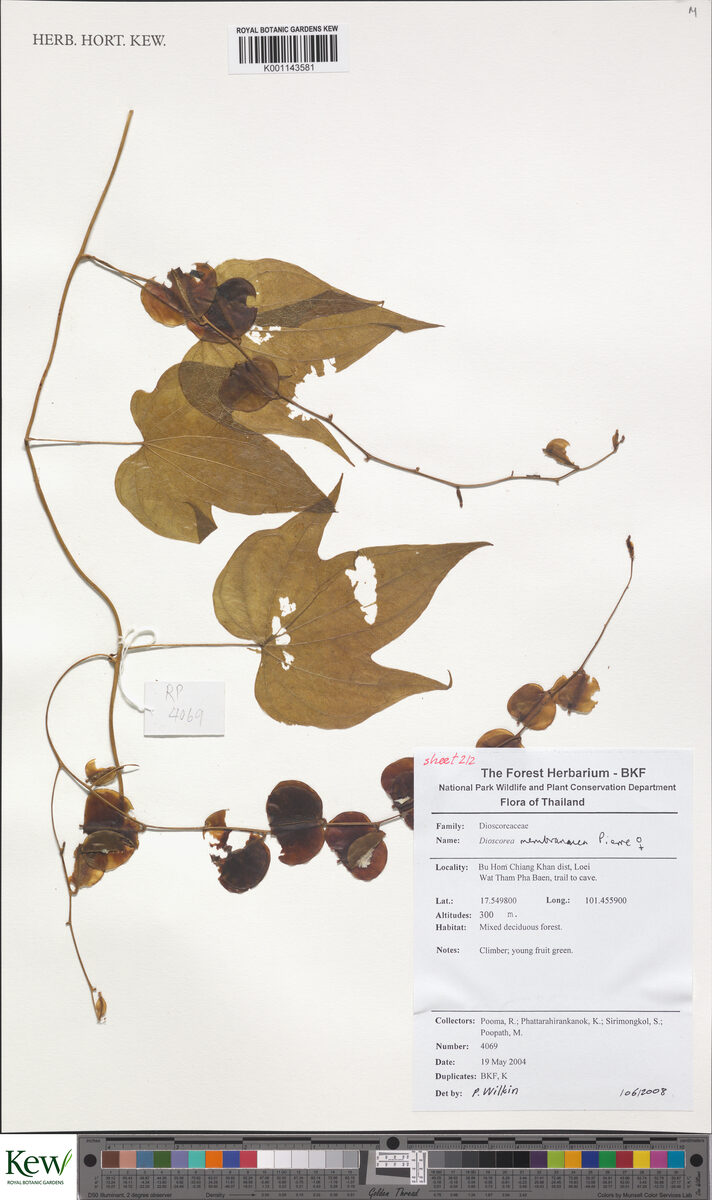
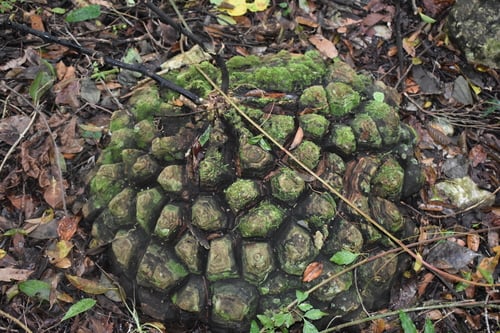
Dioscorea elephantipes
(L'Her.) Engl.
Elephant’s foot, Hottentot bread
iNaturalist· cc-by-nc
(c) Sandra Falanga, some rights reserved (CC BY-NC), uploaded by Sandra Falanga
iNaturalist· cc-by-nc
(c) Luc Strydom, some rights reserved (CC BY-NC), uploaded by Luc Strydom
iNaturalist· cc-by-nc
(c) Luc Strydom, some rights reserved (CC BY-NC), uploaded by Luc Strydom
Summary
Source: WikipediaDioscorea elephantipes, the elephant's foot yam or Hottentot bread, is a species of flowering plant in the genus Dioscorea of the family Dioscoreaceae, native to the dry interior of South Africa.
Description
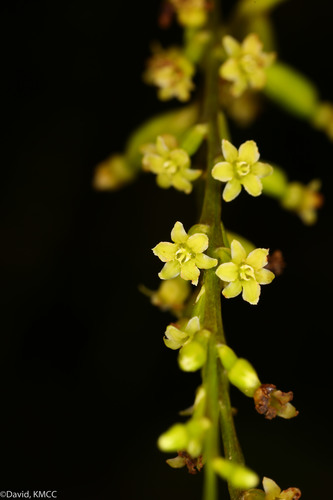
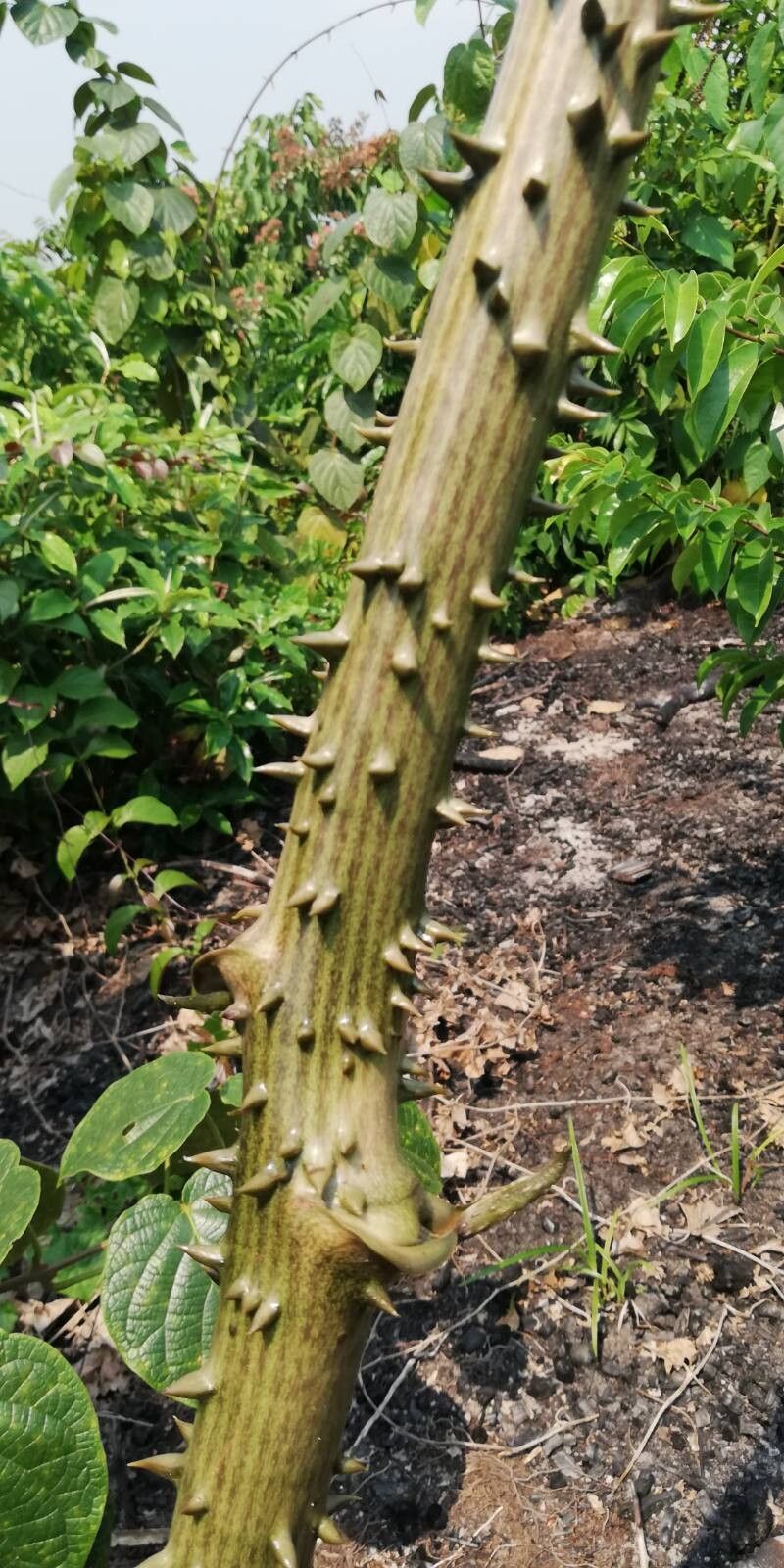
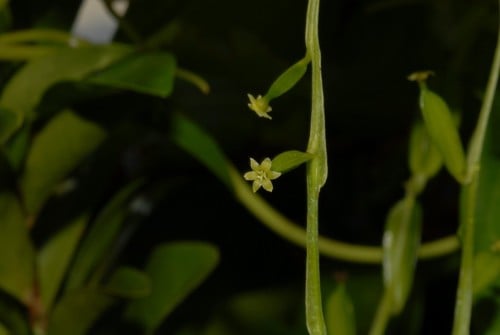
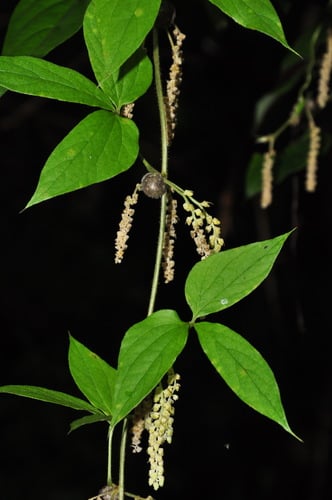
A yam. A vine with a succulent growth near ground level. This can grow 1 m long and 1 m high. It is above ground. It has angular lumps. It is hard and corky. The stems twine to the left. The leaves are heart shaped. The flowers are yellowish-green. The male flowers are in erect flowering stalks and the female flowers are nodding and spiny.
Edible Uses
The tubers are cooked and eaten, and are also processed for starch. Historically used as a famine food by Hottentots in South Africa.
Traditional Uses
The tubers have been cooked and eaten in times of famine by Hottentots in South Africa. It is processed for starch.
This uses section is brief — help expand it
Distribution
It is a warm temperate to subtropical plant. It cannot tolerate frost. It grows naturally on dry rocky slopes in South Africa. It is best in light, well-drained soils. It needs an open, sunny position. In South Africa it grows between 250-1,250 m above sea level. It can grow in arid places. Hobart Botanical Gardens hot house. It suits hardiness zones 9-11.
Where It Grows
Australia, Angola, Botswana, Central Africa, Hawaii, Namibia, Pacific, Slovenia, South Africa*, Southern Africa, Tasmania, USA,
Cultivation
Plants are grown from seed. They can also be grown by cuttings.
Other Information
It is a famine food. It is cultivated.
Notes
There are about 650 species of Dioscorea.
Nutrition
| Part | Moisture | kJ | kcal | Protein | Vit A | Vit C | Iron | Zinc |
|---|---|---|---|---|---|---|---|---|
| Tubers | 92.7 | 98 | 23 | 0.3 | — | 2.9 | 0.4 | 0.2 |
Synonyms
Also Known As
Nakaa, Olifantsvoet, Razbrazdana dioskoreja
References (18)
- Anderson, M., 2002, The World Encyclopedia of Cacti and Succulents. Hermes House, New York. p 149
- Bodkin, F., 1991, Encyclopedia Botanica. Cornstalk publishing, p 345
- Brickell, C. (Ed.), 1999, The Royal Horticultural Society A-Z Encyclopedia of Garden Plants. Convent Garden Books. p 370
- Cheifetz, A., (ed), 1999, 500 popular vegetables, herbs, fruits and nuts for Australian Gardeners. Random House p 66
- Coursey, D.G., 1979, Yams, in Simmonds N.W.,(ed), Crop Plant Evolution. Longmans. London. p 70
Show all 18 references Hide references
- Cundall, P., (ed.), 2004, Gardening Australia: flora: the gardener's bible. ABC Books. p 503
- H. G. A. Engler & C. G. O. Drude, Veg. Erde 9(II):367. 1908 (Pflanzenw. Afrikas)
- Fox, F. W. & Young, M. E. N., 1982, Food from the Veld. Delta Books. p 182
- Hedrick, U.P., 1919, (Ed.), Sturtevant's edible plants of the world. p 645 (As Testudinaria elephantipes)
- Llamas, K.A., 2003, Tropical Flowering Plants. Timber Press. p 185
- Plowes, N. J. & Taylor, F. W., 1997, The Processing of Indigenous Fruits and other Wildfoods of Southern Africa. in Smartt, L. & Haq. (Eds) Domestication, Production and Utilization of New Crops. ICUC p 190
- Royal Botanic Gardens, Kew (1999). Survey of Economic Plants for Arid and Semi-Arid Lands (SEPASAL) database. Published on the Internet; http://www.rbgkew.org.uk/ceb/sepasal/internet [Accessed 16th April 2011]
- Ruiters-Welcome, A. K., 2019, Food plants of southern Africa. Ph.D. thesis. Univ. of Johannesburg p 51
- Staples, G.W. and Herbst, D.R., 2005, A tropical Garden Flora. Bishop Museum Press, Honolulu, Hawaii. p 659
- van Wyk, Be., & Gericke, N., 2007, People's plants. A Guide to Useful Plants of Southern Africa. Briza. p 86
- Welcome, A. K. & Van Wyk, B.-E., 2019, An inventory and analysis of the food plants of southern Africa. South African Journal of Botany 122 (2019) 136–179
- World Checklist of Useful Plant Species 2020. Royal Botanic Gardens, Kew
- Zeven, A. C. & de West, J. M. J., 1982, Dictionary of cultivated plants and their regions of diversity. Wageningen. p 125