Dioscorea abyssinica
Hochst. ex Kunth
iNaturalist· cc-by-nc-sa
(c) MBG, some rights reserved (CC BY-NC-SA)
Summary
Source: WikipediaDioscorea abyssinica is a herbaceous vine in the genus Dioscorea native to several Central African countries including Benin, Burkina Faso, Central African Republic, Eritrea, Ethiopia, Ghana, Ivory Coast, Liberia, Mali, Nigeria, Senegal, and Sudan. The plant's starchy tubers are edible and are either harvested from the wild or cultivated; however, they are difficult to obtain due to the depth at which they grow in the soil. It is propagated by seed.
Description
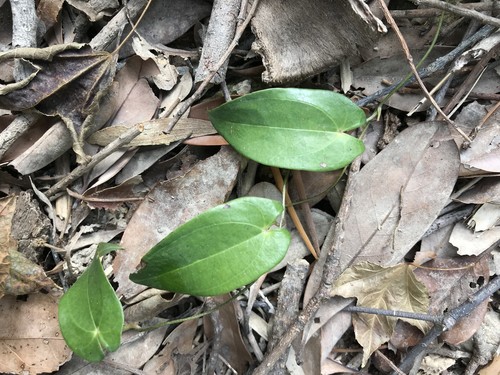
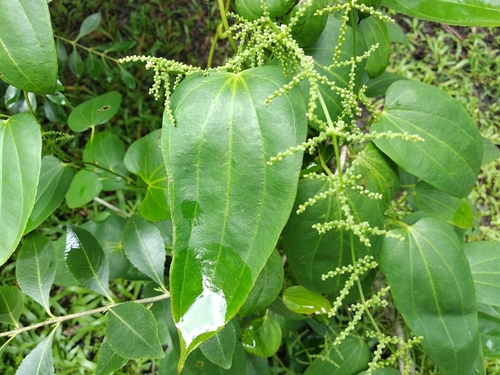
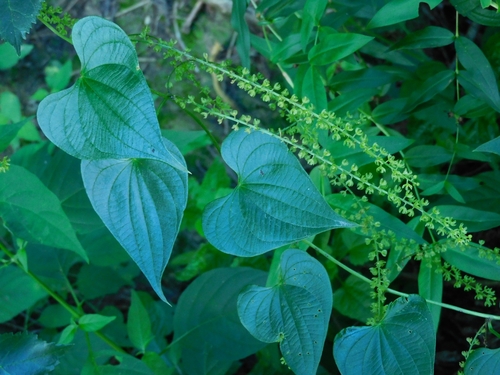
A yam. It is a climber. It grows 4 m high. It can have vines 20 m long. It does not have spines. It twines right-handed. It usually produces one tuber. The tuber is deep in the ground and therefore hard to harvest. The leaves are simple and alternate. The leaves are a rounded heart shape. The flowers are white and cup shaped. The fruit are capsules. There are several cultivated forms.
Edible Uses
The tubers are eaten boiled or roasted.
Traditional Uses
The tubers need to be boiled or roasted.
This uses section is brief — help expand it
Distribution
A tropical plant. It grows in the Sahel region. It can grow in arid places. It suits areas with an alternating wet and dry season. It is best in a sunny position in dry soil. It cannot tolerate frost.
Where It Grows
Africa, Benin, Burkina Faso, Cameroon, Central Africa, Central African Republic, CAR, Congo, Côte d'Ivoire, East Africa, Eritrea, Ethiopia, Ghana, Ivory Coast, Liberia, Mali, Niger, Nigeria, Sahel, Senegal, Sierra Leone, Sudan, Uganda, West Africa, Zambia,
Cultivation
This species is believed to be one of the parents of Dioscorea cayenensis.
Other Information
It is a cultivated plant.
Notes
There are about 850 Dioscorea species. There are about 60 that are edible and 10 that are significant.
Also Known As
Agbo, Bekui, Bemba, Bohe, Boye, Diabongua, Diga, Dika, Dionfini, Dooya, Edwiw, Kape