Dioscorea rupicola
Kunth
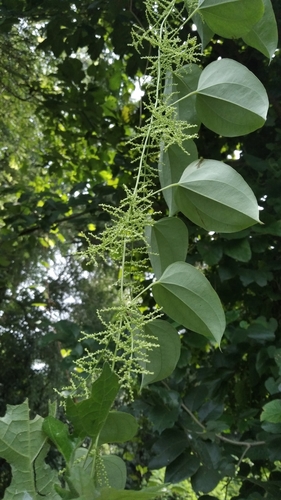
iNaturalist· cc-by-nc
(c) Alison Young, some rights reserved (CC BY-NC), uploaded by Alison Young
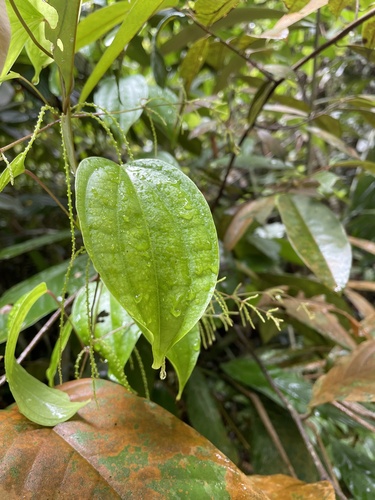
iNaturalist· cc-by-nc
(c) Nick Helme, some rights reserved (CC BY-NC), uploaded by Nick Helme
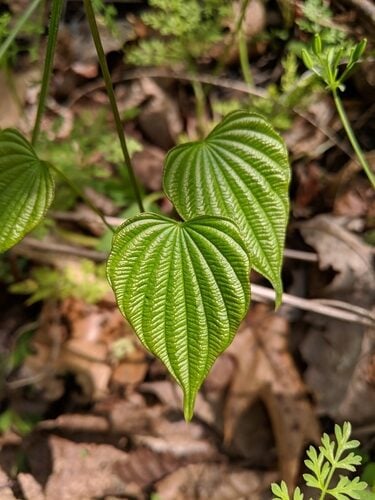
iNaturalist· cc-by-nc
(c) graham_g, some rights reserved (CC BY-NC)
Description
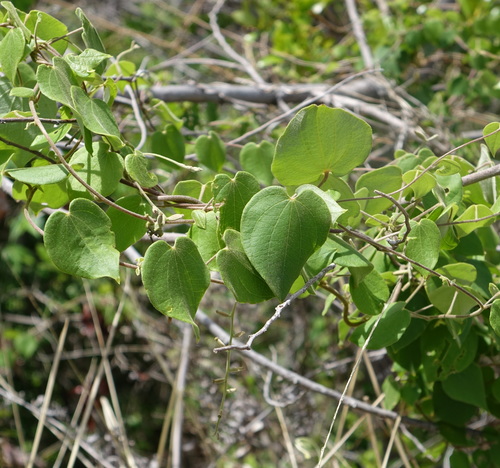
A yam. It is a vine. The vine ca be 8 m long. The flowers are brownish-green. The tuber can be 80 cm across and 3 m long.
This description is brief — help expand it
Edible Uses
The tubers are eaten after being boiled for 12 hours until the bark slips off.
Traditional Uses
Caution: The tubers are poisonous unless properly prepared. The tubers are boiled for 12 hours until the bark slips off.
This uses section is brief — help expand it
Known Hazards
The tubers are poisonous unless properly prepared.
Distribution
It is a subtropical plant. It needs a rich, well-drained soil.
Where It Grows
Africa, Eswatini, Mozambique, Southern Africa, Swaziland, Tanzania, Zambia,
Cultivation
Plants can be grown from seeds.
Other Information
A famine food.
Notes
It contains cortisone that are used to manufacture steroids.
Also Known As
Inkwa, Lunyawolwendlovu, Susula, Senlila
References (5)
- Fox, F. W. & Young, M. E. N., 1982, Food from the Veld. Delta Books. p 180
- Long, C., 2005, Swaziland's Flora - siSwati names and Uses http://www.sntc.org.sz/flora/
- Plowes, N. J. & Taylor, F. W., 1997, The Processing of Indigenous Fruits and other Wildfoods of Southern Africa. in Smartt, L. & Haq. (Eds) Domestication, Production and Utilization of New Crops. ICUC p 190
- Ruiters-Welcome, A. K., 2019, Food plants of southern Africa. Ph.D. thesis. Univ. of Johannesburg p 52
- Welcome, A. K. & Van Wyk, B.-E., 2019, An inventory and analysis of the food plants of southern Africa. South African Journal of Botany 122 (2019) 136–179