Dicliptera papuana
Warb.
Kabanga
wikimedia· cc-by
Wikimedia Commons - R. O. Gardner
wikimedia· cc-by
Wikimedia Commons - R. O. Gardner
gbif· cc0
President and Fellows of Harvard College
Description
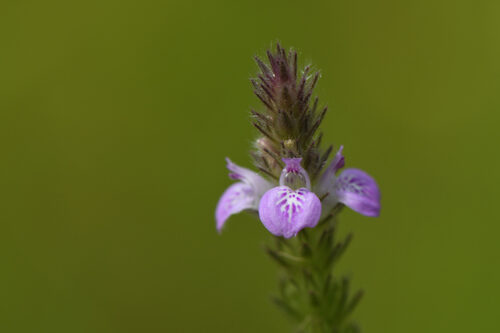
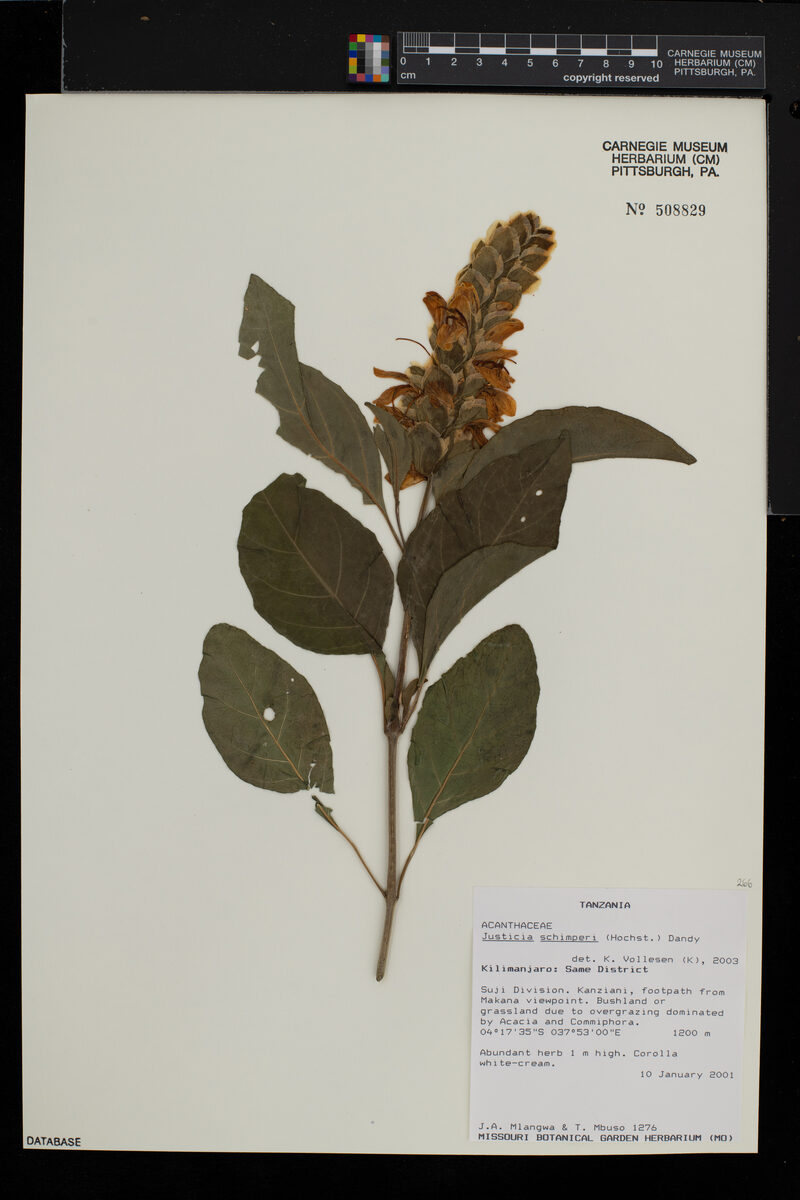
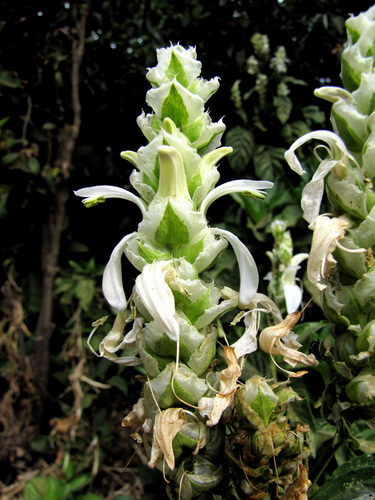
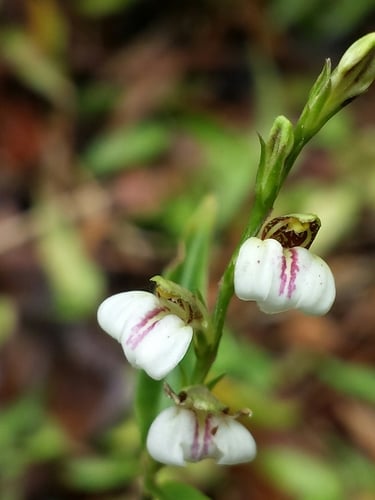
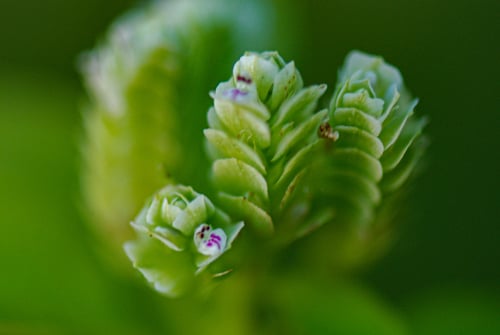
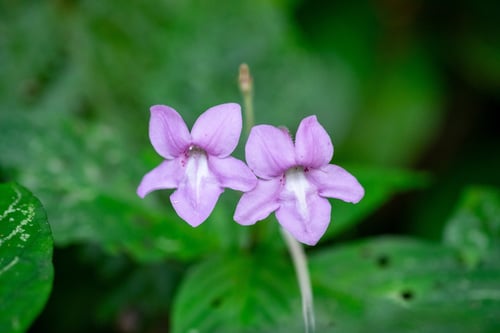
A herb up to 1 m high. It is somewhat similar to Rungia klossii but taller and with longer leaves. The stems have grooves along them. The leaves are produced opposite each other. They are oblong and taper at both ends. Leaves can be smooth or finely hairy. The flower clusters occur in the axils of leaves. The flower clusters have 2 wing like bracts below them. Flowers are blue. They occur in pairs. The fruit capsule is small with 2 cells and with 2 seeds in each cell. The seed are round and with pits on the surface.
Edible Uses
The leaf tips are eaten cooked.
Traditional Uses
Leaf tips are eaten cooked.
This uses section is brief — help expand it
Distribution
A tropical plant. It grows wild in the highlands especially along creeks. It is also cultivated. It grows between at least 700 m and 2600 m altitude.
Where It Grows
Pacific, Papua New Guinea, PNG,
Cultivation
It can be grown from cuttings. Normally a group of stalks are planted together to produce a clumpy bush.
Production
The young leaf tips are picked at regular intervals.
Other Information
A less popular green cultivated in some areas, harvested from the wild in others and not used in other areas. It is less popular than Rungia.
Synonyms
Also Known As
Garu baio, Karamu, Kisomp, Konsjola ma, Omok
References (8)
- Borrell, O.W., 1989, An Annotated Checklist of the Flora of Kairiru Island, New Guinea. Marcellin College, Victoria Australia. p 44
- Bourke, R. M., Altitudinal limits of 230 economic crop species in Papua New Guinea. Terra australis 32.
- French, B.R., 1986, Food Plants of Papua New Guinea, A Compendium. Asia Pacific Science Foundation p 70
- Martin, F.W. & Ruberte, R.M., 1979, Edible Leaves of the Tropics. Antillian College Press, Mayaguez, Puerto Rico. p 171
- Peekel, P.G., 1984, (Translation E.E.Henty), Flora of the Bismarck Archipelago for Naturalists, Division of Botany, Lae, PNG. p 511
Show all 8 references Hide references
- Powell, J.M., Ethnobotany. In Paijmans, K., 1976, New Guinea Vegetation. Australian National University Press. p 110 (As Hemigraphis sp.)
- Sillitoe, P. 1995, An Ethnobotanical Account of the Plant Resources of the Wola Region, Southern Highlands Province, Papua New Guinea. J. Ethnobiol. 15(2): 201-235
- World Checklist of Useful Plant Species 2020. Royal Botanic Gardens, Kew