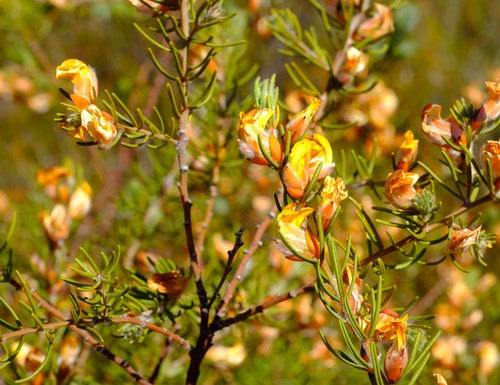
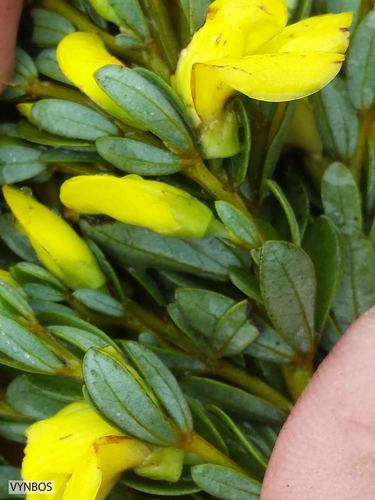
Dichrostachys cinerea
(L.) Wight et Arn
Marabou Thorn, Sickle bush
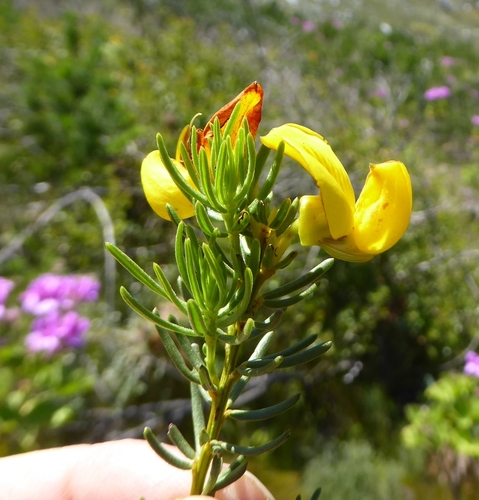
iNaturalist· cc-by-nc
(c) Ricky Taylor, some rights reserved (CC BY-NC), uploaded by Ricky Taylor
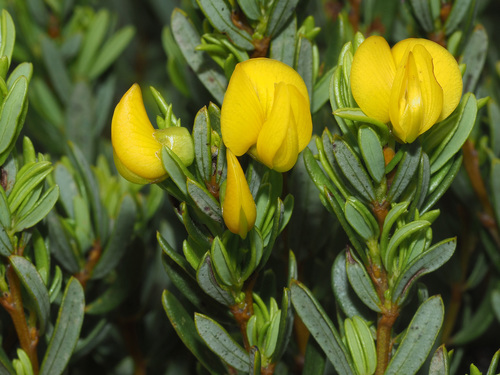
iNaturalist· cc-by-nc
(c) janet_taylor, some rights reserved (CC BY-NC), uploaded by janet_taylor
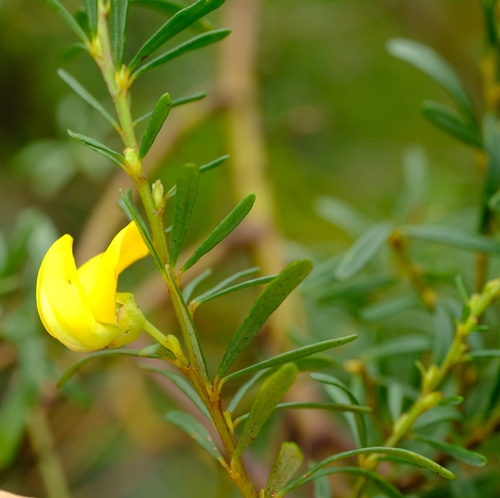
iNaturalist· cc-by-nc
(c) Alex Rebelo, some rights reserved (CC BY-NC), uploaded by Alex Rebelo
Summary
Source: WikipediaDichrostachys cinerea, known as sicklebush, bell mimosa, Chinese lantern tree or Kalahari Christmas tree (South Africa), is a legume of the genus Dichrostachys in the family Fabaceae. Other common names include omubambanjobe (Tooro Uganda), acacia Saint Domingue (French), el marabú (Cuba), " Mpangara" (Shona), Kalahari-Weihnachtsbaum (German of former South West Africa), kéké or mimosa clochette (Réunion).
Description
A shrub or small acacia like tree. It grows 5-6 m high in dry areas and 12 m high in wetter places. The stems are often twisted and twined together. The side branches form spines. It loses its leaves during the year. The leaves are compound. There are 4-13 pairs of stalks each with 27 pairs of leaflets. The leaflets are narrow and 10 mm long by 3 mm wide. They are dark green and glossy above but dull underneath. The flowers are in spikes in the axils of leaves. Half the flower spike is sterile flowers and the other half are fertile. The flower spikes hangs downwards. The fruit is a cluster of pods. Each one is 10 cm long by 1 cm wide. They are twisted.
Edible Uses
The fruit is a narrow, yellow or brown seedpod containing around 4 small black seeds. Both the fruit and seeds are edible. The plant also yields a gum.
Traditional Uses
The fruit and seeds are eaten. The seeds are used in soups. The gum is eaten as a snack.
This uses section is brief — help expand it
Medicinal Uses
The bark is astringent and vermifuge, used for dysentery, headaches, toothaches, and elephantiasis. The root is anthelmintic, purgative, and strongly diuretic; infusions treat snakebites, leprosy, syphilis, and coughs. A root decoction has been used as a contraceptive for women. Pounded roots and leaves are applied in the treatment of epilepsy. Roots or leaves can be chewed and placed on snakebite and scorpion sting sites. The leaves are diuretic and laxative, and when applied externally are believed to produce local anaesthesia; they are used for gonorrhoea, boils, sore eyes, and toothaches. A powder made from the leaves is used in massage of fractures.
Known Hazards
The plant's aggressive weedy character and strong natural regeneration make it difficult to control, limiting its use as a live fence.
Distribution
A tropical plant. It is more common at low altitudes. In East Africa it grows between sea level and 1,700 m altitude. It grows on a range of soils in wooded grassland. It grows in the Sahel. It needs an annual rainfall between 200-400 mm. It can form thickets on poor soils. It will grow in most well-drained soils. It needs an open sunny position. It is damaged by frost but can tolerate some drought. It can grow in salty soils. It can grow in arid places.
Where It Grows
Africa*, Angola, Asia, Australia, Benin, Botswana, Brunei, Burkina Faso, Burundi, Cambodia, Cameroon, Cape Verde, Central Africa, Central African Republic, CAR, Chad, China, Comoros, Congo, Côte d'Ivoire, Djibouti, East Africa*, East Timor, Egypt, Eritrea, Eswatini, Ethiopia, Gabon, Gambia, Ghana, Guinea, Guinée, Guinea-Bissau, India, Indochina, Indonesia, Iran, Ivory Coast, Kenya, Laos, Lesotho, Liberia, Madagascar, Malawi, Malaysia, Maldives, Mali, Mauritania, Middle East, Mozambique, Myanmar, Namibia, Niger, Nigeria, North Africa, Pakistan, Philippines, Rwanda, Sahel, Sao Tome and Principe, Saudi Arabia, SE Asia, Senegal, Seychelles, Sierra Leone, Somalia, South Africa, Southern Africa, South Sudan, Sri Lanka, Sudan, Swaziland, Tanzania, Thailand, Timor-Leste, Togo, Uganda, Vietnam, West Africa*, Yemen, Zambia, Zimbabwe,
Cultivation
They can be grown from seed. The seed needs treatment before sowing. Hot water is poured over the seeds and left to soak for 24 hours before planting. Seeds germinate readily. Plants can be grown from root cuttings.
Propagation
A fraction of seeds are polyembryonic, producing usually 2, sometimes 3, or rarely more embryos; polyembryony appears positively correlated with seed number. Natural regeneration is most vigorous via root suckers — a single plant can produce 130 new stems within a 15m radius over 10 years. Transplanting root suckers or using root cuttings is the easiest and most reliable propagation method. Seed has orthodox storage behaviour with little viability loss over 26 years of hermetic storage at room temperature. Adding ash to stored seed reduces insect damage, and seed can be kept up to 10 years at room temperature if dry and insect-free. Direct sowing is possible; freshly collected ripe seed takes 15–20 days to germinate due to a thick seed coat. Scarification improves germination, and a 25-minute soak in concentrated sulphuric acid gives optimum germination of 3–7 days for fresh seed. Three-year-old seed requires only a 15-minute pre-treatment for the same result. Under controlled conditions, germination above 75% can be expected. Pods should be collected as soon as they ripen and seed dried and stored promptly to reduce insect damage. A single plant can produce around 1 million viable seeds per year.
Other Uses
The bark yields a strong fibre suitable for twine, and debarked roots are used for plaiting racks and baskets. A gum obtained from the plant is of low quality. The heartwood is red or dark purple with darker streaks, clearly differentiated from the yellowish-brown sapwood. The grain is straight or slightly interlocked with a fine, even texture. The wood is medium heavy to very heavy, hard, durable, and presumably termite-resistant. Due to its generally small dimensions, it is used for walking sticks, handles, spears, and tool handles. Fencing posts can last up to 50 years. The wood burns slowly with few sparks and produces non-toxic smoke, making it excellent firewood; the plant's multi-stemmed growth produces pieces ideal for carrying as a headload. The plant is widely used for sand dune stabilisation and soil conservation, and is recommended in India for shallow soils, arid western and subhumid alluvial plains, and degraded calcareous wastelands. Its strong capacity for natural regeneration gives it high potential for ravine reforestation. Leaves are rich in nutrients and frequently used as green manure. In the Sahel it is said to improve soils along riverbanks. It makes a very effective hedge or barrier, preventing livestock from entering gardens and crops, though its aggressive weedy character limits its use as a live fence. Plants can indicate overgrazing in low-rainfall areas. This plant is fire-retardant and suitable for growing in containers.
Production
It grows slowly. In Central African Republic plants have been recorded flowering in June and July.
Notes
There are about 15-20 Dichrostachys species. The leaves are used in medicine. Also as Mimosaceae.
Synonyms
Also Known As
Ader, Andera, Arzik, Bilatri, Bortuli, Chimphongala, Chipangala, Dhiigtaar, Evagia, Ithalala, Kansalonsalo, Katenge, Khairi, Kolai, Kudhu beli, Kunlai, Mkingiri, Moselesele, Muvilisya, Muwanika, N'talala, Odatare, Omutjete, Segum-kati, Sekelbos, Sitbyu, Tabe, Veltura, Vidattalai, Vurtuli
References (41)
- Abbiw, D.K., 1990, Useful Plants of Ghana. West African uses of wild and cultivated plants. Intermediate Technology Publications and the Royal Botanic Gardens, Kew. p 46
- Ambasta, S.P. (Ed.), 2000, The Useful Plants of India. CSIR India. p 170, 94 (As Cailliea cinerea)
- Ballal, M. E., et al, 2014, Ethno-botany of Natural Forests of Nuba Mountains, South Kordofan State, Sudan. Journal of Forest Poducts & Industries. 3(1):13-19
- Bekele-Tesemma A., Birnie, A., & Tengnas, B., 1993, Useful Trees and Shrubs for Ethiopia. Regional Soil Conservation Unit. Technical Handbook No 5. p 186
- Bodkin, F., 1991, Encyclopedia Botanica. Cornstalk publishing, p 339
Show all 41 references Hide references
- Bonou, A., et al, 2013, Valeur economique des Produits Forestiers Non Ligneux (PFNL) au Benin. Editions Universitaires Europeennes p 98
- Bouba, A. A., et al, 2012, Proximate Composition, Mineral and Vitamin Content of Some Wild Plants Used as Spices in Cameroon. Food and Nutrition Sciences 3:423-432.
- Bunderson, W. T. et al, 2002, Common Agroforestry Species in Malawi. Malawi Agroforestry Extension Project, Pubication No. 46, Lilongwe. p 19
- Burkill, H. M., 1985, The useful plants of west tropical Africa, Vol. 3. Kew.
- Busson, 1965,
- Chapman, J. D. & Chapman, H. M., 2001, The Forest Flora of Taraba and Andamawa States, Nigeria. WWF & University of Canterbury. p 183
- Cowie, I, 2006, A Survey of Flora and vegetation of the proposed Jaco-Tutuala-Lore National Park. Timor-Lests (East Timor) www.territorystories.nt/gov.au p 50 (subsp. malesiana)
- Dharani, N., 2002, Field Guide to common Trees & Shrubs of East Africa. Struik. p 222
- Fowler, D. G., 2007, Zambian Plants: Their Vernacular Names and Uses. Kew. p 34
- Grivetti, 1976, 1979,
- Grivetti, L. E., 1980, Agricultural development: present and potential role of edible wild plants. Part 2: Sub-Saharan Africa, Report to the Department of State Agency for International Development. p 79
- Jardin, C., 1970, List of Foods Used In Africa, FAO Nutrition Information Document Series No 2.p 25, 74, 132
- Krishen P., 2006, Trees of Delhi, A Field Guide. DK Books. p 275
- Lee, 1979,
- Le Houerou, H. N., (Ed.), 1980, Browse in Africa. The current state of knowledge. International Livestock Centre for Africa, Ethiopia. p 163
- Maydell, H. von, 1990, Trees and shrubs of the Sahel: their characteristics and uses. Margraf. p 251
- Mbuya, L.P., Msanga, H.P., Ruffo, C.K., Birnie, A & Tengnas, B., 1994, Useful Trees and Shrubs for Tanzania. Regional Soil Conservation Unit. Technical Handbook No 6. p 232
- Palgrave, K.C., 1996, Trees of Southern Africa. Struik Publishers. p 254
- Peters, C. R., O'Brien, E. M., and Drummond, R.B., 1992, Edible Wild plants of Sub-saharan Africa. Kew. p 129
- Pickering, H., & Roe, E., 2009, Wild Flowers of the Victoria Falls Area. Helen Pickering, London. p 73
- Prodr. fl. Ind. orient. 271. 1834
- Roodt, V., 1998, Trees & Shrubs of the Okavango Delta. Medicinal Uses and Nutritional value. The Shell Field Guide Series: Part 1. Shell Botswana. p 181 (subsp. africana)
- Royal Botanic Gardens, Kew (1999). Survey of Economic Plants for Arid and Semi-Arid Lands (SEPASAL) database. Published on the Internet; http://www.rbgkew.org.uk/ceb/sepasal/internet [Accessed 28th April 2011]
- Ruiters-Welcome, A. K., 2019, Food plants of southern Africa. Ph.D. thesis. Univ. of Johannesburg p 57
- Storrs, A. E. C., 1995 reprint, Know Your Trees. Some Common Trees found in Zambia, Forestry Division. Regional Soil Conservation Unit, Nairobi, p 55
- Sujanapal, P., & Sankaran, K. V., 2016, Common Plants of Maldives. FAO & Kerala FRI, p 112
- Sukarya, D. G., (Ed.) 2013, 3,500 Plant Species of the Botanic Gardens of Indonesia. LIPI p 228
- Swaziland's Flora Database http://www.sntc.org.sz/flora (Subsp. africana)
- Tebkew, M. et al, 2014, Underutilized wild edible plants in the Chilga District, northwestern Ethiopia: focus on wild woody plants. Agriculture & Food Security 3:12
- Tebkew, M., et al, 2018, Uses of wild edible plants in Quara district, northwest Ethiopia: implication for forest management. Agriculture and Food Security (2018) 7:12
- van Wyk, B, van Wyk, P, and van Wyk B., 2000, Photographic guide to Trees of Southern Africa. Briza. p 117
- van Wyk, Ben-Erik, 2019, The diversity and multiple uses of southern African legumes. Australian Systematic Botany, 2019, 32, 519–546
- Williamson, J., 2005, Useful Plants of Malawi. 3rd. Edition. Mdadzi Book Trust. p 97
- World Checklist of Useful Plant Species 2020. Royal Botanic Gardens, Kew
- www.worldagroforestrycentre.org/sea/products/afdbases/af/asp/SpeciesInfo.asp?SpID=675
- Yerima, B. J. & Kanawa, A. A., 2018, Nutritive Mineral Content of Dichrostachy cinerea (Sickle bush) Seeds and Fruits. Chemistry Research Journal, 2018, 3(3):168-178