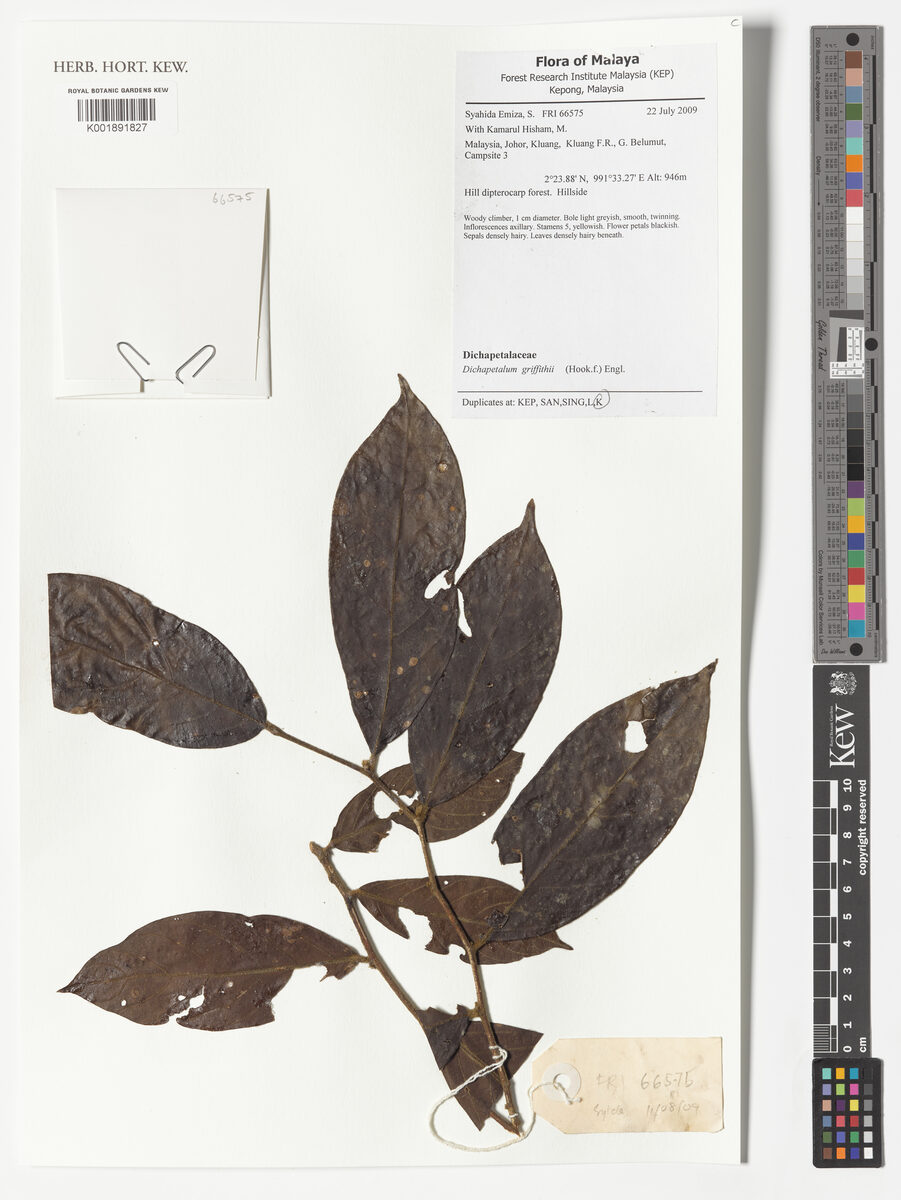
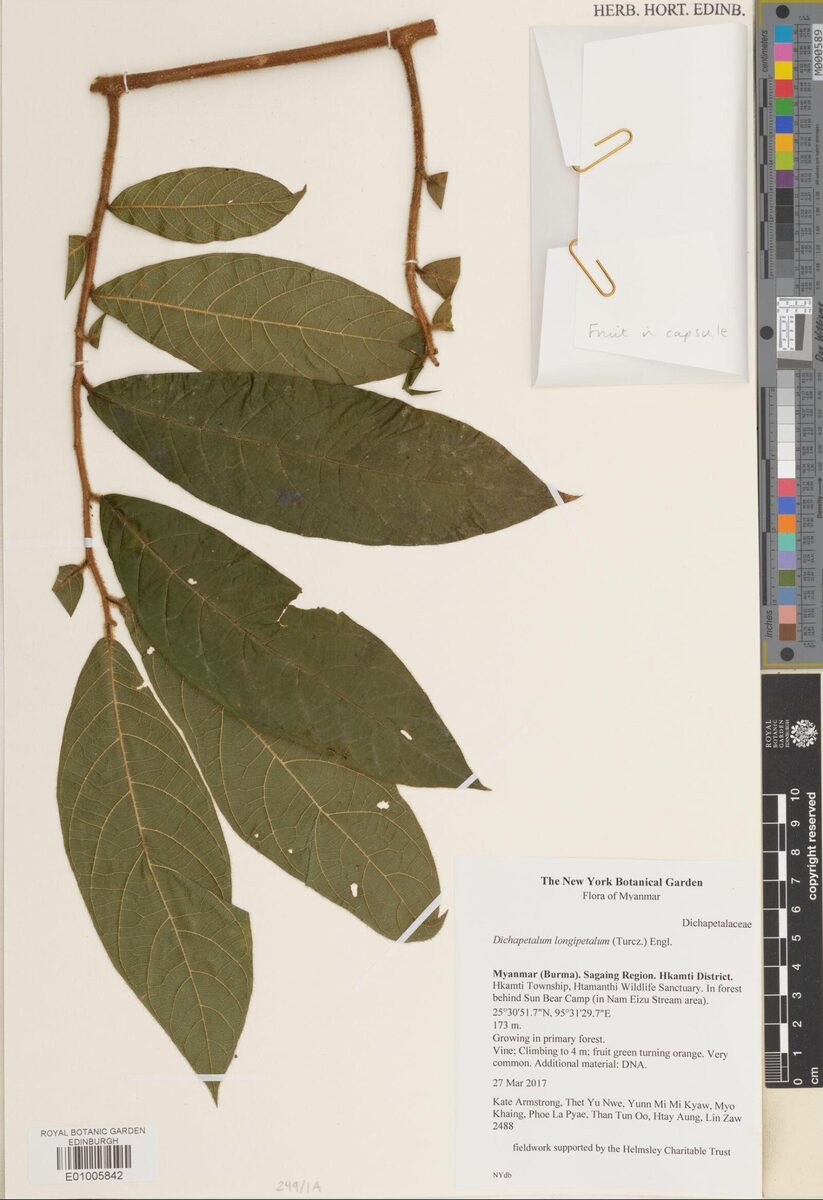
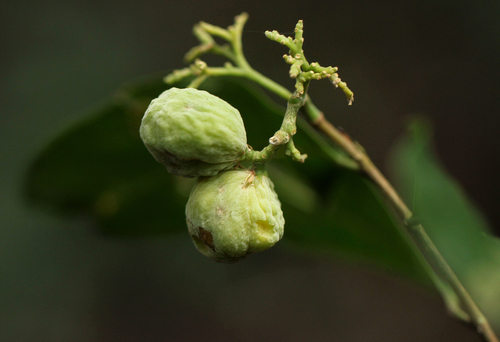
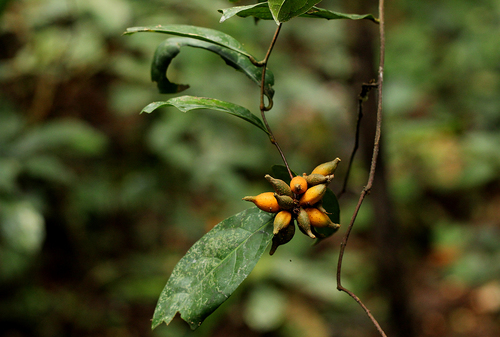
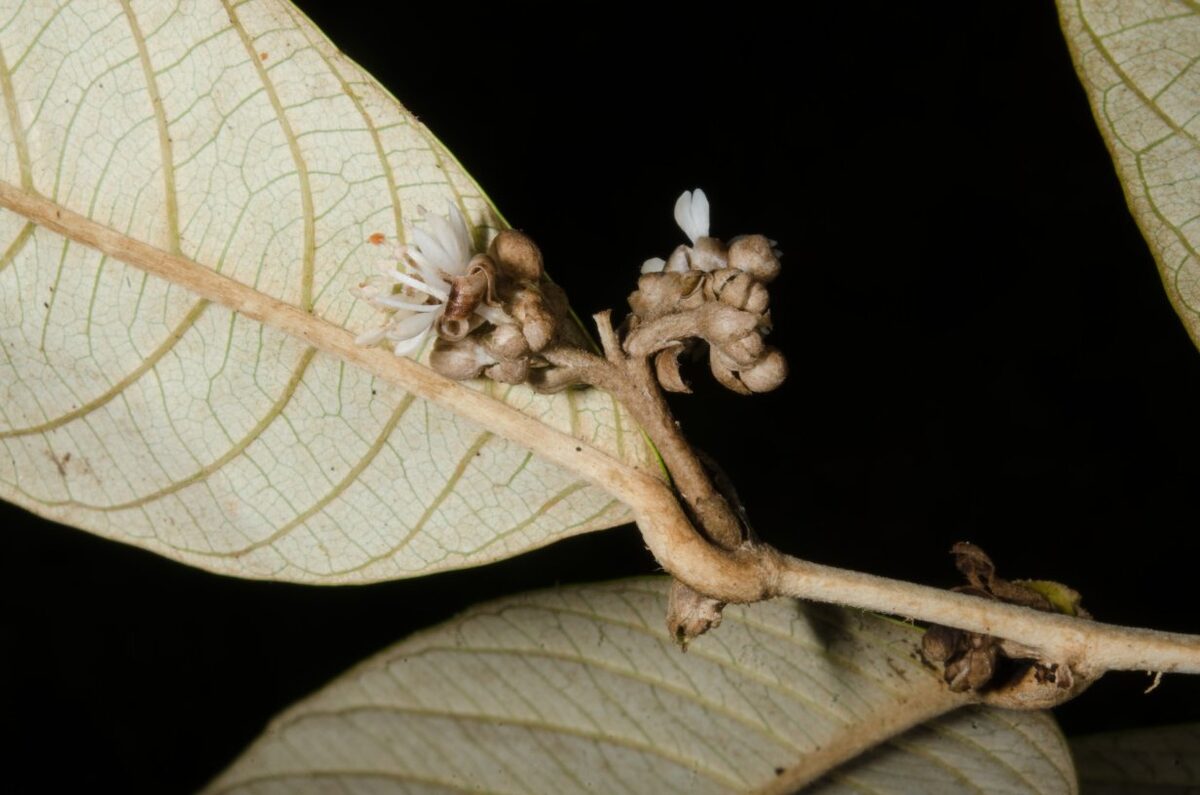
Dichapetalum spp.
wikimedia· cc-by-sa
Prof Christo Botha, Univ of Pretoria (via Wikimedia Commons)
wikimedia· cc-by-sa
Prof Christo Botha, Univ of Pretoria (via Wikimedia Commons)
wikimedia· cc-by-sa
Prof Christa Botha, Univ of Pretoria (via Wikimedia Commons)
Description
A tropical shrub in the Dichapetalaceae family, found primarily in Africa and other tropical regions.
This description is brief — help expand it
Edible Uses
The leaves are eaten.
Traditional Uses
CAUTION: The leaves are poisonous.
This uses section is brief — help expand it
Medicinal Uses
The fluoroacetate found in the plant may be used as a precursor to other organofluorides. There is preliminary evidence for some of these compounds in HIV anti-infective therapy.
Known Hazards
The toxic compound isolated as the cause of gifblaar poisoning is fluoroacetate, which was first isolated by Marais in 1944. The LD50 of this compound is 0.5 mg/kg, which means that about 200 grams of dry plant material is sufficient to kill a 500 kg cow. The compound itself is not toxic but undergoes lethal synthesis in the body while reacting with coenzyme A, yielding fluoroacetyl-Coenzyme A. This compound then reacts with oxaloacetate to form fluorocitrate, which is toxic, being a competitive substrate for aconitase (whose normal substrate is citrate). It binds irreversibly to the aconitase but cannot be released, disrupting the Krebs cycle and thus severely inhibiting cellular respiration. Furthermore, fluorocitrate, unlike citrate, cannot cross from the cytoplasm into the mitochondria, where citrate is needed. It is instead degraded in the cytoplasm. Cattle are mostly affected, with sheep, goats and game rarely being poisoned. The compound is equally poisonous to these species; an explanation is that the bulk grazing style of cattle, which is by nature less selective, lends itself to the ingestion of the plant. Young sprouts have more monofluoroacetate, but all parts are lethal. The plant sprouts in late winter, before the spring rains, the cue for most plants - including grasses - to shoot. This makes it the predominant greenery during that period. Cases of poisoning are most frequent at this time. Later in the season, gifblaar poisoning is far less common; presumably enough other grazing occurs that gifblaar is not eaten. Autumn (late season) poisonings also occur. This is associated with heavy grazing, leading to denudation of preferred species, and gifblaar is again the predominant herbage within the camp. Poisoning of carnivores, including dogs, has been reported after consumption of ruminal contents of poisoned animals.
Distribution
A tropical plant.
Where It Grows
Tropics,
Notes
There are 200 Dichapetalum species. Most are in Africa.
References (2)
- Martin, F.W. & Ruberte, R.M., 1979, Edible Leaves of the Tropics. Antillian College Press, Mayaguez, Puerto Rico. p 182
- Vickery, M.L. and Vickery, B., 1979, Plant Products of Tropical Africa, Macmillan. p 105