Dianthus superbus
L.
Fringed pink
iNaturalist· cc-by-nc
(c) Federico Biguzzi, some rights reserved (CC BY-NC), uploaded by Federico Biguzzi
iNaturalist· cc-by
(c) WATANABE Hitoshi 渡辺仁, some rights reserved (CC BY)
iNaturalist· cc-by-nc
(c) 羅元甫, some rights reserved (CC BY-NC)
Summary
Source: WikipediaDianthus superbus, the fringed pink or large pink, is a species of Dianthus native to Europe and northern Asia, from France north to arctic Norway, and east to Japan; in the south of its range, it occurs at high altitudes, up to 2,400 m. It is a herbaceous perennial plant growing to 80 cm tall. The leaves are green to greyish green, slender, up to 8 cm long. The flowers are sweetly scented, 3–5 cm in diameter, with five deeply cut fringed petals, pink to lavender with a greenish base; they are produced in branched clusters at the top of the stems from early to late summer. There are six subspecies: Dianthus superbus subsp. superbus. Most of the species' range. Dianthus superbus subsp. autumnalis Oberd. Southwestern France. Dianthus superbus subsp. sylvestris Čelak. Germany. Dianthus superbus subsp. alpestris Kablík. ex Čelak. (syn. D. s. subsp. speciosus). Alps, Carpathians, at high altitudes. Shorter stems; leaves greyer; flowers large. Dianthus superbus subsp. stenocalyx (Trautv. ex Juz.) Kleopow. Southern Russia, Ukraine. Dianthus superbus subsp. longicalycinus (Maxim.) Kitam. Japan. Also called nadeshiko (ナデシコ). It is the only food source of the large moth Coleophora musculella.
Description
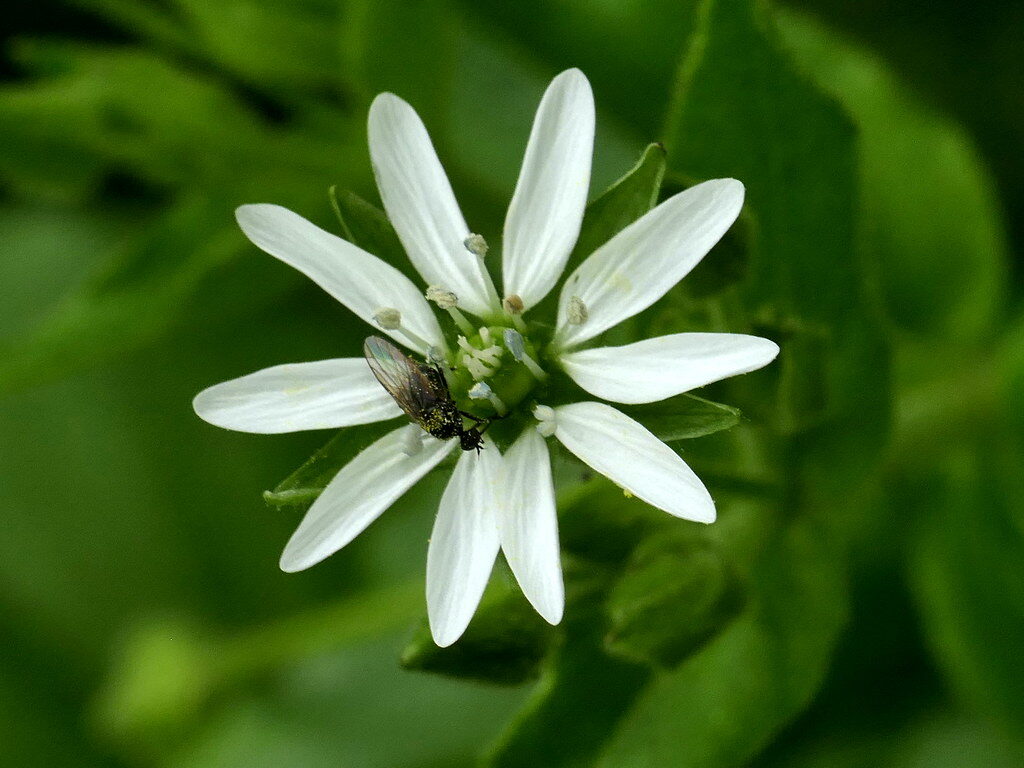
A herb which forms mats. It grows up to 60 cm tall. The leaves are pale green-grey. The flower stems are slender. The flowers are mauve-pink. They have a green or purple "eye" at the centre. The flowers are large and have an aroma. They have 5 petals and are deeply and irregularly split.
Edible Uses
The leaves, stems, and tops can be boiled or steeped in water and eaten as a potherb; young plants are also eaten this way. One report notes the presence of saponins, but the leaves appear not to be toxic, likely because the saponin content is too low to cause harm. Children also suck the flowers for their sweet nectar.
Traditional Uses
The leaves and young plant are cooked and eaten. The flowers are sucked for the nectar.
This uses section is brief — help expand it
Medicinal Uses
Known in Chinese herbalism as Qu Mai, the fringed pink has been used in Chinese herbal medicine for over 2,000 years. The whole plant is a bitter tonic herb that stimulates the digestive and urinary systems and the bowels, lowers blood pressure, reduces fevers, and controls bacterial infections. It is abortifacient, contraceptive, diuretic, emmenagogue, ophthalmic, tonic, and vulnerary, and is also said to promote hair growth. It ranks 9th on a list of 250 potential antifertility Chinese plants. It is often combined with Dan Shen (Salvia multiorrhiza) to induce menstruation rather than used alone. Internally, it treats acute urinary tract infections (especially cystitis), urinary stones, constipation, and failure to menstruate. Externally, it is applied to skin inflammations and swellings. The leaves are used for haemorrhoids, lumbricoid worms, and venereal sores. The flowers are astringent, diuretic, haemostatic, resolvent, and vulnerary — research has confirmed they are the most markedly diuretic part of the plant. The closely related D. chinensis shares the same uses and is more commonly employed.
Known Hazards
The plant contains saponins but apparently in quantities too low to cause harm. Although fairly toxic, saponins are poorly absorbed by the body and most pass straight through without harm. Saponins are found in many foods, such as beans. Saponins are much more toxic to some creatures, such as fish, and hunting tribes have traditionally put large quantities of them in streams, lakes etc in order to stupefy or kill the fish.
Distribution
It grows in wooded hills, forest openings and margins, grassy hillsides, meadows, mountain valley streams, river banks between 400–3700 m altitude in China. It is frost hardy. It can thrive in damp situations. It suits hardiness zones 4-9. In Yunnan and Sichuan.
Where It Grows
Asia, Australia, Central Asia, China, Europe*, Indochina, Japan, Kazakhstan, Korea, Mongolia, Russia, SE Asia, Siberia, Slovenia, Vietnam,
Cultivation
Prefers an alkaline soil but tolerates slightly acid soils. Succeeds in any well-drained peaty soil in sun or light shade. Plants succeed when grown on the top of a broad or retaining wall. A very hardy plant, tolerating temperatures down to about -20°c. The flowers have a soft sweet perfume.
Propagation
Seed: sow April/June in a greenhouse, barely covering the seed. Germination usually takes 1–3 weeks at 20°C. Prick out seedlings into individual pots when large enough and plant out in autumn.
Other Uses
No other uses are known for this plant. Has scented flowers.
Notes
There are 320 Dianthus species.
Synonyms
Also Known As
čudoviti nageljček, Nadeshiko, Qu mai
References (15)
- Bodkin, F., 1991, Encyclopedia Botanica. Cornstalk publishing, p 338
- Brickell, C. (Ed.), 1999, The Royal Horticultural Society A-Z Encyclopedia of Garden Plants. Convent Garden Books. p 361
- Cundall, P., (ed.), 2004, Gardening Australia: flora: the gardener's bible. ABC Books. p 491
- Facciola, S., 1998, Cornucopia 2: a Source Book of Edible Plants. Kampong Publications, p 74
- Flora of China @ efloras.org Volume 6
Show all 15 references Hide references
- Fl. Suec. ed. 2. 146. 1755
- Hibbert, M., 2002, The Aussie Plant Finder 2002, Florilegium. p 85
- Joyce, D., 1998, The Garden Plant Selector. Ryland, Peters and Small. p 221
- Kiple, K.F. & Ornelas, K.C., (eds), 2000, The Cambridge World History of Food. CUP p 1778
- Liu, Yi-tao, & Long, Chun-Lin, 2002, Studies on Edible Flowers Consumed by Ethnic Groups in Yunnan. Acta Botanica Yunnanica. 24(1):41-56
- Lu Dequan, Wu Zhengyi, Zhou Lihua, Chen Shilong; Michael G. Gilbert, Magnus Lidén, John McNeill, John K. Morton, Bengt Oxelman, Richard K. Rabeler, Mats Thulin, Nicholas J. Turland, Warren L. Wagner, CARYOPHYLLACEAE, Flora of China.
- Pham-Hoang Ho, 1999, An Illustrated Flora of Vietnam. Nha Xuat Ban Tre. p 737
- Plants for a Future database, The Field, Penpol, Lostwithiel, Cornwall, PL22 0NG, UK. http://www.scs.leeds.ac.uk/pfaf/
- READ,
- Slocum, P.D. & Robinson, P., 1999, Water Gardening. Water Lilies and Lotuses. Timber Press. p 116