Dialium schlechteri
Harms
Thiba tree, Sherbet tree, Zulu podberry
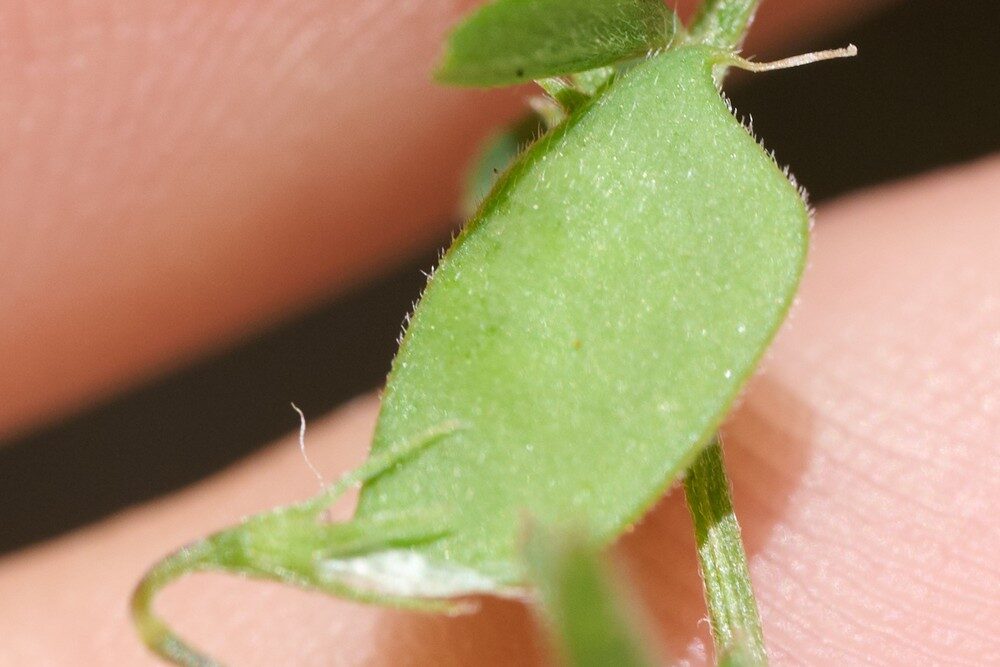
iNaturalist· cc-by-nc
(c) Ricky Taylor, some rights reserved (CC BY-NC), uploaded by Ricky Taylor
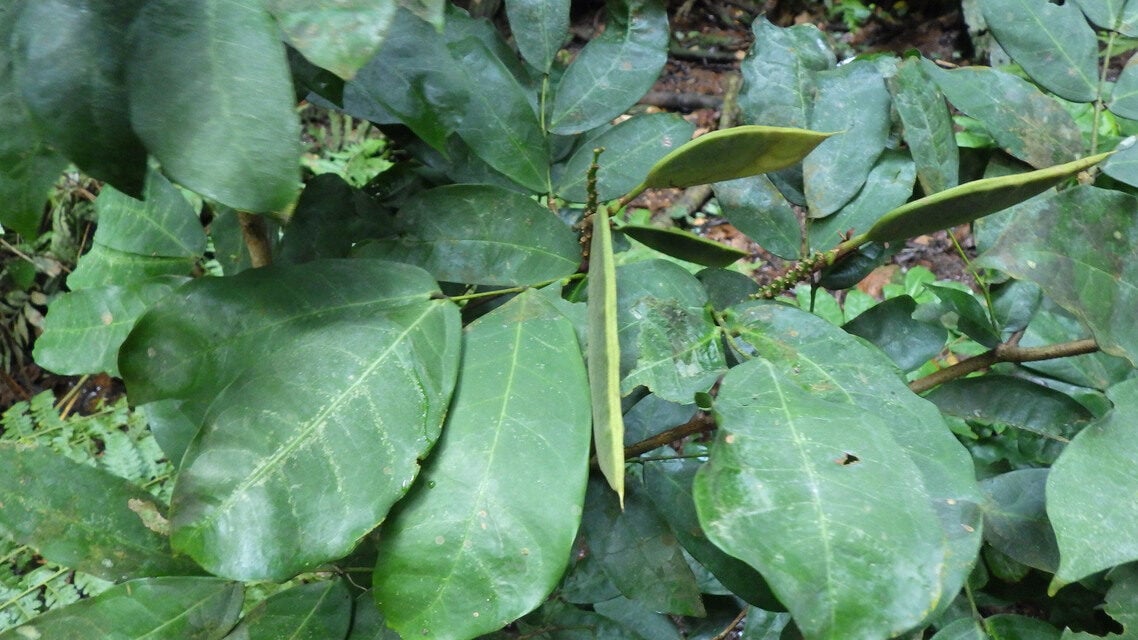
iNaturalist· cc-by-nc
(c) mtessendorf, some rights reserved (CC BY-NC)
iNaturalist· cc-by-nc
(c) magdastlucia, some rights reserved (CC BY-NC), uploaded by magdastlucia
Description
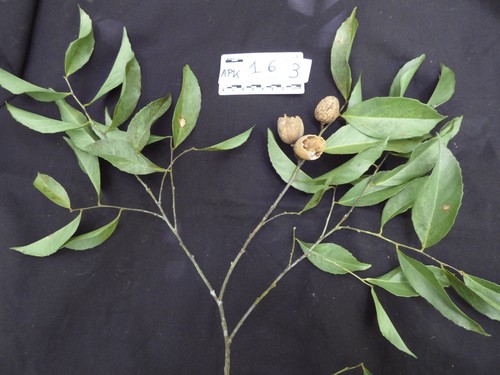
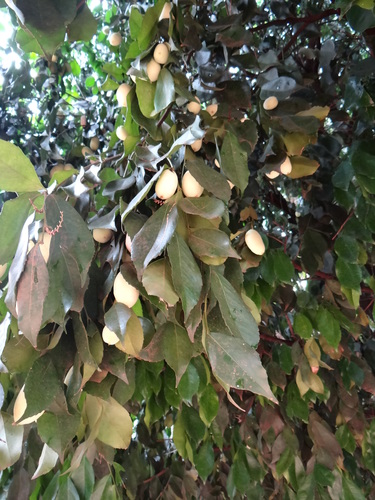
A tree. It grows 6-15 m tall. It has a spreading crown and a straight stem when grown in open places. It can have several stems. The stems are white mottled with grey. The leaves are carried one after another along opposite sides of the branch. They are 15 cm long with 3-6 pairs of leaflets and one at the end. The leaflets are 1-2 cm long and about 1.9 cm wide with unequal sides. The leaves have slender stalks and the leaflets do not have stalks. The leaves turn yellow before they fall off. The buds are round, brown and hairy. They are carried in the axils of leaves. The flowers are small and green and have a scent. The fruit are oval and 2.5 cm long. They are reddish-brown and velvety with a crisp shell. Inside is a thin layer of red flesh which tastes like dried apricots. The seeds are small, shiny and irregular in shape. The fruit are edible.
Edible Uses
The fruit are edible and eaten particularly by children, either cooked or as a powdery pulp mixed with water to make a drink.
Traditional Uses
The fruit are edible and eaten especially by children. They are cooked. The powdery pulp of the fruit is mixed with water to make a drink.
This uses section is brief — help expand it
Distribution
It is a tropical plant. It grows in coastal bush and forest. It is often on dry sandy soils.
Where It Grows
Africa, East Africa, Mozambique, South Africa, Southern Africa,
Other Uses
The wood is used.
Other Information
The fruit are eaten especially by children. It is a commonly used fruit in Mozambique.
Notes
There are about 40 Dialium species. They grow in tropical SE Asia. They probably all have edible fruit. Also as Caesalpinaceae.
Nutrition
| Part | Moisture | kJ | kcal | Protein | Vit A | Vit C | Iron | Zinc |
|---|---|---|---|---|---|---|---|---|
| Fruit | 7.9 | 1408 | 337 | 3.4 | — | 7.8 | 4.3 | 1.2 |
Synonyms
Also Known As
Dziba, Enziba, Ntsiva, Tinswa, Unthiba, Ziba, Zoeloepeulbessie
References (16)
- Albano, et al, 1998,
- Altschul, S.V.R., 1973, Drugs and Foods from Little-known Plants. Notes in Harvard University Herbaria. Harvard Univ. Press. Massachusetts. no. 1683
- Bot. Jahrb. Syst. 26:276. 1899
- Cunningham, 1985,
- Fox, F. W. & Young, M. E. N., 1982, Food from the Veld. Delta Books. p 207
Show all 16 references Hide references
- INFOODS:FAO/INFOODS Databases
- Palgrave, K.C., 1996, Trees of Southern Africa. Struik Publishers. p 286
- Palmer, E and Pitman, N., 1972, Trees of Southern Africa. Vol. 2. A.A. Balkema, Cape Town p 877
- Peters, C. R., O'Brien, E. M., and Drummond, R.B., 1992, Edible Wild plants of Sub-saharan Africa. Kew. p 122
- Plowes, N. J. & Taylor, F. W., 1997, The Processing of Indigenous Fruits and other Wildfoods of Southern Africa. in Smartt, L. & Haq. (Eds) Domestication, Production and Utilization of New Crops. ICUC p 189
- Ruiters-Welcome, A. K., 2019, Food plants of southern Africa. Ph.D. thesis. Univ. of Johannesburg p 57
- van Wyk, B, van Wyk, P, and van Wyk B., 2000, Photographic guide to Trees of Southern Africa. Briza. p 116
- van Wyk, Ben-Erik, 2019, The diversity and multiple uses of southern African legumes. Australian Systematic Botany, 2019, 32, 519–546
- Wehmeyer, A. S, 1986, Edible Wild Plants of Southern Africa. Data on the Nutrient Contents of over 300 species
- Welcome, A. K. & Van Wyk, B.-E., 2019, An inventory and analysis of the food plants of southern Africa. South African Journal of Botany 122 (2019) 136–179
- World Checklist of Useful Plant Species 2020. Royal Botanic Gardens, Kew