Desbordesia glaucescens
(Engl.) Van Tiegh
Alep, Oman
iNaturalist· cc-by-nc
(c) Σάββας Ζαφειρίου (Savvas Zafeiriou), some rights reserved (CC BY-NC), uploaded by Σάββας Ζαφειρίου (Savvas Zafeiriou)
gbif· cc-by-sa
Eden Ngounoue
iNaturalist· cc-by-nc
(c) Ron Vanderhoff, some rights reserved (CC BY-NC), uploaded by Ron Vanderhoff
wikimedia· cc0
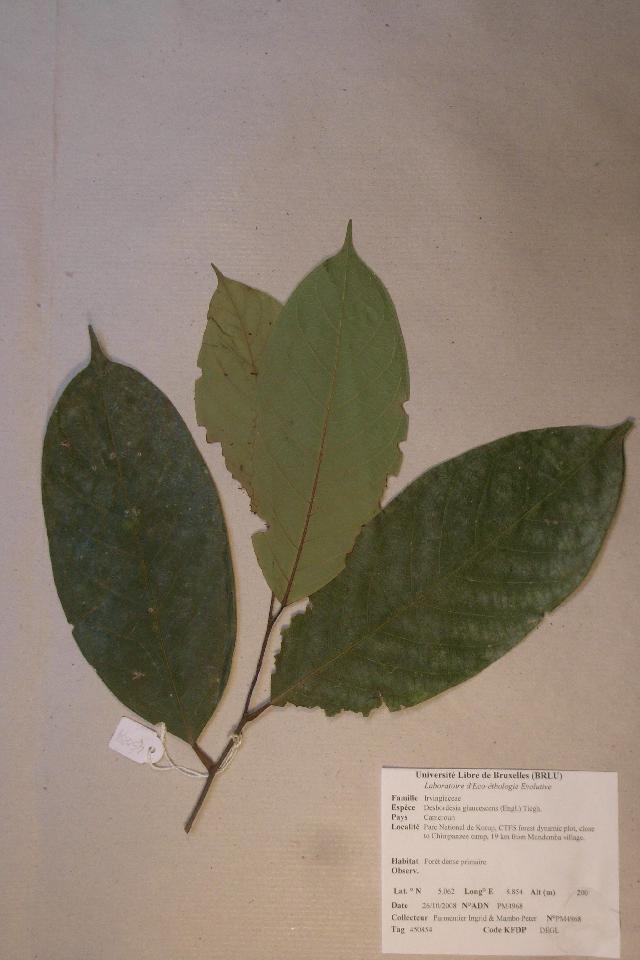
Wikimedia Commons - Collectors: Ingrid Parmentier & Peter Mambo
wikimedia· cc0
Wikimedia Commons - Collectors: Ingrid Parmentier & Peter Mambo
Description
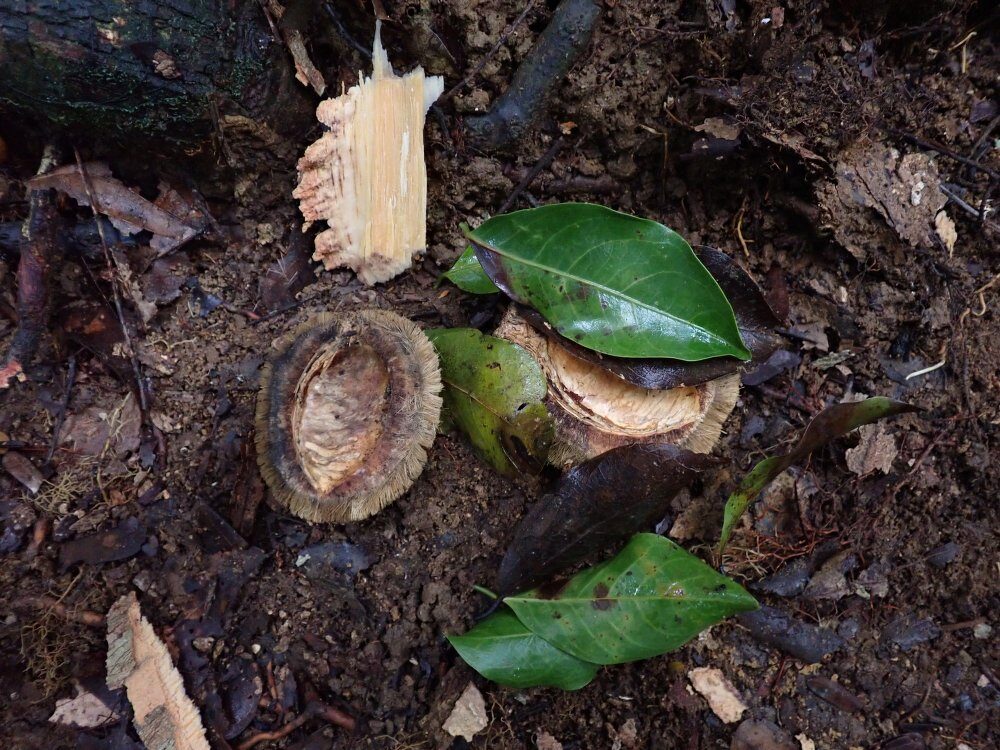
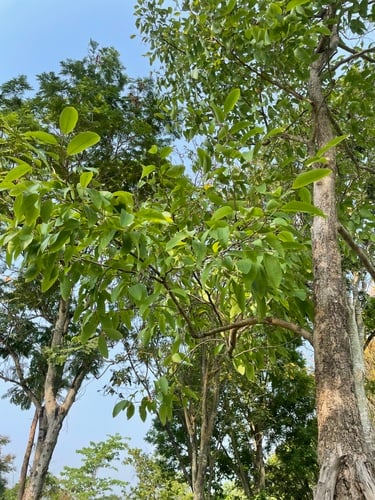
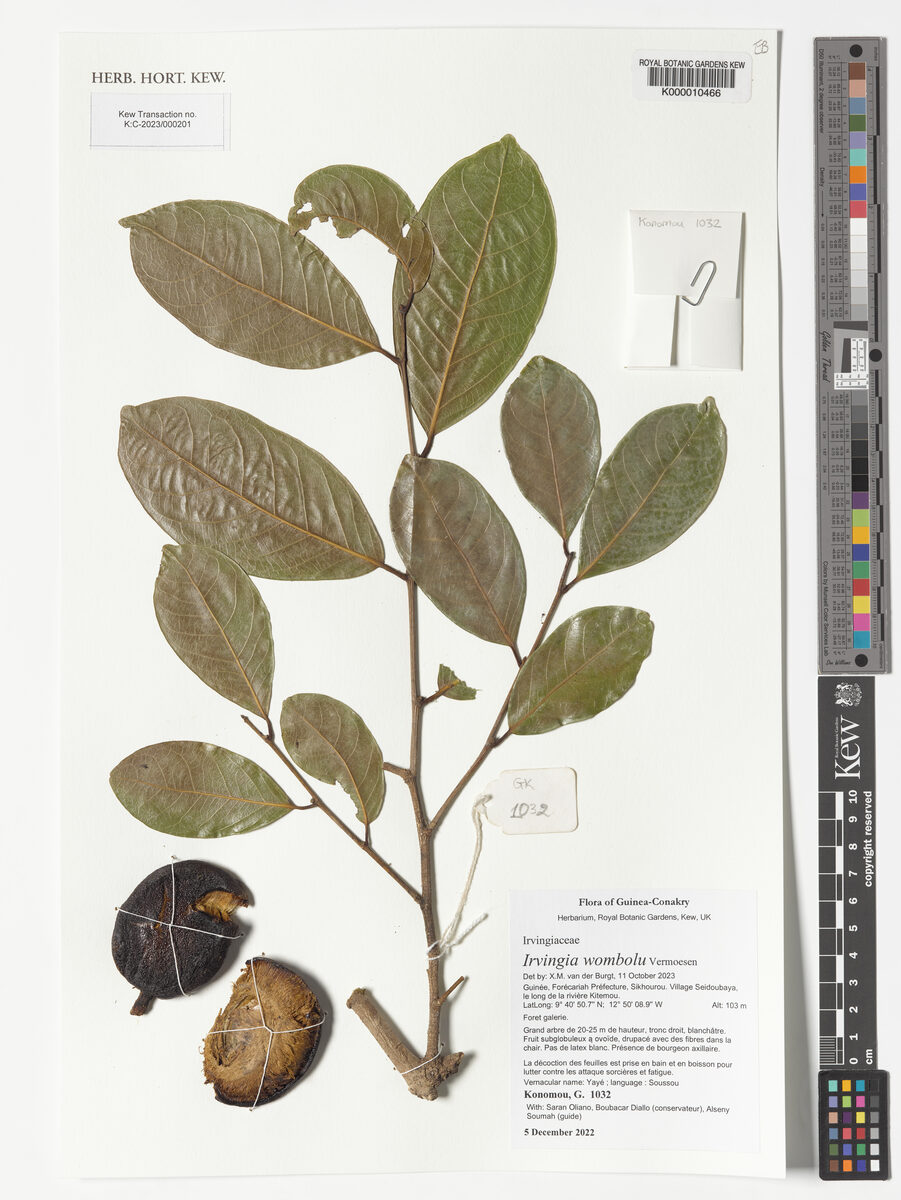
A large tree. It grows to 50 m high. The trunk can be 2.5 m across. The leaves are alternate and simple. They are 10-15 cm long and 4-5 cm wide. The leaves are unequal at the base. The fruit are winged. They are 10-14 cm long by 3-4 cm wide. There are 1-2 seeds per fruit. The seeds are 3.5 cm long by 1 cm wide.
Edible Uses
The seeds contain an oily edible kernel and is crushed in a mortar to make a sort of dika bread. The seeds are used in sauces.
Traditional Uses
The oily seed is used as a flavouring.
This uses section is brief — help expand it
Medicinal Uses
The bark is said to be aphrodisiac, stomachic. A decoction is used in the treatment of stomach-ache. Applied externally, it is made into an ointment with palm-oil for treating chicken-pox, and is also applied to the temples in cases of headache.
Distribution
It is a tropical plant. It grows in rain-forest in West Africa.
Where It Grows
Africa, Cameroon, Central Africa, Central African Republic, CAR, Congo, Gabon, Nigeria, West Africa,
Other Uses
Tannin has been reported in the bark and roots, and some saponin is also found in the roots. The wood is pinkish-white to yellowish, and very hard. It is used for construction-work. The heartwood is yellow-brown, becoming dark brown upon exposure, dark veins are more or less numerous; it is clearly demarcated from the 5 - 8cm wide band of sapwood. The texture is fine, the grain straight. Logs need to be sawn quickly after felling because the wood cracks during druing. The wood is very heavy, hard to very hard, elastic; it is very durable, being resistant to fungi, dry wood borers and termites. It seasons slowly, with a high risk of checking and distortion; once dry it is poorly stable in service. The wood has a fairly high blunting effect, stellite-tipped and tungsten carbide tools are recommended; nailing and screwing are good, but require pre-boring; gluing is correct for internal purposes, but needs to b done with care because of the denseness of the wood. The wood is used for purpuses such as heavy consruction, railway sleepers, bridges, work in contack with fresh water, heavy carpentry etc.
Notes
There is only one Desbordesia species.
Synonyms
Also Known As
Fawouaboka
References (10)
- Billong Fils, P. E., et al, 2020, Ethnobotanical survey of wild edible plants used by Baka people in southeastern Cameroon. Journal or Ethnobiology and Ethnomedicine. 16:64 p 7
- Burkill, H. M., 1985, The useful plants of west tropical Africa, Vol. 2. Kew.
- Dalziel, 1937,
- Jardin, C., 1970, List of Foods Used In Africa, FAO Nutrition Information Document Series No 2.p 42
- Jardin, C., 1970, List of Foods Used In Africa, FAO Nutrition Information Document Series No 2.p 34, 143 (As Irvingia oblonga)
Show all 10 references Hide references
- Heywood, V.H., Brummitt, R.K., Culham, A., and Seberg, O. 2007, Flowering Plant Families of the World. Royal Botanical Gardens, Kew. p 174
- Peters, C. R., O'Brien, E. M., and Drummond, R.B., 1992, Edible Wild plants of Sub-saharan Africa. Kew. p 117
- Vivien, J. & Faure, J.J., 1985, Abres des forets dense d'Afrique Centrale. Agence de Cooperation Culturelle et Technique. Paris. p 224
- Vivien, J., & Faure, J.J., 1996, Fruitiers Sauvages d'Afrique. Especes du Cameroun. CTA p 171
- World Checklist of Useful Plant Species 2020. Royal Botanic Gardens, Kew