Aesculus californica
(Spach.) Nutt.
Californian Buckeye, Californian Horse-Chestnut, Berraco
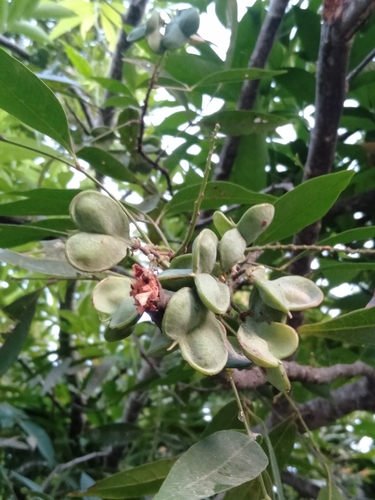
iNaturalist· cc-by-nc-sa
(c) Gary Griffith, some rights reserved (CC BY-NC-SA), uploaded by Gary Griffith
iNaturalist· cc-by-sa
(c) Brian Finzel, some rights reserved (CC BY-SA), uploaded by Brian Finzel
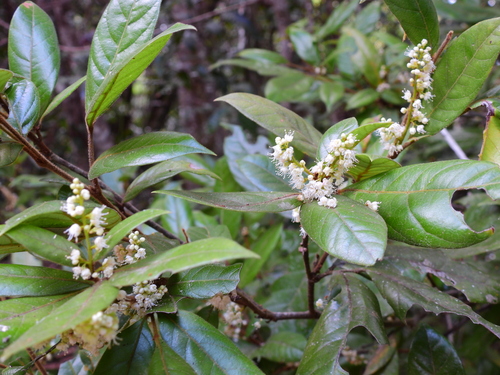
iNaturalist· cc-by-nc
(c) Claudia Vieira, some rights reserved (CC BY-NC), uploaded by Claudia Vieira
Summary
Source: WikipediaAesculus californica, commonly known as the California buckeye or California horse-chestnut, is a species of buckeye native to California and southwestern Oregon.
Description
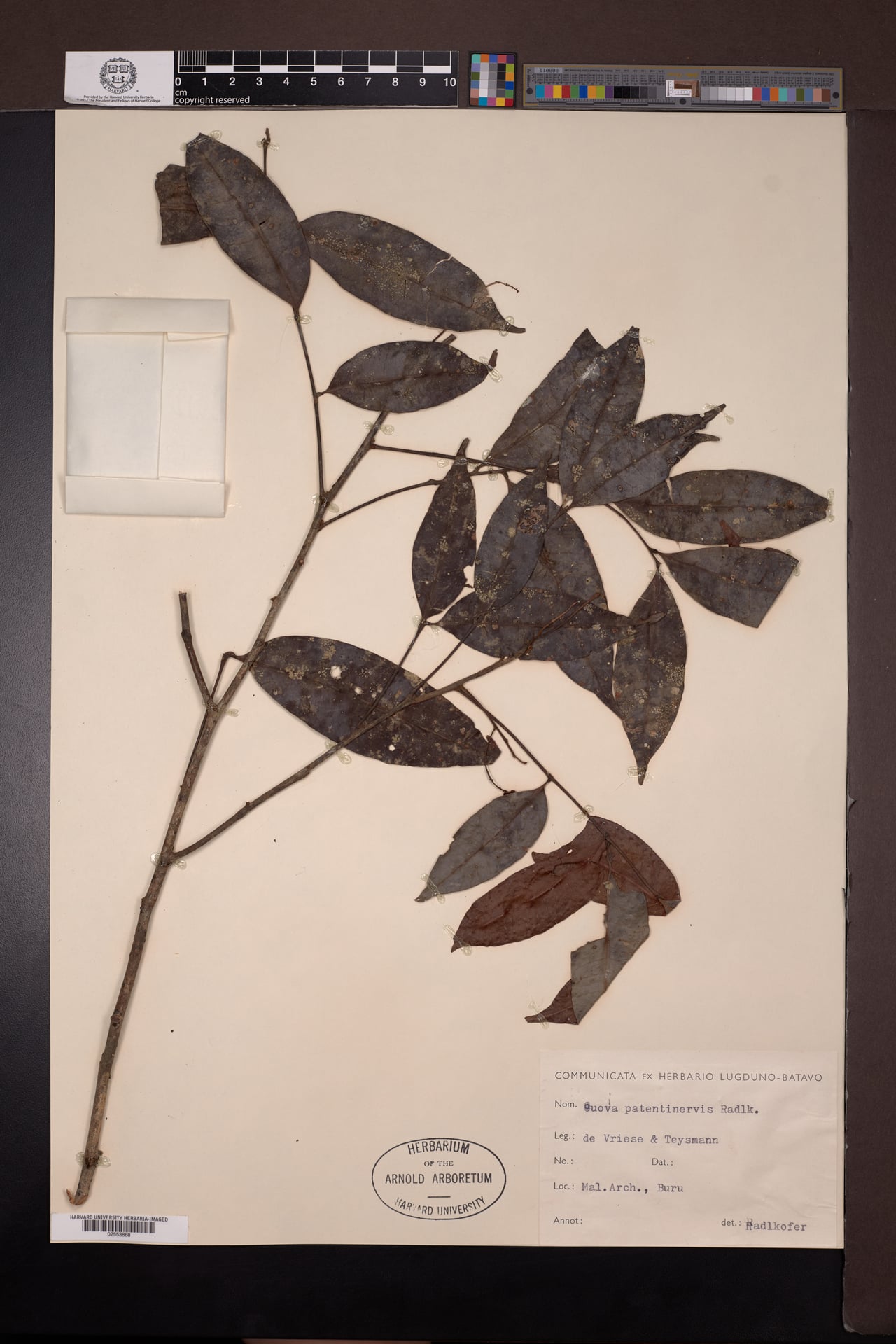
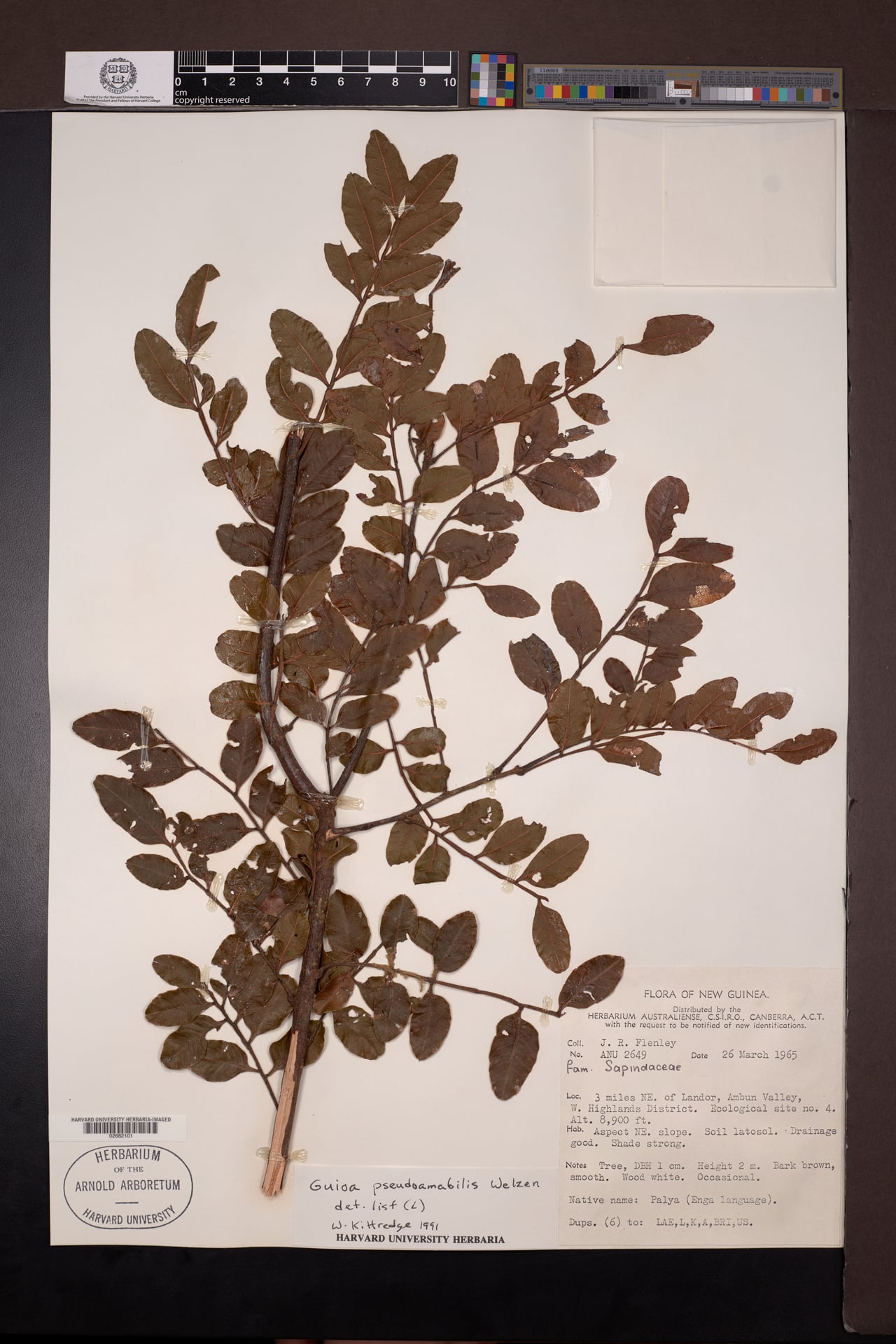
A tree which grows to 12 m tall. It spreads to 10 m across. It loses its leaves during the year. The bark is pale grey and nearly smooth and is thinly scaly. The leaves have leaflets arranged like fingers on a hand. There are 5-7 oblong leaflets. These have teeth along the edge. The leaflets are 15 cm long. They are deep blue-green above and grey-green underneath. The flowers are white or pale pink. They occur in dense cylinder shaped upright panicles. These are 20 cm long. The flowers have a scent. The fruit is smooth and pear shaped. It is 7 cm long. The seed is large and can be 5 cm across. It is glossy brown.
Edible Uses
The seeds can be cooked, or dried and ground into a powder for use as a gruel. They contain approximately 23% protein and have an agreeable flavour. The seeds are large, up to 5cm in diameter, and often produced abundantly in warmer parts of Britain, making them easy to harvest. This was the most widely used Aesculus species in North America. However, the seeds contain poisonous saponins and require careful preparation before eating. The toxins must be leached out — traditionally, Native Americans would slow-roast the nuts to neutralise the saponins, then slice them thinly, place them in a cloth bag, and rinse them in a stream for 2 to 5 days. This process also removes most minerals and other nutrients.
Traditional Uses
Caution: This plant contains saponins which although poisonous are not normally easily absorbed by the body. It is nevertheless probably not wise to eat large quantities. The seeds are eaten cooked. Before eating they are slowly roasted then crushed and washed for 2-5 days in running water. They are then dried and ground into a powder.
Medicinal Uses
The seeds contain saponins and can be used as an expectorant. Crushed fruit is applied as a salve on haemorrhoids. A decoction of the bark is used to treat toothache and loose teeth.
Known Hazards
The seed contains poisonous saponins that must be removed through thorough leaching before the seed is safe to eat.
Distribution
It is a temperate plant. It grows naturally near moist stream borders, scrub and the edges of oak and pine woods in canyons and dry slopes below 1200 metres in California. It requires a dry well drained sunny location. It does best in areas where the temperatures do not go below -10°C. It suits hardiness zones 7-10.
Where It Grows
Australia, Central America, Mexico, North America, USA*,
Cultivation
Plants can be grown from seed. The seed should be sown fresh but germinate quickly. Plants transplant easily. Stored seed should be soaked for 24 hours before sowing. It can be grown from root cuttings.
Propagation
Seed is best sown outdoors or in a cold frame as soon as it is ripe, as it germinates almost immediately and must be protected from severe weather. Viability is very limited — seed must not be allowed to dry out. Stored seed should be soaked for 24 hours before sowing, though it may still fail to germinate. Sow with the scar facing downward. If sowing in a cold frame, pot seedlings up in early spring and plant out into permanent positions during summer.
Other Uses
The seeds are rich in saponins, which can be used as a soap substitute. To extract them, chop the seeds into small pieces and steep in hot water; the resulting liquid can be used to wash the body or clothing, though it leaves a lingering odour of horse chestnuts. The wood is soft, light, and very close-grained, with no value as lumber. North American Indians used it as friction sticks for making fire.
Production
A moderately fast-growing and long-lived tree.
Notes
The seed contains about 23% protein on a fresh weight basis. There are 13 Aesculus species. Also put in the family Hippocastanaceae.
Synonyms
References (19)
- Beckstrom-Sternberg, Stephen M., and James A. Duke. "The Foodplant Database." http://probe.nalusda.gov:8300/cgi-bin/browse/foodplantdb.(ACEDB version 4.0 - data version July 1994)
- Biocyclopedia Edible Plant Species. biocyclopedia.org
- Bircher, A. G. & Bircher, W. H., 2000, Encyclopedia of Fruit Trees and Edible Flowering Plants in Egypt and the Subtropics. AUC Press. p 11
- Bocek, B. R., 1984, Ethnobotany of Costanoan Indians, California, Based on Collections by John P. Harrington. Economic Botany 38(2): 240-255
- Bodkin, F., 1991, Encyclopedia Botanica. Cornstalk publishing, p 54
Show all 19 references Hide references
- Brickell, C. (Ed.), 1999, The Royal Horticultural Society A-Z Encyclopedia of Garden Plants. Convent Garden Books. p 84
- Brouk, B., 1975, Plants Consumed by Man. Academic Press, London. p 214
- Coombes, A.J., 2000, Trees. Dorling Kindersley Handbooks. p 178
- Cundall, P., (ed.), 2004, Gardening Australia: flora: the gardener's bible. ABC Books. p 106
- Etherington, K., & Imwold, D., (Eds), 2001, Botanica's Trees & Shrubs. The illustrated A-Z of over 8500 trees and shrubs. Random House, Australia. p 76
- Hedrick, U.P., 1919, (Ed.), Sturtevant's edible plants of the world. p 27
- Heywood, V.H., Brummitt, R.K., Culham, A., and Seberg, O. 2007, Flowering Plant Families of the World. Royal Botanical Gardens, Kew. p 292 (Family)
- Krochmal, A. & Krochmal, C., 1982, Uncultivated Nuts of The United States. United States Department of Agriculture Forest Service. p 29
- Menninger, E.A., 1977, Edible Nuts of the World. Horticultural Books. Florida p 113
- Plants for a Future database, The Field, Penpol, Lostwithiel, Cornwall, PL22 0NG, UK. http://www.scs.leeds.ac.uk/pfaf/
- Ryan, S., 2008, Dicksonia. Rare Plants Manual. Hyland House. p 5
- Saunders, C.F., 1948, Edible and Useful Wild Plants. Dover. New York. p 81
- J. Torrey & A. Gray, Fl. N. Amer. 1:251. 1838
- Wickens, G.E., 1995, Edible Nuts. FAO Non-wood forest products. FAO, Rome. p 132