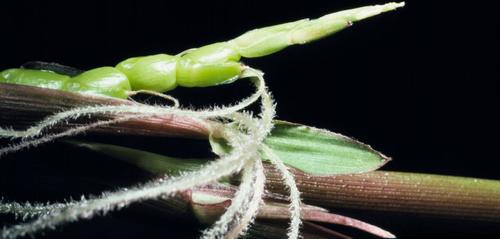
Dendrocalamus merrillianus
(Elmer) Elmer
Bayog
gbif· cc0
President and Fellows of Harvard College
Description
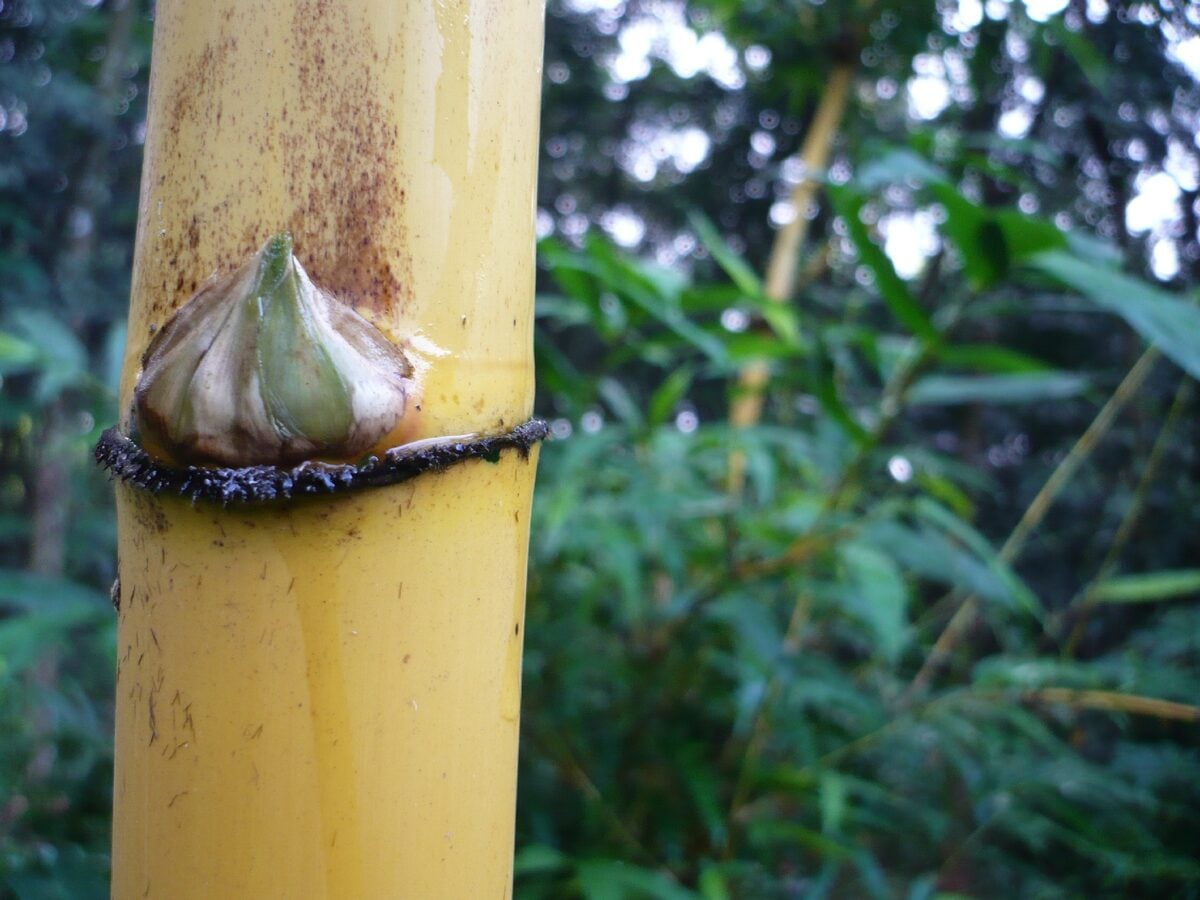
A tall graceful bamboo with slender stalks forming large clumps. Stems have very thick walls and prominent nodes. Roots grow in large numbers from the nodes up to the 15th nodes. There is a thick growth of branches from the fifth node.
Edible Uses
The young shoots are cooked and eaten.
Traditional Uses
The young shoots are cooked and eaten.
This uses section is brief — help expand it
Distribution
A tropical plant. They are apparently widely distributed in the Philippines.
Where It Grows
Asia, Pacific, Philippines, SE Asia,
Cultivation
A plant of low to medium elevations in the moist tropics, where it is found at elevations up to 1,000 metres. It grows best in areas where annual daytime temperatures are within the range 22 - 28°c, but can tolerate 15 - 34°c. It prefers a mean annual rainfall in the range 1,500 - 3,000mm, but tolerates 1,000 - 4,000mm. Succeeds in full sun and in light shade.Prefers a light to medium soil of at least moderate fertility. Prefers a pH in the range 5 - 6.5, tolerating 4.5 - 7. Plants may tolerate a dry season of up to 6 months. Bamboos have an interesting method of growth. Each plant produces a number of new stems annually - these stems grow to their maximum height in their first year of growth, subsequent growth in the stem being limited to the production of new side branches and leaves. In the case of some mature tropical species the new stem could be as much as 30 metres tall, with daily increases in height of 30cm or more during their peak growth time. This makes them some of the fastest-growing species in the world. Bamboos in general are usually monocarpic, living for many years before flowering, then flowering and seeding profusely for a period of 1 - 3 years before usually dying.
Propagation
Seed - many, if not all, members of this genus have a short viability and should be sown within 2 - 3 months of harvest. Sow in containers in a lightly shaded position and only just cover. Germination usually takes place readily. Prick out into individual pots as soon as the plants are large enough to handle. Plant out into permanent positions when 20cm tall. Plants may remain in their low-growing juvenile state for several years - cutting the culms to the ground level can stimulate taller adult growth. Rhizome, culm and branch cuttings. The propagules are raised in the nursery and after they have produced roots they are planted out in the field before or during the first half of the rainy season.
Other Uses
The culms are very strong. They are used for house construction, furniture, vehicle shafts, tool handles and other purposes where great strength is required. They are also used for fencing, handicrafts, basket making, mats etc. The pulp can be used to make paper. The culms can be up to 25 metres long, 4 - 12cm in diameter, with very thick walls. The green culms of this bamboo are split and made into ropes, used particularly for hauling logs. Harvesting may start 3 - 4 years after a clump has begun to produce culms of maximum size. Only culms older than 3 years are harvestable and harvesting should never be done during the growing season. It is recommended to cut the culms lower than 30cm above the ground level, but not below the 2nd node. Debris and cut branches should always be removed completely. The plant is used in soil conservation projects for purposes such as stabilizing river banks, They can also be used in windbreaks and shelterbelts.
Other Information
It is cultivated.
Notes
There are about 29 Dendrocalamus species.
Synonyms
References (3)
- Leafl. Philipp. Bot. 7:2675. 1915
- Monsalud, M.R., Tongacan, A.L., Lopez, F.R., & Lagrimas, M.Q., 1966, Edible Wild Plants in Philippine Forests. Philippine Journal of Science. p 473
- Zeven, A. C. & de West, J. M. J., 1982, Dictionary of cultivated plants and their regions of diversity. Wageningen. p 53