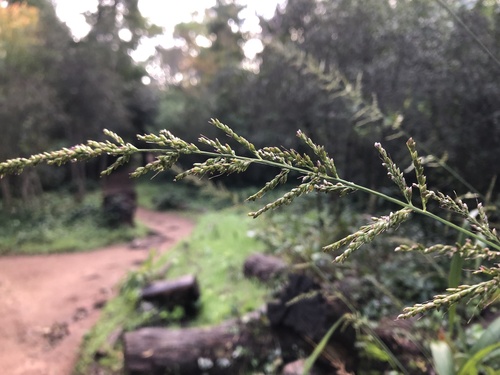
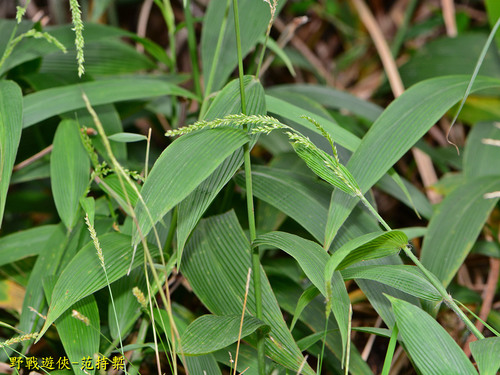
Dendrocalamus hamiltonii
Nees & Arn. ex Munro
Tufted bamboo
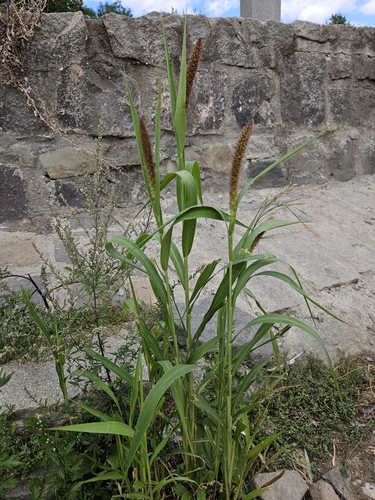
iNaturalist· cc-by-nc
(c) Brian Johnson, some rights reserved (CC BY-NC), uploaded by Brian Johnson
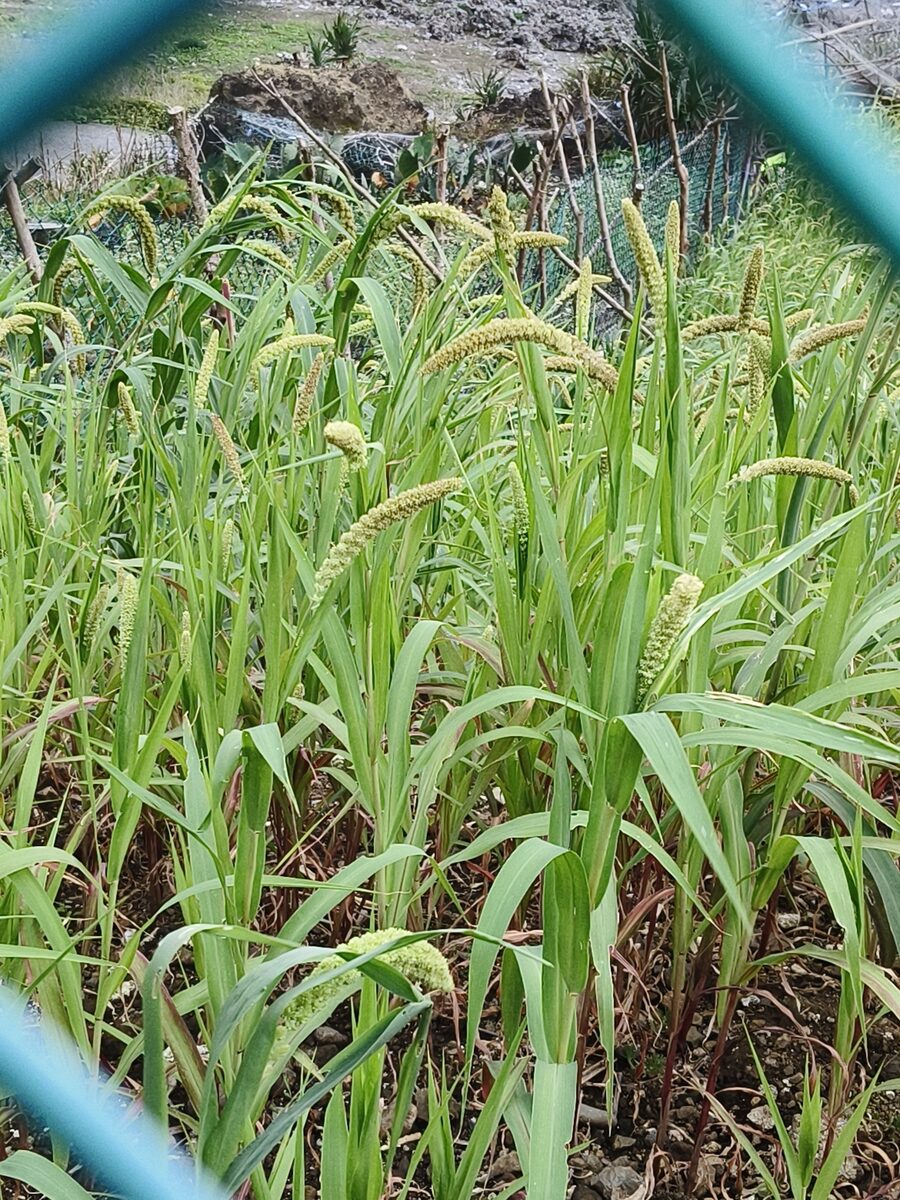
iNaturalist· cc-by-nc
(c) Brian Johnson, some rights reserved (CC BY-NC)
Summary
Source: WikipediaDendrocalamus hamiltonii, or Hamilton's bamboo, is a species of bamboo, 12–15 cm in diameter and growing up to 15–18 m in height, found in South Asian countries such as, India, Sri Lanka, Bhutan, Nepal, Pakistan, and far eastern China.
Description
A bamboo. It grows to 25 m tall. It forms dense thickets. The stems are 7-12 cm across. The stems are curved downwards and the nodes are marked with root scars. The internodes are 20-40 cm long. The stem sheath is triangular. The leaves are narrow and sword shaped. They have small teeth along the edge. The leaves are rough underneath. The leaf sheaths have stiff hairs. The flower is reddish brown. The fruit is a grain which is oval and beaked. It flowers both annually and gregariously after 30 years.
Edible Uses
Young shoots are widely consumed as a vegetable. In India the shoots are made into a sour pickle known as 'hiyup'.
Traditional Uses
Young shoots are cooked as a vegetable. They are also used in curry and pickles. The parts near the base are washed, boiled and cooked as a vegetable. The shoots are fermented and used to flavour meat.
Medicinal Uses
No medicinal uses are known for this plant.
Distribution
A tropical and subtropical plant. It grows in Nepal between 500-2000 m altitude. It grows up to 900 m altitude in Uttar Pradesh in India. In Sikkim it grows between 700-4,000 m above sea level. In XTBG Yunnan.
Where It Grows
Asia, Bangladesh, Bhutan, China, Himalayas, India, Indochina, Laos, Myanmar, Nepal, Northeastern India, SE Asia, Sikkim, Thailand, Vietnam,
Cultivation
It grows best in areas where annual daytime temperatures are within the range 20 - 29?c, but can tolerate 15 - 34?c. It prefers a mean annual rainfall in the range 1,800 - 3,600mm, but tolerates 700 - 4,500mm. Succeeds in full sun and in light shade. Prefers a medium to heavy soil of at least moderate fertility. Prefers a pH in the range 5 - 6, tolerating 4.5 - 6.5. Bamboos have an interesting method of growth. Each plant produces a number of new stems annually - these stems grow to their maximum height in their first year of growth, subsequent growth in the stem being limited to the production of new side branches and leaves. In the case of some mature tropical species the new stem could be as much as 30 metres tall, with daily increases in height of 30cm or more during their peak growth time. This makes them some of the fastest-growing species in the world. Bamboos in general are usually monocarpic, living for many years before flowering, then flowering and seeding profusely for a period of 1 - 3 years before usually dying. The flowering cycle for this species is said to be 30 - 40 years.
Propagation
Seed in this genus tends to have short viability and should be sown within 2–3 months of harvest. Sow in containers in a lightly shaded position, barely covering the seed; germination usually takes place readily. Prick out into individual pots as soon as plants are large enough to handle. Plant out into permanent positions when 20cm tall. Plants may remain in a low-growing juvenile state for several years — cutting culms to ground level can stimulate taller adult growth. Can also be propagated by rhizome, culm, and branch cuttings; propagules are raised in the nursery until rooted, then planted out before or during the first half of the rainy season.
Other Uses
The culms are used for temporary constructions such as houses and bridges, and for household utensils including water containers. They are widely used for pulp in paper production. Split culms are made into baskets and mats. The skin of the culms can be used for binding and for caning chairs. Harvesting may begin 3–4 years after a clump has started producing full-sized culms; only culms older than 3 years are harvestable, and harvesting should not be done during the growing season. Culms should be cut lower than 30cm above ground level but not below the 2nd node, and all debris and cut branches should be removed completely. The plant is also grown as a windbreak in tea plantations.
Other Information
The shoots are sold in markets. It is a popular bamboo shoot. It is cultivated.
Notes
There are about 29 Dendrocalamus species.
Nutrition
| Part | Moisture | kJ | kcal | Protein | Vit A | Vit C | Iron | Zinc |
|---|---|---|---|---|---|---|---|---|
| Shoots | 88 | — | — | 3.9 | — | — | — | — |
Synonyms
Also Known As
Ae, Banh, Bans, Choya bans, Ea, Eppo, Gonam, Gova, Hamilton dendrocalamus, Kaghsi bans, Kaipho, Kokua, Kokwa, Kongha, Lao gang, Mai bo, Maiwan, Pa, Pao, Pashing, Pecha, Peidiau, Petcha, Phai hok, Phai nuan yai, Phai phiao, Phul-rua, Ramkaha, Rhino bamboo, Ri dhu, Schee, Seij-lai, Tama seto, Tama, Tama bans, Tamo, Unap, Wabo-myetsangye, Wah, Wah mi, Wanap, Wa'nok, Wo chi, Yaqiu
References (61)
- Acharya K. P. and Acharya, R., 2010, Eating from the Wild: Indigenous knowledge on wild edible plants in Parroha VDC of Rupandehi District, Central Nepal. International Journal of Social Forestry. 3(1):28-48
- Ambasta, S.P. (Ed.), 2000, The Useful Plants of India. CSIR India. p 166
- Anderson, E. F., 1993, Plants and people of the Golden Triangle. Dioscorides Press. p 209
- Angami, A., et al, 2006, Status and potential of wild edible plants of Arunachal Pradesh. Indian Journal of Traditional Knowledge 5(4) October 2006, pp 541-550
- Aryal, K. P., et al, 2018, Diversity and use of wild and non-cultivated edible plants in the Western Himalaya. Journal of Ethnobiology and Ethnomedicine (2018) 14:10
Show all 61 references Hide references
- Balkrishna, A., et al, 2022, Indigenous Uses of Plants among Forest-dependent Communities of Seijosa, Arunachal Pradesh. International Journal of Economic Plants 2022, 9(1):064-080
- Bhatt, B. P., et al, 2003, Commercial edible bamboo species and their market potentiality in three Indian tribal states of the North Eastern Himalayan Region. J. Bamboo and Rattan. 2(2): 111-133
- Burkill, I.H., 1966, A Dictionary of the Economic Products of the Malay Peninsula. Ministry of Agriculture and Cooperatives, Kuala Lumpur, Malaysia. Vol 1 (A-H) p 793
- Cao, Y., et al, 2020, Ethnobotanical study on wild edible plants used by three trans-boundary ethnic groups in Jiangcheng County, Pu’er, Southwest China. Journal of Ethnobiology and Ethnomedicine (2020) 16:66
- Chettri, N. & Sharma, E., Non-timber Forest Produce: Utilization, Distribution and Status in the Khangchendzonga Biosphere Reserve, Sikkim, India.
- Dangol, D. R. et al, 2017, Wild Edible Plants in Nepal. Proceedings of 2nd National Workshop on CUAOGR, 2017.
- Dobriyal, M. J. R. & Dobriyal, R., 2014, Non Wood Forest Produce an Option for Ethnic Food and Nutritional Security in India. Int. J. of Usuf. Mngt. 15(1):17-37
- Ethnobotany of Karbis. Chapter 4 in p 83, 107
- Ghimeray, A. K., Lamsal, K., et al, 2010, Wild edible angiospermic plants of the Illam Hills (Eastern Nepal) and their mode of use by local community. Korean J. Pl. Taxon. 40(1)
- Ghorbani, A., et al, 2012, A comparison of the wild food plant use knowledge of ethnic minorities in Naban River Watershed Nature Reserve, Yunnan, SW China. Journal of Ethnobiology and Ethnomedicine; 8:17
- Guite, C., 2016, A study of wild edible plants associated with the Paite tribe of Manipur, India, International Journal of Current Research. Vol. 8, Issue, 11, pp. 40927-40932
- Hedrick, U.P., 1919, (Ed.), Sturtevant's edible plants of the world. p 269
- http://www.plantnames.unimelb.edu.au/sorting/Bamboos_Edible.html
- Joshi, N., et al, 2007, Traditional neglected vegetables of Nepal: Their sustainable utilization for meeting human needs. Tropentag 2007. Conference on International Agricultural Research for Development.
- Joshi, N. & Siwakoti, M., 2012, Wild Vegetables Used by Local Community of Makawanpur District and Their Contribution to Food Security and Income Generation. Nepal Journal of Science and Technology Vol. 13, No. 1 (2012) 59-66
- Kar, A., et al, 2013, Wild Edible Plant Resources used by the Mizos of Mizoram, India. Kathmandu University Journal of Science, Engineering and Technology. Vol. 9, No. 1, July, 2013, 106-126
- Khakurel, D., et al, 2021, Foods from the wild: Local knowledge, use pattern and distribution in Western Nepal. PLOS ONE.
- Kumar, A., et al, 2012, Ethnobotanical Edible Plant Biodiversity of Lepcha Tribes. Indian Forester, 138 (9):798-803
- Lungphi, P., Wangpan, T. & Tangjang, S., 2018, Wild edible plants and their additional uses by the Tangsa community living in the Changlang district of Arunachal Pradesh, India. Pleione 12(2): 151 - 164. 2018.
- Maikhuri, R, K, and Gangwar, A. K., 1993, Ethnobiological Notes on the Khasi and Garo Tribes of Meghalaya, Northeast India, Economic Botany, Vol. 47, No. 4, pp. 345-357
- Manandhar, N.P., 2002, Plants and People of Nepal. Timber Press. Portland, Oregon. p 193
- Manju, S., and Sundriyal, R. C., 2001, Wild Edible Plants of the Sikkim Himalaya: Nutritive Values of Selected Species. Economic Botany 55(3): 377-390
- Martin, F.W. & Ruberte, R.M., 1979, Edible Leaves of the Tropics. Antillian College Press, Mayaguez, Puerto Rico. p 194
- Mukhia, P.K., et al, 2013, Wild plants as Non Wood Forest Products used by the rural community of Dagana, a southern foothill district of Bhutan, SAARC Journal, 27 pages
- Murtem, G. & Chaudhrey, P., 2016, An ethnobotanical note on wild edible plants of Upper Eastern Himalaya, India. Brazilian Journal of Biological Sciences, 2016, v. 3, no. 5, p. 63-81
- Negi, K.S., 1988, Some little known wild edible plants of U.P. Hills. J. Econ. Tax. Bot. Vol. 12 No. 2 pp 345-360
- Premlata, T., et al, 2020, Edible bamboo resources of Manipur: consumption pattern of young shoots, processing techniques and their commercial status in the local market. Indian Journal of Traditional Knowledge Vol. 19(1) pp 73-82
- PROSEA (Plant Resources of South East Asia) handbook, Volume 7, 1995, Bamboos
- Roy, A., et al, 2017, Insight into Bamboo-based Fermented Foods by Galo (Sub-tribe) of Arunachal Pradesh, India. Int. J. Life. Sci. Scienti. Res., 3(4): 1200-1207
- Sahni, K.C., 2000, The Book of Indian Trees. Bombay Natural History Society. Oxford. p 190
- Sangma, A. j. T., 2018, Non-timber forest products (NTFPs) used by Garo tribe of Rongram block in West Garo Hills, Meghalaya. Indian Journal of Traditional Knowledge Vol 18 (1), pp 151-161
- Sarma, H., et al, 2010, Updated Estimates of Wild Edible and Threatened Plants of Assam: A Meta-analysis. International Journal of Botany 6(4): 414-423
- Sawian, J. T., et al, 2007, Wild edible plants of Meghalaya, North-east India. Natural Product Radiance Vol. 6(5): p 415
- Singh, A. G., Panthi, M. P., & Tewari, D. D., 2012, Wild Plants Used as Vegetable in Rupandehi District of Nepal and their Ethnomedicinal Importance. J. Nat. Hist. Mus. Vol. 26, 2012, 111-125
- Singh, B., et al, 2012, Wild edible plants used by Garo tribes of Nokrek Biosphere Reserve in Meghalaya, India. Indian Journal of Traditional Knowledge. 11(1) pp 166-171
- Singh, H.B., Arora R.K.,1978, Wild edible Plants of India. Indian Council of Agricultural Research, New Delhi. p 25
- Srivastava, R. C., 2009, Traditional knowledge of Adi tribe of Arunachal Pradesh on plants. Indian Journal of Traditional Knowledge. 8(2): 146-153
- Stapleton, C., 1994, Bamboos of Bhutan. Kew Botanical Gardens. p 14
- Sundriyal, M., et al, 1998, Wild edibles and other useful plants from the Sikkim Himalaya, India. Oecologia Montana 7:43-54
- Sundriyal, Manju and R. C. Sundriyal, Wild Edible Plants of the Sikkim Himalaya: Marketing, Value Addition and Implications for Management. Economic Botany: Vol. 58, No. 2, pp. 300–315.
- Sundriyal, M., et al, 2004, Dietary Use of Wild Plant Resources in the Sikkim Himalaya, India. Economic Botany 58(4) pp 626-638
- Taram, M., et al, 2018, Wild Food Plant Resources of Komkar Adi Tribe of Upper Siang District in Arunachal Pradesh, India. Bulletin of Arunachal Forest Research, Vol. 33(2), 27-35
- Teron, R. & Borthakur, S. K., 2016, Edible Medicines: An Exploration of Medicinal Plants in Dietary Practices of Karbi Tribal Population of Assam, Northeast India. In Mondal, N. & Sen, J.(Ed.) Nutrition and Health among tribal populations of India. p 154
- Terra, G.J.A., 1973, Tropical Vegetables. Communication 54e Royal Tropical Institute, Amsterdam, p 27
- Thapa, L. B., et al, 2014, Wild Edible Plants used by endangered and Indigenous Raji Tribe in Western Nepal. International Journal of Applied Sciences and Biotechnology. Vol 2(3):243-252
- Trans. Linn. Soc. London 26:151. 1868
- Tsering, J., et al, 2017, Ethnobotanical appraisal on wild edible plants used by the Monpa community of Arunchal Pradesh. Indian Journal of Traditional Knowledge. Vol 16(4), October 2017, pp 626-637
- Uprety, Y., et al, 2012, Diversity of use and local knowledge of wild edible plant resources in Nepal. Journal of Ethnobotany and Ethnomedicine 8:16
- USDA, ARS, National Genetic Resources Program. Germplasm Resources Information Network - (GRIN). [Online Database] National Germplasm Resources Laboratory, Beltsville, Maryland. Available: www.ars-grin.gov/cgi-bin/npgs/html/econ.pl (10 April 2000)
- Waikhom, S. D., et al, 2013, Grappling the High Altitude for Safe Edible Bamboo Shoots with Rich Nutritional Attributes and Escaping Cyanogenic Toxicity. BioMed Reserch International. Voluyme 2013 Article ID 289285, 11 pages
- Wiersema, J. H. & Leon, B., 2013, World Economic Plants. A Standard Reference CRC Press. 2nd Ed. p 238
- Wild edible plants of Himachal Pradesh
- World Checklist of Useful Plant Species 2020. Royal Botanic Gardens, Kew
- Xu, You-Kai, et al, 2004, Wild Vegetable Resources and Market Survey in Xishuangbanna, Southwest China. Economic Botany. 58(4): 647-667.
- Yang, Y., et al, A review of bamboo resources in Yunnan, China www.bioversityinternational.org
- Zeven, A. C. & de West, J. M. J., 1982, Dictionary of cultivated plants and their regions of diversity. Wageningen. p 73