Acacia beauverdiana
Ewart & Sharman
Bead wattle
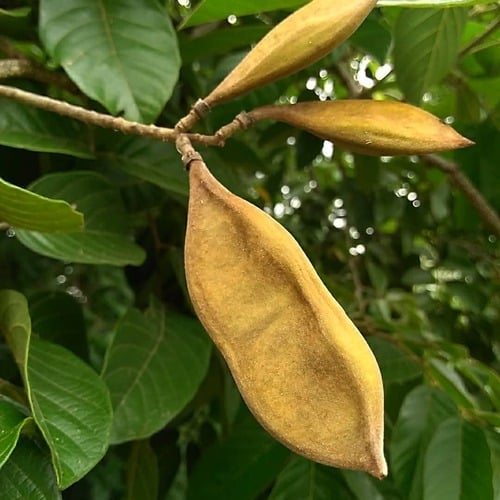
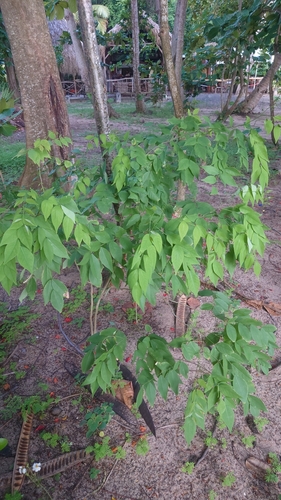
iNaturalist· cc-by-nc
(c) Loxley Fedec, some rights reserved (CC BY-NC), uploaded by Loxley Fedec
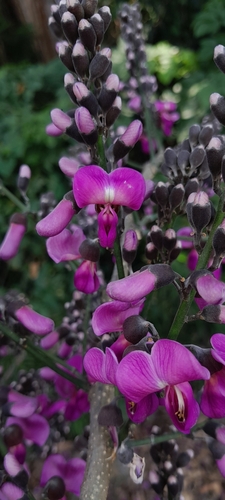
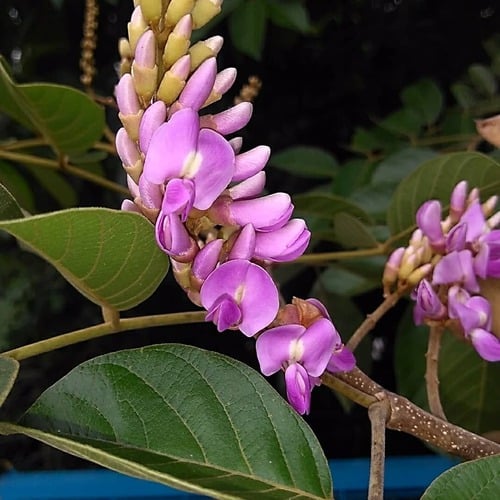
iNaturalist· cc-by-nc
(c) Loxley Fedec, some rights reserved (CC BY-NC), uploaded by Loxley Fedec
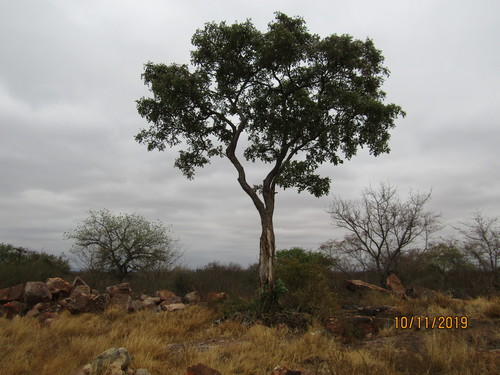
iNaturalist· cc-by-nc
(c) Loxley Fedec, some rights reserved (CC BY-NC), uploaded by Loxley Fedec
Summary
Source: WikipediaAcacia beauverdiana, commonly known as pukkati, is a species of flowering plant in the family Fabaceae and is endemic to inland areas of south-western Western Australia. It is a rounded shrub or tree with upright to erect linear to narrowly oblong phyllodes, golden-yellow flowers arranged in oblong to spherical heads, usually arranged singly or in pairs in leaf axils, and linear, leathery pods up to 90 mm (3.5 in) long.
Description
A shrub or small tree. It grows 5 m tall. There are prickles along the stem. The leaves are twice divided and there are 8-18 pairs of pinnae. There are up to 50 pairs of pinnules on each pinnae. The flowers are yellow. They are in large clusters at the ends of branches. The pods are flattened.
Edible Uses
The mature seeds are eaten raw or ground into flour and cooked.
Traditional Uses
The mature seeds are eaten raw or ground to flour and cooked.
This uses section is brief — help expand it
Distribution
It prefers sandy well-drained soils. It suits an open sunny position. It is drought resistant but cannot tolerate frosts. Often it occurs in arid regions.
Where It Grows
Australia*,
Cultivation
It can be grown from seed. The seed needs treatment to break the hard seed coat. Normally this is by putting the seeds in very hot water and letting the water cool down overnight then planting the seeds immediately.
Notes
There are about 1,350 Acacia species. Over 1,000 occur in Australia. Also as Mimosaceae.
Also Known As
Pukati, Pukkati
References (4)
- Bodkin, F., 1991, Encyclopedia Botanica. Cornstalk publishing, p 10
- Bindon, P., 1996, Useful Bush Plants. Western Australian Museum. p 8
- Paczkowska, G . & Chapman, A.R., 2000, The Western Australian Flora. A Descriptive Catalogue. Western Australian Herbarium. p 298
- Proc. Roy. Soc. Victoria new ser., 28:230. 1916