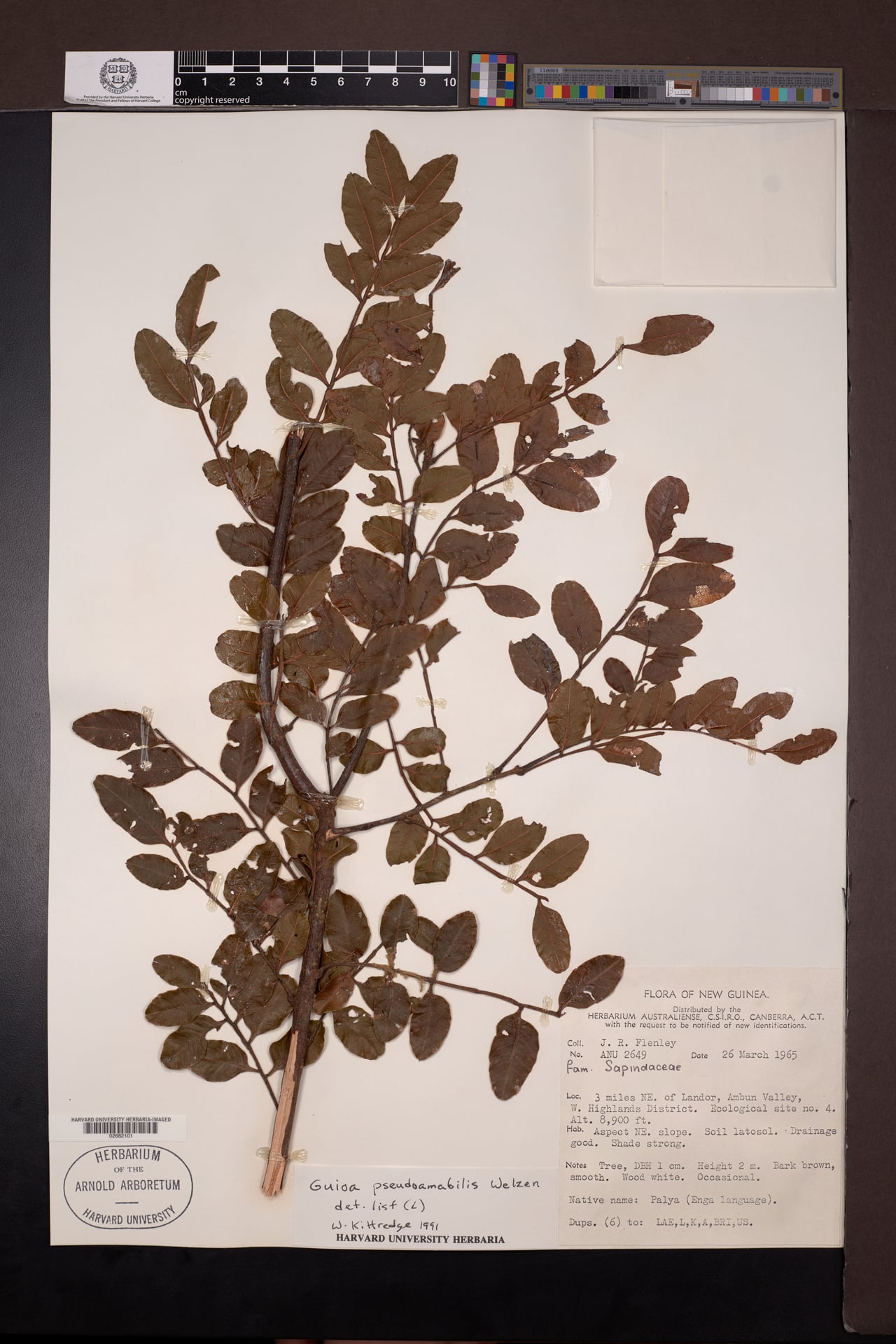
Deinbollia xanthocarpa
(Klotsch) Radlk.
Transvaal soap-berry, Northern soap-berry
iNaturalist· cc-by-nc
(c) Mark Hyde, Bart Wursten and Petra Ballings, some rights reserved (CC BY-NC)
iNaturalist· cc-by-nc
(c) zachsavage, some rights reserved (CC BY-NC)
Description
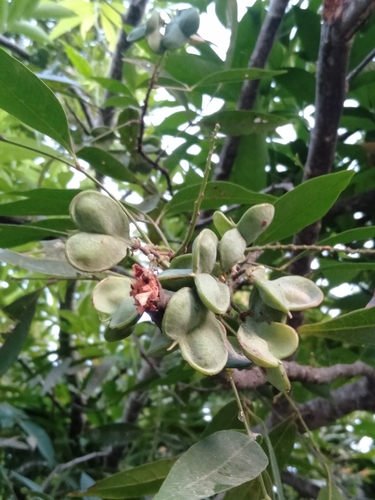
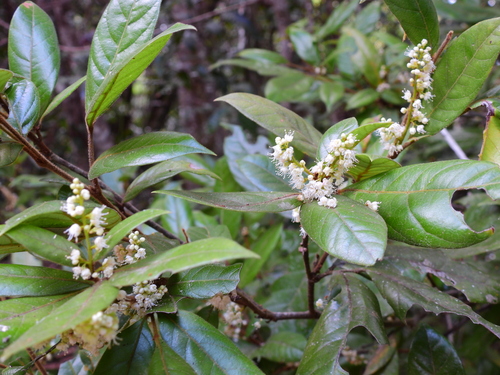
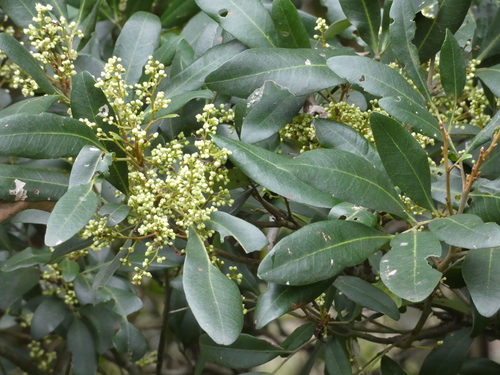
A scrambling shrub or small tree. It grows to 7 m high. The leaves are 8 cm long by 3 cm wide. There can be 3-9 pairs of leaflets. The flower arrangement is 20 cm long. The fruit has 1-2 egg-shaped parts. These are yellow and hairy. They are edible.
Edible Uses
The fruit is eaten as a snack.
Traditional Uses
The fruit is eaten as a snack.
This uses section is brief — help expand it
Distribution
It is a tropical plant. It grows at low altitude in mixed woodland. It also grows near rivers.
Where It Grows
Africa, East Africa, Malawi, Mozambique, South Africa, Southern Africa, Zambia, Zimbabwe,
Synonyms
Also Known As
Kasikizi, Nhacatarara
References (8)
- Flora Zambesiaca. http://apps.kew.org/efloras
- Fowler, D. G., 2007, Zambian Plants: Their Vernacular Names and Uses. Kew. p 59
- Fox, F. W. & Young, M. E. N., 1982, Food from the Veld. Delta Books. p 333
- Palgrave, K.C., 1996, Trees of Southern Africa. Struik Publishers. p 529
- Palmer, E and Pitman, N., 1972, Trees of Southern Africa. Vol. 2. A.A. Balkema, Cape Town p 1353
Show all 8 references Hide references
- Peters, C. R., O'Brien, E. M., and Drummond, R.B., 1992, Edible Wild plants of Sub-saharan Africa. Kew. p 180
- Ruiters-Welcome, A. K., 2019, Food plants of southern Africa. Ph.D. thesis. Univ. of Johannesburg p 100
- Welcome, A. K. & Van Wyk, B.-E., 2019, An inventory and analysis of the food plants of southern Africa. South African Journal of Botany 122 (2019) 136–179