Dasylirion texanum
Scheele
Texas sotol
iNaturalist· cc-by-nc
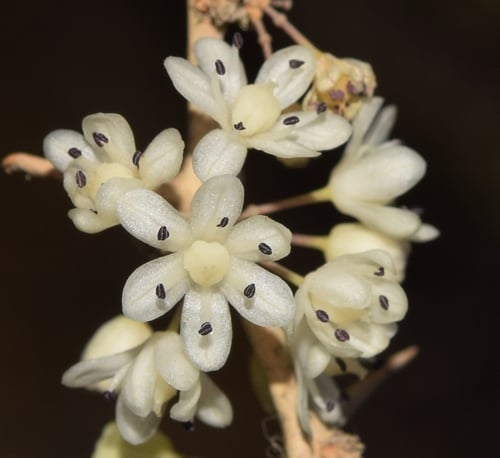
(c) Austin R. Kelly, some rights reserved (CC BY-NC), uploaded by Austin R. Kelly
iNaturalist· cc-by-nc
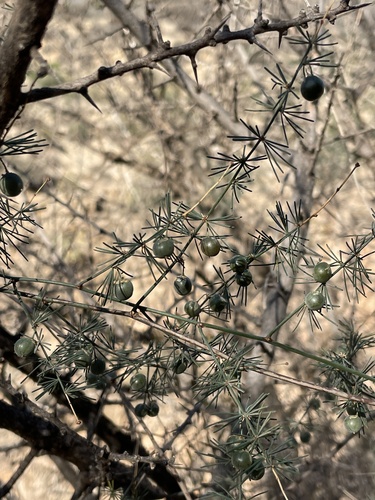
(c) spiderlover111, some rights reserved (CC BY-NC)
iNaturalist· cc-by-nc
(c) spiderlover111, some rights reserved (CC BY-NC)
Summary
Source: WikipediaDasylirion texanum, the Texas sotol and sotol, is a monocot flowering plant native to central and southwestern Texas and in Coahuila state of northeastern Mexico, including the Chihuahuan Desert.
Description
A grass like plant. The trunk and crown are usually less than 40 cm tall. The leaves are long and 1-2 m long.
This description is brief — help expand it
Edible Uses
Drink. The sap, crown, and flowering stalk are edible, and the species can be used like common sotol. The crown is always available but destructive to harvest, while the flowering stalk is the most practical renewable food part. Edible Uses & Rating. Texas sotol ranks as a moderate-to-high-value desert survival and traditional-use plant, with the same strengths and weaknesses as the genus. The flowering stalk is the best renewable edible part. The crown is substantial but should only be harvested when truly necessary because removal kills the plant. Taste, Processing & Kitchen Notes. By comparison with common sotol, the most reasonable expectation is that the flowering stalk is sweet, green, and somewhat asparagus-like, with a mild soapy note that diminishes with cooking. The crown should be considered a roasting and slow-cooking food, not a fresh vegetable. Sap may be collected from cut stalks or crown tissue, though it is secondary in practical importance to the stalk and crown themselves. Seasonality (Phenology). The genus generally blooms from May to July, with possible later flowering following rainfall. Crowns are available year-round. Flower stalks are best harvested young and tender shortly after emergence. Safety & Cautions (Food Use). Texas sotol carries the same physical hazards as other sotols: sharp marginal teeth and terminal leaf spines. Gloves and careful handling are essential. Crown harvest is destructive. Insect contamination of flowers is likely, and cooking is recommended. Local legality and sustainability should always be considered before harvest. Harvest & Processing Workflow. Young flower stalks should be cut while still green and before the lower tissues become woody. Tender inner portions can be stripped and cooked. Crowns require excavation and slow roasting or pit-cooking. Sap can be collected from cut stalk tissue. Flowers, if used, should be gathered selectively, cleaned of insects, and cooked. Cultivar/Selection Notes. There are no recognized food cultivars. In landscape use, selection tends to focus on foliage color and compactness rather than edible quality. Look-Alikes & Confusion Risks. Texas sotol can be confused with common sotol, but it is typically smaller and brighter green rather than bluish or dusty. It is also distinct from agaves and yuccas by flower sexuality and ovary position. Traditional/Indigenous Use Summary. Texas sotol can be used like common sotol, supporting its place in regional desert food systems. The sugary pulp in the centre of the bud can be eaten. Dasylirion was once a major food source in the desert southwest of N. America. The bulbs were roasted in rock-lined pits and pounded into cakes. A potent alcoholic beverage, known as sotol, is distilled from the baked and fermented bulbs.
Traditional Uses
The pulp of the young shoots are used as a source of sugar to make a drink called "Sotol". The pulp of the leaves and stems is also cooked and eaten. The sap is used to make a fermented drink.
Medicinal Uses
Dasylirion texanum (Texas sotol) has historical medicinal uses among indigenous groups for treating injuries and illnesses, including root decoctions for sprains and wounds. It is primarily recognized as a traditional, drought-tolerant, and nutritious food source (roasted hearts) rather than a widely used modern medicinal plant. Medicinal and Traditional Uses Wound Care: Root decoctions were used as washes for bleeding wounds and broken limbs. Anti-inflammatory/Pain Relief: Used for treating sprains. Hair Care: Roots were boiled for use as a hair tonic. Nutritional Support: The hearts were historically roasted, pounded into a paste, and consumed.
Known Hazards
Texas sotol carries the same physical hazards as other sotols: sharp marginal teeth and terminal leaf spines. Gloves and careful handling are essential. Crown harvest is destructive. Insect contamination of flowers is likely and cooking is recommended. Local legality and sustainability should always be considered before harvest.
Distribution
It is a subtropical plant. It grows in the desert.
Where It Grows
Mexico, North America, USA,
Cultivation
Texas sotol is a useful dryland food reserve and an excellent ornamental desert plant. Its main value lies in the flowering stalk and crown, with the stalk serving as a better renewable food source for modern, responsible use. Growing Conditions. This species prefers full sun, excellent drainage, and low to moderate moisture. It tolerates heat, drought, and poor soils very well and performs best where humidity is low and drainage is sharp. Habitat & Range. Texas sotol occurs primarily in southern Texas in the Chihuahuan Desert and adjacent dry scrub habitats. It is associated with rocky ground, limestone, and open arid slopes. Size & Landscape Performance. It forms a handsome, symmetrical, architectural rosette, especially useful in xeriscapes and native desert gardens. It is somewhat more compact and greener than common sotol, giving it a slightly softer visual effect. Cultivation (Horticulture). Texas sotol is well-suited to drought-tolerant landscapes and requires little maintenance once established. It should be planted in full sun with fast drainage and minimal irrigation. Overwatering and winter wet are the principal horticultural hazards. Pests & Problems. This species is generally durable and pest-resistant. Crown rot is the main issue in poorly drained soils. Leaf tips and margins can be hazardous during maintenance and pruning. Identification & Habit. Texas sotol is a shrub-like, basal-rosette perennial with long, narrow, bright green leaves armed with marginal teeth and a terminal spine. Flower stalks emerge from the center and carry many small unisexual flowers. Plants are dioecious and polycarpic. Pollinators. Likely pollinated by generalist insects, including bees, flies, and beetles, that visit the numerous small flowers borne on the tall stalks. Flowering displays are conspicuous and probably important to local insect communities when in bloom.
Propagation
Seed.
Other Uses
The leaves can be used for making baskets and fans.
Notes
There are 18 Dasylirion species. They occur in North America. Also put in the family Nolinaceae.
Synonyms
Also Known As
Green sotol, Sotol chino
References (8)
- Beckstrom-Sternberg, Stephen M., and James A. Duke. "The Foodplant Database." http://probe.nalusda.gov:8300/cgi-bin/browse/foodplantdb.(ACEDB version 4.0 - data version July 1994)
- Brickell, C. (Ed.), 1999, The Royal Horticultural Society A-Z Encyclopedia of Garden Plants. Convent Garden Books. p 348
- Facciola, S., 1998, Cornucopia 2: a Source Book of Edible Plants. Kampong Publications. p 3
- Hedrick, U.P., 1919, (Ed.), Sturtevant's edible plants of the world. p 264
- Kermath, B. M., et al, 2014, Food Plants in the Americas: A survey of the domesticated, cultivated and wild plants used for Human food in North, Central and South America and the Caribbean. On line draft. p 298
Show all 8 references Hide references
- Piedra-Malagón, E. M. et al, 2022, Edible native plants of the Gulf of Mexico Province. Biodiversity Data Journal 10: e80565 p 13
- Smith, N., Mori, S.A., et al, 2004, Flowering Plants of the Neotropics. Princeton. p 464
- World Checklist of Useful Plant Species 2020. Royal Botanic Gardens, Kew