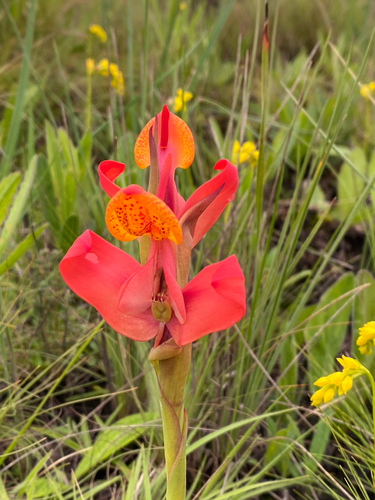
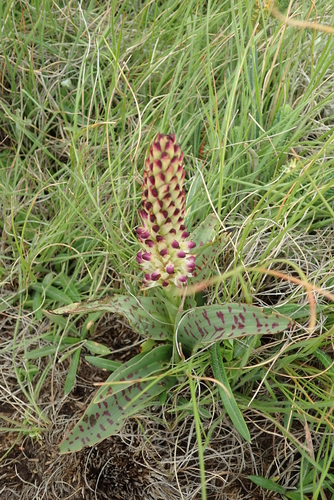
Habenaria multipartita
Blume ex Kranzlin
Uwi-uwi, Toothed habenaria
iNaturalist· cc-by-nc
(c) Colin Trainor, some rights reserved (CC BY-NC), uploaded by Colin Trainor
iNaturalist· cc-by-nc
(c) Colin Trainor, some rights reserved (CC BY-NC)
Description
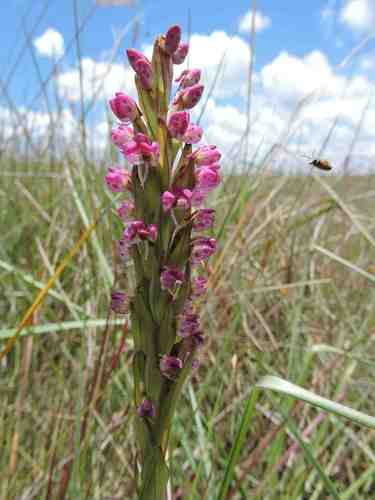
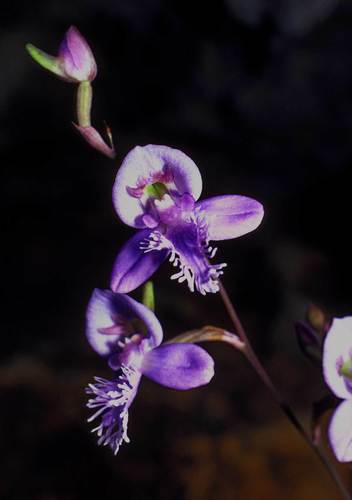
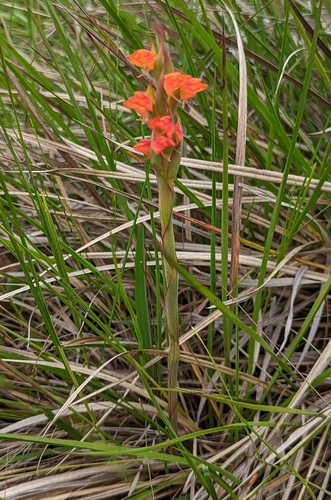
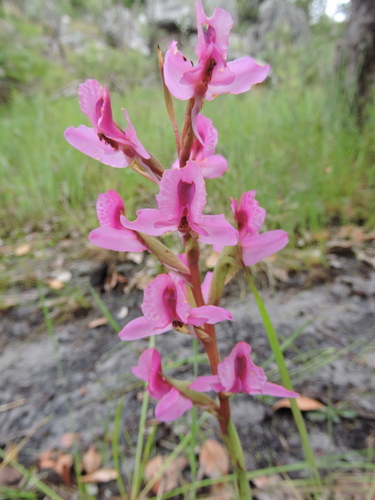
An orchid. It grows 40-60 cm high. The roots form tubers. There are 6-7 leaves. The leaves are narrow and sword shaped. They are 14-30 cm long by 1.5-2.5 cm wide. The flower stalk is 18 cm long. It has many large, scented, green flowers. The flowers have a strong scent especially early in the night.
Edible Uses
The tubers and roots are edible and have been used as a famine food.
Distribution
A tropical plant. It grows in sunny or slightly shady places often in grassland areas between 1300-2500 m altitude.
Where It Grows
Asia, East Timor, Indonesia, SE Asia, Timor-Leste,
Other Information
It is a famine food.
Notes
There are about 500-600 Habenaria species.
Synonyms
References (4)
- Lim, T. K., 2015, Edible Medicinal and Non Medicinal Plants. Volume 9, Modified Stems, Roots, Bulbs. Springer p 45
- Nurfadilah, S., 2020, Utilization of orchids of Wallacea region and implication for conservation. IOP Conf. Series: Earth and Environmental Science 473 (2020) 012063
- PROSEA handbook Volume 9 Plants yielding non-seed carbohydrates. p 176
- World Checklist of Useful Plant Species 2020. Royal Botanic Gardens, Kew