Dacryodes rostrata
(Blume) H. J. Lam
Asem begomdang, Kedondong kerut
iNaturalist· cc-by-nc-sa
(c) filibot.web, some rights reserved (CC BY-NC-SA)
wikimedia· cc-by-sa
Wikimedia Commons - Ezagren (bicara / talk)
Summary
Source: WikipediaDacryodes rostrata is a tree in the family Burseraceae. The specific epithet rostrata is from the Latin meaning 'beaked', referring to the narrow-tipped leaves.
Description
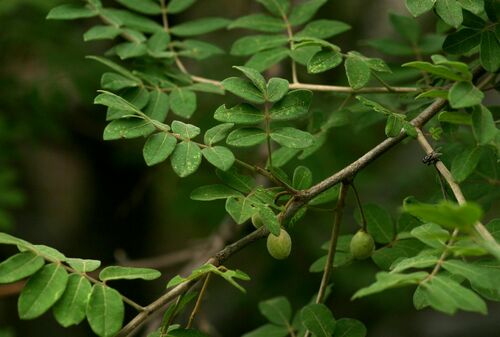
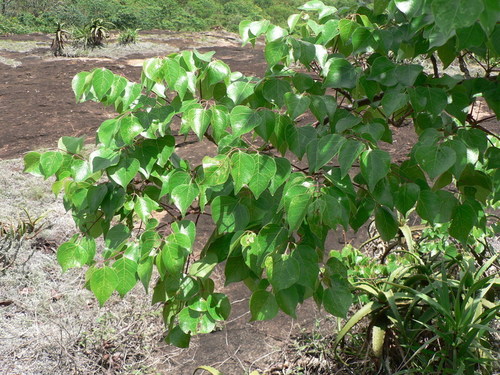
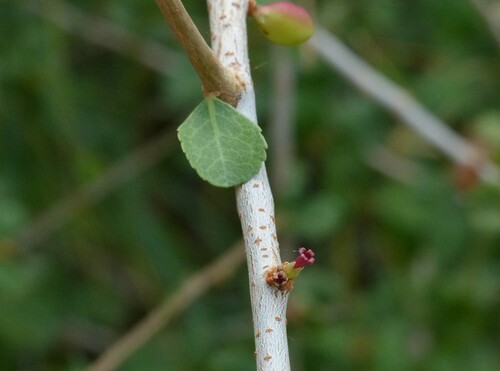
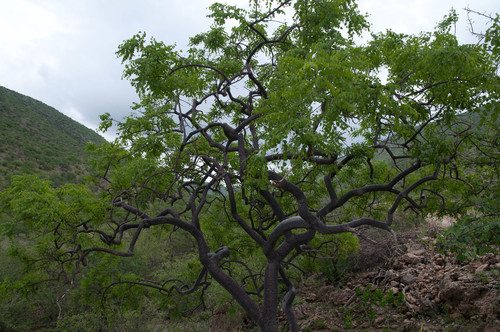
A tree. It grows up to 25-45 m tall. The trunk is 1 m across. It can have buttresses. The leaves are alternate and compound. The leaves have 2-10 pairs of leaflets. The flowers are hairy and in groups 5-23 cm long in the axils of leaves. The fruit stalk is stout. The fruit are oblong and yellow to bluish-black. They are 2-4 cm long by 1-2 cm wide. They have a smooth skin. The flesh is yellowish-purple. They contain one seed.
Edible Uses
The fruit pulp is edible and is traditionally preserved in salt or soy sauce and eaten as an appetiser with rice or porridge.
Traditional Uses
The pulp of the fruit is edible. The fruit are preserved in salt or soy sauce and eaten as an appetiser with rice or porridge.
This uses section is brief — help expand it
Distribution
A tropical plant. It grows in primary forest and occasionally in swamps up to 600 m altitude above sea level. It can grow on limestone.
Where It Grows
Asia, Brunei, Indochina, Indonesia, Malaysia, Philippines, SE Asia, Singapore, Thailand, Vietnam,
Cultivation
Plants are grown by seeds.
Other Uses
A resin obtained from the tree is used for making torches. The wood is used for planks and paddy pounders.
Production
Trees fruit between March and September.
Other Information
It is sometimes a cultivated food plant.
Nutrition
| Part | Moisture | kJ | kcal | Protein | Vit A | Vit C | Iron | Zinc |
|---|---|---|---|---|---|---|---|---|
| Fruit | 56.2 | 1007 | 241 | 3.4 | — | — | 1.1 | 10 |
Synonyms
Also Known As
Ampadu kalui, Champu biru, Engkeramoh, Kalasu, Kamabyau, Kambayan, Kamubang, Karamu, Kedondong hutan, Kedondong mata hari, Kelamok maruk, Kemayau, Kembajau, Kembayan aie, Kembayau, Keramoh, Kumbi, Langain, Lunai, Masam, Merading, Merasam, Palaspas, Pili-hanai, Pinanasan, Rengas burung, Tindau, Ungit
References (15)
- Altschul, S.V.R., 1973, Drugs and Foods from Little-known Plants. Notes in Harvard University Herbaria. Harvard Univ. Press. Massachusetts. no. 1989
- Bircher, A. G. & Bircher, W. H., 2000, Encyclopedia of Fruit Trees and Edible Flowering Plants in Egypt and the Subtropics. AUC Press. p 79 (As Canarium kadondon)
- Burkill, I.H., 1966, A Dictionary of the Economic Products of the Malay Peninsula. Ministry of Agriculture and Cooperatives, Kuala Lumpur, Malaysia. Vol 1 (A-H) p 435 (As Canarium kadondon)
- Chai, P. P. K. (Ed), et al, 2000, A checklist of Flora, Fauna, Food and Medicinal Plants. Lanjak Entimau Wildlife Sanctuary, Sarawak. Forestry Malaysia & ITTO. p 166
- Facciola, S., 1998, Cornucopia 2: a Source Book of Edible Plants. Kampong Publications, p 62
Show all 15 references Hide references
- Hoe, V. B. & Siong, K. H., 1999, The nutritional value of indigenous fruit and vegetables in Sarawak. Asia Pacific J. Clin. Nutr. 8(1):24-31
- Kebler, P. J. A., & Kidiyasa, 1994, Trees of the Balikpapan-Samarinda area of East Kalimantan, Indonesia. The Tropenbos Foundation, Wageningen, The Netherlands. p 67
- Leenhouts, P.W., 1955, Burseraceae in Flora Malesiana Vol 5 p 228
- Milow, P., et al, 2013, Malaysian species of plants with edible fruits or seeds and their evaluation. International Journal of Fruit Science. 14:1, 1-27
- Siong, K. H., 2003, Indigenous Fruits of Sarawak. ITTO & Sarawak Forest Department. p 37
- Slik, F., www.asianplant.net
- Soepadmo, E. and Wong, K. M., 1995, Tree Flora of Sabah and Sarawak. Forestry Malaysia. Volume One. p 72
- Sosef, M. S. M., Hong, L. T., & Prawirohatmodjo, S., (Eds.), 1998, Timber tree: Lesser-known timbers. Plant Resources of South-East Asia, 5(3), p 174
- Verheij, E. W. M. and Coronel, R.E., (Eds.), 1991, Plant Resources of South-East Asia. PROSEA No 2. Edible fruits and nuts. Pudoc Wageningen. p 327
- World Checklist of Useful Plant Species 2020. Royal Botanic Gardens, Kew