Dacryodes klaineana
(Pierre) H. J. Lam
Damson
gbif· cc-by-nc-nd
Lié Constant Moungoudy & West and Central Africa Program.
gbif· cc-by-nc-nd
Lié Constant Moungoudy & West and Central Africa Program.
gbif· cc-by-nc-nd
Lié Constant Moungoudy & West and Central Africa Program.
Summary
Source: WikipediaDacryodes klaineana is an evergreen perennial tree within the Burseraceae family. It is locally called Monkey plum and African cherry fruit as a result of its edible pulp.
Description
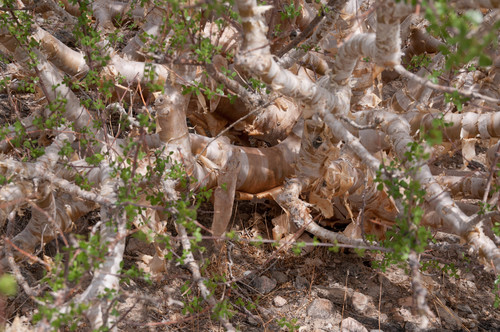
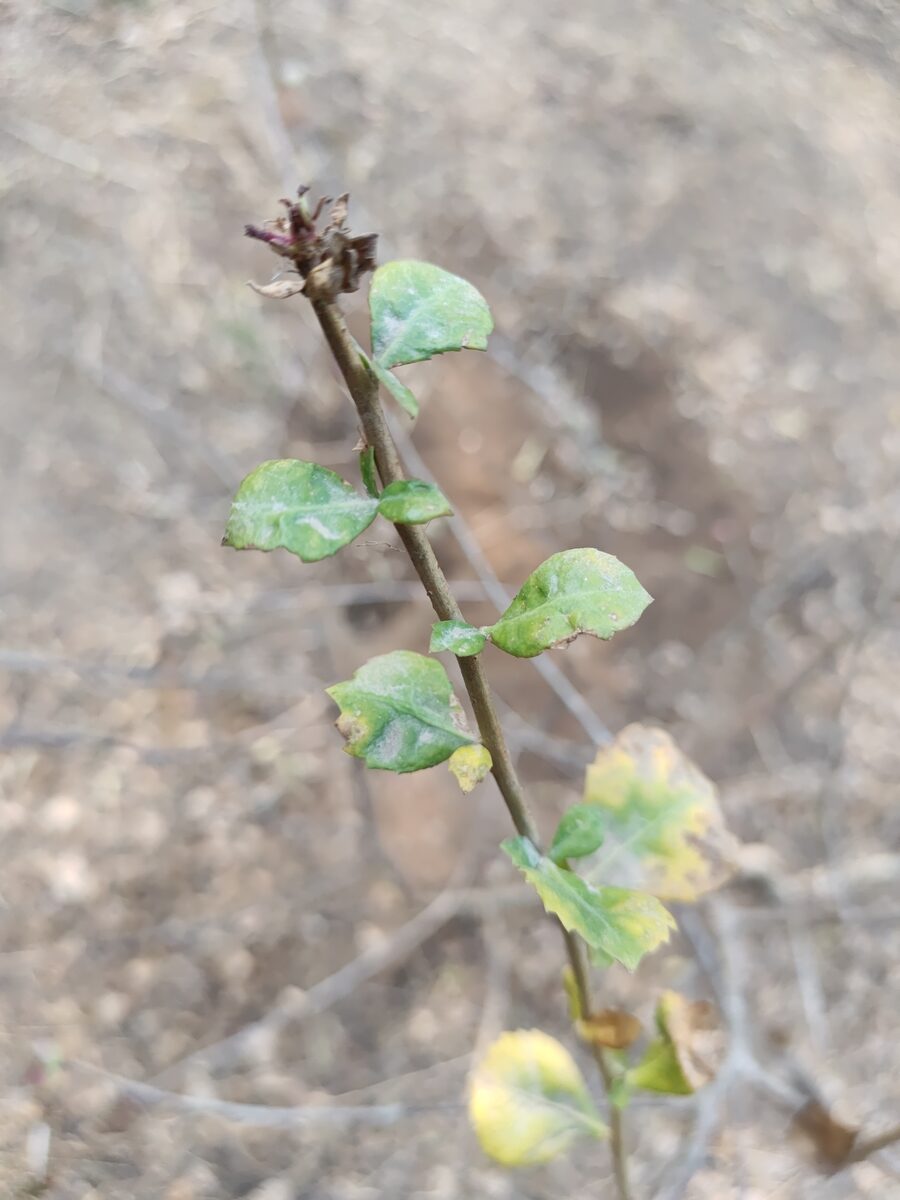
A tree. It grows to 25 m high. The trunk is 1 m across. It has fewer leaflets than Dacryodes edulis. The leaves are compound with 2-4 pairs of pointed leaflets and one at the end. The leaves are 15-45 cm long. The leaflets are 20 cm long by 9 cm wide. The flowers are pale yellow in branched flower arrangements. The fruit are also smaller. The fruit are 1.5-2 cm across. They are softly hairy with a fibrous pulp. There is one seed per fruit.
Edible Uses
The fruit is eaten raw or cooked; the pulp is boiled or roasted to yield a kind of butter. The fruit is about 25mm long. The flesh of the fruits in this genus usually adheres very strongly to the seed. When placed in hot (but not boiling) water at around 60 - 85°c the fruit softens and swells and all the flesh then slides easily off the seed.
Traditional Uses
The fruit are eaten raw.
This uses section is brief — help expand it
Medicinal Uses
Traditional healers use root extracts to treat skin diseases while leaf is used as part of a process to treat painful menstruation.
Distribution
A tropical plant. It grows in deciduous forests and along the edges of forests in West Africa. It does not grow in very dry forests. It grows in poor acidic soils. It grows between 100-700 m above sea level.
Where It Grows
Africa, Benin, Cameroon, Central Africa, Central African Republic, CAR, Congo R, Côte d'Ivoire, Equatorial Guinea, Gabon, Ghana, Guinea, Guinée, Ivory Coast, Liberia, Niger, Nigeria, Sahel, Sierra Leone, Togo, West Africa,
Cultivation
Plants are grown by seeds. They can be in shade.
Propagation
Seed - best sown as soon as it is ripe in a lightly shaded position in a nursery seedbed. It germinates within 15 - 30 days.
Other Uses
The heartwood is grey to yellowish grey-brown with darker streaks, giving it a decorative appearance; the 10cm or more wide band of sapwood is whitish grey. The wood is rather heavy and hard. It contains silica and is moderately difficult to work. It is used in construction and for mortars, axe handles and wagons. It has also been recommended for telegraph poles and railway sleepers. It is considered suitable for interior joinery, furniture and parquetry and has been used for paper making. The wood is used for fuel.
Production
In Sierra Leone and Liberia, it fruits in December and January.
Other Information
Fruit are sold in local markets. They are commonly eaten.
Synonyms
Also Known As
Abatom, Adjouaba, Krindja, Mgbin, Mugninga, Nom atom, Nom eba, Nom ebap, Orumu egbo, Puway-chua, Se, Smah
References (16)
- Burkill, H. M., 1985, The useful plants of west tropical Africa, Vol. 1. Kew.
- Diop, A. l., et al, 2021, Cultural importance of wild edible plants in three sympatric communities: Agni, Akyé and Gwa in the Department of Alépé (Southeast of Côte d’Ivoire). Ethnobotany Research and Applications 22:35. p 6
- INFOODSUpdatedFGU-list.xls
- Jardin, C., 1970, List of Foods Used In Africa, FAO Nutrition Information Document Series No 2.p 131
- Jusu, A. & Cuni-Sanchez, A., 2017, Priority indigenous fruit trees in the African rainforest zone: insights from Sierra Leone. Genet Resour Crop Evol (2017) 64:745–760
Show all 16 references Hide references
- liberianfaunaflora.org Plant Atlas
- Manvell, A., 2011, Use of Non-Timber Forest Products around Sapo National Park, Liberia (Report B) p 17
- Nkeoua, G. & Boundzanga, G. C., 1999, Donnees sur les produits forestieres non ligneux en Republique du Congo. FAO. p 24
- NYBG herbarium "edible"
- Onana, J. M., 2008, A synoptic revision of Dacryodes (Burseraceae) in Africa, with a new species from Central Africa. KEW BULLETIN VOL. 63: 385–400
- Oteng-Amoako, A. A. (Ed.), 2006, 100 Tropical African Timber Trees from Ghana. Forestry Research Institute of Ghana. p 122
- Savill, P. S. & Fox, J. E. D., Trees of Sierra Leone. p 61
- Vascular Plants of Korup National Park. korupplants.myspecies.info
- Vivien, J. & Faure, J.J., 1985, Abres des forets dense d'Afrique Centrale. Agence de Cooperation Culturelle et Technique. Paris. p 62
- Vivien, J., & Faure, J.J., 1996, Fruitiers Sauvages d'Afrique. Especes du Cameroun. CTA p 91
- World Checklist of Useful Plant Species 2020. Royal Botanic Gardens, Kew (As Pachylobus klaineanus)