Cystopteris montana
(Lam.) Desv.
Mountain Bladder Fern
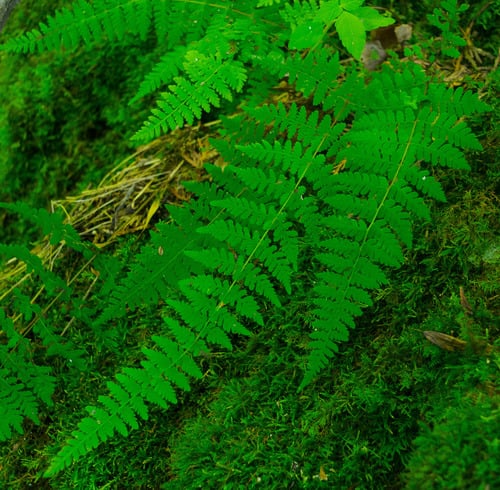
iNaturalist· cc-by
(c) Andrew Bazdyrev, some rights reserved (CC BY), uploaded by Andrew Bazdyrev
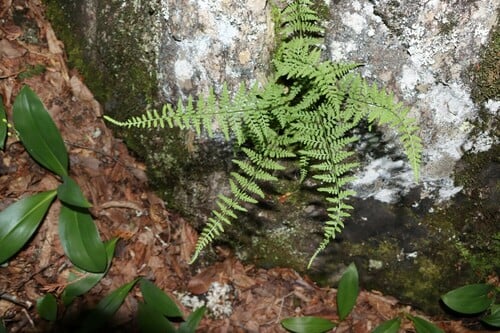
iNaturalist· cc-by
(c) Dustin Snider, some rights reserved (CC BY)
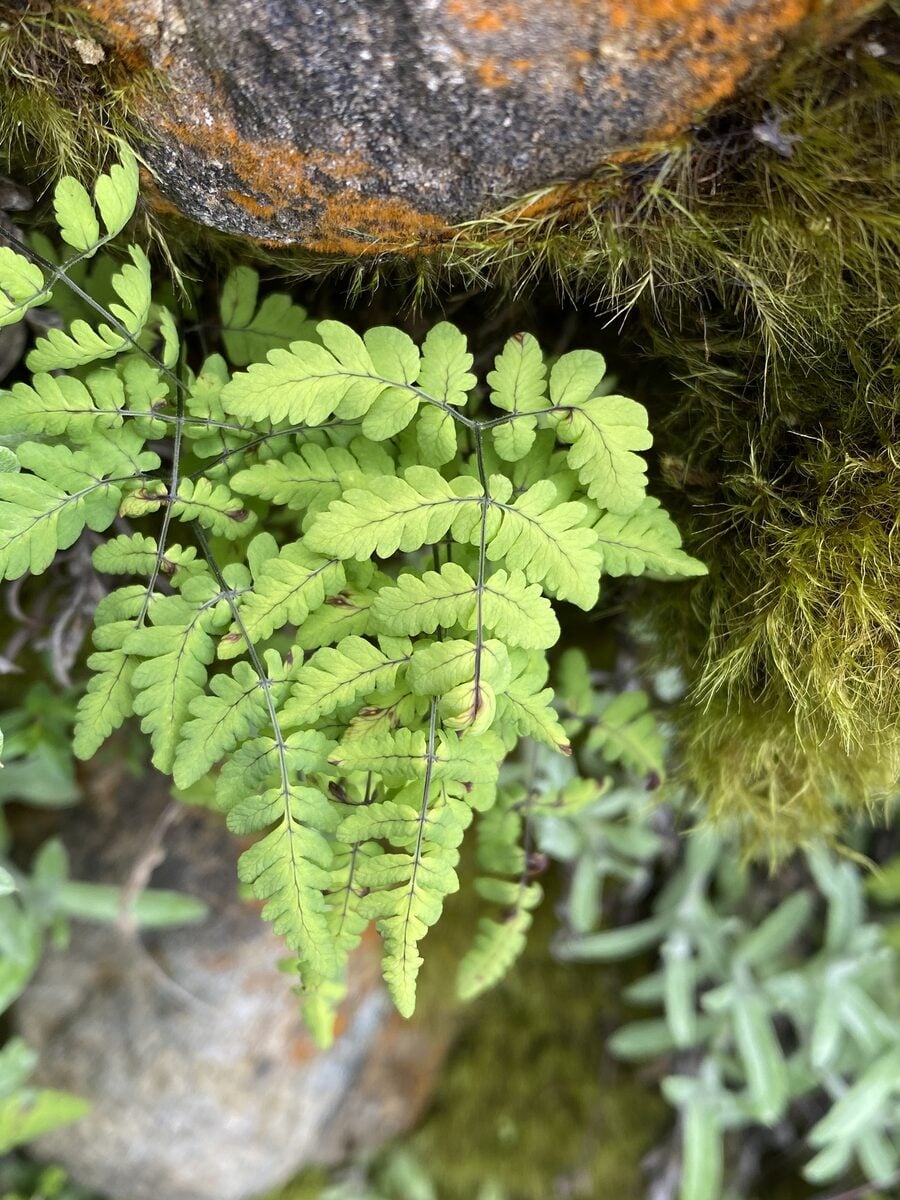
iNaturalist· cc-by
(c) Dustin Snider, some rights reserved (CC BY)
Summary
Source: WikipediaCystopteris montana, previously classified as Athyrium montanum, is a species of fern known by the common name mountain bladderfern. It occurs throughout the high latitudes of the Northern Hemisphere, in Eurasia, Greenland, and Alaska, and around Canada. It is also present in the higher elevations in Colorado further south. This fern produces a creeping, cordlike, scaly stem. The leaves are up to 45 centimeters long. The blades are borne on a petiole with a dark base and a light-colored end. The petiole is longer than the blade. The blade is pentagonal in shape and divided into leaflets which are subdivided into many lobed and toothed segments. The sori are covered in hairy, whitish, cup-shaped indusia. This fern grows in moist mountain habitat, such as forests near streams.
Description
A small fern. The fronds are bright green and triangle shaped. They are 10-30 cm high.
This description is brief — help expand it
Edible Uses
The root is edible but is considered strictly an emergency food, used only when no other options remain.
Medicinal Uses
None known.
Distribution
It is a temperate plant. It prefers a moist, shady location. In China it grows in alpine areas in the mountains in wet forests between 1,700-4,500 m above sea level.
Where It Grows
Asia, Australia, Britain, China, Europe, Himalayas, India, Japan, Korea, Nepal, North America, Pakistan, Russia, USA,
Propagation
Sow spores as soon as ripe on the surface of a humus-rich sterilised soil. Keep the compost moist, ideally by placing a plastic bag over the pot. Germination takes 1–3 months at 20°C. Pot on small clumps of plantlets once large enough to handle and keep humid until well established. Do not plant outside until the ferns are at least 2 years old. Division in spring.
Other Uses
None known.
Notes
There are between 10 and 20 Cystopteris species.
Synonyms
References (3)
- Plants for a Future database, The Field, Penpol, Lostwithiel, Cornwall, PL22 0NG, UK. http://www.scs.leeds.ac.uk/pfaf/
- Slocum, P.D. & Robinson, P., 1999, Water Gardening. Water Lilies and Lotuses. Timber Press. p 115
- www.eFloras.org Flora of China