Cystopteris fragilis
(L.) Bernh.
Brittle bladder fern
iNaturalist· cc-by-nc
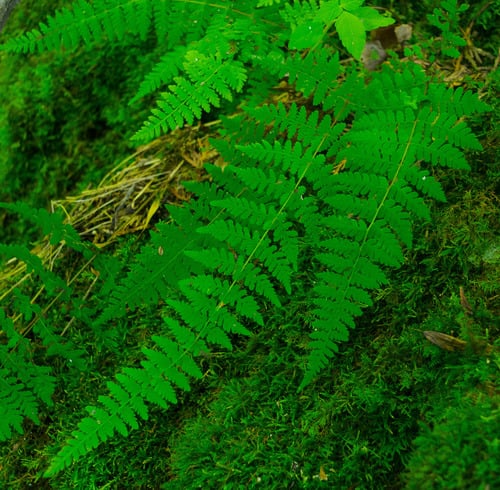
(c) Ian Shackleford, some rights reserved (CC BY-NC), uploaded by Ian Shackleford
iNaturalist· cc-by-nc
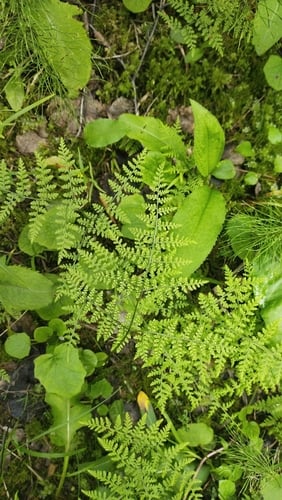
(c) Federico Biguzzi, some rights reserved (CC BY-NC), uploaded by Federico Biguzzi
iNaturalist· cc-by-nc
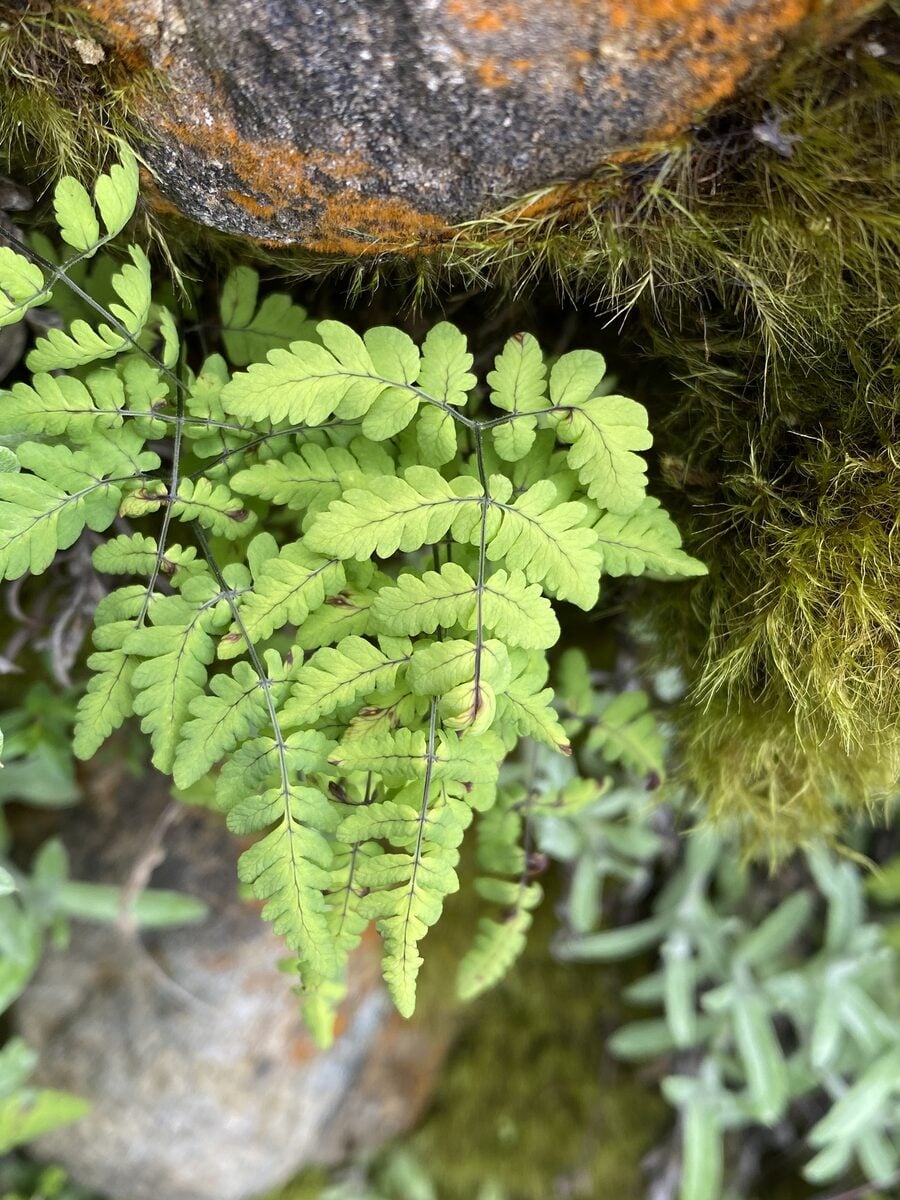
(c) Ian Shackleford, some rights reserved (CC BY-NC), uploaded by Ian Shackleford
Summary
Source: WikipediaCystopteris fragilis is a species of perennial fern known by the common names brittle bladder-fern and common fragile fern. It can be found worldwide, generally in shady, moist areas.
Description
A fern. It grows 20-25 cm high. It forms clumps. The brown rootstock is covered with broad brown scales. The fronds occur in tufts and are grey-green. They are lacy and divided once. The segments have irregular lobes and teeth along the edge.
Edible Uses
The root is edible but is considered strictly an emergency food, used only when no other options remain.
Medicinal Uses
A decoction of the roots has been used as an anthelmintic enema. A cold compound infusion of the whole plant has been used both internally and externally to treat injury.
Distribution
It is a temperate plant. It is frost hardy. It grows in wet rocky crevices at high altitudes. It needs cool, moist, humid conditions. It needs a shady position. In China it has been recorded between 1,500-4,500 m above sea level.
Where It Grows
Afghanistan, Africa, Australia, Britain, Central Asia, Chile, China, Europe, Falklands, Himalayas, India, Iran, Japan, Korea, Lesotho, Luxembourg, Middle East, Mongolia, Nepal, North America, Pakistan, Russia, Slovenia, South Africa, Southern Africa, South America, Tajikistan, Tasmania, Turkey, Türkiye, USA,
Cultivation
Plants can be grown by spores. Plants are difficult to grow and resent disturbance.
Propagation
Sow spores as soon as ripe on the surface of a humus-rich sterilised soil. Keep the compost moist, ideally by placing a plastic bag over the pot. Germination takes 1–3 months at 20°C. Pot on small clumps of plantlets once large enough to handle and keep humid until well established. Do not plant outside until the ferns are at least 2 years old. Division in spring.
Other Uses
Plants can be grown as ground cover when spaced approximately 15cm apart each way.
Other Information
There are 18 Cystopteris species.
Notes
There are between 10 and 20 Cystopteris species.
Also Known As
Krhka priščanica
References (8)
- Ambasta, S.P. (Ed.), 2000, The Useful Plants of India. CSIR India. p 159
- Joyce, D., 1998, The Garden Plant Selector. Ryland, Peters and Small. p 334
- Plants for a Future database, The Field, Penpol, Lostwithiel, Cornwall, PL22 0NG, UK. http://www.scs.leeds.ac.uk/pfaf/
- Slocum, P.D. & Robinson, P., 1999, Water Gardening. Water Lilies and Lotuses. Timber Press. p 115
- Upson, R., & Lewis R., 2014, Updated Vascular Plant Checklist and Atlas for the Falkland Islands. Falklands Conservation and Kew.
Show all 8 references Hide references
- Urgamal, M., et al, 2014, Conspectus of the Vascular Plants of Mongolia. Mongolia Academy of Sciences Institute of Botany and National University of Mongolia Department of Biology. p 32
- World Checklist of Useful Plant Species 2020. Royal Botanic Gardens, Kew
- www.eFloras.org Flora of China